Technological Advancements in Fish Finder Market
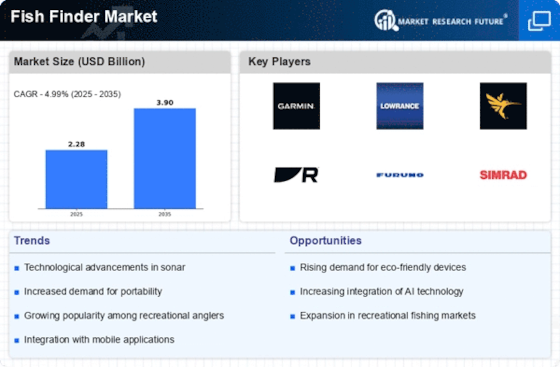
The Fish Finder Market is experiencing a notable transformation due to rapid technological advancements. Innovations such as CHIRP sonar technology and advanced imaging capabilities are enhancing the accuracy and efficiency of fish detection. These technologies allow anglers to identify fish species and their behavior patterns more effectively. The integration of GPS and mapping features into fish finders is also becoming increasingly prevalent, providing users with real-time data and navigation assistance. According to recent data, the market for fish finders is projected to grow at a compound annual growth rate of approximately 6.5% over the next five years, driven by these technological enhancements. As manufacturers continue to invest in research and development, the Fish Finder Market is likely to witness the introduction of even more sophisticated devices, catering to both recreational and professional anglers.
Rising Demand for Portability in Fish Finder Market
The Fish Finder Market is witnessing a surge in demand for portable fish finders, reflecting a shift in consumer preferences towards convenience and mobility. Anglers are increasingly seeking lightweight and compact devices that can be easily transported and used in various fishing environments. This trend is particularly evident among recreational fishers who prefer to fish from kayaks, canoes, or even the shore. The market has responded by introducing battery-operated and wireless models that offer flexibility without compromising on performance. Recent statistics indicate that portable fish finders account for a significant portion of total sales, with a growing number of consumers prioritizing ease of use and transportability. As this trend continues, manufacturers in the Fish Finder Market are likely to focus on developing innovative designs that enhance portability while maintaining advanced features.
Growth of E-commerce and Online Sales in Fish Finder Market
The Fish Finder Market is experiencing a transformation driven by the growth of e-commerce and online sales channels. As consumers increasingly turn to online platforms for purchasing fishing equipment, the accessibility and variety of fish finders available have expanded significantly. This trend is particularly beneficial for niche products, allowing consumers to compare features and prices easily. Recent data indicates that online sales of fishing equipment, including fish finders, have seen substantial growth, with many consumers preferring the convenience of home delivery. This shift is prompting traditional retailers to adapt their strategies, often integrating online and offline sales approaches. As e-commerce continues to evolve, the Fish Finder Market is likely to see further innovations in distribution and marketing, enhancing consumer engagement and driving sales.
Increasing Popularity of Recreational Fishing in Fish Finder Market
The Fish Finder Market is benefiting from the increasing popularity of recreational fishing activities. As more individuals engage in fishing as a leisure activity, the demand for fish finders is expected to rise correspondingly. This trend is particularly pronounced among younger demographics who are drawn to outdoor activities and seek to enhance their fishing experiences. The rise in fishing tournaments and community events further fuels interest in advanced fishing technologies, including fish finders. Market data suggests that the number of recreational fishers has grown significantly, leading to a corresponding increase in sales of fish finders. This growing interest in recreational fishing is likely to drive innovation and competition within the Fish Finder Market, as companies strive to meet the evolving needs of consumers.
Environmental Awareness and Sustainable Fishing in Fish Finder Market
The Fish Finder Market is increasingly influenced by a growing awareness of environmental sustainability among consumers. As anglers become more conscious of their impact on aquatic ecosystems, there is a rising demand for fish finders that promote sustainable fishing practices. This includes features that help users identify and avoid overfished areas or endangered species. Manufacturers are responding by developing fish finders that provide data on fish populations and habitat conditions, enabling anglers to make informed decisions. Recent surveys indicate that a significant percentage of fishers are willing to invest in technology that supports sustainable practices. This shift towards eco-conscious fishing is likely to shape product development and marketing strategies within the Fish Finder Market, as companies align their offerings with the values of environmentally aware consumers.