×
Request Free Sample ×

Kindly complete the form below to receive a free sample of this Report

* Please use a valid business email

Leading companies partner with us for data-driven Insights

clients tt-cursor
Hero Background

Firearm Lubricant Market

ID: MRFR/CnM/30433-HCR
111 Pages
Chitranshi Jaiswal
February 2026

Firearm Lubricant Market Research Report: By Lubricant Type (Synthetic Lubricants, Mineral-Based Lubricants, Bio-Based Lubricants, Greases), By Application (Sporting Firearms, Military Firearms, Law Enforcement Firearms, Hunting Firearms), By Formulation (Aerosol, Liquid, Paste, Gel), By User Type (Professional Users, Amateur Users, Armories and Gunsmiths), By Packaging Type (Bulk Packaging, Retail Packaging) and By Regional (North America, Europe, South America, Asia Pacific, Middle East and Africa) - Forecast to 2035.

Share:
Download PDF ×

We do not share your information with anyone. However, we may send you emails based on your report interest from time to time. You may contact us at any time to opt-out.

Firearm Lubricant Market Infographic
Purchase Options

Firearm Lubricant Market Summary

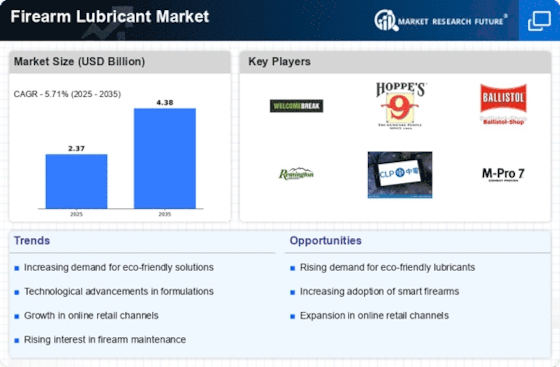
As per Market Research Future analysis, the Firearm Lubricant Market Size was estimated at 2.374 USD Billion in 2024. The Firearm Lubricant industry is projected to grow from USD 2.51 Billion in 2025 to USD 4.375 Billion by 2035, exhibiting a compound annual growth rate (CAGR) of 5.71% during the forecast period 2025 - 2035

Key Market Trends & Highlights

The Firearm Lubricant Market is experiencing a dynamic shift towards sustainability and technological innovation.

  • North America remains the largest market for firearm lubricants, driven by a robust consumer base and regulatory frameworks.
  • The Asia-Pacific region is emerging as the fastest-growing market, fueled by increasing firearm ownership and interest in shooting sports.
  • Synthetic lubricants dominate the market, while bio-based lubricants are gaining traction as environmentally friendly alternatives.
  • Key market drivers include increased firearm ownership and the growing demand for compliance with safety standards.

Market Size & Forecast

2024 Market Size 2.374 (USD Billion)
2035 Market Size 4.375 (USD Billion)
CAGR (2025 - 2035) 5.71%

Major Players

Break-Free (US), Hoppe's (US), Ballistol (DE), Remington (US), CLP (US), M-Pro 7 (US), Lucas Oil (US), Fireclean (US), Slip 2000 (US)

Our Impact
Enabled $4.3B Revenue Impact for Fortune 500 and Leading Multinationals
Partnering with 2000+ Global Organizations Each Year
30K+ Citations by Top-Tier Firms in the Industry

Firearm Lubricant Market Trends

The Firearm Lubricant Market is currently experiencing a notable evolution, driven by various factors that influence consumer preferences and technological advancements. As firearm enthusiasts and professionals seek enhanced performance and reliability, the demand for high-quality lubricants has surged. This market encompasses a diverse range of products, including oils, greases, and specialized formulations designed to reduce friction, prevent corrosion, and ensure optimal functioning of firearms. The increasing awareness regarding firearm maintenance and the importance of using appropriate lubricants is likely to propel market growth further. Moreover, the Firearm Lubricant Market appears to be influenced by the rising trend of outdoor activities and shooting sports, which has led to a broader consumer base. Manufacturers are responding to this shift by innovating and developing eco-friendly and biodegradable lubricants, catering to environmentally conscious consumers. Additionally, the expansion of e-commerce platforms has facilitated easier access to a variety of lubricant products, enhancing consumer choice. As the market continues to evolve, it may witness further diversification in product offerings, aligning with the changing preferences of users and the growing emphasis on sustainability in the industry.

Sustainability Initiatives

The Firearm Lubricant Market is increasingly focusing on sustainability, with manufacturers developing eco-friendly products. This trend reflects a growing consumer preference for biodegradable and non-toxic lubricants, which align with environmental concerns. Companies are investing in research to create formulations that minimize ecological impact while maintaining performance.

Technological Advancements

Innovations in lubricant formulations are shaping the Firearm Lubricant Market. Advanced technologies are being employed to enhance the effectiveness of lubricants, improving their ability to withstand extreme conditions. This trend indicates a shift towards high-performance products that cater to the needs of both recreational and professional users.

E-commerce Growth

The rise of e-commerce platforms is transforming the Firearm Lubricant Market by providing consumers with greater access to a wide range of products. Online shopping offers convenience and the ability to compare different brands and formulations, which may lead to increased sales and a more informed consumer base.

Firearm Lubricant Market Drivers

Increased Firearm Ownership

The rise in firearm ownership appears to be a pivotal driver for the Firearm Lubricant Market. As more individuals acquire firearms for personal protection, recreational shooting, or hunting, the demand for effective lubricants to maintain these weapons is likely to increase. Recent statistics indicate that firearm sales have surged, with millions of new owners entering the market. This trend necessitates the use of high-quality lubricants to ensure optimal performance and longevity of firearms. Consequently, manufacturers in the Firearm Lubricant Market are focusing on developing specialized products that cater to the diverse needs of firearm owners, thereby expanding their market reach and enhancing customer satisfaction.

Growing Interest in Shooting Sports

The growing interest in shooting sports is significantly impacting the Firearm Lubricant Market. As more individuals participate in competitive shooting, hunting, and recreational shooting activities, the demand for reliable and effective lubricants is likely to increase. This trend is supported by various shooting organizations and events that promote the sport, thereby attracting new enthusiasts. The need for consistent firearm performance during competitions necessitates the use of high-quality lubricants, which can enhance accuracy and reliability. As a result, manufacturers are focusing on marketing their products to this demographic, further driving growth within the Firearm Lubricant Market.

E-commerce Expansion and Accessibility

E-commerce expansion is reshaping the Firearm Lubricant Market by providing consumers with greater accessibility to a wide range of products. The rise of online shopping platforms has made it easier for firearm owners to purchase lubricants from the comfort of their homes. This trend is particularly beneficial for those in remote areas where access to physical stores may be limited. Additionally, e-commerce allows for the comparison of products and prices, enabling consumers to make informed decisions. As online sales continue to grow, manufacturers are increasingly investing in digital marketing strategies to reach potential customers, thereby enhancing their presence in the Firearm Lubricant Market.

Technological Innovations in Lubricants

Technological innovations are transforming the Firearm Lubricant Market, as manufacturers strive to develop advanced formulations that offer superior performance. Innovations such as synthetic lubricants and nanotechnology are gaining traction, providing enhanced protection against wear, corrosion, and extreme temperatures. These advancements not only improve the functionality of firearms but also extend their lifespan, which is increasingly appealing to consumers. Market data suggests that the adoption of these innovative lubricants is on the rise, as firearm enthusiasts seek products that deliver optimal results. Consequently, the Firearm Lubricant Market is witnessing a shift towards high-performance solutions that cater to the evolving needs of users.

Regulatory Compliance and Safety Standards

Regulatory compliance and safety standards play a crucial role in shaping the Firearm Lubricant Market. Governments and regulatory bodies often impose stringent guidelines regarding the maintenance and safety of firearms. This has led to an increased emphasis on the use of certified lubricants that meet specific performance criteria. As a result, manufacturers are compelled to innovate and produce lubricants that not only comply with these regulations but also enhance the safety and reliability of firearms. The growing awareness of safety standards among consumers further drives the demand for high-quality lubricants, thereby influencing market dynamics and encouraging investment in research and development within the Firearm Lubricant Market.


Market Segment Insights

By Type: Synthetic Lubricants (Largest) vs. Bio-Based Lubricants (Fastest-Growing)

In the Firearm Lubricant Market, the segment insights illustrate a clear dominance of synthetic lubricants, which account for the largest market share due to their superior performance characteristics. These lubricants are favored for their ability to withstand extreme temperatures and reduce friction, making them a popular choice among firearm enthusiasts. In contrast, bio-based lubricants are emerging rapidly, attributed to increasing awareness around environmental sustainability and non-toxic formulations. Their market share, while smaller, is on a significant upward trajectory as more consumers seek eco-friendly alternatives.

Synthetic Lubricants (Dominant) vs. Bio-Based Lubricants (Emerging)

Synthetic lubricants are regarded as the dominant player in the firearm lubricant segment due to their advanced formulation and excellent operational performance under varying conditions. They often consist of chemically engineered compounds that provide unmatched lubrication and protection against wear. On the other hand, bio-based lubricants are making noticeable strides as an emerging segment, driven by environmentally conscious consumers and manufacturers. These lubricants are derived from natural sources, which not only offer effective lubrication but also appeal to a growing demographic seeking to minimize their ecological footprint. The blend of performance and sustainability is reshaping consumer preferences in the market.

By Application: Sporting Firearms (Largest) vs. Military Firearms (Fastest-Growing)

The firearm lubricant market is segmented into several applications, with sporting firearms holding the largest market share. This segment is driven by increasing recreational shooting and participation in shooting sports. Conversely, military firearms are witnessing the fastest growth due to rising defense budgets and an increased focus on improving the performance and longevity of military equipment. Law enforcement and hunting firearms also contribute to the market but exhibit slower growth rates compared to sporting and military firearms.

Sporting Firearms (Dominant) vs. Military Firearms (Emerging)

Sporting firearms lubricants are designed for a highly competitive environment, emphasizing reliability, performance, and ease of application. This segment supports a vast array of activities, from target shooting to competitive sports. In contrast, military firearms lubricants address unique challenges posed by extreme conditions, requiring robust protection and operational reliability. As military engagements rise, the demand for military firearm lubricants is growing, with innovations focusing on enhanced cleaning and protective properties. This dual emphasis on performance makes both segments critical to the overall market, with sporting firearms leading in share while military firearms demonstrate rapid development.

By Formulation: Aerosol (Largest) vs. Liquid (Fastest-Growing)

In the Firearm Lubricant Market, the formulation segment shows varied distribution among aerosol, liquid, paste, and gel types. Currently, aerosol lubricants capture the largest market share due to their convenience and ease of application. In contrast, the liquid formulation has been identified as the fastest-growing segment, driven by its versatility and effectiveness in providing thorough lubrication. The demand for liquid lubricants is increasing as users seek advanced cleaning and maintenance solutions.

Liquid (Dominant) vs. Paste (Emerging)

The liquid formulation of firearm lubricants is characterized by its superior ability to penetrate tight spaces and provide uniform coverage, making it a preferred choice among firearm owners. It has gained significant traction in the market due to its effectiveness in reducing friction and wear. Meanwhile, paste lubricants are emerging as a complementary option, favored for their long-lasting performance and ability to adhere to surfaces without running off easily. This distinctive property positions paste lubricants as valuable in specific maintenance scenarios, contributing to the diversification of the product offerings in the Firearm Lubricant Market.
By User Type: Professional Users (Largest) vs. Amateur Users (Fastest-Growing)

The 'User Type' segment in the Firearm Lubricant Market reveals a diverse distribution of market share. Professional Users constitute the largest portion of the segment, driven by their frequent use and reliance on high-quality lubricants for performance and maintenance. They often prioritize reliability and effectiveness in products to ensure their firearms operate optimally under various conditions. In contrast, Amateur Users, while comprising a smaller share currently, are experiencing rapid growth, as more hobbyists and casual shooters become aware of the benefits of using specialized lubricants for firearm care and maintenance. Growth trends within this segment are primarily influenced by increasing interest in shooting sports and firearm ownership among the general population. As firearm safety courses and training sessions become more prevalent, more amateur users are entering the market, leading to heightened demand for quality lubricants. Additionally, the rise of e-commerce has made these products more accessible to a broader audience, further accelerating growth in this segment. Professional users, while established, also continue to seek innovations and formulations that enhance performance and longevity, ensuring their segment remains robust.

Professional Users (Dominant) vs. Gunsmiths (Emerging)

Professional Users in the Firearm Lubricant Market stand out as the dominant force due to their substantial usage and preference for high-performance lubricants tailored to specific conditions and firearm types. They often rely on established brands known for quality and consistency, ensuring their firearms maintain peak performance. In contrast, Gunsmiths represent an emerging segment, as they play a crucial role in firearm maintenance and customization. Gunsmiths are becoming more mainstream with the rise in firearm ownership, often recommending particular lubricants based on individual customer needs. As these two segments interact and influence each other, the demand for specialized examples in both categories is expected to rise, highlighting the interdependence between professional users and gunsmiths in the lubricant market.

By Packaging Type: Bulk Packaging (Largest) vs. Retail Packaging (Fastest-Growing)

In the Firearm Lubricant Market, the packaging type segment displays a diverse landscape with bulk packaging taking the lead as the dominant choice among manufacturers and consumers. This preference stems from its cost-effectiveness and suitability for high-volume applications, providing significant market share. In contrast, retail packaging, while smaller in overall market proportion, is rapidly gaining traction among individual consumers, driven by the demand for convenient, smaller-sized products that are easier to handle and retail. The growth of the retail packaging segment can be attributed to changing consumer behaviors and increasing interest among novices in firearms. As more individuals venture into the world of firearm ownership, the need for conveniently packaged lubricant options has surged. Retail packaging accommodates this demand, branding itself as user-friendly and accessible, making it a key driver of growth amidst competitive market dynamics.

Bulk Packaging (Dominant) vs. Retail Packaging (Emerging)

Bulk packaging in the Firearm Lubricant Market is recognized as the dominant form due to its appealing benefits for both suppliers and users. It typically features larger volumes designed for frequent or industrial use, appealing to manufacturers and shooting ranges who require lubricants in substantial quantities for operational efficiency. This segment's established presence is rooted in its cost advantages and effective supply chain management, allowing for maximization of product usage. In contrast, retail packaging is emerging swiftly, catering to the needs of individual consumers and hobbyists. Its portable formats enable easier transportation, aligning with the growing trend of personalized firearm care among casual users. Retail packaging is characterized by attractive branding and informative labels that emphasize ease of use, thereby attracting a diverse consumer base and redefining market engagement.

Get more detailed insights about Firearm Lubricant Market

Regional Insights

North America : Market Leader in Firearm Lubricants

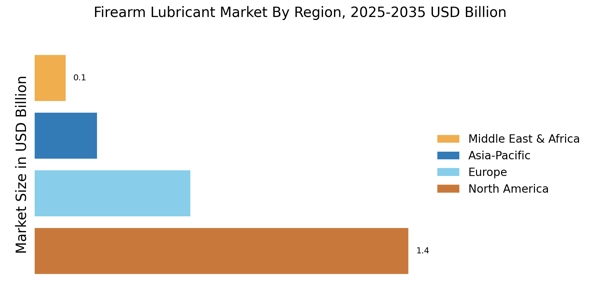
North America is the largest market for firearm lubricants, accounting for approximately 60% of the global share. The growth is driven by increasing firearm ownership, rising participation in shooting sports, and stringent regulations promoting firearm maintenance. The demand for high-quality lubricants is further fueled by advancements in technology and product innovation, ensuring optimal performance and longevity of firearms. The United States is the leading country in this region, with a robust competitive landscape featuring key players such as Break-Free, Hoppe's, and Remington. The presence of established brands and a strong distribution network enhances market accessibility. Additionally, the growing trend of DIY firearm maintenance among enthusiasts is expected to further boost demand for lubricant products, solidifying North America's position as a market leader.

Europe : Emerging Market with Regulations

Europe is witnessing a growing demand for firearm lubricants, driven by increasing awareness of firearm maintenance and safety regulations. The region holds approximately 25% of the global market share, with countries like Germany and the UK leading the way. Regulatory frameworks promoting responsible firearm ownership and maintenance are key growth drivers, encouraging consumers to invest in quality lubricants for optimal performance. Germany stands out as a significant player, with brands like Ballistol gaining traction. The competitive landscape is characterized by a mix of local and international players, fostering innovation and product diversity. The European market is also influenced by stringent environmental regulations, pushing manufacturers to develop eco-friendly lubricant solutions, thereby enhancing market appeal and compliance with regulations.

Asia-Pacific : Rapid Growth and Demand

The Asia-Pacific region is emerging as a significant player in the firearm lubricant market, accounting for approximately 10% of the global share. The growth is driven by increasing firearm ownership, particularly in countries like India and Australia, where recreational shooting is gaining popularity. Additionally, rising disposable incomes and a growing interest in hunting and shooting sports are contributing to the demand for high-quality lubricants. Australia is a key market within this region, with a competitive landscape featuring both local and international brands. The presence of key players such as CLP and M-Pro 7 enhances market dynamics. Furthermore, the region's regulatory environment is evolving, with governments promoting responsible firearm ownership and maintenance practices, which is expected to further boost lubricant demand in the coming years.

Middle East and Africa : Emerging Market with Potential

The Middle East and Africa region is gradually emerging in the firearm lubricant market, holding about 5% of the global share. The growth is primarily driven by increasing interest in shooting sports and hunting, alongside rising disposable incomes. Countries like South Africa and the UAE are witnessing a surge in firearm ownership, leading to a growing demand for quality lubricants to ensure firearm longevity and performance. South Africa is a notable market, with a competitive landscape that includes both local and international brands. The presence of key players such as Lucas Oil and Fireclean is enhancing market dynamics. However, the region faces challenges such as regulatory hurdles and varying consumer awareness levels, which could impact growth. Nevertheless, the potential for market expansion remains significant as awareness and interest in firearm maintenance continue to rise.

Firearm Lubricant Market Regional Image

Key Players and Competitive Insights

The Firearm Lubricant Market is characterized by a competitive landscape that is increasingly shaped by innovation, sustainability, and strategic partnerships. Key players such as Break-Free (US), Hoppe's (US), and Ballistol (DE) are actively refining their operational focus to enhance product performance and meet evolving consumer demands. Break-Free (US) has positioned itself as a leader in advanced lubricant technology, emphasizing the development of high-performance products that cater to both recreational and professional users. Meanwhile, Hoppe's (US) continues to leverage its long-standing reputation in the market, focusing on expanding its product line to include eco-friendly options, thereby appealing to a more environmentally conscious consumer base. Ballistol (DE) is also making strides in this area, promoting its biodegradable lubricants, which align with the growing trend towards sustainability in the firearms industry. Collectively, these strategies indicate a shift towards a more innovation-driven competitive environment, where companies are not only competing on product efficacy but also on their environmental impact.In terms of business tactics, companies are increasingly localizing manufacturing and optimizing supply chains to enhance efficiency and reduce costs. The Firearm Lubricant Market appears to be moderately fragmented, with several key players holding substantial market shares while also facing competition from smaller, niche brands. This competitive structure allows for a diverse range of products and innovations, as established companies strive to maintain their market positions against emerging competitors.

In August Break-Free (US) announced the launch of a new line of synthetic lubricants designed specifically for high-performance firearms. This strategic move is significant as it not only reinforces Break-Free's commitment to innovation but also addresses the growing demand for specialized products among competitive shooters and law enforcement agencies. The introduction of these advanced formulations is likely to enhance the brand's market share and solidify its reputation as a leader in firearm maintenance solutions.

In September Hoppe's (US) unveiled a partnership with a leading environmental organization to promote sustainable practices within the firearms industry. This collaboration aims to develop a new range of eco-friendly lubricants that meet stringent environmental standards. The strategic importance of this partnership lies in its potential to attract a broader customer base that prioritizes sustainability, thereby positioning Hoppe's as a forward-thinking brand in a market that is increasingly influenced by environmental considerations.

In July Ballistol (DE) expanded its distribution network by entering into agreements with several major retailers across North America. This strategic expansion is crucial as it enhances Ballistol's visibility and accessibility in a competitive market, allowing the company to reach a wider audience. By increasing its presence in key retail channels, Ballistol is likely to capture a larger share of the market, particularly among consumers seeking high-quality, reliable firearm lubricants.

As of October the Firearm Lubricant Market is witnessing trends that emphasize digitalization, sustainability, and the integration of advanced technologies. Companies are increasingly forming strategic alliances to enhance their product offerings and market reach. This shift indicates a movement away from traditional price-based competition towards a focus on innovation, technology, and supply chain reliability. As the market evolves, competitive differentiation will likely hinge on the ability to deliver high-performance products that also align with consumer values, particularly in terms of environmental sustainability.

Key Companies in the Firearm Lubricant Market include

Industry Developments

  • Q2 2024: Lucas Oil Introduces New Gun Metal Polish to Expand Firearm Lubricant Line Lucas Oil announced the launch of its new Gun Metal Polish, expanding its firearm lubricant product portfolio with a solution designed to clean and protect gun metal surfaces.
  • Q2 2024: Remington Arms Launches Bio-Based Firearm Lubricant for Law Enforcement Market Remington Arms unveiled a new bio-based firearm lubricant targeting law enforcement agencies, emphasizing environmentally friendly formulation and high performance.
  • Q3 2024: Hoppe’s Announces Partnership with U.S. Shooting Team for Exclusive Lubricant Supply Hoppe’s entered into a partnership agreement to become the exclusive supplier of firearm lubricants for the U.S. Shooting Team, supporting athletes in national and international competitions.
  • Q3 2024: Breakthrough Clean Technologies Expands Distribution with New European Facility Breakthrough Clean Technologies opened a new distribution facility in Germany to support growing demand for its firearm lubricants and cleaning products in the European market.
  • Q4 2024: Otis Technology Launches Next-Generation CLP Lubricant for Military Applications Otis Technology released its next-generation CLP (Cleaner, Lubricant, Protectant) formula, specifically designed for military firearms to improve reliability and reduce maintenance cycles.
  • Q1 2025: Ballistol Announces Strategic Partnership with Major U.S. Outdoor Retailer Ballistol entered a strategic partnership with a leading U.S. outdoor retailer to expand the distribution of its firearm lubricants and cleaning products nationwide.
  • Q1 2025: FrogLube Receives U.S. Department of Defense Approval for Non-Toxic Firearm Lubricant FrogLube secured regulatory approval from the U.S. Department of Defense for its non-toxic firearm lubricant, enabling supply to military and government agencies.
  • Q2 2025: Slip 2000 Launches New Extreme Weather Firearm Lubricant Slip 2000 introduced a new firearm lubricant formulated for extreme weather conditions, targeting military, law enforcement, and outdoor enthusiasts.
  • Q2 2025: Mil-Comm Products Wins Multi-Year Contract to Supply Lubricants to NATO Forces Mil-Comm Products was awarded a multi-year contract to supply its firearm lubricants to NATO member forces, supporting maintenance and operational readiness.
  • Q3 2025: G96 Products Expands Manufacturing Capacity with New Facility in Texas G96 Products opened a new manufacturing facility in Texas to increase production of its firearm lubricants and meet rising demand in North America.
  • Q3 2025: M-Pro 7 Launches Advanced Synthetic Lubricant for Competitive Shooting Market M-Pro 7 introduced an advanced synthetic firearm lubricant designed for competitive shooters, offering improved performance and reduced fouling.
  • Q4 2025: Shooters Choice Secures Investment to Accelerate Product Innovation in Firearm Lubricants Shooters Choice received a significant investment to support research and development of new firearm lubricant formulations and expand its market presence.

Future Outlook

Firearm Lubricant Market Future Outlook

The Firearm Lubricant Market is projected to grow at a 5.71% CAGR from 2025 to 2035, driven by increasing firearm ownership and technological advancements in lubricant formulations.

New opportunities lie in:

  • Development of eco-friendly lubricant formulations for sustainability-focused consumers.
  • Expansion into emerging markets with tailored marketing strategies.
  • Integration of smart technology in lubricant application systems for enhanced user experience.

By 2035, the market is expected to achieve robust growth, positioning itself as a leader in the firearm maintenance sector.

Market Segmentation

Firearm Lubricant Market Type Outlook

  • Synthetic Lubricants
  • Mineral-Based Lubricants
  • Bio-Based Lubricants
  • Greases

Firearm Lubricant Market User Type Outlook

  • Professional Users
  • Amateur Users
  • Armories
  • Gunsmiths

Firearm Lubricant Market Application Outlook

  • Sporting Firearms
  • Military Firearms
  • Law Enforcement Firearms
  • Hunting Firearms

Firearm Lubricant Market Formulation Outlook

  • Aerosol
  • Liquid
  • Paste
  • Gel

Firearm Lubricant Market Packaging Type Outlook

  • Bulk Packaging
  • Retail Packaging

Report Scope

MARKET SIZE 20242.374(USD Billion)
MARKET SIZE 20252.51(USD Billion)
MARKET SIZE 20354.375(USD Billion)
COMPOUND ANNUAL GROWTH RATE (CAGR)5.71% (2025 - 2035)
REPORT COVERAGERevenue Forecast, Competitive Landscape, Growth Factors, and Trends
BASE YEAR2024
Market Forecast Period2025 - 2035
Historical Data2019 - 2024
Market Forecast UnitsUSD Billion
Key Companies ProfiledBreak-Free (US), Hoppe's (US), Ballistol (DE), Remington (US), CLP (US), M-Pro 7 (US), Lucas Oil (US), Fireclean (US), Slip 2000 (US)
Segments CoveredLubricant Type, Application, Formulation, User Type, Packaging Type, Regional
Key Market OpportunitiesGrowing demand for eco-friendly lubricants in the Firearm Lubricant Market presents significant market opportunities.
Key Market DynamicsRising demand for eco-friendly lubricants drives innovation and competition in the firearm lubricant market.
Countries CoveredNorth America, Europe, APAC, South America, MEA
Leave a Comment

FAQs

What is the projected market valuation of the Firearm Lubricant Market by 2035?

The Firearm Lubricant Market is projected to reach a valuation of 4.375 USD Billion by 2035.

What was the market valuation of the Firearm Lubricant Market in 2024?

In 2024, the Firearm Lubricant Market was valued at 2.374 USD Billion.

What is the expected CAGR for the Firearm Lubricant Market during the forecast period 2025 - 2035?

The expected CAGR for the Firearm Lubricant Market during the forecast period 2025 - 2035 is 5.71%.

Which companies are considered key players in the Firearm Lubricant Market?

Key players in the Firearm Lubricant Market include Break-Free, Hoppe's, Ballistol, Remington, CLP, M-Pro 7, Lucas Oil, Fireclean, and Slip 2000.

What are the main types of lubricants in the Firearm Lubricant Market?

The main types of lubricants in the Firearm Lubricant Market include Synthetic Lubricants, Mineral-Based Lubricants, Bio-Based Lubricants, and Greases.

How much is the market for Synthetic Lubricants expected to grow by 2035?

The market for Synthetic Lubricants is expected to grow from 0.712 USD Billion in 2024 to 1.325 USD Billion by 2035.

What is the projected market size for Military Firearms lubricants by 2035?

The market size for Military Firearms lubricants is projected to increase from 0.712 USD Billion in 2024 to 1.325 USD Billion by 2035.

Download Free Sample

Kindly complete the form below to receive a free sample of this Report

Compare Licence

×
Features License Type
Single User Multiuser License Enterprise User
Price $4,950 $ $7,250
Maximum User Access Limit 1 User Upto 10 Users Unrestricted Access Throughout the Organization
Free Customization
Direct Access to Analyst
Deliverable Format
Platform Access
Discount on Next Purchase 10% 15% 15%
Printable Versions