×
Request Free Sample ×

Kindly complete the form below to receive a free sample of this Report

* Please use a valid business email

Leading companies partner with us for data-driven Insights

clients tt-cursor
Hero Background

China Thermal Management Market

ID: MRFR/EnP/46983-HCR
200 Pages
Garvit Vyas
February 2026

China Thermal Management Market Research Report By Material (Adhesive Materials, Non-adhesive Materials) and By End User (Automotive, Aerospace, Consumer Electronics, Servers, Data Centers, Aerospace and Defense, Healthcare)- Forecast to 2035

Share:
Download PDF ×

We do not share your information with anyone. However, we may send you emails based on your report interest from time to time. You may contact us at any time to opt-out.

China Thermal Management Market Infographic
Purchase Options

China Thermal Management Market Summary

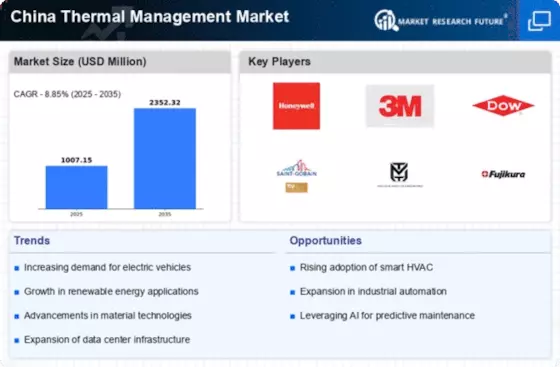
As per analysis, the China Thermal Management Market is projected to grow from USD 925.26 Million in 2024 to USD 1,015.75 Million in 2025, ultimately reaching USD 2,352.32 Million by 2035, exhibiting a compound annual growth rate (CAGR) of 8.85% during the forecast period (2025 - 2035).

Key Market Trends & Highlights

The China Thermal Management Market is poised for substantial growth driven by advancements in technology and increasing demand across various sectors.

  • The automotive segment remains the largest contributor to the thermal management market, primarily fueled by the rise of electric vehicles.
  • The electronics sector is the fastest-growing segment, with consumer electronics driving demand for efficient thermal solutions.
  • Energy efficiency has become a focal point for manufacturers, leading to innovative thermal management strategies.
  • Key market drivers include the rise of electric vehicles and government initiatives promoting energy efficiency.

Market Size & Forecast

2024 Market Size 925.26 (USD Million)
2035 Market Size 2352.32 (USD Million)
CAGR (2025 - 2035) 8.85%

Major Players

Honeywell (CN), 3M (CN), Dow (CN), Saint-Gobain (CN), Thermal Management Technologies (CN), Fujikura (CN), Aavid Thermalloy (CN), Laird (CN)

Our Impact
Enabled $4.3B Revenue Impact for Fortune 500 and Leading Multinationals
Partnering with 2000+ Global Organizations Each Year
30K+ Citations by Top-Tier Firms in the Industry

China Thermal Management Market Trends

The China Thermal Management Market is currently experiencing a notable transformation, driven by the increasing demand for efficient thermal solutions across various sectors. This market encompasses a wide range of applications, including electronics, automotive, and industrial processes, where effective heat management is crucial for performance and reliability. The rapid growth of the electric vehicle sector in China has particularly intensified the need for advanced thermal management systems, as these vehicles require sophisticated cooling technologies to maintain optimal battery performance. Furthermore, the government's commitment to promoting energy efficiency and sustainability is likely to bolster the adoption of innovative thermal management solutions. In addition to the automotive industry, the electronics sector in China is also witnessing a surge in demand for thermal management products. As devices become more compact and powerful, the need for effective heat dissipation solutions has become paramount. This trend is further supported by the increasing focus on renewable energy technologies, which often require specialized thermal management systems to enhance efficiency. Overall, the China Thermal Management Market appears poised for substantial growth, driven by technological advancements and a strong emphasis on energy conservation and performance optimization.

Rise of Electric Vehicles

The electric vehicle sector in China is expanding rapidly, leading to a heightened demand for advanced thermal management systems. These systems are essential for maintaining battery performance and ensuring vehicle safety, thus driving innovation in cooling technologies.

Growth in Electronics Sector

The electronics industry in China is evolving, with a growing need for effective thermal management solutions. As devices become more compact and powerful, the demand for efficient heat dissipation technologies is increasing, prompting manufacturers to innovate.

Focus on Energy Efficiency

There is a strong emphasis on energy efficiency within the China Thermal Management Market. Government initiatives aimed at promoting sustainable practices are likely to encourage the adoption of advanced thermal management solutions across various industries.

China Thermal Management Market Drivers

Rise of Electric Vehicles

The increasing adoption of electric vehicles (EVs) in China is a pivotal driver for the China Thermal Management Market. As the government promotes EV usage through subsidies and incentives, the demand for efficient thermal management solutions rises. In 2025, the number of electric vehicles in China is projected to exceed 10 million, necessitating advanced thermal management systems to ensure optimal battery performance and longevity. This trend indicates a significant shift in automotive manufacturing, where thermal management plays a crucial role in vehicle design and functionality. Consequently, companies specializing in thermal management technologies are likely to experience substantial growth, as they cater to the evolving needs of the automotive sector.

Focus on Energy Efficiency

The emphasis on energy efficiency in China is a critical driver for the China Thermal Management Market. The government has implemented stringent regulations aimed at reducing energy consumption across various sectors, including manufacturing and transportation. In 2025, energy efficiency standards are expected to become even more rigorous, compelling industries to adopt advanced thermal management solutions. This focus on sustainability not only aligns with global environmental goals but also drives innovation in thermal management technologies. Companies that can provide energy-efficient solutions are likely to gain a competitive edge, as businesses strive to comply with regulations while minimizing operational costs.

Growth in Electronics Sector

The rapid expansion of the electronics sector in China significantly influences the China Thermal Management Market. With the country being a global leader in electronics manufacturing, the demand for effective thermal management solutions is paramount. In 2025, the electronics market in China is expected to reach approximately USD 1 trillion, driven by innovations in consumer electronics, telecommunications, and industrial applications. This growth necessitates advanced thermal management systems to prevent overheating and ensure device reliability. As manufacturers seek to enhance product performance and lifespan, the thermal management market is poised for growth, with companies developing innovative materials and technologies to meet these demands.

Advancements in Material Science

Innovations in material science are transforming the landscape of the China Thermal Management Market. The development of advanced materials, such as phase change materials and high-performance thermal interface materials, enhances the efficiency of thermal management systems. In 2025, the market for these materials is projected to grow significantly, driven by their application in various industries, including automotive, electronics, and aerospace. As manufacturers seek to improve thermal performance and reduce weight, the demand for these advanced materials is likely to increase. This trend suggests that companies investing in research and development of new materials will play a crucial role in shaping the future of thermal management solutions in China.

Government Initiatives and Policies

Government initiatives and policies aimed at promoting technological advancements are vital drivers for the China Thermal Management Market. The Chinese government has launched several programs to support research and development in thermal management technologies, particularly in the context of energy efficiency and environmental sustainability. By 2025, these initiatives are expected to foster collaboration between public and private sectors, leading to innovative solutions that address thermal management challenges. Additionally, policies encouraging the adoption of green technologies will likely stimulate market growth, as companies align their strategies with national objectives. This supportive regulatory environment is essential for the long-term development of the thermal management market in China.


Market Segment Insights

By Application: Automotive (Largest) vs. Electronics (Fastest-Growing)

In the China Thermal Management Market, the application segment is dominated by the automotive sector, which accounts for the majority share. This segment benefits from the increasing demand for electric vehicles and stringent regulations on emissions, driving manufacturers to invest in more efficient thermal management solutions. On the other hand, the electronics application has gained significant traction, especially with the rise of consumer electronics and data centers, contributing to a diversified market presence.

Electronics: Automotive (Dominant) vs. Telecommunications (Emerging)

The automotive sector remains the dominant application in the thermal management market due to its extensive use in various vehicle systems, including power electronics and HVAC. Advanced thermal management techniques improve efficiency and performance, making them essential in modern automotive designs. Conversely, the telecommunications sector is emerging with increasing demand for thermal solutions in network infrastructure and data centers. As technology progresses, telecommunications equipment, including high-performance servers and cooling systems, will require sophisticated thermal management to maintain optimal operation, representing a growing opportunity within the market.

By End Use: Passenger Vehicles (Largest) vs. Consumer Electronics (Fastest-Growing)

In the China Thermal Management Market, the end-use segments showcase a diverse distribution of market share, with passenger vehicles dominating the landscape. This segment benefits from the rapid growth of the automotive industry, driven by increasing consumer demand for energy-efficient vehicles. On the other hand, consumer electronics is emerging as a significant player, with thermal management solutions increasingly integrated into devices such as smartphones and laptops due to rising performance and miniaturization demands. The growth trends in these segments are influenced by several factors. For passenger vehicles, the shift towards electric vehicles (EVs) necessitates effective thermal management to enhance battery performance and safety. Meanwhile, the consumer electronics segment is driven by the proliferation of innovative gadgets that require advanced thermal solutions to manage heat dissipation efficiently, making this segment the fastest-growing in the market.

Passenger Vehicles (Dominant) vs. Data Centers (Emerging)

The passenger vehicles segment is currently the dominant force in the China Thermal Management Market, propelled by the booming automotive sector and the growing emphasis on fuel efficiency and emissions reduction. Innovations in thermal management technologies allow for improved performance across vehicle models. Conversely, the data centers segment, while still emerging, is gaining traction due to the increasing demand for cloud computing services and the need for efficient thermal management solutions to ensure operational reliability. Advanced cooling systems are being adopted to mitigate heat generation, driven by the exponential growth of data usage and the critical need for optimal performance in data centers. The evolving landscape points to a promising future for both segments, with passenger vehicles leading the way and data centers rapidly progressing.

By Material Type: Metal (Largest) vs. Polymer (Fastest-Growing)

In the China Thermal Management Market, metal materials hold the largest market share, mainly due to their superior thermal conductivity and reliability in high-performance applications. Metals such as aluminum and copper are widely utilized in heat exchangers and thermal interfaces, reflecting their established presence in the market. Conversely, polymer materials are emerging rapidly, capturing significant attention for their lightweight characteristics and versatility, making them increasingly popular in thermal management solutions.

Metal (Dominant) vs. Polymer (Emerging)

Metal, particularly aluminum and copper, remains the dominant material in thermal management applications due to its exceptional thermal conductivity and durability. These metals are essential for effective heat transfer in various applications, including automotive and electronics. On the other hand, polymers are seen as an emerging force in this segment, gaining traction due to their lightweight nature and potential for lower production costs. They are increasingly being integrated into new thermal management technologies, offering flexibility in design and performance. This shift is driven by demands for more energy-efficient materials and innovative applications, indicating a dynamic change in the material landscape of the China Thermal Management Market.

By Technology: Active Cooling (Largest) vs. Passive Cooling (Fastest-Growing)

In the China Thermal Management Market, the technology segment is prominently led by Active Cooling, which holds a significant share due to its efficiency in high-demand applications. This includes electric vehicles and industrial machinery, where optimal thermal control is crucial. On the other hand, Passive Cooling is rapidly gaining traction, capitalizing on the increasing emphasis on energy efficiency and sustainability in various sectors, thus showcasing a strong market presence. Growth trends indicate a robust adoption of advanced cooling technologies driven by the rising need for enhanced heat management solutions. The demand for Active Cooling continues to be propelled by expanding automotive and electronics industries, whereas Passive Cooling benefits from eco-friendly initiatives and innovations in materials. This duality in technology preferences is shaping a dynamic landscape in the thermal management sector in China.

Active Cooling (Dominant) vs. Thermal Interface Materials (Emerging)

Active Cooling is currently the dominant force in the China Thermal Management Market, recognized for its superior performance in efficiently managing and dissipating heat across various applications. This technology enables rapid cooling, making it essential in sectors where thermal performance is crucial. Conversely, Thermal Interface Materials are emerging rapidly, focusing on improving heat conduction and transfer efficiencies in electronic devices and systems. As miniaturization and power density in electronics increase, the role of Thermal Interface Materials becomes vital for ensuring reliability and longevity. This shift reflects a broader trend towards optimizing thermal efficiency through innovative material design, positioning these segments favorably for future growth.

Get more detailed insights about China Thermal Management Market

Key Players and Competitive Insights

The competitive dynamics within the Thermal Management Market in China are characterized by a blend of innovation, strategic partnerships, and a focus on sustainability. Key growth drivers include the increasing demand for efficient thermal management solutions across various sectors, such as electronics, automotive, and renewable energy. Major players like Honeywell (CN), 3M (CN), and Dow (CN) are actively shaping the market landscape through their strategic positioning. Honeywell (CN) emphasizes innovation in advanced materials, while 3M (CN) focuses on diversifying its product portfolio to cater to emerging technologies. Dow (CN) is enhancing its operational focus on sustainable solutions, which collectively influences the competitive environment by fostering a culture of continuous improvement and adaptation.

In terms of business tactics, companies are increasingly localizing manufacturing to reduce lead times and optimize supply chains. The market structure appears moderately fragmented, with several key players exerting considerable influence. This fragmentation allows for a variety of competitive strategies, as companies seek to differentiate themselves through unique offerings and localized solutions. The collective influence of these players is significant, as they drive advancements in technology and operational efficiencies.

In December 2025, Honeywell (CN) announced a partnership with a leading Chinese automotive manufacturer to develop next-generation thermal management systems for electric vehicles. This strategic move is likely to enhance Honeywell's position in the rapidly growing electric vehicle market, aligning with the global shift towards sustainable transportation solutions. The collaboration may also facilitate the integration of advanced thermal management technologies, thereby improving vehicle performance and energy efficiency.

In November 2025, 3M (CN) launched a new line of thermal interface materials specifically designed for high-performance computing applications. This introduction reflects 3M's commitment to innovation and its strategic focus on meeting the evolving needs of the technology sector. By addressing the thermal management challenges faced by data centers and high-performance computing systems, 3M (CN) positions itself as a leader in this niche market, potentially capturing a larger share of the growing demand for efficient thermal solutions.

In October 2025, Dow (CN) expanded its manufacturing capabilities in China by investing in a new facility dedicated to producing sustainable thermal management products. This investment underscores Dow's strategic emphasis on sustainability and its intent to meet the increasing demand for eco-friendly solutions. The new facility is expected to enhance Dow's operational efficiency while reinforcing its commitment to reducing environmental impact, thereby appealing to environmentally conscious consumers and businesses alike.

As of January 2026, current trends in the Thermal Management Market are increasingly defined by digitalization, sustainability, and the integration of artificial intelligence (AI) into product development. Strategic alliances among key players are shaping the competitive landscape, fostering innovation and collaboration. The shift from price-based competition to a focus on technological advancement and supply chain reliability is evident, suggesting that companies will need to differentiate themselves through innovative solutions and sustainable practices to thrive in this evolving market.

Key Companies in the China Thermal Management Market include

Industry Developments

Recent developments in the China Thermal Management Market highlight significant advancements and competitive activities among key players. In October 2023, Baidu announced its collaboration with Amphenol to enhance their thermal management solutions for electric vehicles, leveraging artificial intelligence and smart technologies. Additionally, Bosch and Guangzhou Automobile Group are jointly investing in Research and Development to create advanced thermal management systems aimed at improving energy efficiency and vehicle performance. 

Notably, in September 2023, SAIC Motor launched a new line of thermal control products designed for electric and hybrid vehicles, reflecting the rapidly growing demand for efficient thermal management in the automotive sector. In terms of mergers and acquisitions, Midea Group acquired a minority stake in a leading thermal management startup in China, reported in August 2023, with intentions to bolster its technological capabilities. The Shanghai government, supporting the electric vehicle sector, has initiated policies to encourage innovation in thermal management systems, recognizing the importance of efficient thermal solutions in sustaining economic growth.

Over the past few years, companies like LG Chem and Samsung SDI have increased their investments in thermal management technologies in response to the rising production of electric vehicles, demonstrating the ongoing evolution of the market.

Future Outlook

China Thermal Management Market Future Outlook

The China Thermal Management Market is projected to grow at an 8.85% CAGR from 2025 to 2035, driven by increasing energy efficiency demands and technological advancements.

New opportunities lie in:

  • Development of advanced thermal interface materials for electronics cooling solutions.
  • Integration of AI-driven thermal management systems in smart buildings.
  • Expansion of thermal management solutions in electric vehicle manufacturing.

By 2035, the market is expected to achieve substantial growth, positioning itself as a leader in thermal management solutions.

Market Segmentation

China Thermal Management Market End Use Outlook

  • Passenger Vehicles
  • Commercial Vehicles
  • Consumer Electronics
  • Data Centers
  • Renewable Energy

China Thermal Management Market Technology Outlook

  • Active Cooling
  • Passive Cooling
  • Heat Pipes
  • Thermal Interface Materials
  • Thermal Insulation

China Thermal Management Market Application Outlook

  • Automotive
  • Electronics
  • Aerospace
  • Industrial
  • Telecommunications

China Thermal Management Market Material Type Outlook

  • Metal
  • Polymer
  • Ceramic
  • Composite
  • Phase Change Material

Report Scope

MARKET SIZE 2024925.26(USD Million)
MARKET SIZE 20251015.75(USD Million)
MARKET SIZE 20352352.32(USD Million)
COMPOUND ANNUAL GROWTH RATE (CAGR)8.85% (2024 - 2035)
REPORT COVERAGERevenue Forecast, Competitive Landscape, Growth Factors, and Trends
BASE YEAR2024
Market Forecast Period2025 - 2035
Historical Data2019 - 2024
Market Forecast UnitsUSD Million
Key Companies ProfiledHoneywell (CN), 3M (CN), Dow (CN), Saint-Gobain (CN), Thermal Management Technologies (CN), Fujikura (CN), Aavid Thermalloy (CN), Laird (CN)
Segments CoveredApplication, End Use, Material Type, Technology
Key Market OpportunitiesGrowing demand for electric vehicles drives innovation in the China Thermal Management Market.
Key Market DynamicsRising demand for energy-efficient thermal management solutions driven by stringent environmental regulations in China.
Countries CoveredChina
Leave a Comment

FAQs

What is the current valuation of the China Thermal Management Market?

As of 2024, the overall market valuation was 925.26 USD Million.

What is the projected market size for the China Thermal Management Market by 2035?

The market is projected to reach 2352.32 USD Million by 2035.

What is the expected CAGR for the China Thermal Management Market during the forecast period 2025 - 2035?

The expected CAGR for the market during the forecast period 2025 - 2035 is 8.85%.

Which application segments are driving the China Thermal Management Market?

Key application segments include Automotive, Electronics, Aerospace, Industrial, and Telecommunications, with Automotive valued between 300.0 and 800.0 USD Million.

What are the primary end-use segments in the China Thermal Management Market?

The primary end-use segments encompass Passenger Vehicles, Commercial Vehicles, Consumer Electronics, Data Centers, and Renewable Energy.

Which materials are predominantly used in the China Thermal Management Market?

The market features materials such as Metal, Polymer, Ceramic, Composite, and Phase Change Material, with Polymer valued between 250.0 and 600.0 USD Million.

What technologies are utilized in the China Thermal Management Market?

Technologies employed include Active Cooling, Passive Cooling, Heat Pipes, Thermal Interface Materials, and Thermal Insulation, with Thermal Insulation valued between 270.26 and 752.32 USD Million.

Who are the key players in the China Thermal Management Market?

Key players include Honeywell, 3M, Dow, Saint-Gobain, Thermal Management Technologies, Fujikura, Aavid Thermalloy, and Laird.

How does the market performance of the Automotive segment compare to others?

The Automotive segment, valued between 300.0 and 800.0 USD Million, appears to be one of the leading segments compared to others.

What trends are anticipated in the China Thermal Management Market by 2035?

By 2035, the market is likely to experience substantial growth, driven by advancements in technology and increasing demand across various sectors.

Download Free Sample

Kindly complete the form below to receive a free sample of this Report

Compare Licence

×
Features License Type
Single User Multiuser License Enterprise User
Price $4,950 $5,950 $7,250
Maximum User Access Limit 1 User Upto 10 Users Unrestricted Access Throughout the Organization
Free Customization
Direct Access to Analyst
Deliverable Format
Platform Access
Discount on Next Purchase 10% 15% 15%
Printable Versions