Increasing Incidence of Cancer
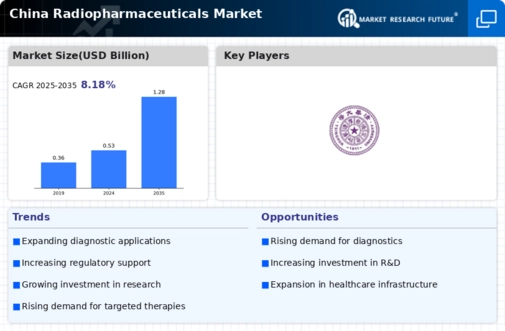
The rising incidence of cancer in China is a pivotal driver for the china radiopharmaceuticals market. According to the National Cancer Center of China, cancer cases are projected to reach approximately 4.6 million by 2025. This alarming trend necessitates advanced diagnostic and therapeutic solutions, which radiopharmaceuticals provide. The growing prevalence of various cancers, including lung, breast, and colorectal cancers, underscores the urgent need for effective imaging and treatment options. As healthcare providers seek to enhance patient outcomes, the demand for radiopharmaceuticals is likely to surge, thereby propelling market growth. Furthermore, the integration of radiopharmaceuticals in personalized medicine approaches may further stimulate the market, as tailored therapies become increasingly essential in oncology. Thus, the increasing incidence of cancer serves as a significant catalyst for the expansion of the china radiopharmaceuticals market.
Government Initiatives and Funding
Government initiatives and funding play a crucial role in shaping the china radiopharmaceuticals market. The Chinese government has been actively promoting the development of the healthcare sector, particularly in the field of nuclear medicine. Policies aimed at enhancing research and development in radiopharmaceuticals have been implemented, with substantial financial support allocated to relevant projects. For instance, the National Health Commission has outlined plans to improve the availability of radiopharmaceuticals in hospitals across the country. This commitment to funding not only fosters innovation but also encourages collaboration between public and private sectors. As a result, the market is likely to witness an influx of new products and technologies, enhancing the overall landscape of the china radiopharmaceuticals market. The sustained government backing is expected to create a favorable environment for growth and investment in this sector.
Aging Population and Healthcare Needs
The aging population in China is a significant driver of the china radiopharmaceuticals market. As the demographic landscape shifts, the proportion of elderly individuals is expected to rise dramatically, leading to an increased prevalence of age-related diseases, including cancer and cardiovascular conditions. The World Health Organization estimates that by 2050, the number of people aged 60 and older in China will exceed 480 million. This demographic shift necessitates enhanced healthcare services, including advanced diagnostic and therapeutic options provided by radiopharmaceuticals. The growing healthcare needs of the elderly population are likely to stimulate demand for radiopharmaceuticals, as these products offer effective solutions for early detection and treatment. Consequently, the aging population serves as a critical factor influencing the expansion of the china radiopharmaceuticals market.
Technological Innovations in Radiopharmaceuticals
Technological innovations are transforming the landscape of the china radiopharmaceuticals market. Advances in imaging techniques, such as positron emission tomography (PET) and single-photon emission computed tomography (SPECT), have significantly improved the accuracy and efficiency of diagnostics. The development of novel radiotracers and targeted therapies is also gaining momentum, enhancing the therapeutic efficacy of radiopharmaceuticals. For instance, the introduction of new isotopes and radiolabeling techniques has expanded the range of applications for radiopharmaceuticals in oncology and cardiology. As these technologies continue to evolve, they are likely to drive market growth by offering healthcare providers more effective tools for diagnosis and treatment. Moreover, the integration of artificial intelligence in radiopharmaceutical development may further streamline processes, leading to faster and more reliable outcomes in the china radiopharmaceuticals market.
Rising Awareness and Acceptance of Nuclear Medicine
Rising awareness and acceptance of nuclear medicine among healthcare professionals and patients are driving the china radiopharmaceuticals market. Educational initiatives and outreach programs have been instrumental in promoting the benefits of radiopharmaceuticals for diagnosis and treatment. As healthcare providers become more familiar with the advantages of nuclear medicine, including its non-invasive nature and precision, the adoption of radiopharmaceuticals is likely to increase. Furthermore, patient acceptance is growing as individuals seek more effective and less invasive treatment options. The increasing recognition of the role of radiopharmaceuticals in personalized medicine and targeted therapies is also contributing to this trend. As awareness continues to rise, the market for radiopharmaceuticals in China is expected to expand, reflecting a broader acceptance of innovative healthcare solutions.