Growing Demand for Diagnostic Imaging
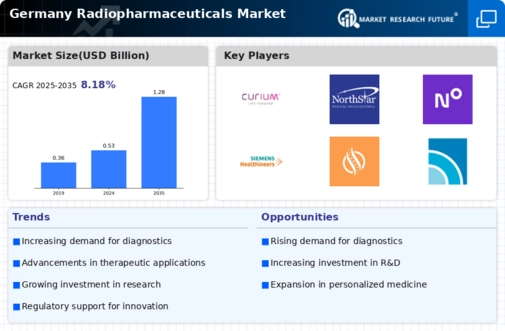
The increasing prevalence of chronic diseases in Germany is driving the demand for advanced diagnostic imaging techniques. Radiopharmaceuticals play a crucial role in this sector, as they enhance the accuracy of imaging modalities such as PET and SPECT. In 2025, the market for diagnostic imaging in Germany was valued at approximately 2.5 billion euros, with radiopharmaceuticals accounting for a significant share. This trend is expected to continue, as healthcare providers increasingly adopt these technologies to improve patient outcomes. The Germany radiopharmaceuticals market is thus poised for growth, fueled by the need for early disease detection and monitoring.
Investment in Research and Development
Germany has a robust framework for research and development in the healthcare sector, particularly in radiopharmaceuticals. The government and private entities are investing heavily in innovative research initiatives aimed at developing new radiopharmaceutical agents. In 2025, R&D expenditure in the German healthcare sector reached around 10 billion euros, with a notable portion allocated to radiopharmaceuticals. This investment is likely to foster advancements in the Germany radiopharmaceuticals market, leading to the introduction of novel therapies and diagnostic tools that could enhance treatment efficacy and patient care.
Regulatory Framework Supporting Innovation
Germany's regulatory environment is conducive to the growth of the radiopharmaceuticals market. The Federal Institute for Drugs and Medical Devices (BfArM) and the Paul-Ehrlich-Institut (PEI) provide a structured framework for the approval and monitoring of radiopharmaceuticals. This regulatory support is essential for ensuring the safety and efficacy of new products entering the market. In 2025, the approval process for radiopharmaceuticals was streamlined, reducing the time to market for innovative therapies. This regulatory framework is likely to bolster the Germany radiopharmaceuticals market, encouraging companies to invest in new product development.
Collaboration Between Industry and Academia
The collaboration between academic institutions and the radiopharmaceutical industry in Germany is fostering innovation and development. Universities and research centers are increasingly partnering with pharmaceutical companies to advance the science of radiopharmaceuticals. This synergy is evident in various projects aimed at developing targeted therapies and improving imaging techniques. In 2025, over 30 collaborative projects were reported in the Germany radiopharmaceuticals market, highlighting the potential for breakthroughs that could enhance diagnostic accuracy and treatment outcomes.
Aging Population and Increased Healthcare Needs
Germany's demographic shift towards an aging population is contributing to a heightened demand for healthcare services, including radiopharmaceuticals. As the elderly population grows, the incidence of age-related diseases such as cancer and cardiovascular conditions is expected to rise. In 2025, approximately 22% of the German population was aged 65 and older, indicating a substantial market for radiopharmaceuticals. This demographic trend is likely to drive the Germany radiopharmaceuticals market, as healthcare providers seek effective diagnostic and therapeutic solutions tailored to the needs of older patients.