Urban Lifestyle Changes
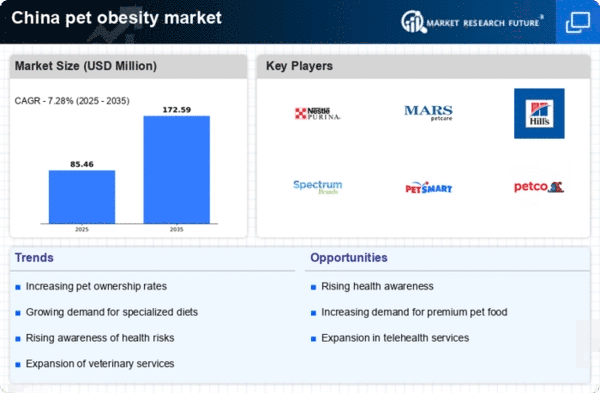
The pet obesity market in China is significantly influenced by urban lifestyle changes. As urbanization continues, many pet owners lead busier lives, often resulting in less time for physical activities with their pets. This sedentary lifestyle contributes to the rising incidence of obesity among pets. Reports suggest that nearly 30% of pets in urban areas are classified as overweight or obese. This situation prompts pet owners to seek out convenient solutions, such as specialized pet foods and weight management programs. The market is likely to respond by offering more products tailored to address the needs of overweight pets, thus fostering growth in the pet obesity market.
Rising Pet Ownership Rates
The pet obesity market in China is experiencing growth due to the increasing rates of pet ownership. As more households adopt pets, particularly dogs and cats, the demand for pet care products and services rises. Recent statistics indicate that pet ownership in urban areas has surged, with approximately 60% of households owning at least one pet. This trend correlates with a growing awareness of pet health, leading to a higher demand for specialized diets and weight management solutions. Consequently, the pet obesity market is likely to expand as pet owners seek to maintain their pets' health and well-being, thereby driving sales of weight control foods and veterinary services.
Growing Pet Health Awareness
The pet obesity market in China is propelled by a growing awareness of pet health among owners. Educational campaigns and veterinary advice have led to increased recognition of the risks associated with obesity in pets, such as diabetes and joint problems. Surveys indicate that over 70% of pet owners are now more conscious of their pets' dietary needs and exercise requirements. This heightened awareness is likely to result in a shift towards healthier pet food options and weight management solutions. As pet owners become more informed, the demand for products that promote a healthy lifestyle for pets is expected to rise, further stimulating the pet obesity market.
Increased Availability of Pet Products
The pet obesity market in China benefits from the increased availability of pet products, particularly those aimed at weight management. Retailers and online platforms are expanding their offerings, providing a wide range of specialized diets, treats, and supplements designed to combat obesity in pets. Recent data indicates that the market for pet food in China is projected to reach approximately $30 billion by 2026, with a notable segment dedicated to weight control products. This accessibility encourages pet owners to invest in healthier options for their pets, thereby driving growth in the pet obesity market as they become more proactive in managing their pets' weight.
Influence of Social Media and Pet Influencers
The pet obesity market in China is increasingly shaped by the influence of social media and pet influencers. Platforms such as Weibo and Douyin have become vital channels for disseminating information about pet health and wellness. Pet influencers often promote healthy lifestyles for pets, including proper nutrition and exercise routines. This trend appears to resonate with pet owners, leading to a greater emphasis on maintaining their pets' health. As a result, the market for weight management products is likely to see growth, as pet owners are encouraged to adopt healthier practices for their pets, driven by the visibility and engagement fostered by social media.