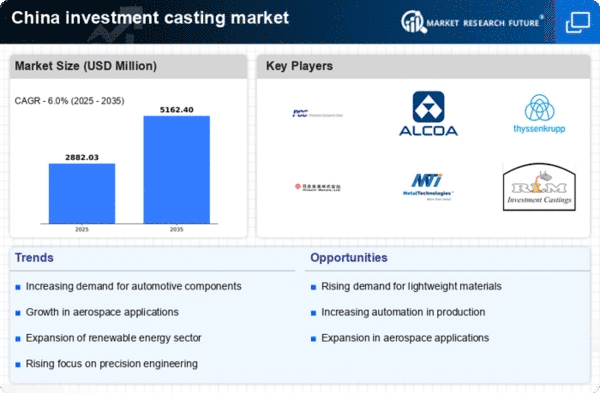
The investment casting market in China is characterized by a competitive landscape that is increasingly shaped by innovation, strategic partnerships, and a focus on sustainability. Key players are actively pursuing growth through technological advancements and regional expansions, which are critical in meeting the rising demand across various sectors, including aerospace, automotive, and industrial applications. Companies such as Precision Castparts Corp (US), Alcoa Corporation (US), and Thyssenkrupp AG (DE) are at the forefront, leveraging their extensive experience and resources to enhance their market positions. Their strategies, which include mergers and acquisitions, digital transformation initiatives, and localized manufacturing, collectively contribute to a dynamic competitive environment that is both fragmented and concentrated in certain segments.In terms of business tactics, companies are increasingly localizing manufacturing to reduce lead times and optimize supply chains. This approach not only enhances operational efficiency but also aligns with the growing emphasis on sustainability and reducing carbon footprints. The market structure appears moderately fragmented, with several players vying for market share while a few larger entities dominate key segments. The collective influence of these key players is significant, as they set industry standards and drive innovation through competitive practices.
In October Precision Castparts Corp (US) announced a strategic partnership with a leading Chinese aerospace manufacturer to develop advanced casting technologies tailored for the aerospace sector. This collaboration is poised to enhance their product offerings and strengthen their foothold in the rapidly growing aerospace market in China. The strategic importance of this partnership lies in its potential to leverage local expertise and resources, thereby accelerating innovation and reducing time-to-market for new products.
In September Alcoa Corporation (US) unveiled a new initiative aimed at integrating AI-driven processes into their investment casting operations. This move is expected to optimize production efficiency and reduce waste, aligning with the company's sustainability goals. The strategic significance of this initiative is underscored by the increasing demand for environmentally friendly manufacturing practices, which are becoming a key differentiator in the market.
In August Thyssenkrupp AG (DE) expanded its investment casting capabilities by acquiring a local firm specializing in precision casting technologies. This acquisition not only enhances Thyssenkrupp's technological capabilities but also provides access to a broader customer base in China. The strategic importance of this acquisition lies in its potential to create synergies that improve operational efficiencies and expand market reach.
As of November the competitive trends in the investment casting market are increasingly defined by digitalization, sustainability, and the integration of advanced technologies such as AI. Strategic alliances are playing a crucial role in shaping the current landscape, enabling companies to pool resources and expertise to drive innovation. Looking ahead, competitive differentiation is likely to evolve from traditional price-based competition to a focus on technological advancements, supply chain reliability, and sustainable practices. This shift indicates a growing recognition that long-term success will depend on the ability to innovate and adapt to changing market demands.