Request Free Sample ×

Kindly complete the form below to receive a free sample of this Report

* Please use a valid business email

Leading companies partner with us for data-driven Insights

clients tt-cursor
Hero Background

Central Pontine Myelinolysis Market

ID: MRFR/Pharma/3161-HCR
80 Pages
Vikita Thakur
Last Updated: April 06, 2026

Central Pontine Myelinolysis Market Research Report By Type (Acute Central Pontine Myelinolysis, Chronic Central Pontine Myelinolysis, Mixed Central Pontine Myelinolysis), By Diagnosis Method (Magnetic Resonance Imaging, Computed Tomography, Neurological Examination, Electromyography), By Treatment Type (Pharmacological Therapy, Physical Therapy, Occupational Therapy, Rehabilitation Programs), By End User (Hospitals, Clinics, Rehabilitation Centers) andBy Regional (North America, Europe, South America, Asia Pacific, Middle East and Africa) - Growth & Industry Forecast 2025 To 2035

Share:
Download PDF ×

We do not share your information with anyone. However, we may send you emails based on your report interest from time to time. You may contact us at any time to opt-out.

Central Pontine Myelinolysis Market Infographic
Purchase Options

Central Pontine Myelinolysis Market Summary

As per Market Research Future analysis, the Central Pontine Myelinolysis Market Size was estimated at 80.0 USD Million in 2024. The Central Pontine Myelinolysis industry is projected to grow from USD 84.71 Million in 2025 to USD 150.14 Million by 2035, exhibiting a compound annual growth rate (CAGR) of 5.89% during the forecast period 2025 - 2035

Key Market Trends & Highlights

The Central Pontine Myelinolysis Market is poised for growth driven by advancements in treatment and rising awareness.

  • North America remains the largest market for Central Pontine Myelinolysis Market, reflecting a robust healthcare infrastructure.
  • The Asia-Pacific region is emerging as the fastest-growing market, fueled by increasing healthcare investments and awareness.
  • Acute Central Pontine Myelinolysis Market represents the largest segment, while Chronic Central Pontine Myelinolysis Market is witnessing the fastest growth due to evolving treatment paradigms.
  • Key market drivers include the rising incidence of neurological disorders and enhanced awareness among healthcare professionals.

Market Size & Forecast

2024 Market Size 80.0 (USD Million)
2035 Market Size 150.14 (USD Million)
CAGR (2025 - 2035) 5.89%

Major Players

Roche (CH), Novartis (CH), Bristol-Myers Squibb (US), Pfizer (US), Sanofi (FR), Merck & Co. (US), AstraZeneca (GB), Teva Pharmaceutical Industries (IL), Eli Lilly and Company (US)

Our Impact
Enabled $4.3B Revenue Impact for Fortune 500 and Leading Multinationals
Partnering with 2000+ Global Organizations Each Year
30K+ Citations by Top-Tier Firms in the Industry

Central Pontine Myelinolysis Market Trends

The Central Pontine Myelinolysis Market is currently experiencing a notable evolution, driven by advancements in medical research and increased awareness of neurological disorders. This condition, characterized by the demyelination of nerve fibers in the central pons, has garnered attention due to its complex etiology and potential for severe neurological impairment. As healthcare providers enhance diagnostic capabilities and treatment modalities, the market appears poised for growth. Furthermore, the rising prevalence of conditions that predispose individuals to central pontine myelinolysis, such as chronic alcoholism and rapid correction of hyponatremia, suggests a growing need for effective management strategies. In addition, the Central Pontine Myelinolysis Market is likely influenced by ongoing developments in pharmaceutical interventions and supportive therapies. Research initiatives focusing on neuroprotective agents and rehabilitation techniques may contribute to improved patient outcomes. Moreover, the collaboration between academic institutions and healthcare organizations seems to foster innovation in treatment approaches. As the understanding of this disorder deepens, stakeholders in the market may find opportunities to enhance therapeutic options and improve quality of life for affected individuals. Overall, the landscape of the Central Pontine Myelinolysis Market appears dynamic, with various factors shaping its trajectory in the coming years.

Rising Awareness and Education

There is an increasing emphasis on educating healthcare professionals and the public about central pontine myelinolysis. This trend is likely to enhance early diagnosis and intervention, potentially leading to better patient outcomes.

Advancements in Treatment Modalities

Innovations in treatment options, including neuroprotective therapies and rehabilitation techniques, are emerging. These advancements may provide new avenues for managing central pontine myelinolysis, thereby influencing market dynamics.

Collaborative Research Initiatives

The collaboration between research institutions and healthcare providers appears to be fostering a more profound understanding of central pontine myelinolysis. Such partnerships may lead to the development of novel therapeutic strategies and improved care protocols.

Central Pontine Myelinolysis Market Drivers

Rising Geriatric Population

The rising geriatric population is a significant factor influencing the Central Pontine Myelinolysis Market. As individuals age, they are more susceptible to various health issues, including those that can lead to electrolyte imbalances and subsequent demyelination. The World Health Organization has projected that the proportion of the global population aged 60 years and older will double by 2050, which suggests a growing patient base for Central Pontine Myelinolysis Market. This demographic shift is likely to increase the demand for healthcare services and interventions aimed at managing age-related neurological conditions. Consequently, pharmaceutical companies and healthcare providers may focus more on developing targeted therapies for this vulnerable population, thereby driving market growth.

Growing Investment in Neurology Research

Growing investment in neurology research is anticipated to propel the Central Pontine Myelinolysis Market forward. Increased funding from both public and private sectors is being directed towards understanding the pathophysiology of demyelinating diseases. This influx of resources is likely to facilitate the development of novel therapeutic agents and treatment protocols. Research initiatives focusing on the mechanisms of Central Pontine Myelinolysis Market are expected to yield insights that could lead to more effective management strategies. Furthermore, collaborations between academic institutions and pharmaceutical companies are becoming more common, which may accelerate the translation of research findings into clinical practice. This trend indicates a robust future for the market as new therapies emerge.

Increasing Incidence of Neurological Disorders

The rising incidence of neurological disorders, particularly those leading to electrolyte imbalances, appears to be a primary driver for the Central Pontine Myelinolysis Market. Conditions such as chronic alcoholism, liver disease, and severe malnutrition are known risk factors for this demyelinating condition. Recent data indicates that the prevalence of these underlying conditions is on the rise, which could lead to an increase in cases of Central Pontine Myelinolysis Market. As healthcare systems adapt to this growing challenge, there is a heightened focus on developing effective treatment protocols and preventive measures. This trend suggests that the market for Central Pontine Myelinolysis Market may experience significant growth as healthcare providers seek to address the needs of an expanding patient population.

Technological Advancements in Diagnostic Tools

Technological advancements in diagnostic tools are likely to enhance the detection and management of Central Pontine Myelinolysis Market, thereby influencing the Central Pontine Myelinolysis Market. Innovations such as advanced MRI techniques and biomarker identification are improving the accuracy of diagnoses. Enhanced imaging capabilities allow for earlier detection of demyelination, which is crucial for timely intervention. As diagnostic tools become more sophisticated, healthcare providers may be better equipped to identify at-risk patients and implement preventive strategies. This could lead to an increase in demand for related therapeutic interventions, thereby expanding the market. The integration of artificial intelligence in diagnostic processes may further streamline patient management, potentially leading to improved outcomes.

Enhanced Awareness Among Healthcare Professionals

Enhanced awareness among healthcare professionals regarding Central Pontine Myelinolysis Market is expected to positively impact the Central Pontine Myelinolysis Market. As medical education evolves, there is a growing emphasis on recognizing and managing rare neurological conditions. Training programs and continuing medical education initiatives are increasingly incorporating information about demyelinating diseases, which may lead to earlier diagnosis and treatment. This heightened awareness could result in improved patient outcomes and a greater willingness among healthcare providers to explore innovative treatment options. As more professionals become knowledgeable about Central Pontine Myelinolysis Market, the market may see an uptick in demand for specialized therapies and interventions, reflecting a proactive approach to patient care.

Market Segment Insights

By Type: Acute Central Pontine Myelinolysis (Largest) vs. Chronic Central Pontine Myelinolysis (Fastest-Growing)

In the Central Pontine Myelinolysis market, Acute Central Pontine Myelinolysis holds a significant share, primarily driven by the immediate medical response required for acute presentations. This type is often diagnosed in patients who have undergone rapid changes in sodium levels, leading to demyelination. In contrast, Chronic Central Pontine Myelinolysis, while traditionally smaller, is emerging due to increased awareness and diagnosis of chronic neurological conditions, potentially gaining ground in market share.

Acute Central Pontine Myelinolysis (Dominant) vs. Chronic Central Pontine Myelinolysis (Emerging)

Acute Central Pontine Myelinolysis is characterized by sudden onset symptoms and requires urgent medical care, making it a dominant segment in the market. The rapid recognition of symptoms typically results in immediate intervention, which underscores its prominence. In contrast, Chronic Central Pontine Myelinolysis has lately gained attention as healthcare professionals enhance their understanding of chronic neurological conditions. Its gradual prevalence highlights changing diagnostic practices and the importance of long-term patient education, positioning it as an emerging segment in this market.

By Diagnosis Method: Magnetic Resonance Imaging (Largest) vs. Computed Tomography (Fastest-Growing)

In the Central Pontine Myelinolysis market, the Diagnosis Method segment is characterized by a diverse range of techniques, with Magnetic Resonance Imaging (MRI) leading in market share due to its non-invasive nature and ability to provide detailed images of brain structures. Computed Tomography (CT) follows, known for its speed and accessibility, making it a preferred choice in emergency settings. Neurological Examination and Electromyography, while essential for clinical assessment, comprise a smaller portion of the market share but still play critical roles.

Magnetic Resonance Imaging (Dominant) vs. Computed Tomography (Emerging)

Magnetic Resonance Imaging (MRI) is the dominant diagnostic method in the Central Pontine Myelinolysis market, favored for its high sensitivity in detecting demyelination and offering superior imaging without radiation exposure. It is extensively utilized in clinical practice for its comprehensive assessment capabilities. On the other hand, Computed Tomography (CT) is emerging as a faster diagnostic tool, crucial in high-paced clinical environments. CT scans are particularly effective in ruling out other conditions quickly, allowing for prompt treatment decisions. These two methods complement each other as they cater to different clinical needs, and ongoing advancements in technology are likely to enhance their applications further.

By Treatment Type: Pharmacological Therapy (Largest) vs. Rehabilitation Programs (Fastest-Growing)

In the Central Pontine Myelinolysis Market, the distribution of treatment types reveals a strong preference for Pharmacological Therapy, which holds the largest share among treatment modalities. This segment benefits from established protocols and effective medication regimens that address symptom management and recovery. On the other hand, Rehabilitation Programs are gaining traction and emerging as a vital approach, reflecting a shift towards holistic care and functional recovery in affected patients. Growth trends in the Central Pontine Myelinolysis treatment market are driven by an increasing understanding of the condition's pathology and the importance of comprehensive care. As the population ages and the incidence of neurological disorders rises, the demand for diverse treatment options is expected to grow. The integration of advanced therapeutic techniques within Rehabilitation Programs is also contributing to their rapid adoption, as healthcare providers seek to optimize recovery outcomes for patients.

Pharmacological Therapy (Dominant) vs. Occupational Therapy (Emerging)

Pharmacological Therapy remains the dominant treatment modality in the Central Pontine Myelinolysis Market, characterized by its reliance on medications that effectively manage symptoms and support neurological recovery. This segment is well-established, benefiting from extensive research and clinical validation that continually enhance its efficacy. In contrast, Occupational Therapy is emerging as a vital segment, focusing on enabling patients to regain independence and improve their quality of life. This service emphasizes personalized approaches and functional training, making it increasingly relevant in modern treatment plans. As caregivers and clinicians recognize the importance of daily functioning in recovery, Occupational Therapy is poised to gain more attention and investment, complementing traditional pharmacological methods.

By End User: Hospitals (Largest) vs. Rehabilitation Centers (Fastest-Growing)

The Central Pontine Myelinolysis Market displays a diverse distribution of end user segments, with hospitals holding the largest share due to their comprehensive facilities and expertise in managing complex neurological conditions. Clinics follow, catering to patients with milder manifestations or follow-up treatments. Rehabilitation centers, although currently a smaller segment, are witnessing significant growth as they become essential for patients recovering from neurological impairments associated with myelinolysis.

Hospitals (Dominant) vs. Rehabilitation Centers (Emerging)

Hospitals play a dominant role in the Central Pontine Myelinolysis Market as they provide critical care, neurology specialists, and advanced medical technologies essential for effective treatment. They are equipped to handle severe cases, making them the preferred choice for initial diagnosis and management. On the other hand, rehabilitation centers are emerging as vital components, focusing on post-hospitalization care and recovery therapies. Their growth is driven by increasing awareness of neurological rehabilitation, highlighting their importance for patients transitioning from acute care to recovery, thus representing a significant shift in patient care dynamics.

Get more detailed insights about Central Pontine Myelinolysis Market

Regional Insights

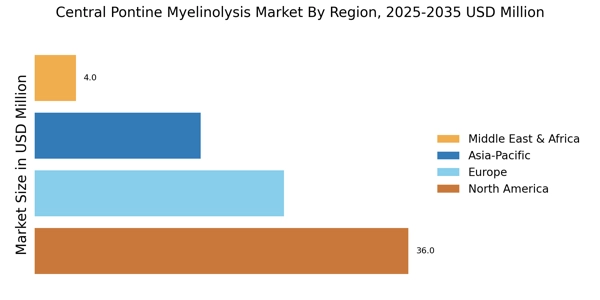
North America : Leading Market for Innovation

North America is the largest market for Central Pontine Myelinolysis Market treatments, holding approximately 45% of the global market share. The region benefits from advanced healthcare infrastructure, high prevalence of neurological disorders, and significant investments in research and development. Regulatory support from agencies like the FDA further catalyzes market growth, ensuring timely access to innovative therapies. The United States is the primary contributor, with a robust presence of key players such as Pfizer, Merck & Co., and Bristol-Myers Squibb. Canada also plays a significant role, focusing on improving healthcare access and treatment options. The competitive landscape is characterized by ongoing collaborations and partnerships among pharmaceutical companies, enhancing the availability of effective treatments.

Europe : Regulatory Support Drives Growth

Europe is the second-largest market for Central Pontine Myelinolysis Market, accounting for approximately 30% of the global market share. The region's growth is driven by increasing awareness of neurological disorders and supportive regulatory frameworks from the European Medicines Agency (EMA). Countries like Germany and France are leading the charge, with a focus on innovative treatment solutions and patient access initiatives. Germany stands out as a key player, with significant contributions from companies like Roche and Novartis. The competitive landscape is marked by a mix of established pharmaceutical giants and emerging biotech firms, fostering innovation. Collaborative efforts among stakeholders aim to enhance treatment options and improve patient outcomes across the region.

Asia-Pacific : Emerging Market with Potential

The Asia-Pacific region is witnessing rapid growth in the Central Pontine Myelinolysis Market, driven by increasing healthcare expenditure and rising awareness of neurological conditions. This region holds approximately 20% of the global market share, with countries like China and India leading the way. The growing aging population and advancements in healthcare infrastructure are significant demand drivers, supported by favorable government initiatives. China is emerging as a key market, with substantial investments in healthcare and a focus on improving treatment accessibility. India is also gaining traction, with a growing number of pharmaceutical companies entering the market. The competitive landscape is evolving, with both local and international players striving to meet the increasing demand for effective therapies.

Middle East and Africa : Untapped Market Opportunities

The Middle East and Africa region represents an untapped market for Central Pontine Myelinolysis Market treatments, holding approximately 5% of the global market share. The growth in this region is primarily driven by increasing healthcare investments and a rising prevalence of neurological disorders. Countries like South Africa and the UAE are focusing on enhancing healthcare infrastructure and access to treatments, which are crucial for market expansion. South Africa is a key player, with efforts to improve healthcare delivery and access to innovative therapies. The competitive landscape is characterized by a mix of local and international pharmaceutical companies, working to address the unique healthcare challenges in the region. Collaborative initiatives are essential for fostering growth and improving patient outcomes.

Central Pontine Myelinolysis Market Regional Image

Key Players and Competitive Insights

The Global Central Pontine Myelinolysis Market is characterized by a complex landscape of competition shaped by various factors such as the prevalence of neurological disorders, demand for effective treatment options, and advancements in pharmaceutical research and development. As healthcare practitioners strive to provide better clinical outcomes for patients suffering from this neurological condition, market players are focusing on innovation, strategic collaborations, and the development of targeted therapies. Competitive dynamics are influenced by a mix of established pharmaceutical giants and emerging players, each leveraging their strengths to capture market share. Ongoing research and a better understanding of the disease are driving investments and resource allocations in this domain, enabling companies to enhance their product pipelines and expand their reach in the global market. Pfizer enjoys a robust presence in the Global Central Pontine Myelinolysis Market, driven by its commitment to pharmaceutical excellence and innovation. Renowned for its extensive research capabilities, Pfizer has been proactive in uncovering novel therapeutic solutions aimed at addressing central nervous system disorders, including conditions related to myelinolysis. With a solid portfolio of neurology-related products, Pfizer benefits from its reputation for quality and reliability in the pharmaceutical sector. The company's strong pipeline, fueled by ongoing clinical trials, positions it well to capitalize on emerging trends and unmet medical needs within the market. Additionally, Pfizer’s global distribution networks and strategic partnerships enable it to effectively reach healthcare providers and patients in diverse regions, solidifying its competitive edge. Takeda Pharmaceutical has established itself as a significant player in the Global Central Pontine Myelinolysis Market, with a focus on addressing unmet medical needs through innovative therapies. The company is recognized for its comprehensive approach to neurological disorders, which is reflected in its research efforts and product offerings aimed at improving outcomes for patients. Key products and services are designed to target various aspects of neurological health, showcasing Takeda's commitment to enhancing patient quality of life. The company's strengths lie not only in its robust R&D capabilities but also in its strategic mergers and acquisitions that have bolstered its product portfolio and market presence. Through these strategic moves, Takeda seeks to gain access to novel treatments and technologies that align with its mission in the global healthcare landscape. Additionally, its well-established distribution channels ensure that its innovative solutions reach patients effectively, further enhancing Takeda's position in the competitive arena of the Global Central Pontine Myelinolysis Market.

Key Companies in the Central Pontine Myelinolysis Market include

Industry Developments

The Global Central Pontine Myelinolysis Market has seen significant developments recently as pharmaceutical companies explore innovative treatment options.

Notably, in September 2023, AbbVie announced advancements in their clinical trials aimed at addressing central pontine myelinolysis, with promising preliminary results indicating potential for new therapies. Pfizer has also been active, expanding its research initiatives in neurological disorders, thereby increasing their footprint in this specialized market.

In terms of mergers and acquisitions, in August 2023, Gilead Sciences completed its acquisition of a smaller biotech firm focusing on neurodegenerative diseases, which complements their existing portfolio and strategic direction; this move is anticipated to enhance their capabilities in the central nervous system therapeutics sector.

Market valuations for companies such as Roche and Novartis have seen upward trends due to their ongoing Research and Development investments, positively impacting their market positions and investor confidence.

Over the last two to three years, the market has witnessed steady growth attributed to advancements in medical research and an increasing focus on neurological disorders, contributing to heightened awareness and demand for effective treatment solutions.

Future Outlook

Central Pontine Myelinolysis Market Future Outlook

The Central Pontine Myelinolysis Market is projected to grow at a 5.89% CAGR from 2025 to 2035, driven by advancements in diagnostic technologies and increasing awareness of neurological disorders.

New opportunities lie in:

  • Development of targeted therapies for Central Pontine Myelinolysis Market patients.
  • Expansion of telemedicine services for remote patient monitoring.
  • Investment in educational programs for healthcare professionals on early diagnosis.

By 2035, the market is expected to exhibit robust growth and enhanced treatment options.

Market Segmentation

Central Pontine Myelinolysis Market Type Outlook

  • Acute Central Pontine Myelinolysis
  • Chronic Central Pontine Myelinolysis
  • Mixed Central Pontine Myelinolysis

Central Pontine Myelinolysis Market End User Outlook

  • Hospitals
  • Clinics
  • Rehabilitation Centers

Central Pontine Myelinolysis Market Treatment Type Outlook

  • Pharmacological Therapy
  • Physical Therapy
  • Occupational Therapy
  • Rehabilitation Programs

Central Pontine Myelinolysis Market Diagnosis Method Outlook

  • Magnetic Resonance Imaging
  • Computed Tomography
  • Neurological Examination
  • Electromyography

Report Scope

MARKET SIZE 2024 80.0(USD Million)
MARKET SIZE 2025 84.71(USD Million)
MARKET SIZE 2035 150.14(USD Million)
COMPOUND ANNUAL GROWTH RATE (CAGR) 5.89% (2025 - 2035)
REPORT COVERAGE Revenue Forecast, Competitive Landscape, Growth Factors, and Trends
BASE YEAR 2024
Market Forecast Period 2025 - 2035
Historical Data 2019 - 2024
Market Forecast Units USD Million
Key Companies Profiled Roche (CH), Novartis (CH), Bristol-Myers Squibb (US), Pfizer (US), Sanofi (FR), Merck & Co. (US), AstraZeneca (GB), Teva Pharmaceutical Industries (IL), Eli Lilly and Company (US)
Segments Covered Type, Diagnosis Method, Treatment Type, End User, Regional
Key Market Opportunities Advancements in neuroprotective therapies present growth potential in the Central Pontine Myelinolysis Market.
Key Market Dynamics Rising demand for effective treatment options drives innovation and competition in the Central Pontine Myelinolysis market.
Countries Covered North America, Europe, APAC, South America, MEA

Market Highlights

FAQs

What is the projected market valuation for Central Pontine Myelinolysis by 2035?

The projected market valuation for Central Pontine Myelinolysis is expected to reach 150.14 USD Million by 2035.

What was the overall market valuation for Central Pontine Myelinolysis in 2024?

The overall market valuation for Central Pontine Myelinolysis was 80.0 USD Million in 2024.

What is the expected CAGR for the Central Pontine Myelinolysis Market during the forecast period?

The expected CAGR for the Central Pontine Myelinolysis Market from 2025 to 2035 is 5.89%.

Which companies are considered key players in the Central Pontine Myelinolysis Market?

Key players in the Central Pontine Myelinolysis Market include Roche, Novartis, Bristol-Myers Squibb, Pfizer, Sanofi, Merck & Co., AstraZeneca, Teva Pharmaceutical Industries, and Eli Lilly and Company.

What are the market segments for Central Pontine Myelinolysis based on type?

The market segments based on type include Acute Central Pontine Myelinolysis, Chronic Central Pontine Myelinolysis, and Mixed Central Pontine Myelinolysis, with valuations ranging from 25.0 to 55.0 USD Million.

What diagnostic methods are utilized in the Central Pontine Myelinolysis Market?

Diagnostic methods in the Central Pontine Myelinolysis Market include Magnetic Resonance Imaging, Computed Tomography, Neurological Examination, and Electromyography, with valuations from 15.0 to 60.0 USD Million.

What treatment types are available for Central Pontine Myelinolysis?

Available treatment types for Central Pontine Myelinolysis encompass Pharmacological Therapy, Physical Therapy, Occupational Therapy, and Rehabilitation Programs, with valuations between 15.0 and 60.0 USD Million.

Which end users are involved in the Central Pontine Myelinolysis Market?

End users in the Central Pontine Myelinolysis Market include Hospitals, Clinics, and Rehabilitation Centers, with valuations ranging from 24.0 to 60.0 USD Million.

How does the market for Acute Central Pontine Myelinolysis compare to Chronic and Mixed types?

The market for Acute Central Pontine Myelinolysis is valued between 30.0 and 55.0 USD Million, which appears higher than Chronic and Mixed types, valued between 25.0 and 50.14 USD Million.

What trends are anticipated in the Central Pontine Myelinolysis Market from 2025 to 2035?

Trends anticipated in the Central Pontine Myelinolysis Market from 2025 to 2035 suggest a steady growth trajectory, driven by advancements in treatment and diagnostic technologies.

Author
Author
Author Profile
Vikita Thakur LinkedIn
Senior Research Analyst
She holds an experience of about 5+ years in market research and business consulting projects for sectors such as life sciences, medical devices, and healthcare IT. She possesses a robust background in data analysis, market estimation, competitive intelligence, pipeline analysis market trend identification, and consumer behavior insights. Her expertise lies in technical Sales support, client interaction and project management, designing and implementing market research studies, conducting competitive analysis, and synthesizing complex data into actionable recommendations that drive business growth.
Co-Author
Co-Author Profile
Rahul Gotadki LinkedIn
Research Manager
He holds an experience of about 9+ years in Market Research and Business Consulting, working under the spectrum of Life Sciences and Healthcare domains. Rahul conceptualizes and implements a scalable business strategy and provides strategic leadership to the clients. His expertise lies in market estimation, competitive intelligence, pipeline analysis, customer assessment, etc.
Leave a Comment
Download Free Sample

Kindly complete the form below to receive a free sample of this Report

Compare Licence

×
Features License Type
Single User Multiuser License Enterprise User
Price $4,950 $5,950 $7,250
Maximum User Access Limit 1 User Upto 10 Users Unrestricted Access Throughout the Organization
Free Customization
Direct Access to Analyst
Deliverable Format
Platform Access
Discount on Next Purchase 10% 15% 15%
Printable Versions