×
Request Free Sample ×

Kindly complete the form below to receive a free sample of this Report

* Please use a valid business email

Leading companies partner with us for data-driven Insights

clients tt-cursor
Hero Background

Canada Video Streaming Software Market

ID: MRFR/ICT/61559-HCR
200 Pages
Aarti Dhapte
February 2026

Canada Video Streaming Software Market Size, Share and Research Report: By Component (Transcoding & Processing, Video Management, Video Delivery & Distribution, Video Security) and By Streaming Type (Live, Video-On-Demand)- Industry Forecast to 2035

Share:
Download PDF ×

We do not share your information with anyone. However, we may send you emails based on your report interest from time to time. You may contact us at any time to opt-out.

Canada Video Streaming Software Market Infographic
Purchase Options

Canada Video Streaming Software Market Summary

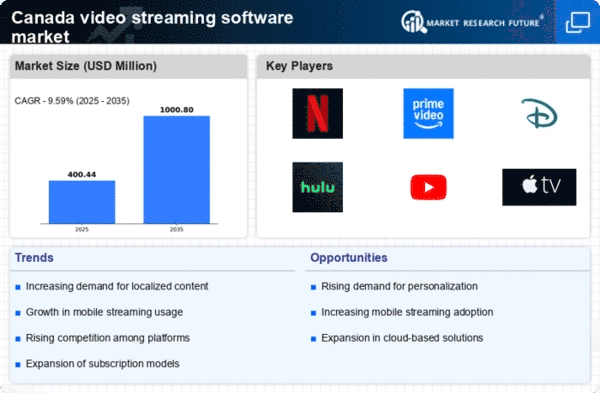
As per Market Research Future analysis, the Canada video streaming software market was estimated at 365.4 USD Million in 2024. The Canada video streaming-software market is projected to grow from 400.44 USD Million in 2025 to 1000.8 USD Million by 2035, exhibiting a compound annual growth rate (CAGR) of 9.5% during the forecast period 2025 - 2035

Key Market Trends & Highlights

The Canada video streaming software market is experiencing robust growth driven by technological advancements and changing consumer preferences.

  • The largest segment in the Canada video streaming-software market is subscription-based services, reflecting a shift towards recurring revenue models.
  • Mobile optimization and accessibility are becoming increasingly critical as more users access content via smartphones and tablets.
  • The fastest-growing segment is ad-supported video on demand (AVOD), indicating a rising interest in free content options.
  • Key market drivers include rising internet penetration and increased mobile device usage, which are fueling demand for diverse streaming options.

Market Size & Forecast

2024 Market Size 365.4 (USD Million)
2035 Market Size 1000.8 (USD Million)
CAGR (2025 - 2035) 9.59%

Major Players

Netflix (US), Amazon Prime Video (US), Disney+ (US), Hulu (US), YouTube (US), Apple TV+ (US), HBO Max (US), Tencent Video (CN), iQIYI (CN)

Our Impact
Enabled $4.3B Revenue Impact for Fortune 500 and Leading Multinationals
Partnering with 2000+ Global Organizations Each Year
30K+ Citations by Top-Tier Firms in the Industry

Canada Video Streaming Software Market Trends

The video streaming-software market is currently experiencing a dynamic evolution, driven by the increasing demand for on-demand content and the proliferation of high-speed internet access. As consumers seek more personalized viewing experiences, software solutions are adapting to provide enhanced features such as user-friendly interfaces, advanced recommendation algorithms, and multi-device compatibility. This shift is indicative of a broader trend towards digital consumption, where traditional media consumption patterns are being disrupted. Furthermore, the rise of mobile devices has significantly influenced the way content is consumed, leading to a surge in mobile-optimized streaming solutions. In addition, the competitive landscape of the video streaming-software market is becoming increasingly crowded, with numerous players vying for market share. This competition is fostering innovation, as companies strive to differentiate their offerings through unique features and pricing strategies. The integration of artificial intelligence and machine learning into streaming platforms is also noteworthy, as these technologies enhance content delivery and user engagement. Overall, the video streaming-software market is poised for continued growth, reflecting changing consumer preferences and technological advancements.

Increased Demand for Personalized Content

There is a noticeable trend towards personalized content delivery in the video streaming-software market. Users are increasingly expecting tailored recommendations based on their viewing habits, which encourages software developers to implement sophisticated algorithms that analyze user behavior. This shift not only enhances user satisfaction but also drives engagement, as viewers are more likely to consume content that aligns with their preferences.

Mobile Optimization and Accessibility

The emphasis on mobile optimization is becoming more pronounced within the video streaming-software market. As mobile device usage continues to rise, software solutions are being designed to ensure seamless streaming experiences across various platforms. This trend highlights the importance of accessibility, allowing users to enjoy content anytime and anywhere, thereby expanding the potential audience for streaming services.

Integration of Advanced Technologies

The integration of advanced technologies, such as artificial intelligence and machine learning, is transforming the video streaming-software market. These technologies facilitate improved content delivery and user interaction, enabling platforms to offer features like voice search and enhanced content curation. As these innovations become more prevalent, they are likely to redefine user experiences and expectations in the streaming landscape.

Canada Video Streaming Software Market Drivers

Rising Internet Penetration

The video streaming software market in Canada is experiencing a notable surge due to the increasing penetration of high-speed internet. As of 2025, approximately 90% of Canadian households have access to broadband internet, facilitating seamless streaming experiences. This widespread connectivity enables consumers to access a variety of content on-demand, thereby driving the demand for video streaming software. Furthermore, the Canadian Radio-television and Telecommunications Commission (CRTC) indicates that the average internet speed in Canada has reached 150 Mbps, which supports high-definition streaming. Consequently, the growth in internet accessibility is likely to propel the video streaming-software market, as more users engage with diverse platforms and services, enhancing overall market dynamics.

Increased Mobile Device Usage

The proliferation of mobile devices in Canada is significantly impacting the video streaming software market. As of 2025, over 80% of Canadians own smartphones, and a substantial portion of video content is consumed via mobile applications. This trend indicates a shift in viewing habits, with users increasingly favoring on-the-go access to their favorite shows and movies. Consequently, video streaming software developers are prioritizing mobile optimization to enhance user experience and engagement. The Canadian market is also witnessing the development of innovative mobile applications that leverage advanced features such as offline viewing and personalized recommendations. This growing reliance on mobile devices is likely to drive further growth in the video streaming-software market, as companies strive to meet the demands of mobile-centric consumers.

Emergence of Local Content Providers

The video streaming software market in Canada is being shaped by the emergence of local content providers. In recent years, there has been a marked increase in the number of Canadian streaming platforms that focus on regional content, catering to diverse cultural and linguistic demographics. This trend is supported by government initiatives aimed at promoting Canadian content, which has led to a rise in investment in local productions. As of 2025, local streaming services are capturing an estimated 25% of the market share, indicating a growing preference for homegrown content. This shift not only enriches the content landscape but also fosters competition among providers, ultimately benefiting consumers. The presence of local content providers is expected to continue influencing the video streaming-software market, as they offer unique offerings that resonate with Canadian audiences.

Shift Towards Subscription-Based Models

The video streaming software market in Canada is witnessing a significant shift towards subscription-based revenue models. As of 2025, subscription services account for over 70% of the total revenue generated within the market. This trend is largely driven by consumer preferences for ad-free experiences and exclusive content offerings. Major players in the industry, such as Netflix and Amazon Prime Video, have successfully capitalized on this model, attracting millions of subscribers. Additionally, the Canadian market has seen the emergence of local streaming services that cater to regional content preferences, further diversifying the subscription landscape. This transition to subscription-based models is expected to continue influencing the video streaming-software market, as companies adapt their strategies to meet evolving consumer demands.

Technological Advancements in Streaming Quality

Technological advancements are playing a crucial role in shaping the video streaming software market in Canada. Innovations such as 4K streaming, HDR, and adaptive bitrate streaming are enhancing the quality of video content available to consumers. As of 2025, approximately 40% of Canadian households have access to 4K-capable devices, which is driving demand for high-quality streaming services. Furthermore, the integration of artificial intelligence and machine learning in content delivery systems is optimizing user experiences by providing personalized recommendations and reducing buffering times. These technological improvements are likely to attract more users to the video streaming-software market, as consumers increasingly seek superior viewing experiences. The ongoing evolution of streaming technology is expected to remain a key driver of growth in the market.


Market Segment Insights

By Component: Transcoding & Processing (Largest) vs. Video Delivery & Distribution (Fastest-Growing)

In the Canada video streaming software market, the component segment is prominently characterized by the dominance of Transcoding & Processing, which takes the largest share, followed by Video Management, Video Delivery & Distribution, and Video Security. Each of these components plays a crucial role, but it is Transcoding & Processing that significantly influences market dynamics, showcasing robust demand due to the increasing content consumption trends. Video Delivery & Distribution has emerged as the fastest-growing component, driven by the surge in online streaming and consumer preference for on-demand access. The escalation in internet speeds and the proliferation of Smart TVs also contribute to this growth. As more consumers embrace streaming platforms, the necessity for efficient video management and security solutions rises, further propelling the market forward.

Transcoding & Processing (Dominant) vs. Video Delivery & Distribution (Emerging)

Transcoding & Processing stands as the dominant force within the Canada video streaming-software market due to its crucial role in converting video files into formats suitable for diverse platforms and devices. This component ensures optimized streaming quality, enabling seamless user experiences. In contrast, Video Delivery & Distribution is an emerging player that has garnered attention for its rapid growth, reflecting the increasing adoption of cloud services and the demand for real-time content delivery. As streaming services evolve, both components will remain essential, yet they will cater to different user needs and technological advancements.

By Streaming Type: Video-On-Demand (Largest) vs. Live (Fastest-Growing)

In the Canada video streaming software market, Video-On-Demand (VOD) continues to command the largest share, appealing to consumers desiring flexibility in viewing. This segment leverages the convenience of watching content at their own pace, significantly contributing to the overall market dynamics. Conversely, the Live streaming segment, characterized by its real-time broadcast capabilities, has seen substantial growth in recent years as consumers crave immersive experiences and live interactions. The growth of the Live streaming segment can be attributed to the rising popularity of events, gaming tournaments, and live broadcasting of shows. As more consumers seek to engage with live content, the demand for platforms offering these functionalities has surged. Technological advancements, coupled with increased internet speeds and the proliferation of mobile devices, further drive this trend, making Live streaming one of the most exciting and rapidly evolving areas in the market.

Video-On-Demand: VOD (Dominant) vs. Live Streaming (Emerging)

Video-On-Demand (VOD) is the dominant force in the Canada video streaming-software market, providing users with the ability to access a vast library of content on their terms. Its popularity is fueled by an expansive range of genres and formats, catering to diverse audience preferences. VOD platforms typically offer subscription models or ad-supported options, enabling monetization while enhancing viewer engagement. In contrast, Live streaming represents an emerging segment, offering real-time content that fosters community interaction through chat features and social media integration. The appeal of Live streaming lies in its ability to create a sense of urgency and excitement around events, making it particularly popular among younger audiences and those seeking authentic experiences.

Get more detailed insights about Canada Video Streaming Software Market

Key Players and Competitive Insights

The video streaming-software market exhibits a dynamic competitive landscape characterized by rapid technological advancements and shifting consumer preferences. Key players such as Netflix (US), Amazon Prime Video (US), and Disney+ (US) are at the forefront, each employing distinct strategies to enhance their market presence. Netflix (US) continues to focus on original content production, which has proven effective in attracting and retaining subscribers. Meanwhile, Amazon Prime Video (US) leverages its extensive ecosystem, integrating streaming services with its e-commerce platform to create a seamless user experience. Disney+ (US), on the other hand, capitalizes on its vast library of beloved franchises, appealing to family-oriented audiences. Collectively, these strategies contribute to a competitive environment that is increasingly defined by content quality and user engagement.The market structure appears moderately fragmented, with a mix of established players and emerging platforms vying for consumer attention. Key business tactics include localized content offerings and strategic partnerships aimed at enhancing user experience. For instance, companies are increasingly localizing their content to cater to regional tastes, which not only boosts subscriber growth but also strengthens brand loyalty. The influence of major players is significant, as their operational strategies often set industry standards, compelling smaller competitors to adapt or innovate.

In October Netflix (US) announced a partnership with a leading Canadian production company to create localized content tailored for Canadian audiences. This strategic move is likely to enhance Netflix's appeal in Canada, allowing it to better compete with local streaming services and further solidify its market position. By investing in regional content, Netflix (US) demonstrates its commitment to understanding and catering to diverse viewer preferences, which may lead to increased subscriber retention.

In September Amazon Prime Video (US) launched a new feature that allows users to access exclusive live sports events, a move that could significantly enhance its value proposition. This strategic initiative not only diversifies its content offerings but also positions Amazon Prime Video (US) as a formidable competitor in the sports streaming segment. The integration of live sports is expected to attract a broader audience, potentially increasing subscription rates and viewer engagement.

In August Disney+ (US) expanded its content library by acquiring rights to several popular animated series, further enriching its family-friendly offerings. This acquisition is strategically important as it aligns with Disney's brand identity and strengthens its competitive edge against other platforms. By continuously enhancing its content library, Disney+ (US) aims to maintain its subscriber growth trajectory and reinforce its position as a leader in family-oriented streaming.

As of November current trends in the video streaming-software market indicate a strong emphasis on digitalization, sustainability, and AI integration. Strategic alliances are increasingly shaping the competitive landscape, as companies collaborate to enhance technological capabilities and expand content offerings. Looking ahead, competitive differentiation is likely to evolve, with a shift from price-based competition to a focus on innovation, technology, and supply chain reliability. This transition suggests that companies will need to invest in unique content and advanced technologies to maintain a competitive edge in an ever-evolving market.

Key Companies in the Canada Video Streaming Software Market include

Industry Developments

In April 2025, Amazon Prime Video acquired exclusive Canadian streaming rights for two NHL seasons. This expansion of the platform's sports content allowed Prime Video subscribers in Canada to access live game broadcasts, analyses, and coverage.Rogers Communications and the NHL renewed their 12-year national media rights agreement in early April 2025, which will continue until the 2037–38 season. 

The agreement is valued at CAD 11 billion. This agreement encompasses the Stanley Cup Final, regular-season and playoff games, and special events in all languages, as well as TV, digital, and streaming.Major U.S. streaming services—including Apple, Spotify, Amazon, and Netflix—commenced litigation against Canada's Online Streaming Act (Bill C-11) in the Federal Court of Appeal in June 2025. The law, which was enacted in April 2023 and will be effective from September 2024, mandates that foreign broadcasters with a Canadian revenue exceeding CAD 25 million must contribute 5% of that revenue to support Canadian cultural and news programming.

Future Outlook

Canada Video Streaming Software Market Future Outlook

The Video Streaming Software Market in Canada is projected to grow at a 9.59% CAGR from 2025 to 2035, driven by technological advancements and increasing consumer demand.

New opportunities lie in:

  • Development of AI-driven content recommendation systems
  • Expansion of subscription-based revenue models
  • Integration of interactive features for enhanced user engagement

By 2035, the market is expected to achieve substantial growth and innovation.

Market Segmentation

Canada Video Streaming Software Market Component Outlook

  • Transcoding & Processing
  • Video Management
  • Video Delivery & Distribution
  • Video Security

Canada Video Streaming Software Market Streaming Type Outlook

  • Live
  • Video-On-Demand

Report Scope

MARKET SIZE 2024 365.4(USD Million)
MARKET SIZE 2025 400.44(USD Million)
MARKET SIZE 2035 1000.8(USD Million)
COMPOUND ANNUAL GROWTH RATE (CAGR) 9.59% (2025 - 2035)
REPORT COVERAGE Revenue Forecast, Competitive Landscape, Growth Factors, and Trends
BASE YEAR 2024
Market Forecast Period 2025 - 2035
Historical Data 2019 - 2024
Market Forecast Units USD Million
Key Companies Profiled Netflix (US), Amazon Prime Video (US), Disney+ (US), Hulu (US), YouTube (US), Apple TV+ (US), HBO Max (US), Tencent Video (CN), iQIYI (CN)
Segments Covered Component, Streaming Type
Key Market Opportunities Integration of advanced analytics and AI-driven personalization in the video streaming-software market.
Key Market Dynamics Growing demand for personalized content drives innovation in video streaming-software, reshaping competitive dynamics in Canada.
Countries Covered Canada
Leave a Comment

FAQs

What is the expected market size of the Canada Video Streaming Software Market in 2024?

The Canada Video Streaming Software Market is expected to be valued at 414.12 million USD in 2024.

What will the market valuation be in 2035?

By 2035, the market valuation is projected to reach 1,134.86 million USD.

What is the compound annual growth rate (CAGR) for the Canada Video Streaming Software Market?

The CAGR for the Canada Video Streaming Software Market is anticipated to be 9.598% from 2025 to 2035.

What are the key components of the Canada Video Streaming Software Market?

The key components include Transcoding & Processing, Video Management, Video Delivery & Distribution, and Video Security.

Which segment of the market has the highest valuation in 2024?

The Video Delivery & Distribution segment holds the highest valuation at 150.0 million USD in 2024.

Who are the major players in the Canada Video Streaming Software Market?

Major players include Netflix, Disney, Amazon, Hulu, and YouTube among others.

What is the forecasted market size for Transcoding & Processing by 2035?

The Transcoding & Processing segment is expected to reach a value of 220.0 million USD by 2035.

How does the Video Management segment grow from 2024 to 2035?

The Video Management segment is projected to grow from 90.0 million USD in 2024 to 250.0 million USD by 2035.

What challenges does the Canada Video Streaming Software Market currently face?

The market faces challenges including competition saturation and evolving consumer preferences.

What opportunities exist for stakeholders in the Canada Video Streaming Software Market?

There are opportunities in expanding content offerings and improving user experience in the market.

Download Free Sample

Kindly complete the form below to receive a free sample of this Report

Compare Licence

×
Features License Type
Single User Multiuser License Enterprise User
Price $4,950 $5,950 $7,250
Maximum User Access Limit 1 User Upto 10 Users Unrestricted Access Throughout the Organization
Free Customization
Direct Access to Analyst
Deliverable Format
Platform Access
Discount on Next Purchase 10% 15% 15%
Printable Versions