×
Request Free Sample ×

Kindly complete the form below to receive a free sample of this Report

* Please use a valid business email

Leading companies partner with us for data-driven Insights

clients tt-cursor
Hero Background

Canada Propolis Market

ID: MRFR/FnB/45457-HCR
128 Pages
Snehal Singh
February 2026

Canada Propolis Market Size, Share, Industry Trend & Analysis Research Report By Product Type (Capsules and Tablets, Spray, Extract, Others), By Category (Alcohol-Based, Alcohol-free) andBy Distribution Channel (Store-based, Non-store-based)- Forecast to 2035

Share:
Download PDF ×

We do not share your information with anyone. However, we may send you emails based on your report interest from time to time. You may contact us at any time to opt-out.

Canada Propolis Market Infographic
Purchase Options

Canada Propolis Market Summary

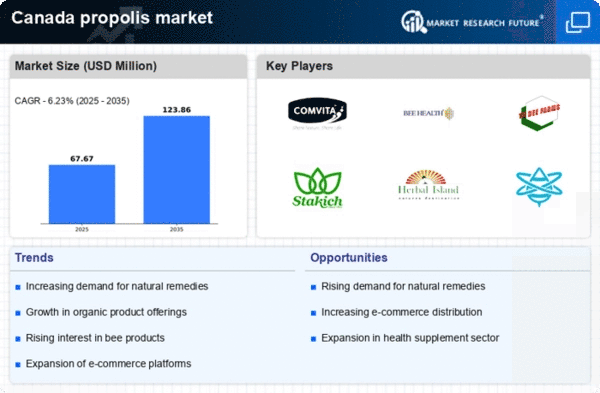
As per Market Research Future analysis, the Canada propolis market Size was estimated at 63.7 USD Million in 2024. The Canada propolis market is projected to grow from 67.67 USD Million in 2025 to 123.86 USD Million by 2035, exhibiting a compound annual growth rate (CAGR) of 6.2% during the forecast period 2025 - 2035

Key Market Trends & Highlights

The Canada propolis market is experiencing a robust growth trajectory driven by increasing consumer interest in natural health products.

  • The demand for natural health products is rising, indicating a shift towards holistic wellness solutions.
  • Local sourcing and sustainability practices are becoming increasingly important among consumers and producers alike.
  • The expansion of product applications for propolis is evident, particularly in the cosmetics and dietary supplement sectors.
  • Key market drivers include growing awareness of health benefits and the rise of e-commerce, enhancing accessibility for consumers.

Market Size & Forecast

2024 Market Size 63.7 (USD Million)
2035 Market Size 123.86 (USD Million)
CAGR (2025 - 2035) 6.23%

Major Players

Comvita (NZ), Bee Health (GB), Y.S. Eco Bee Farms (US), Stakich Inc. (US), Herbal Island (AU), Apitherapy (US), Propolia (FR), Bee Propolis (BR)

Our Impact
Enabled $4.3B Revenue Impact for Fortune 500 and Leading Multinationals
Partnering with 2000+ Global Organizations Each Year
30K+ Citations by Top-Tier Firms in the Industry

Canada Propolis Market Trends

The propolis market in Canada is experiencing notable growth, driven by increasing consumer awareness regarding natural health products. Propolis, a resinous substance produced by bees, is recognized for its potential health benefits, including anti-inflammatory and antimicrobial properties. This growing interest in natural remedies is reflected in the rising demand for propolis-based supplements and cosmetics. Furthermore, the trend towards organic and sustainably sourced products aligns well with the characteristics of propolis, appealing to environmentally conscious consumers. As a result, various companies are expanding their product lines to include propolis, catering to this evolving market. In addition to health benefits, the propolis market is influenced by the increasing popularity of beekeeping in Canada. The rise in local beekeeping initiatives has led to a more accessible supply of propolis, fostering local production and innovation. This shift not only supports local economies but also enhances the quality and traceability of propolis products. As consumers become more discerning, the emphasis on local sourcing and production is likely to shape the future landscape of the propolis market, creating opportunities for both established and emerging players in the industry.

Rising Demand for Natural Health Products

There is a growing trend towards natural health solutions, with consumers increasingly seeking products that are perceived as safe and effective. Propolis, known for its health-promoting properties, is gaining traction among health-conscious individuals. This shift is prompting manufacturers to innovate and expand their offerings in the propolis market.

Local Sourcing and Sustainability

The emphasis on sustainability is becoming more pronounced, with consumers favoring products that are locally sourced and environmentally friendly. The propolis market is benefiting from this trend, as local beekeeping initiatives provide a reliable supply of high-quality propolis. This focus on sustainability is likely to enhance consumer trust and loyalty.

Expansion of Product Applications

Propolis is finding new applications beyond traditional uses, particularly in the beauty and personal care sectors. The versatility of propolis is leading to its incorporation in various formulations, from skincare to dietary supplements. This diversification is expected to drive growth in the propolis market, attracting a broader consumer base.

Canada Propolis Market Drivers

Innovative Product Development

Innovation within the propolis market is driving the introduction of new and diverse product offerings. Companies are increasingly exploring various applications of propolis, from dietary supplements to skincare products. This diversification is crucial as it caters to a broader consumer base, potentially increasing market penetration. Recent data indicates that innovative propolis products have contributed to a 10% growth in market share over the last year. As the industry continues to evolve, the propolis market is likely to see further advancements in product formulations, enhancing its appeal to health-conscious consumers.

E-commerce Growth and Accessibility

The rapid growth of e-commerce platforms is transforming the way consumers access propolis products in Canada. With online sales channels expanding, consumers can easily purchase propolis supplements and cosmetics from the comfort of their homes. This shift is particularly significant in the propolis market, where online sales have surged by around 20% over the past year. The convenience of e-commerce, coupled with targeted marketing strategies, is likely to enhance consumer engagement and drive sales. As more Canadians turn to online shopping, the propolis market stands to gain from increased visibility and accessibility of its products.

Growing Awareness of Health Benefits

The increasing awareness of the health benefits associated with propolis is a key driver in the propolis market. Consumers in Canada are becoming more informed about natural remedies and their potential advantages, such as anti-inflammatory and antioxidant properties. This trend is reflected in the rising sales of propolis-based products, which have seen an increase of approximately 15% annually. As more individuals seek alternatives to synthetic medications, the demand for propolis is likely to continue its upward trajectory. The propolis market is thus positioned to benefit from this shift towards natural health solutions, as consumers prioritize wellness and preventive care.

Regulatory Support for Natural Products

Regulatory frameworks in Canada are increasingly supportive of natural health products, including propolis. The Natural Health Products Regulations provide a clear pathway for the approval and marketing of propolis-based items, fostering innovation within the propolis market. This regulatory environment encourages manufacturers to invest in research and development, potentially leading to new product formulations and applications. As a result, the industry may experience growth as companies capitalize on the favorable regulations to introduce novel propolis products. The propolis market is thus likely to thrive in an environment that promotes natural health solutions.

Rising Interest in Beekeeping and Local Production

The resurgence of interest in beekeeping among Canadians is contributing to the growth of the propolis market. As more individuals engage in beekeeping, the supply of locally sourced propolis is expected to increase, enhancing the availability of this natural product. This trend aligns with the growing consumer preference for locally produced goods, which is evident in the propolis market. The local production of propolis not only supports sustainability but also appeals to consumers who value transparency in sourcing. Consequently, the propolis market may benefit from this trend as it fosters a connection between producers and consumers.


Market Segment Insights

By Product Type: Extract (Largest) vs. Capsules and Tablets (Fastest-Growing)

The market share distribution in the Canada propolis market is significantly skewed towards the extract segment, which dominates due to its versatility and high concentration of bioactive compounds. Capsules and tablets, while holding a smaller portion of the market, are rapidly gaining popularity among consumers looking for convenient health solutions. The spray and others segments also contribute, but less prominently in comparison to these main types. Growth trends in the Canada propolis market reveal a strong demand for natural health products, driving growth across all segments. The extract segment benefits from increasing awareness of its health benefits, while capsules and tablets are favored for their ease of use. Changing consumer preferences towards preventive healthcare and the rising trend of dietary supplements are propelling these segments forward.

Extract (Dominant) vs. Capsules and Tablets (Emerging)

The extract segment in the Canada propolis market is characterized by its high potency and efficacy, often preferred by consumers seeking strong health benefits. As a dominant product type, it is widely used in various formulations, catering to both traditional and modern health enthusiasts. In contrast, capsules and tablets represent an emerging category, appealing to those who prioritize convenience and specific dosage measurements. This segment is increasingly recognized for its ability to deliver consistent amounts of propolis, thus attracting health-conscious consumers. Together, these segments illustrate the diverse preferences within the market, with extract leading in traditional appeal, while capsules and tablets innovate towards accommodating contemporary lifestyles.

By Category: Alcohol-Based (Largest) vs. Alcohol-free (Fastest-Growing)

In the Canada propolis market, the category of Alcohol-Based products holds the largest share, attracting consumers looking for effective solutions with a strong reputation for quality. This segment benefits from the familiarity and established background of alcohol-based formulations, which are often perceived as more potent and effective in delivering the health benefits associated with propolis. Conversely, the Alcohol-free category is rapidly gaining traction, appealing to health-conscious consumers and those seeking alternatives due to dietary restrictions or personal preferences. Growth trends within these segments showcase a dynamic shift in consumer preferences. The Alcohol-free segment is emerging as a strong contender, driven by increasing awareness of health and wellness, alongside a wave of demand for natural and organic products. Factors such as changing lifestyles, rising interest in holistic approaches to health, and the influence of social media in shaping consumer behavior contribute to the popularity of Alcohol-free propolis products, positioning them as a vital growth driver in the market.

Alcohol-Based: Dominant vs. Alcohol-free: Emerging

The Alcohol-Based category is characterized by its long-established presence in the Canada propolis market, appealing to a broad base of consumers who prioritize efficacy and tradition. These products leverage the germicidal and therapeutic properties of alcohol, which enhance the extraction process of propolis, leading to a potent end product. In contrast, the Alcohol-free segment is making commendable strides, emerging as a choice for individuals seeking alternatives that align with modern health trends. Alcohol-free products often highlight their natural ingredients and gentle formulations, making them suitable for a diverse clientele, including children and those with sensitivities. This emerging segment is thriving, reflecting a shifting landscape and the increasing diversification of consumer preferences.

By Distribution Channel: Store-based (Largest) vs. Non-store-based (Fastest-Growing)

In the Canada propolis market, the distribution of sales between store-based and non-store-based channels highlights a strong preference for store-based shopping, which commands the largest market share. Retail outlets such as health food stores and pharmacies are favored by consumers who seek reliability and personal interaction in their purchasing decisions. Meanwhile, non-store-based channels, which include online platforms, are also gaining traction as more consumers turn to the convenience and accessibility of e-commerce solutions. The growth trends in the distribution channel segment are influenced by changing consumer behavior and a shift towards digital shopping experiences. Online sales have seen a significant boost, driven by the pandemic's effect on shopping habits, and consumers are increasingly drawn to the convenience offered by online platforms. This trend is expected to continue, positioning non-store-based channels as the fastest-growing segment, while store-based channels remain solid, catering to traditional shopping preferences.

Store-based (Dominant) vs. Non-store-based (Emerging)

Store-based distribution in the Canada propolis market remains the dominant channel, characterized by established retail infrastructures where consumers feel confident purchasing their health products. Traditional brick-and-mortar stores provide an essential touchpoint for buyers seeking information and personalized advice about propolis. On the other hand, non-store-based distribution represents an emerging segment that is rapidly evolving, capturing a growing market share through online platforms and e-commerce strategies. This segment appeals to tech-savvy consumers looking for convenience, broader product selections, and competitive pricing. The rise of e-commerce has been particularly beneficial for smaller brands and niche players in the propolis space, allowing them to reach a more extensive audience with relative ease.

Get more detailed insights about Canada Propolis Market

Key Players and Competitive Insights

The propolis market in Canada is characterized by a dynamic competitive landscape, driven by increasing consumer awareness of natural health products and the growing demand for bee-derived substances. Key players such as Comvita (NZ), Bee Health (GB), and Y.S. Eco Bee Farms (US) are strategically positioned to leverage these trends. Comvita (NZ) focuses on innovation in product development, particularly in enhancing the bioavailability of propolis extracts, while Bee Health (GB) emphasizes sustainability in sourcing and production processes. Y.S. Eco Bee Farms (US) has adopted a regional expansion strategy, targeting health-conscious consumers through direct-to-consumer channels, which collectively shapes a competitive environment that prioritizes quality and sustainability. The market structure appears moderately fragmented, with several players vying for market share. Key business tactics include localizing manufacturing to reduce costs and optimize supply chains, which is crucial in maintaining competitive pricing. The collective influence of these companies fosters a competitive atmosphere where innovation and sustainability are paramount, as they seek to differentiate themselves in a crowded marketplace. In October 2025, Comvita (NZ) announced a partnership with a Canadian health retailer to launch a new line of propolis-infused wellness products. This strategic move is likely to enhance Comvita's market presence in Canada, tapping into the growing trend of natural health solutions. The collaboration not only broadens their product range but also aligns with consumer preferences for locally available, high-quality health products. In September 2025, Bee Health (GB) unveiled a new sustainability initiative aimed at reducing its carbon footprint by 30% over the next five years. This initiative underscores the company's commitment to environmentally responsible practices, which may resonate well with eco-conscious consumers. By prioritizing sustainability, Bee Health positions itself as a leader in the market, potentially attracting a loyal customer base that values ethical sourcing and production. In August 2025, Y.S. Eco Bee Farms (US) expanded its distribution network by partnering with several Canadian e-commerce platforms. This strategic action is indicative of a broader trend towards digital transformation in the propolis market. By enhancing its online presence, Y.S. Eco Bee Farms can reach a wider audience, catering to the increasing demand for convenient shopping options among health-conscious consumers. As of November 2025, current competitive trends in the propolis market include a pronounced shift towards digitalization, sustainability, and the integration of advanced technologies. Strategic alliances are increasingly shaping the landscape, as companies recognize the value of collaboration in enhancing product offerings and market reach. Looking ahead, competitive differentiation is likely to evolve from traditional price-based competition to a focus on innovation, technological advancements, and supply chain reliability, reflecting the changing preferences of consumers who prioritize quality and sustainability.

Key Companies in the Canada Propolis Market include

Industry Developments

The Canada Propolis Market has seen notable developments recently, with companies like Manuka Health and Bee Health actively expanding their product lines and enhancing their distribution strategies.

In June 2023, Y.S. Eco Bee Farms announced an increase in production capacity attributed to rising consumer demand for natural health products, specifically propolis-infused supplements. Additionally, in September 2023, Comvita, a key player in the market, reported a significant growth in revenue driven by the increased popularity of its propolis products amongst Canadian consumers.

There are no publicly reported mergers or acquisitions involving the specified companies in the recent months. Over the past two to three years, the overall valuation of the Canada Propolis Market has shown positive growth trends, with estimates adjusting upwards due to heightened awareness of the health benefits associated with propolis.

The Canadian government continues to support local beekeeping initiatives, recognizing the importance of bees and propolis in both ecological balance and economic sustainability. This multifaceted support contributes to the favorable market environment for companies like Honeysuckle Enterprises, Herbal Terra, and Beekeeper's Naturals in Canada.

Future Outlook

Canada Propolis Market Future Outlook

The Propolis Market is projected to grow at a 6.23% CAGR from 2025 to 2035, driven by increasing health awareness, demand for natural products, and expanding applications in cosmetics and pharmaceuticals.

New opportunities lie in:

  • Development of innovative propolis-based health supplements Expansion into e-commerce platforms for direct consumer sales Collaboration with cosmetic brands for propolis-infused skincare lines

By 2035, the propolis market is expected to achieve substantial growth and diversification.

Market Segmentation

Canada Propolis Market Category Outlook

  • Alcohol-Based
  • Alcohol-free

Canada Propolis Market Product Type Outlook

  • Capsules and Tablets
  • Spray
  • Extract
  • Others

Canada Propolis Market Distribution Channel Outlook

  • Store-based
  • Non-store-based

Report Scope

MARKET SIZE 2024 63.7(USD Million)
MARKET SIZE 2025 67.67(USD Million)
MARKET SIZE 2035 123.86(USD Million)
COMPOUND ANNUAL GROWTH RATE (CAGR) 6.23% (2025 - 2035)
REPORT COVERAGE Revenue Forecast, Competitive Landscape, Growth Factors, and Trends
BASE YEAR 2024
Market Forecast Period 2025 - 2035
Historical Data 2019 - 2024
Market Forecast Units USD Million
Key Companies Profiled Comvita (NZ), Bee Health (GB), Y.S. Eco Bee Farms (US), Stakich Inc. (US), Herbal Island (AU), Apitherapy (US), Propolia (FR), Bee Propolis (BR)
Segments Covered Product Type, Category, Distribution Channel
Key Market Opportunities Growing consumer interest in natural health products enhances opportunities in the propolis market.
Key Market Dynamics Rising consumer interest in natural health products drives growth in the propolis market in Canada.
Countries Covered Canada
Leave a Comment

FAQs

What is the projected market size of the Canada Propolis Market in 2024?

The Canada Propolis Market is expected to be valued at 63.7 million USD in 2024.

What is the expected CAGR for the Canada Propolis Market from 2025 to 2035?

The expected compound annual growth rate for the Canada Propolis Market from 2025 to 2035 is 7.491%.

What will the market size of the Canada Propolis Market be in 2035?

By 2035, the Canada Propolis Market is projected to grow to approximately 141.0 million USD.

Which product type will have the highest market value in 2035 within the Canada Propolis Market?

By 2035, the 'Extract' product type is expected to have the highest market value at 45.0 million USD.

What are the key players in the Canada Propolis Market?

Key players include Manuka Health, Bee Health, Stakich, Honey Pacifica, and Beekeeper's Naturals, among others.

How much is the 'Capsules and Tablets' segment valued at in 2024?

The 'Capsules and Tablets' segment of the Canada Propolis Market is valued at 18.5 million USD in 2024.

What challenges are impacting the Canada Propolis Market?

Challenges may include fluctuating bee populations and regulatory hurdles affecting propolis extraction.

What is the value of the 'Spray' segment in 2035?

The 'Spray' segment is expected to be valued at 32.0 million USD in 2035.

What growth opportunities exist in the Canada Propolis Market?

Growth opportunities exist in increasing consumer awareness of health benefits and product innovation.

How significantly will the 'Others' segment grow by 2035?

The 'Others' segment is projected to grow to 24.0 million USD by 2035, demonstrating significant growth potential.

Download Free Sample

Kindly complete the form below to receive a free sample of this Report

Compare Licence

×
Features License Type
Single User Multiuser License Enterprise User
Price $4,950 $5,950 $7,250
Maximum User Access Limit 1 User Upto 10 Users Unrestricted Access Throughout the Organization
Free Customization
Direct Access to Analyst
Deliverable Format
Platform Access
Discount on Next Purchase 10% 15% 15%
Printable Versions