Rising Cyber Threats
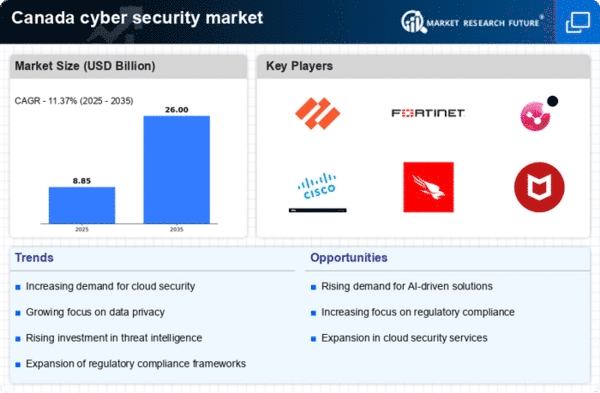
The cyber security market in Canada is experiencing a surge in demand due to the increasing frequency and sophistication of cyber threats. Reports indicate that cybercrime incidents have escalated, with a notable rise in ransomware attacks targeting various sectors, including healthcare and finance. In 2025, it is estimated that the cost of cybercrime in Canada could reach $10 billion, prompting organizations to invest heavily in robust security measures. This trend underscores the urgency for businesses to adopt comprehensive cyber security solutions to safeguard sensitive data and maintain operational integrity. As a result, the cyber security market is likely to expand significantly, driven by the need for advanced threat detection and response capabilities.
Emergence of IoT Devices
The proliferation of Internet of Things (IoT) devices in Canada is reshaping the cyber security market landscape. With an estimated 30 million IoT devices expected to be in use by 2025, the potential attack surface for cyber threats is expanding. These devices often lack robust security features, making them attractive targets for cybercriminals. As a result, organizations are increasingly investing in specialized cyber security solutions tailored to protect IoT ecosystems. This trend indicates a growing recognition of the need for comprehensive security strategies that encompass not only traditional IT infrastructure but also the myriad of connected devices. The cyber security market is thus poised for growth as businesses seek to mitigate risks associated with IoT vulnerabilities.
Increased Remote Work Practices
The shift towards remote work in Canada has created new vulnerabilities, thereby driving demand in the cyber security market. As organizations adapt to flexible work arrangements, the need for secure remote access solutions has become paramount. Data suggests that 70% of Canadian companies have adopted remote work policies, leading to an increased focus on securing endpoints and networks. This trend necessitates the deployment of advanced cyber security measures, such as Virtual Private Networks (VPNs) and multi-factor authentication (MFA). The growing reliance on remote work is likely to propel the cyber security market, as businesses prioritize the protection of their digital assets in a distributed work environment.
Regulatory Compliance Requirements
The cyber security market in Canada is significantly influenced by stringent regulatory compliance requirements. Organizations are mandated to adhere to various laws and regulations, such as the Personal Information Protection and Electronic Documents Act (PIPEDA) and the Digital Privacy Act. Non-compliance can result in hefty fines, which may reach up to $100,000 for organizations. Consequently, businesses are compelled to invest in cyber security solutions to ensure compliance and protect customer data. This regulatory landscape is fostering growth in the cyber security market, as companies seek to implement effective security frameworks that not only meet legal obligations but also enhance their overall security posture.
Growing Awareness of Cyber Security Risks
There is a notable increase in awareness regarding cyber security risks among Canadian businesses and consumers. Educational initiatives and high-profile data breaches have heightened the understanding of potential threats, leading to a proactive approach towards cyber security. Surveys indicate that 65% of Canadian organizations are prioritizing cyber security training for employees, recognizing that human error is a significant factor in security breaches. This heightened awareness is driving investments in cyber security solutions, as companies strive to cultivate a security-first culture. The cyber security market is likely to benefit from this trend, as organizations seek to enhance their defenses against evolving cyber threats.