×
Request Free Sample ×

Kindly complete the form below to receive a free sample of this Report

* Please use a valid business email

Leading companies partner with us for data-driven Insights

clients tt-cursor
Hero Background

Brazil Feed Premix Market

ID: MRFR/Agri/46863-HCR
200 Pages
Snehal Singh
February 2026

Brazil Feed Premix Market Size, Share, Industry Trend & Analysis Research Report By Ingredient (Vitamins, Minerals, Amino Acids, Lipids, Others) and By Livestock (Poultry, Ruminants, Swine, Aquaculture, Others) - Forecast to 2035

Share:
Download PDF ×

We do not share your information with anyone. However, we may send you emails based on your report interest from time to time. You may contact us at any time to opt-out.

Brazil Feed Premix Market Infographic
Purchase Options

Brazil Feed Premix Market Summary

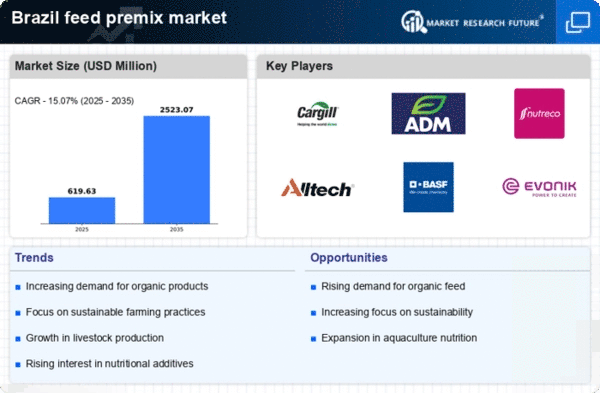
As per Market Research Future analysis, the Brazil Feed Premix Market size was estimated at 538.48 USD Million in 2024. The Feed Premix market is projected to grow from 619.63 USD Million in 2025 to 2523.07 USD Million by 2035, exhibiting a compound annual growth rate (CAGR) of 15.0% during the forecast period 2025 - 2035

Key Market Trends & Highlights

The Brazil feed premix market is experiencing a dynamic shift towards specialty formulations and sustainability.

  • The largest segment in the Brazil feed premix market is the poultry sector, driven by high consumption rates.
  • The fastest-growing segment is the aquaculture feed premix, reflecting increasing seafood demand.
  • Sustainability initiatives are gaining traction, influencing formulation practices across the industry.
  • Key market drivers include rising livestock production and regulatory support for animal nutrition.

Market Size & Forecast

2024 Market Size 538.48 (USD Million)
2035 Market Size 2523.07 (USD Million)
CAGR (2025 - 2035) 15.07%

Major Players

Cargill (US), Archer Daniels Midland (US), Nutreco (NL), Alltech (US), BASF (DE), Evonik Industries (DE), Land O'Lakes (US), ForFarmers (NL), De Heus (NL), ADM Animal Nutrition (US)

Our Impact
Enabled $4.3B Revenue Impact for Fortune 500 and Leading Multinationals
Partnering with 2000+ Global Organizations Each Year
30K+ Citations by Top-Tier Firms in the Industry

Brazil Feed Premix Market Trends

The Brazil Feed Premix Market is currently experiencing notable growth, driven by increasing demand for high-quality animal nutrition. This trend is largely influenced by the rising awareness among livestock producers regarding the importance of balanced diets for enhancing productivity and health. Additionally, the expansion of the poultry and aquaculture sectors in Brazil contributes to the heightened need for specialized feed formulations. As producers seek to optimize feed efficiency and improve animal performance, the market is likely to witness innovations in premix formulations that cater to specific nutritional requirements. Moreover, regulatory frameworks and initiatives aimed at promoting sustainable practices in animal husbandry are shaping the feed premix market landscape. The Brazilian government has been actively encouraging the adoption of environmentally friendly practices, which may lead to a shift towards organic and natural feed ingredients. This shift could potentially enhance the market's appeal to consumers who are increasingly concerned about food safety and quality. As a result, the feed premix market is poised for transformation, with a focus on sustainability and nutritional efficacy, reflecting broader trends in the agricultural sector.

Rising Demand for Specialty Premixes

There is a growing inclination towards specialty premixes tailored for specific livestock needs. This trend is driven by the need for improved health and productivity in animals, prompting producers to seek customized solutions that address particular nutritional deficiencies.

Sustainability Initiatives

Sustainability is becoming a central theme in the feed premix market, with an emphasis on eco-friendly ingredients and production methods. Regulatory support for sustainable practices is likely to influence market dynamics, encouraging the use of organic and natural components.

Technological Advancements in Formulation

Innovations in formulation technology are emerging as a key trend, enabling the development of more effective and efficient feed premixes. These advancements may enhance nutrient absorption and overall animal performance, aligning with the industry's focus on maximizing productivity.

Brazil Feed Premix Market Drivers

Expansion of Export Markets

Brazil's feed premix market is poised for growth due to the expansion of export markets for animal products. With increasing global demand for meat and dairy, Brazilian producers are looking to enhance their competitiveness through high-quality feed premixes. In 2025, it is projected that exports of Brazilian meat could reach $8 billion, necessitating the use of superior feed formulations to ensure product quality. This trend is encouraging the feed premix market to innovate and develop products that meet international standards, thereby positioning Brazil as a key player in The feed premix market.

Increasing Livestock Production

The feed premix market in Brazil is experiencing growth due to the rising demand for livestock products. As the population increases, so does the need for meat, dairy, and eggs. In 2025, Brazil's livestock sector is projected to expand by approximately 3.5%, leading to a higher requirement for feed premixes that enhance animal health and productivity. This growth is driven by both domestic consumption and export opportunities, particularly in markets such as Asia and Europe. The feed premix market is adapting to these demands by developing specialized formulations that cater to the nutritional needs of various livestock species, thereby ensuring optimal growth rates and feed efficiency.

Rising Awareness of Animal Welfare

There is a growing awareness of animal welfare among Brazilian consumers, which is influencing the feed premix market. As consumers become more conscious of the conditions in which livestock are raised, there is an increasing demand for feed premixes that support humane and ethical farming practices. In 2025, it is anticipated that approximately 40% of consumers will prioritize animal welfare in their purchasing decisions. This shift is prompting feed premix market players to develop products that not only enhance animal health but also align with ethical standards, thereby appealing to a more socially responsible consumer base.

Regulatory Support for Animal Nutrition

Brazil's government has implemented various regulations aimed at improving animal health and nutrition, which positively impacts the feed premix market. These regulations encourage the use of scientifically formulated feed premixes that meet specific nutritional standards. In 2025, the Brazilian Ministry of Agriculture is expected to introduce new guidelines that promote the use of additives and supplements in animal feed, enhancing the overall quality of livestock products. This regulatory support is likely to drive innovation within the feed premix market, as manufacturers seek to comply with these standards while also addressing consumer preferences for healthier and more sustainable food options.

Technological Innovations in Feed Production

The feed premix market in Brazil is benefiting from technological advancements in feed production processes. Innovations such as precision nutrition and automated mixing systems are enhancing the efficiency and accuracy of feed premix formulations. In 2025, it is estimated that the adoption of these technologies could increase production efficiency by up to 25%. This trend is likely to lead to cost savings for producers and improved product quality, thereby strengthening the competitive position of the feed premix market. As technology continues to evolve, it may also facilitate the development of customized feed solutions tailored to specific livestock needs.


Market Segment Insights

By Ingredient Type: Vitamins (Largest) vs. Amino Acids (Fastest-Growing)

In the Brazil feed premix market, the ingredient type segment showcases a diversified distribution among its key components. Vitamins emerge as the largest category, capturing a significant share due to their essential role in animal health and performance improvement. Minerals follow closely, contributing robustly to the overall market due to their fundamental importance in animal diets. Amino acids and lipids, while smaller, play crucial roles in nutrition, especially in specialized diets for livestock. Growth trends indicate a strong upward trajectory for amino acids, which are becoming increasingly vital for livestock feed formulations that require enhanced nutritional efficiency. The rising demand for high-performance animal feed, coupled with the focus on optimizing feed conversion ratios, propels this segment forward. Additionally, growing awareness of animal health and the push for improved feed quality further drive the uptake of these ingredients in the Brazil feed premix market.

Vitamins (Dominant) vs. Amino Acids (Emerging)

Vitamins hold a dominant position in the Brazil feed premix market, primarily due to their critical function in the overall health and productivity of livestock. They are essential in supporting metabolic processes, enhancing immunity, and improving growth rates, which makes them integral to feed formulations. On the other hand, amino acids are emerging as a key ingredient, gaining traction due to the increasing emphasis on precision nutrition in animal husbandry. As livestock producers seek to optimize feed efficiency and meet specific dietary requirements, the demand for amino acids is rapidly expanding, positioning them as a vital component in modern formulations.

By Livestock: Poultry (Largest) vs. Swine (Fastest-Growing)

In the Brazil feed premix market, Poultry holds the largest share, significantly influencing the overall market dynamics. The Ruminants and Swine segments follow, each contributing to the market with their unique nutritional requirements and growth potential. Aquaculture and Others make up the remaining share, showing varying levels of demand based on emerging trends and consumer preferences. Growth trends indicate a robust increase in the Swine segment, driven by rising pork consumption and advancements in breeding practices. Similarly, Poultry continues to flourish, propelled by an increasing preference for chicken as a primary protein source. The market is further supported by a growing focus on sustainable farming practices and the need for efficient feed solutions across all livestock categories.

Poultry (Dominant) vs. Ruminants (Emerging)

Poultry is the dominant segment within the Brazil feed premix market, characterized by its extensive production units and the increasing demand for meat products. This segment benefits from innovations in feed formulations that enhance growth rates and feed efficiency. Conversely, the Ruminants segment is emerging, driven by the increasing dairy and beef demand. While it currently holds a smaller share compared to Poultry, Ruminants are gaining traction through the implementation of specialized nutrition programs and improved agricultural practices. Both segments, although different in their market positions, are essential for the ongoing evolution of the Brazil feed premix market.

Get more detailed insights about Brazil Feed Premix Market

Key Players and Competitive Insights

The feed premix market in Brazil is characterized by a dynamic competitive landscape, driven by increasing demand for high-quality animal nutrition and the growing emphasis on sustainable practices. Major players such as Cargill (US), Archer Daniels Midland (US), and Nutreco (NL) are strategically positioned to leverage innovation and regional expansion to enhance their market presence. Cargill (US) focuses on developing tailored nutritional solutions, while Archer Daniels Midland (US) emphasizes supply chain optimization and sustainability initiatives. Nutreco (NL) is actively investing in research and development to create advanced feed formulations, collectively shaping a competitive environment that prioritizes quality and sustainability.Key business tactics employed by these companies include localizing manufacturing to reduce costs and enhance supply chain efficiency. The market appears moderately fragmented, with several key players exerting considerable influence. This structure allows for competitive dynamics where innovation and customer-centric approaches are paramount, as companies strive to differentiate themselves in a crowded marketplace.

In October Cargill (US) announced the launch of a new line of organic feed premixes aimed at meeting the rising consumer demand for organic animal products. This strategic move not only aligns with global sustainability trends but also positions Cargill (US) as a leader in the organic segment, potentially capturing a significant share of the market. The introduction of these products may enhance customer loyalty and open new distribution channels.

In September Archer Daniels Midland (US) expanded its production capacity in Brazil by investing $50 million in a new facility dedicated to feed premix manufacturing. This expansion is likely to bolster the company’s ability to meet local demand and improve supply chain resilience. By increasing production capabilities, Archer Daniels Midland (US) may enhance its competitive edge, particularly in regions experiencing rapid growth in livestock production.

In August Nutreco (NL) entered into a strategic partnership with a Brazilian technology firm to develop AI-driven solutions for optimizing feed formulations. This collaboration is indicative of a broader trend towards digitalization in the industry, suggesting that Nutreco (NL) is keen on leveraging technology to enhance product efficacy and customer engagement. Such initiatives may lead to improved operational efficiencies and a stronger market position.

As of November current competitive trends in the feed premix market include a pronounced shift towards digitalization, sustainability, and the integration of AI technologies. Strategic alliances are increasingly shaping the landscape, enabling companies to pool resources and expertise. Looking ahead, competitive differentiation is likely to evolve from traditional price-based competition to a focus on innovation, technological advancements, and supply chain reliability, underscoring the importance of adaptability in a rapidly changing market.

Key Companies in the Brazil Feed Premix Market include

Industry Developments

Recent developments in the Brazil Feed Premix Market highlight a focus on innovation and sustainability among key players. Companies such as Trouw Nutrition, Cargill, and BRF are investing significantly in research and development efforts to enhance the nutritional value and efficiency of their feed products. Notably, in August 2023, Grupo Mantiqueira announced plans to expand its production capabilities, emphasizing a commitment to improving quality and meeting increasing demand.

The market has seen steady growth, with reports suggesting a valuation increase for firms like Minerva Foods and JBS, driven by rising protein consumption in Brazil and the export sector. Significant activities included the acquisition of a regional feed company by Aurora Alimentos in July 2022 to strengthen its market position. Brazil's Ministry of Agriculture noted an upward trend in feed premix consumption, reflecting the expanding livestock sector. In recent years, FrieslandCampina and Bunge have also forged strategic partnerships to boost efficiency in supply chains.

Overall, the Brazil Feed Premix Market continues to evolve with advancements in technology, a diversified product range, and a growing focus on sustainable practices among prominent industry players.

Future Outlook

Brazil Feed Premix Market Future Outlook

The Feed Premix Market in Brazil is poised for growth at a 15.07% CAGR from 2025 to 2035, driven by rising livestock production and demand for quality feed.

New opportunities lie in:

  • Development of customized nutrient blends for specific livestock needs.

  • Expansion into organic feed premixes to meet consumer demand.
  • Implementation of digital platforms for real-time inventory management.

By 2035, the feed premix market is expected to achieve substantial growth and innovation.

Market Segmentation

Brazil Feed Premix Market Livestock Outlook

  • Poultry
  • Ruminants
  • Swine
  • Aquaculture
  • Others

Brazil Feed Premix Market Ingredient Type Outlook

  • Vitamins
  • Minerals
  • Amino Acids
  • Lipids
  • Others

Report Scope

MARKET SIZE 2024 538.48(USD Million)
MARKET SIZE 2025 619.63(USD Million)
MARKET SIZE 2035 2523.07(USD Million)
COMPOUND ANNUAL GROWTH RATE (CAGR) 15.07% (2025 - 2035)
REPORT COVERAGE Revenue Forecast, Competitive Landscape, Growth Factors, and Trends
BASE YEAR 2024
Market Forecast Period 2025 - 2035
Historical Data 2019 - 2024
Market Forecast Units USD Million
Key Companies Profiled Cargill (US), Archer Daniels Midland (US), Nutreco (NL), Alltech (US), BASF (DE), Evonik Industries (DE), Land O'Lakes (US), ForFarmers (NL), De Heus (NL), ADM Animal Nutrition (US)
Segments Covered Ingredient Type, Livestock
Key Market Opportunities Growing demand for sustainable feed solutions drives innovation in the feed premix market.
Key Market Dynamics Rising demand for sustainable feed premixes driven by regulatory changes and consumer preferences in Brazil.
Countries Covered Brazil
Leave a Comment

FAQs

What is the expected market size of the Brazil Feed Premix Market in 2024?

The Brazil Feed Premix Market is expected to be valued at approximately 621.32 million USD in 2024.

What is the forecasted market size for the Brazil Feed Premix Market by 2035?

By 2035, the Brazil Feed Premix Market is anticipated to reach a valuation of about 2083.74 million USD.

What is the expected compound annual growth rate (CAGR) for the Brazil Feed Premix Market from 2025 to 2035?

The anticipated CAGR for the Brazil Feed Premix Market from 2025 to 2035 is approximately 11.628%.

Who are the key players dominating the Brazil Feed Premix Market?

Major players in the Brazil Feed Premix Market include Trouw Nutrition, Grupo Mantiqueira, Minerva Foods, Aurora Alimentos, and JBS, among others.

Which ingredient segment is projected to have the largest market value in 2035?

In 2035, the Amino Acids segment is projected to have the largest market value at around 700 million USD.

What will the market value for Vitamins in the Brazil Feed Premix Market be by 2035?

The market value for Vitamins in the Brazil Feed Premix Market is expected to reach approximately 600 million USD by 2035.

How much is the Minerals segment expected to grow from 2024 to 2035?

The Minerals segment is expected to grow from about 120 million USD in 2024 to 450 million USD by 2035.

What are some key trends driving the growth of the Brazil Feed Premix Market?

Key trends driving the market growth include increasing demand for high-quality animal feed and advancements in animal nutrition technology.

What challenges are currently affecting the Brazil Feed Premix Market?

The challenges impacting the Brazil Feed Premix Market include fluctuating raw material prices and stringent regulatory standards.

What is the expected market value for Lipids in the Brazil Feed Premix Market by 2035?

The Lipids segment is expected to reach a market value of around 300 million USD by 2035.

Download Free Sample

Kindly complete the form below to receive a free sample of this Report

Compare Licence

×
Features License Type
Single User Multiuser License Enterprise User
Price $4,950 $5,950 $7,250
Maximum User Access Limit 1 User Upto 10 Users Unrestricted Access Throughout the Organization
Free Customization
Direct Access to Analyst
Deliverable Format
Platform Access
Discount on Next Purchase 10% 15% 15%
Printable Versions