×
Request Free Sample ×

Kindly complete the form below to receive a free sample of this Report

* Please use a valid business email

Leading companies partner with us for data-driven Insights

clients tt-cursor
Hero Background

Brazil Botanical Extracts Market

ID: MRFR/FnB/46036-HCR
128 Pages
Garvit Vyas
February 2026

Brazil Botanical Extracts Market Size, Share, Industry Trend & Analysis Research Report: By Form (Powder, Liquid), By Source (Herbs & Spices, Fruits), andBy Application (Food, Beverages, Personal Care, Pharmaceuticals & Nutraceuticals)- Forecast to 2035

Share:
Download PDF ×

We do not share your information with anyone. However, we may send you emails based on your report interest from time to time. You may contact us at any time to opt-out.

Brazil Botanical Extracts Market Infographic
Purchase Options

Brazil Botanical Extracts Market Summary

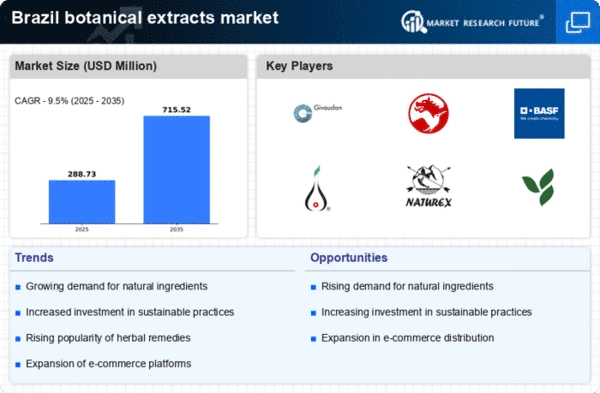
As per Market Research Future analysis, the Brazil botanical extracts market size was estimated at 263.68 USD Million in 2024. The Brazil botanical extracts market is projected to grow from 288.73 USD Million in 2025 to 715.52 USD Million by 2035, exhibiting a compound annual growth rate (CAGR) of 9% during the forecast period 2025 - 2035

Key Market Trends & Highlights

The Brazil botanical extracts market is experiencing robust growth driven by consumer preferences for natural and sustainable products.

  • The market is witnessing a rising demand for natural ingredients, particularly in the food and beverage sector.
  • Innovation in extraction technologies is enhancing product quality and efficiency, contributing to market expansion.
  • The largest segment in this market is the food and beverage sector, while the cosmetic segment is the fastest-growing.
  • Key market drivers include growing consumer awareness and regulatory support for natural products, which are shaping industry dynamics.

Market Size & Forecast

2024 Market Size 263.68 (USD Million)
2035 Market Size 715.52 (USD Million)
CAGR (2025 - 2035) 9.5%

Major Players

Givaudan (CH), Symrise (DE), BASF (DE), Kalsec (US), Naturex (FR), Herbalife (US), Frutarom (IL), Sundew (IN)

Our Impact
Enabled $4.3B Revenue Impact for Fortune 500 and Leading Multinationals
Partnering with 2000+ Global Organizations Each Year
30K+ Citations by Top-Tier Firms in the Industry

Brazil Botanical Extracts Market Trends

The botanical extracts market is experiencing notable growth. This growth is driven by increasing consumer awareness regarding natural products and their benefits. In Brazil, the demand for plant-based ingredients is on the rise, as consumers seek alternatives to synthetic additives in food, cosmetics, and pharmaceuticals. This shift towards natural solutions is likely influenced by a broader trend of health consciousness and sustainability. Furthermore, The Brazilian government supports initiatives that promote the use of native plants. This support may enhance the availability and diversity of botanical extracts in the market. Additionally, the regulatory framework in Brazil appears to be evolving, with authorities focusing on the standardization and quality control of botanical extracts. This development could foster greater trust among consumers and manufacturers alike. As the market matures, there seems to be a growing emphasis on research and development, particularly in the extraction processes and applications of these natural ingredients. The botanical extracts market is poised for further expansion, as both local and international players recognize the potential of Brazil's rich biodiversity and its implications for various industries.

Rising Demand for Natural Ingredients

There is a noticeable increase in consumer preference for natural ingredients across various sectors, including food and cosmetics. This trend reflects a broader shift towards health and wellness, with consumers actively seeking products that are free from synthetic additives.

Support for Sustainable Practices

The Brazilian government is promoting sustainable practices in the extraction and use of botanical resources. This initiative not only aims to protect biodiversity but also encourages the development of eco-friendly products, appealing to environmentally conscious consumers.

Innovation in Extraction Technologies

Advancements in extraction technologies are enhancing the efficiency and quality of botanical extracts. These innovations may lead to the discovery of new applications and formulations, thereby expanding the market's potential.

Brazil Botanical Extracts Market Drivers

Growing Consumer Awareness

In Brazil, there is a notable increase in consumer awareness regarding health and wellness, which significantly influences the botanical extracts market. As individuals become more informed about the benefits of natural ingredients, they are increasingly seeking products that contain botanical extracts. This trend is reflected in the rising sales of herbal supplements and natural cosmetics, which have seen growth rates of approximately 15% annually. The demand for transparency in ingredient sourcing further drives this trend, as consumers prefer brands that disclose their sourcing practices. Consequently, companies in the botanical extracts market are adapting their product lines to meet these evolving consumer preferences, thereby enhancing their market presence.

Rise of Eco-Friendly Products

The increasing consumer preference for eco-friendly products is a significant driver for the botanical extracts market in Brazil. As environmental concerns gain prominence, consumers are gravitating towards products that are sustainably sourced and produced. This shift is evident in the beauty and personal care sectors, where brands are incorporating botanical extracts derived from organic farming practices. The market for organic personal care products in Brazil is projected to grow by 12% annually, reflecting the rising demand for sustainable alternatives. Companies that prioritize eco-friendly practices in their supply chains are likely to gain a competitive edge, thereby contributing to the overall growth of the botanical extracts market.

Regulatory Support for Natural Products

Brazil's regulatory framework increasingly supports the use of natural products, which positively impacts the botanical extracts market. The Brazilian Health Regulatory Agency (ANVISA) has established guidelines that facilitate the approval and commercialization of botanical extracts in food, cosmetics, and pharmaceuticals. This regulatory environment encourages innovation and investment in the sector, as companies can navigate the approval process more efficiently. Furthermore, the government promotes the use of native plants, which not only supports biodiversity but also enhances the market potential for local producers. As a result, the botanical extracts market is likely to experience sustained growth, with an estimated increase of 10% in market value over the next five years.

Expansion of the Food and Beverage Sector

The food and beverage sector in Brazil is experiencing rapid expansion, which serves as a catalyst for the botanical extracts market. With a growing trend towards healthier eating, manufacturers are increasingly incorporating botanical extracts into their products for flavor enhancement and health benefits. The market for functional foods is expected to grow by 8% annually. This growth is often attributed to the utilization of botanical extracts. This trend is driven by consumer demand for products that offer added nutritional value, such as beverages infused with herbal extracts. As the food and beverage industry continues to innovate, the botanical extracts market is likely to benefit from increased utilization in various applications.

Technological Advancements in Extraction Methods

Technological advancements in extraction methods are transforming the botanical extracts market in Brazil. Innovations such as supercritical CO2 extraction and ultrasonic extraction are enhancing the efficiency and quality of botanical extracts. These methods not only improve yield but also preserve the bioactive compounds present in the plants, making them more appealing to manufacturers. As companies adopt these advanced techniques, the market is expected to witness a surge in high-quality botanical extracts, catering to the growing demand in various industries, including cosmetics and nutraceuticals. The potential for increased profitability through improved extraction processes may drive further investment in the botanical extracts market.


Market Segment Insights

By Form: Powder (Largest) vs. Liquid (Fastest-Growing)

In the Brazil botanical extracts market, the distribution between form segments reveals that Powder forms dominate, holding a significant share owing to their versatility and ease of incorporation into various applications. Liquids, while smaller in overall share, are rapidly gaining traction due to their convenience and immediate usability in formulations, appealing to both manufacturers and end-users. The growth trends within this segment are driven by increasing consumer preferences for natural and herbal products, contributing to the rising demand for both Powder and Liquid forms. Factors such as the expanding health and wellness market, alongside innovations in extraction technology, are enabling Liquid forms to emerge rapidly as key players. This dynamic ecosystem promises continued evolution for both formats in the coming years.

Powder (Dominant) vs. Liquid (Emerging)

Powder forms of botanical extracts stand out as the dominant choice in the market due to their long shelf life and flexibility in usage, suited for products ranging from dietary supplements to cosmetics. Their ability to encapsulate beneficial properties in a stable format makes them appealing to manufacturers. On the other hand, Liquid forms are rapidly emerging as a strong contender, primarily driven by consumer demand for ready-to-use solutions. The ease of incorporation into beverages and topical applications makes Liquid extracts particularly attractive, setting the stage for a competitive landscape where both forms can coexist and thrive.

By Source: Herbs & Spices (Largest) vs. Fruits (Fastest-Growing)

In the Brazil botanical extracts market, Herbs & Spices account for a significant share of the overall market, reflecting their longstanding popularity and versatility in culinary applications. Additionally, this segment's established position is supported by a wide range of applications in the food and beverage sector, herbal medicines, and traditional practices, making it a reliable choice for consumers and manufacturers alike. On the other hand, the Fruits segment is emerging as the fastest-growing category, driven by increasing consumer awareness of health benefits associated with fruit-derived extracts. Innovations in extraction processes and a surge in demand for natural, plant-based products are catalyzing growth. As trends shift towards more natural flavors and ingredients, the Fruits segment is expected to see robust expansion in the coming years.

Herbs & Spices: Dominant vs. Fruits: Emerging

Herbs & Spices have solidified their position as the dominant player in the Brazil botanical extracts market due to their rich flavors, aromatic properties, and extensive usage across various industries. This segment encompasses a variety of plants, each offering unique properties and benefits. Meanwhile, the Fruits segment is emerging as a vibrant category, fueled by consumer trends leaning towards health and wellness. This shift has prompted manufacturers to explore innovative extraction methods to offer concentrated fruit flavors and health benefits. Both segments exhibit distinct characteristics that cater to diverse consumer preferences, yet their contributions to the overall market reflect varying dynamics. Herbs & Spices maintain a strong foothold, while Fruits are gaining momentum and popularity.

By Application: Food & Beverages (Largest) vs. Pharmaceuticals & Nutraceuticals (Fastest-Growing)

The market shares in the Brazil botanical extracts market indicate that the Food & Beverages segment holds the largest share, driven by increasing consumer demand for natural flavors and healthy products. The Personal Care segment follows closely, leveraging the trend towards organic and naturally derived ingredients, while the Pharmaceuticals & Nutraceuticals segment is emerging rapidly with a focus on natural health products. Growth in this segment is primarily fueled by rising health awareness among consumers, shifting preferences towards natural and organic products, and the expanding applications of botanical extracts in various industries. The growing trend for sustainability and eco-friendliness further supports the momentum in the Pharmaceuticals & Nutraceuticals segment, making it the fastest-growing area in this market.

Food & Beverages (Dominant) vs. Pharmaceuticals & Nutraceuticals (Emerging)

The Food & Beverages segment is dominant in the Brazil botanical extracts market, characterized by its extensive use of natural extracts in enhancing flavors and promoting health benefits in food products. This segment is well-established and caters to a broad consumer base looking for organic and health-oriented options. In contrast, the Pharmaceuticals & Nutraceuticals segment is considered emerging, focusing on integrating botanical extracts into health supplements and medications. This segment is characterized by innovative product development and a strong consumer shift towards preventive healthcare, reflecting the growing trend of utilizing natural ingredients for health improvement. As consumers increasingly seek products that offer both efficacy and natural origins, this segment is projected to grow rapidly.

Get more detailed insights about Brazil Botanical Extracts Market

Key Players and Competitive Insights

The botanical extracts market in Brazil is characterized by a dynamic competitive landscape, driven by increasing consumer demand for natural ingredients across various sectors, including food and beverages, cosmetics, and pharmaceuticals. Key players such as Givaudan (CH), Symrise (DE), and BASF (DE) are strategically positioned to leverage their extensive portfolios and innovation capabilities. Givaudan (CH) focuses on enhancing its product offerings through sustainable sourcing and technological advancements, while Symrise (DE) emphasizes regional expansion and partnerships to strengthen its market presence. BASF (DE) is actively pursuing digital transformation initiatives to optimize its operations and improve customer engagement, collectively shaping a competitive environment that prioritizes innovation and sustainability.In terms of business tactics, companies are increasingly localizing manufacturing to reduce lead times and enhance supply chain efficiency. The market structure appears moderately fragmented, with several players vying for market share. However, the collective influence of major companies like Kalsec (US) and Naturex (FR) is notable, as they contribute to a competitive atmosphere that encourages innovation and responsiveness to consumer trends.

In October Givaudan (CH) announced a partnership with a local Brazilian startup to develop new botanical extracts tailored for the cosmetics industry. This collaboration is strategically significant as it allows Givaudan (CH) to tap into local expertise and consumer preferences, thereby enhancing its product relevance in the Brazilian market. Such partnerships may also facilitate faster product development cycles and improved market responsiveness.

In September Symrise (DE) launched a new line of organic botanical extracts aimed at the health and wellness sector. This initiative reflects a growing consumer trend towards natural and organic products, positioning Symrise (DE) favorably in a market that increasingly values sustainability. The introduction of these products is likely to strengthen Symrise's (DE) competitive edge and appeal to health-conscious consumers.

In August BASF (DE) unveiled a digital platform designed to streamline the procurement process for botanical extracts. This move underscores the importance of digitalization in enhancing operational efficiency and customer engagement. By leveraging technology, BASF (DE) aims to provide a more seamless experience for its clients, potentially setting a new standard in the industry.

As of November current competitive trends in the botanical extracts market are heavily influenced by digitalization, sustainability, and the integration of artificial intelligence. Strategic alliances are increasingly shaping the landscape, enabling companies to pool resources and expertise. Looking ahead, competitive differentiation is likely to evolve from traditional price-based competition to a focus on innovation, technological advancements, and supply chain reliability. This shift suggests that companies that prioritize these areas will be better positioned to thrive in an increasingly competitive market.

Key Companies in the Brazil Botanical Extracts Market include

Industry Developments

The Brazil Botanical Extracts Market has seen significant developments recently, with companies such as Natura and Drogaria Araujo actively expanding their product lines. These firms are increasingly focusing on sustainable sourcing practices, reflecting a growing consumer demand for eco-friendly products.

In August 2023, Bioway emerged as a notable player in the sector with the introduction of a new range of organic extracts aimed at the cosmetic industry, emphasizing high-quality natural ingredients. The market has also witnessed the rise of investment in Research and Development activities, particularly by companies like Rituals and Mundo Verde, to innovate and enhance product efficacy.

A notable merger occurred in October 2023, involving Herbarium and Brahma Kumaris, which strengthens their position in the market through combined resources and expertise. The valuation of companies in this sector continues to grow, driven by the increasing consumer preference for natural and organic products.

Over the last two to three years, initiatives for sustainable harvesting practices have been on the rise, aligning with the Brazilian government's focus on environmental preservation and sustainable agriculture, contributing positively to the overall development in the botanical extracts space.

Future Outlook

Brazil Botanical Extracts Market Future Outlook

The Botanical Extracts Market is projected to grow at a 9.5% CAGR from 2025 to 2035, driven by increasing demand for natural ingredients and health-conscious consumer trends.

New opportunities lie in:

  • Development of organic certification programs for local producers.
  • Investment in advanced extraction technologies to enhance yield.
  • Expansion of e-commerce platforms for direct-to-consumer sales.

By 2035, the market is expected to achieve robust growth, positioning itself as a leader in natural product offerings.

Market Segmentation

Brazil Botanical Extracts Market Form Outlook

  • Powder
  • Liquid

Brazil Botanical Extracts Market Source Outlook

  • Herbs & Spices
  • Fruits

Brazil Botanical Extracts Market Application Outlook

  • Food & Beverages
  • Personal Care
  • Pharmaceuticals & Nutraceuticals

Report Scope

MARKET SIZE 2024 263.68(USD Million)
MARKET SIZE 2025 288.73(USD Million)
MARKET SIZE 2035 715.52(USD Million)
COMPOUND ANNUAL GROWTH RATE (CAGR) 9.5% (2025 - 2035)
REPORT COVERAGE Revenue Forecast, Competitive Landscape, Growth Factors, and Trends
BASE YEAR 2024
Market Forecast Period 2025 - 2035
Historical Data 2019 - 2024
Market Forecast Units USD Million
Key Companies Profiled Givaudan (CH), Symrise (DE), BASF (DE), Kalsec (US), Naturex (FR), Herbalife (US), Frutarom (IL), Sundew (IN)
Segments Covered Form, Source, Application
Key Market Opportunities Growing demand for natural ingredients in cosmetics and food products drives innovation in the botanical extracts market.
Key Market Dynamics Rising demand for natural ingredients drives innovation and competition in the botanical extracts market.
Countries Covered Brazil
Leave a Comment

FAQs

How does regionality affect the Brazil Botanical Extracts Market?

Regionality plays a significant role in the Brazil Botanical Extracts Market, influencing the availability of native botanical resources and consumer preferences.

Download Free Sample

Kindly complete the form below to receive a free sample of this Report

Compare Licence

×
Features License Type
Single User Multiuser License Enterprise User
Price $4,950 $5,950 $7,250
Maximum User Access Limit 1 User Upto 10 Users Unrestricted Access Throughout the Organization
Free Customization
Direct Access to Analyst
Deliverable Format
Platform Access
Discount on Next Purchase 10% 15% 15%
Printable Versions