×
Request Free Sample ×

Kindly complete the form below to receive a free sample of this Report

* Please use a valid business email

Leading companies partner with us for data-driven Insights

clients tt-cursor
Hero Background

Brazil Biomass Gasification Market

ID: MRFR/EnP/53530-HCR
200 Pages
Chitranshi Jaiswal
February 2026

Brazil Biomass Gasification Market Research Report By Fuel Type (Agricultural Waste, Forest waste, Animal waste, Municipal waste), By Gasifier Technology (Fixed-bed gasifier, fluidized bed gasifier, entrained flow gasifier, Others) and By Application (Hydrogen Generation, Power Generation, Chemicals, Transportation Fuel, Ethanol, Biochar)-Forecast to 2035

Share:
Download PDF ×

We do not share your information with anyone. However, we may send you emails based on your report interest from time to time. You may contact us at any time to opt-out.

Brazil Biomass Gasification Market Infographic
Purchase Options

Brazil Biomass Gasification Market Summary

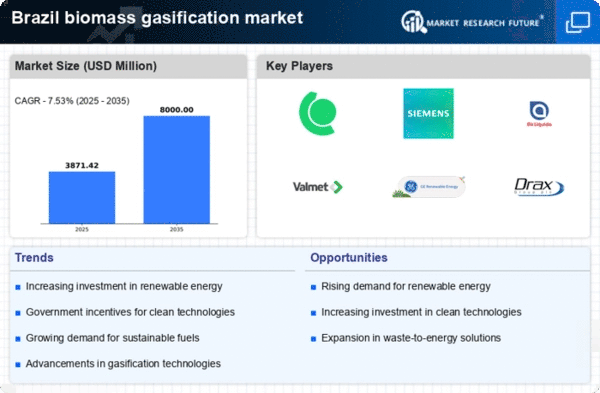
As per Market Research Future analysis, the Brazil Biomass Gasification Market size was estimated at 3600.32 USD Million in 2024. The Brazil Biomass Gasification market is projected to grow from 3871.42 USD Million in 2025 to 8000.0 USD Million by 2035, exhibiting a compound annual growth rate (CAGR) of 7.5% during the forecast period 2025 - 2035

Key Market Trends & Highlights

The Brazil biomass gasification market is poised for growth driven by technological advancements and increasing sustainability awareness.

  • Technological advancements are enhancing the efficiency of biomass gasification processes.
  • Government support and policies are fostering a favorable environment for market expansion.
  • Sustainability and environmental awareness are driving investments in renewable energy solutions.
  • Rising energy demand and agricultural residue utilization are key drivers propelling market growth.

Market Size & Forecast

2024 Market Size 3600.32 (USD Million)
2035 Market Size 8000.0 (USD Million)
CAGR (2025 - 2035) 7.53%

Major Players

Fortum (FI), Siemens (DE), Air Liquide (FR), Valmet (FI), GE Renewable Energy (US), Drax Group (GB), Biomass Energy Solutions (US), Sustainable Energy Solutions (US), Enerkem (CA)

Our Impact
Enabled $4.3B Revenue Impact for Fortune 500 and Leading Multinationals
Partnering with 2000+ Global Organizations Each Year
30K+ Citations by Top-Tier Firms in the Industry

Brazil Biomass Gasification Market Trends

The Brazil Biomass Gasification Market is currently experiencing a notable transformation, driven by a combination of environmental policies and technological advancements. Brazil's commitment to renewable energy sources has led to increased interest in biomass as a viable alternative to fossil fuels. The government has implemented various incentives to promote the use of biomass, which has resulted in a growing number of projects aimed at harnessing agricultural residues and other organic materials.

This shift not only supports energy security but also contributes to reducing greenhouse gas emissions, aligning with international climate goals. Moreover, the biomass gasification market is characterized by a diverse range of stakeholders, including government entities, private companies, and research institutions. Collaboration among these groups appears essential for fostering innovation and improving the efficiency of gasification technologies. As Brazil continues to invest in infrastructure and research, the market is likely to see advancements in gasification processes, making them more economically viable.

The increasing awareness of sustainability among consumers and industries further fuels the demand for cleaner energy solutions, positioning the biomass gasification market as a critical component of Brazil's energy landscape.

Technological Advancements

Recent innovations in gasification technologies are enhancing efficiency and reducing costs. These advancements may lead to more widespread adoption of biomass gasification systems across various sectors, including energy production and waste management.

Government Support and Policies

The Brazilian government is actively promoting renewable energy initiatives, including biomass gasification. Policies aimed at incentivizing investment in this sector could stimulate growth and attract new players, fostering a competitive market environment.

Sustainability and Environmental Awareness

There is a growing emphasis on sustainable practices within industries and among consumers. This trend is likely to drive demand for biomass gasification solutions, as stakeholders seek to minimize their carbon footprint and transition to cleaner energy sources.

Brazil Biomass Gasification Market Drivers

Rising Energy Demand

The increasing energy demand in Brazil is a crucial driver for the biomass gasification market. As the population grows and industrial activities expand, the need for sustainable energy sources intensifies. Biomass gasification offers a viable solution by converting organic materials into syngas, which can be used for electricity generation and heating. In 2025, Brazil's energy consumption is projected to rise by approximately 3.5%, further emphasizing the necessity for alternative energy sources. This trend indicates a growing market potential for biomass gasification technologies, as they can help meet energy needs while reducing reliance on fossil fuels.

Agricultural Residue Utilization

Brazil's vast agricultural sector generates significant amounts of biomass waste, including crop residues and by-products. The biomass gasification market stands to benefit from the effective utilization of these materials, which would otherwise contribute to environmental degradation. In 2025, it is estimated that Brazil produces over 200 million tons of agricultural waste annually. By converting this waste into energy through gasification, Brazil can enhance its energy security and reduce greenhouse gas emissions. This approach not only addresses waste management issues but also promotes a circular economy, making it a compelling driver for the biomass gasification market.

Regulatory Framework Enhancements

The regulatory framework surrounding renewable energy in Brazil is evolving, which positively impacts the biomass gasification market. Recent policy changes aim to streamline the approval processes for biomass projects and provide incentives for investment. In 2025, the government is expected to implement new regulations that facilitate easier access to financing for biomass gasification initiatives. These enhancements could lead to a more favorable business environment, encouraging both domestic and foreign investments. As regulations become more supportive, the biomass gasification market is likely to experience accelerated growth, attracting stakeholders interested in sustainable energy solutions.

Public Awareness and Education Initiatives

Public awareness and education initiatives regarding renewable energy are gaining traction in Brazil, serving as a significant driver for the biomass gasification market. As citizens become more informed about the benefits of sustainable energy sources, there is a growing demand for cleaner alternatives. In 2025, educational campaigns are expected to increase awareness of biomass gasification's potential to reduce carbon emissions and promote energy independence. This heightened awareness may lead to increased public support for biomass projects, influencing policymakers to prioritize funding and resources for the biomass gasification market. Consequently, this driver could play a crucial role in shaping the market's future.

Investment in Renewable Energy Infrastructure

Investment in renewable energy infrastructure is a pivotal factor influencing the biomass gasification market in Brazil. The government and private sector are increasingly channeling funds into renewable energy projects, with biomass gasification being a key focus area. In 2025, investments in renewable energy are expected to exceed $10 billion, with a significant portion allocated to biomass technologies. This influx of capital is likely to accelerate the development and deployment of gasification facilities, enhancing the market's growth prospects. Furthermore, such investments can lead to job creation and technological advancements, further solidifying the biomass gasification market's position in Brazil.


Market Segment Insights

By Fuel Type: Wood (Largest) vs. Animal Waste (Fastest-Growing)

In the Brazil biomass gasification market, the fuel type segment showcases a diverse distribution with wood holding the largest market share. Wood has established itself as the most preferred fuel source due to its availability and economic viability. Animal waste follows in significance, gaining traction as stakeholders increasingly recognize its potential in sustainable energy solutions. Other sources, while present, are not yet major players, indicating a developing market landscape. Growth trends in this segment are influenced by rising environmental concerns and the push for renewable energy adoption. Wood continues to dominate due to its established supply chains, while animal waste is emerging rapidly fueled by innovations in processing technologies and increasing governmental support for biomass applications. The overall segment is set to grow, driven by the quest for cleaner energy alternatives and waste management solutions.

Wood (Dominant) vs. Animal Waste (Emerging)

Wood remains the dominant fuel type in the Brazil biomass gasification market, characterized by its widespread availability and established infrastructure. Its utilization is supported by traditional practices and a strong market presence, making it favored among users. In contrast, animal waste represents an emerging opportunity, being increasingly harnessed for energy production. Its growth is propelled by advancements in technology and rising awareness of its benefits in waste management. Both segments showcase distinct attributes; wood's reliability contrasts with animal waste's potential for innovation and sustainability. This comparison indicates a shift towards more diversified fuel usage as environmental awareness grows and technology advances.

By Application: Power & Gas Fuels (Largest) vs. Chemicals (Fastest-Growing)

In the Brazil biomass gasification market, the application segment is primarily diversified into Power & Gas Fuels, Liquid Fuels, and Chemicals. Among these, Power & Gas Fuels holds the largest market share, driven by the increasing demand for sustainable energy solutions. Chemicals, however, are emerging as a significant growth driver, showcasing rapid development in their application due to innovations in processing technologies and rising environmental concerns. The growth trends in the application segment indicate a rising interest in both Power & Gas Fuels and Chemicals. The push towards cleaner energy sources is propelling Power & Gas Fuels, while Chemicals benefit from industrial advancements and a shift towards bio-based products. This dual momentum reflects an evolving market landscape, where traditional applications coexist with emerging ones, stimulating competition and investment.

Power & Gas Fuels (Dominant) vs. Chemicals (Emerging)

Power & Gas Fuels are recognized as the dominant application in the Brazil biomass gasification market, leveraging existing infrastructure and extensive consumer demand. Their significance is further enhanced by the ongoing transition to renewable energy, which has positioned them as a reliable alternative. On the other hand, Chemicals are an emerging segment, fueled by technological innovations and a shift towards sustainable materials. This segment includes bio-based chemicals that replace conventional petroleum products, driving investment and research. The contrasting positions of these applications highlight a dynamic landscape where established and new opportunities are forging the future of biomass gasification.

Get more detailed insights about Brazil Biomass Gasification Market

Key Players and Competitive Insights

The biomass gasification market in Brazil is characterized by a dynamic competitive landscape, driven by increasing demand for renewable energy solutions and stringent environmental regulations. Key players are actively pursuing strategies that emphasize innovation, regional expansion, and partnerships to enhance their market positioning. Companies such as Fortum (FI), Siemens (DE), and Air Liquide (FR) are at the forefront, leveraging their technological expertise and operational capabilities to capture market share. Their collective focus on sustainable practices and advanced gasification technologies shapes a competitive environment that is increasingly oriented towards efficiency and environmental stewardship. In terms of business tactics, companies are localizing manufacturing and optimizing supply chains to reduce costs and improve service delivery. The market structure appears moderately fragmented, with several players vying for dominance. However, the influence of major companies is significant, as they set benchmarks for technology and operational excellence. This competitive structure fosters an environment where innovation is paramount, compelling smaller firms to adapt or collaborate with larger entities to remain viable. In October 2025, Fortum (FI) announced a strategic partnership with a Brazilian energy firm to develop a new biomass gasification facility in the state of São Paulo. This initiative is expected to enhance local energy production while reducing greenhouse gas emissions. The partnership underscores Fortum's commitment to expanding its footprint in Brazil and aligns with the country's renewable energy goals, potentially positioning the company as a leader in the region's transition to sustainable energy. In September 2025, Siemens (DE) launched a new digital platform aimed at optimizing biomass gasification processes. This platform integrates AI and machine learning to enhance operational efficiency and reduce downtime. The introduction of this technology is indicative of Siemens' strategy to leverage digital transformation as a means to improve competitiveness and operational performance in the biomass sector, suggesting a shift towards more data-driven decision-making in energy production. In August 2025, Air Liquide (FR) expanded its operations in Brazil by acquiring a local biomass gasification technology firm. This acquisition is likely to bolster Air Liquide's capabilities in providing integrated solutions for biomass conversion, enhancing its service offerings in the region. The move reflects a broader trend of consolidation within the market, as companies seek to enhance their technological prowess and market reach through strategic acquisitions. As of November 2025, current trends in the biomass gasification market are increasingly defined by digitalization, sustainability, and the integration of advanced technologies. Strategic alliances are becoming more prevalent, as companies recognize the need to collaborate to innovate and meet evolving market demands. Looking ahead, competitive differentiation is expected to shift from price-based competition to a focus on innovation, technology, and supply chain reliability. This evolution may redefine the competitive landscape, compelling companies to invest in cutting-edge solutions that enhance their operational capabilities and sustainability profiles.

Key Companies in the Brazil Biomass Gasification Market include

Industry Developments

In recent months, the Brazil Biomass Gasification Market has seen significant activity. Notably, AgroPower has been advancing its biomass energy initiatives, focusing on sustainable practices that align with Brazil's green energy policies. In September 2023, Bioenergy Corporation reported an increase in gasification projects aimed at utilizing agricultural residues, underscoring the potential for waste-to-energy conversion.

Archer Daniels Midland is also expanding its footprint in the market by enhancing its biomass processing capabilities. In terms of mergers and acquisitions, EDP Energias do Brasil has been in discussions to acquire smaller biomass firms to increase its market share, while Votorantim Energia announced in October 2023 the acquisition of several biomass-based energy facilities to bolster its renewable energy portfolio.

Current affairs have highlighted the need for innovative technologies, with Universidade Federal do Rio de Janeiro actively engaging in Research and Development initiatives. The growth trajectory in this sector is fueled not just by corporate strategies but also by Brazil's commitment to renewable energy, aiming for a more sustainable future in alignment with international environmental goals. Recent developments indicate a promising future for biomass gasification, emphasizing both strategic corporate advances and governmental support.


Future Outlook

Brazil Biomass Gasification Market Future Outlook

The Biomass Gasification Market in Brazil is poised for growth at a 7.53% CAGR from 2025 to 2035, driven by renewable energy policies, technological advancements, and increasing energy demands.

New opportunities lie in:

  • Development of integrated biomass supply chains for efficiency gains. Investment in advanced gasification technologies to enhance output. Partnerships with agricultural sectors for sustainable feedstock sourcing.

By 2035, the biomass gasification market is expected to achieve substantial growth and innovation.

Market Segmentation

Brazil Biomass Gasification Market Fuel Type Outlook

  • Wood
  • Animal Waste
  • Others

Brazil Biomass Gasification Market Application Outlook

  • Chemicals
  • Liquid Fuels
  • Power & Gas Fuels

Report Scope

MARKET SIZE 2024 3600.32(USD Million)
MARKET SIZE 2025 3871.42(USD Million)
MARKET SIZE 2035 8000.0(USD Million)
COMPOUND ANNUAL GROWTH RATE (CAGR) 7.53% (2025 - 2035)
REPORT COVERAGE Revenue Forecast, Competitive Landscape, Growth Factors, and Trends
BASE YEAR 2024
Market Forecast Period 2025 - 2035
Historical Data 2019 - 2024
Market Forecast Units USD Million
Key Companies Profiled Fortum (FI), Siemens (DE), Air Liquide (FR), Valmet (FI), GE Renewable Energy (US), Drax Group (GB), Biomass Energy Solutions (US), Sustainable Energy Solutions (US), Enerkem (CA)
Segments Covered Fuel Type, Application
Key Market Opportunities Growing demand for renewable energy solutions drives innovation in the biomass gasification market.
Key Market Dynamics Rising investments in biomass gasification technologies driven by Brazil's renewable energy policies and sustainability goals.
Countries Covered Brazil
Leave a Comment

FAQs

What is the expected market size of the Brazil Biomass Gasification Market in 2024?

The Brazil Biomass Gasification Market is expected to be valued at 4.5 USD billion in 2024.

How much is the Brazil Biomass Gasification Market projected to be worth by 2035?

By 2035, the Brazil Biomass Gasification Market is anticipated to reach a value of 10.0 USD billion.

What is the expected compound annual growth rate (CAGR) for the Brazil Biomass Gasification Market from 2025 to 2035?

The market is expected to grow at a CAGR of 7.528 percent from 2025 to 2035.

Which fuel type has the largest market share in the Brazil Biomass Gasification Market in 2024?

Agricultural waste holds the largest market share valued at 1.5 USD billion in 2024.

What is the projected market size for forest waste in the Brazil Biomass Gasification Market by 2035?

The market for forest waste is projected to reach 2.5 USD billion by 2035.

Who are the key players in the Brazil Biomass Gasification Market?

Major players include AgroPower, Bioenergy Corporation, Archer Daniels Midland, and Petrobras.

What is the estimated market size for municipal waste in the Brazil Biomass Gasification Market in 2024?

The municipal waste segment is estimated to be valued at 1.3 USD billion in 2024.

What growth opportunities exist in the Brazil Biomass Gasification Market?

The increasing focus on renewable energy sources presents significant growth opportunities in the market.

How is the animal waste segment expected to perform by 2035 in the Brazil Biomass Gasification Market?

The animal waste segment is forecasted to reach a valuation of 1.7 USD billion by 2035.

What challenges might affect the growth of the Brazil Biomass Gasification Market?

Regulatory hurdles and competition from other renewable energy sources may pose challenges to market growth.

Download Free Sample

Kindly complete the form below to receive a free sample of this Report

Compare Licence

×
Features License Type
Single User Multiuser License Enterprise User
Price $4,950 $5,950 $7,250
Maximum User Access Limit 1 User Upto 10 Users Unrestricted Access Throughout the Organization
Free Customization
Direct Access to Analyst
Deliverable Format
Platform Access
Discount on Next Purchase 10% 15% 15%
Printable Versions