×
Request Free Sample ×

Kindly complete the form below to receive a free sample of this Report

* Please use a valid business email

Leading companies partner with us for data-driven Insights

clients tt-cursor
Hero Background

Bladder Exstrophy Market

ID: MRFR/HC/34421-HCR
100 Pages
Rahul Gotadki
February 2026

Bladder Exstrophy Market Research Report: Size, Share, Trend Analysis By Surgical Procedures (Bladder Closure, Epispadias Repair, Surgical Revision), By Patient Demographics (Pediatric Patients, Adult Patients, Gender), By Treatment Type (Surgical Treatment, Non-Surgical Treatment, Palliative Care), By Healthcare Setting (Hospitals, Specialized Clinics, Outpatient Facilities) and By Regional (North America, Europe, South America, Asia Pacific, Middle East and Africa) - Growth Outlook & Industry Forecast 2025 To 2035

Share:
Download PDF ×

We do not share your information with anyone. However, we may send you emails based on your report interest from time to time. You may contact us at any time to opt-out.

Bladder Exstrophy Market Infographic
Purchase Options

Bladder Exstrophy Market Summary

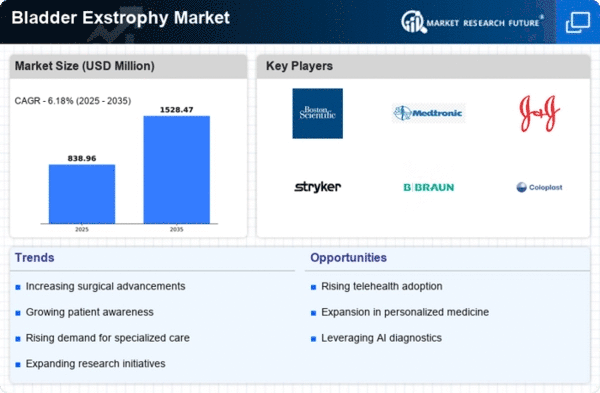
As per MRFR analysis, the Bladder Exstrophy Market Size was estimated at 790.13 USD Million in 2024. The Bladder Exstrophy industry is projected to grow from 838.97 in 2025 to 1528.47 by 2035, exhibiting a compound annual growth rate (CAGR) of 6.18 during the forecast period 2025 - 2035.

Key Market Trends & Highlights

The Bladder Exstrophy Market is poised for growth driven by advancements in surgical techniques and a focus on patient-centric care.

  • North America remains the largest market for bladder exstrophy treatments, reflecting a robust healthcare infrastructure.
  • Asia-Pacific is emerging as the fastest-growing region, driven by increasing healthcare investments and awareness.
  • Surgical procedures dominate the market, while diagnostic procedures are witnessing rapid growth due to technological advancements.
  • The rising incidence of bladder exstrophy and increased awareness are key drivers propelling market expansion.

Market Size & Forecast

2024 Market Size 790.13 (USD Million)
2035 Market Size 1528.47 (USD Million)
CAGR (2025 - 2035) 6.18%

Major Players

Boston Scientific (US), Medtronic (US), Johnson & Johnson (US), Stryker (US), B. Braun Melsungen AG (DE), Coloplast A/S (DK), Hollister Incorporated (US), ConvaTec Group PLC (GB)

Our Impact
Enabled $4.3B Revenue Impact for Fortune 500 and Leading Multinationals
Partnering with 2000+ Global Organizations Each Year
30K+ Citations by Top-Tier Firms in the Industry

Bladder Exstrophy Market Trends

The Bladder Exstrophy Market is characterized by a complex interplay of medical advancements, patient needs, and healthcare policies. As awareness of this congenital condition increases, there is a growing demand for innovative surgical techniques and post-operative care solutions. The market appears to be evolving, with a focus on improving patient outcomes and enhancing quality of life. Furthermore, the integration of multidisciplinary approaches in treatment plans suggests a shift towards more comprehensive care models, which may lead to better management of bladder exstrophy cases. In addition, the Bladder Exstrophy Market is influenced by ongoing research and development efforts aimed at understanding the underlying causes and potential therapies for this condition. Collaboration among healthcare providers, researchers, and patient advocacy groups seems to be fostering an environment conducive to innovation. As the market continues to mature, it is likely that new technologies and treatment modalities will emerge, potentially reshaping the landscape of care for individuals affected by bladder exstrophy.

Advancements in Surgical Techniques

Recent developments in surgical methods for bladder exstrophy are enhancing the precision and effectiveness of procedures. Minimally invasive techniques are gaining traction, which may lead to reduced recovery times and improved patient satisfaction.

Increased Focus on Patient-Centric Care

There is a noticeable trend towards prioritizing patient needs and preferences in treatment plans. This shift may result in more personalized approaches, ensuring that care is tailored to individual circumstances and enhancing overall outcomes.

Growing Research and Collaboration

The Bladder Exstrophy Market is witnessing a surge in collaborative research efforts among medical professionals and institutions. This trend could lead to breakthroughs in understanding the condition and developing innovative therapies.

Bladder Exstrophy Market Drivers

Enhanced Diagnostic Tools

The development of advanced diagnostic tools is a notable factor propelling the Global Bladder Exstrophy Market Industry. Enhanced imaging techniques, such as 3D ultrasound and MRI, allow for more accurate diagnosis and assessment of bladder exstrophy. These tools facilitate early detection, which is crucial for timely intervention and improved patient outcomes. As healthcare facilities adopt these technologies, the demand for related medical services is likely to increase. This trend aligns with the overall growth trajectory of the market, which is expected to see a significant uptick in value as more patients receive accurate diagnoses and appropriate care.

Market Growth Projections

The Global Bladder Exstrophy Market Industry is projected to experience substantial growth, with estimates indicating a market value of 0.79 USD Billion in 2024 and a potential increase to 1.53 USD Billion by 2035. This growth trajectory suggests a robust demand for medical interventions and support services related to bladder exstrophy. The anticipated CAGR of 6.19% from 2025 to 2035 further underscores the market's potential, driven by factors such as advancements in surgical techniques, increased awareness, and enhanced diagnostic tools. These projections reflect a growing recognition of the need for effective management of bladder exstrophy on a global scale.

Rising Healthcare Expenditure

The increase in global healthcare expenditure is a significant driver for the Global Bladder Exstrophy Market Industry. As countries invest more in healthcare infrastructure and services, access to specialized treatments for conditions like bladder exstrophy improves. This trend is particularly evident in developing regions, where healthcare reforms are underway to enhance service delivery. The growing financial commitment to healthcare is likely to result in a higher demand for surgical interventions and ongoing care for bladder exstrophy patients. Consequently, this increase in expenditure is expected to positively impact the market, supporting its growth in the coming years.

Advancements in Surgical Techniques

Innovations in surgical methodologies for bladder exstrophy correction are significantly influencing the Global Bladder Exstrophy Market Industry. Techniques such as the bladder neck reconstruction and pelvic osteotomy have evolved, enhancing patient outcomes and reducing complications. These advancements not only improve the quality of life for affected individuals but also encourage more families to seek surgical intervention. As a result, the market is projected to grow at a CAGR of 6.19% from 2025 to 2035, reflecting the increasing adoption of these advanced surgical techniques. The ongoing research and development in this area are likely to further propel market expansion.

Growing Awareness and Support Initiatives

The rise in awareness campaigns and support initiatives for bladder exstrophy is fostering a more informed public, thereby driving the Global Bladder Exstrophy Market Industry. Organizations dedicated to educating families about the condition and available treatment options are emerging globally. These initiatives not only provide critical information but also create communities for affected individuals and their families. As awareness increases, the demand for medical services and products related to bladder exstrophy is expected to rise, contributing to the market's projected growth. This trend is anticipated to play a crucial role in shaping the future landscape of the industry.

Increasing Prevalence of Bladder Exstrophy

The rising incidence of bladder exstrophy globally is a primary driver for the Global Bladder Exstrophy Market Industry. This congenital condition affects approximately 1 in 30,000 births, leading to a growing need for specialized medical interventions and surgical procedures. As awareness increases among healthcare providers and parents, early diagnosis and treatment options are becoming more accessible. This trend is expected to contribute to the market's growth, with projections indicating a market value of 0.79 USD Billion in 2024, potentially reaching 1.53 USD Billion by 2035. Such figures highlight the urgent need for innovative solutions in managing bladder exstrophy.


Market Segment Insights

By Application: Surgical Procedures (Largest) vs. Diagnostic Procedures (Fastest-Growing)

In the Bladder Exstrophy Market, the application segment is primarily dominated by Surgical Procedures, which accounts for the largest share. Surgical interventions are essential for managing this complex congenital condition, leading to a significant number of procedures performed annually. In contrast, Diagnostic Procedures are emerging rapidly, reflecting a growing awareness and improved technologies that enhance early detection of bladder exstrophy in newborns and children. This increase in diagnostic capabilities is transforming patient management strategies and underpinned by advancements in imaging and assessment techniques.

Surgical Procedures (Dominant) vs. Patient Monitoring (Emerging)

Surgical Procedures remain the dominant force in the Bladder Exstrophy Market, characterized by a variety of complex operations aimed at reconstructing bladder functionality. These procedures not only require skilled surgical expertise but also comprehensive multidisciplinary care post-surgery. Meanwhile, Patient Monitoring is an emerging aspect of care, focused on ensuring that post-operative patients are closely observed for any complications or changes in their health status. With advancements in wearable technology and telemedicine, patient monitoring is becoming increasingly vital in providing real-time data to healthcare providers, thereby facilitating timely interventions when necessary.

By Type of Treatment: Surgical Correction (Largest) vs. Pharmacological Treatment (Fastest-Growing)

The Bladder Exstrophy Market is segmented into four key treatment types: Surgical Correction, Pharmacological Treatment, Rehabilitative Therapy, and Psychosocial Support. Among these, Surgical Correction holds a significant share, as it is the primary approach to address the physical malformations associated with bladder exstrophy. It is a well-established treatment that is widely recognized and accepted, which solidifies its position as the largest segment. On the other hand, Pharmacological Treatment, focusing on medication to manage symptoms and improve quality of life, is gaining traction and showcases the fastest growth potential, driven by advancements in drug development and increased patient awareness.

Surgical Correction (Dominant) vs. Psychosocial Support (Emerging)

Surgical Correction stands out as the dominant treatment option in the Bladder Exstrophy market due to its critical role in managing the physical aspects of the condition effectively. This approach typically involves reconstructive surgeries aimed at restoring bladder function and integrity. Concurrently, Psychosocial Support is emerging as a vital component in the overall treatment framework, addressing the emotional and social needs of patients. With an increasing recognition of mental health's importance in chronic conditions, more healthcare providers are integrating psychosocial support into treatment plans. This shift reflects a holistic understanding of patient care, thus paving the way for the growth of Psychosocial Support services.

By Patient Age Group: Children (Largest) vs. Adults (Fastest-Growing)

The Bladder Exstrophy Market shows a diverse distribution across patient age groups, with Children representing the largest segment. This age group comprises a substantial portion of the patient population due to the congenital nature of bladder exstrophy, which typically presents at birth. In contrast, the Adult segment, while smaller, is becoming increasingly significant as improved surgical interventions allow more individuals to transition into adulthood with manageable conditions.

Children (Dominant) vs. Adults (Emerging)

Children represent a dominant segment in the Bladder Exstrophy Market, as many cases are identified early in life and require continuous care through various treatment stages. The treatment for children mainly focuses on surgical correction and management of complications, necessitating a range of healthcare services specifically tailored to this group. Meanwhile, the Adult segment is emerging, reflecting changing demographics where more patients lead to adulthood due to advancements in patient care and lifelong monitoring. This shift indicates a growing need for supportive care, specialized clinics, and adult-focused therapies that can address the unique challenges faced by adults who were treated for bladder exstrophy in childhood.

By Severity of Condition: Severe (Largest) vs. Complex (Fastest-Growing)

In the Bladder Exstrophy Market, the severity of condition plays a crucial role in treatment approaches and patient management. The distribution of cases is notable, with the 'Severe' category representing a significant share, as it often requires more extensive medical intervention and ongoing care. Conversely, the 'Complex' category is gaining traction, reflecting an increase in awareness, early diagnosis, and advanced treatment options available for intricate cases. This change in dynamics indicates a shift in healthcare professionals' focus towards addressing complex conditions promptly. Current growth trends in the bladder exstrophy segment are primarily driven by technological advancements in surgical procedures and postoperative care. As treatment methodologies evolve, hospitals and clinics are increasingly adopting innovative strategies to provide better outcomes for patients with bladder exstrophy. Moreover, factors such as patient support groups and comprehensive care programs are helping to improve awareness and understanding, leading to a corresponding rise in the identification and treatment of 'Complex' cases, making it the fastest-growing segment within the market.

Severity: Severe (Dominant) vs. Complex (Emerging)

In the Bladder Exstrophy Market, the 'Severe' segment is well-established as the dominant area due to its high demand for intricate care strategies, encompassing surgical procedures and long-term management. Patients in this category often undergo multiple surgeries and require continuous follow-up, making it critical for healthcare providers to specialize in high-complexity care pathways. On the other hand, the 'Complex' segment represents an emerging area that is progressively gaining importance. Patients classified under this category often present with unique challenges that necessitate tailored treatment plans. The growth in this segment reflects not only the improvement in diagnostic techniques but also the increased emphasis on personalized medicine, making both segments pivotal in addressing the evolving needs in bladder exstrophy management.

Get more detailed insights about Bladder Exstrophy Market

Regional Insights

North America : Market Leader in Innovation

North America continues to lead the Bladder Exstrophy market, holding a significant share of 395.06 million in 2024. The region's growth is driven by advanced healthcare infrastructure, increasing awareness of bladder conditions, and supportive regulatory frameworks. The demand for innovative surgical solutions and devices is on the rise, fueled by a growing population and higher healthcare spending. Regulatory bodies are actively promoting research and development, enhancing market dynamics. The competitive landscape in North America is robust, featuring key players such as Boston Scientific, Medtronic, and Johnson & Johnson. These companies are at the forefront of technological advancements, offering a range of products tailored to meet patient needs. The U.S. remains the largest market, with Canada also showing promising growth. The presence of established healthcare systems and investment in medical technology further solidify North America's position in the global market.

Europe : Emerging Market with Potential

Europe's Bladder Exstrophy market is valued at 250.0 million, reflecting a growing awareness and demand for effective treatment options. The region is characterized by stringent regulatory standards that ensure the safety and efficacy of medical devices. Increasing healthcare expenditure and a rising prevalence of bladder exstrophy are key drivers of market growth. Additionally, initiatives by European health authorities to improve patient outcomes are fostering innovation in treatment methodologies. Leading countries in this region include Germany, the UK, and France, where healthcare systems are increasingly adopting advanced medical technologies. The competitive landscape features companies like B. Braun Melsungen AG and Coloplast A/S, which are investing in research and development to enhance their product offerings. The European market is poised for growth, supported by collaborations between healthcare providers and industry players. "The European market is committed to improving patient care through innovative solutions," stated a representative from the European Medicines Agency.

Asia-Pacific : Rapidly Growing Healthcare Sector

The Asia-Pacific Bladder Exstrophy market, valued at 120.0 million, is witnessing rapid growth driven by increasing healthcare investments and rising awareness of bladder conditions. Countries like China and India are experiencing significant demand for advanced medical solutions, supported by government initiatives aimed at enhancing healthcare infrastructure. The region's growth is also fueled by a growing population and rising disposable incomes, leading to increased healthcare spending. In this competitive landscape, key players such as Hollister Incorporated and ConvaTec Group PLC are expanding their presence in Asia-Pacific. The market is characterized by a mix of local and international companies striving to meet the evolving needs of patients. As healthcare systems in the region continue to develop, the Bladder Exstrophy market is expected to expand further, driven by innovation and improved access to medical technologies.

Middle East and Africa : Emerging Market with Challenges

The Middle East and Africa Bladder Exstrophy market, valued at 25.07 million, is gradually emerging, driven by increasing healthcare investments and awareness of bladder conditions. The region faces challenges such as limited access to advanced medical technologies and varying healthcare standards. However, government initiatives aimed at improving healthcare infrastructure are fostering growth. The rising prevalence of bladder exstrophy is prompting healthcare providers to seek effective treatment options, contributing to market expansion. Countries like South Africa and the UAE are leading the way in adopting innovative medical solutions. The competitive landscape is evolving, with both local and international players striving to establish a foothold in this market. As healthcare systems improve, the demand for bladder exstrophy treatments is expected to rise, supported by collaborations between governments and healthcare organizations. "We are committed to enhancing healthcare access in the region," stated a representative from the World Health Organization.

Key Players and Competitive Insights

The Bladder Exstrophy Market is characterized by a competitive landscape that is increasingly shaped by innovation, strategic partnerships, and a focus on patient-centric solutions. Key players such as Boston Scientific (US), Medtronic (US), and Johnson & Johnson (US) are at the forefront, leveraging their extensive research and development capabilities to enhance surgical outcomes and improve quality of life for patients. These companies are not only investing in advanced technologies but are also exploring mergers and acquisitions to expand their product portfolios and market reach, thereby intensifying competition within the sector.In terms of business tactics, companies are localizing manufacturing to reduce costs and improve supply chain efficiency. The market appears moderately fragmented, with several players vying for market share. However, the collective influence of major companies like Stryker (US) and B. Braun Melsungen AG (DE) is significant, as they implement strategies that emphasize operational excellence and customer engagement, which in turn shapes the overall market structure.

In November Boston Scientific (US) announced the launch of a new line of minimally invasive surgical tools specifically designed for bladder reconstruction procedures. This strategic move is likely to enhance their competitive positioning by addressing the growing demand for less invasive treatment options, which could lead to improved patient recovery times and satisfaction. Such innovations not only bolster their product offerings but also align with the broader trend towards patient-centered care.

In October Medtronic (US) entered into a partnership with a leading research institution to develop AI-driven solutions for bladder management. This collaboration is indicative of the company's commitment to integrating cutting-edge technology into their product development processes. By harnessing AI, Medtronic aims to enhance diagnostic accuracy and treatment personalization, which could significantly impact patient outcomes and set new standards in the market.

In September Johnson & Johnson (US) completed the acquisition of a startup specializing in regenerative medicine for bladder repair. This acquisition is strategically important as it allows Johnson & Johnson to diversify its portfolio and tap into the growing field of regenerative therapies. The integration of such innovative solutions could provide a competitive edge, particularly as the market shifts towards more advanced treatment modalities.

As of December the Bladder Exstrophy Market is witnessing trends that emphasize digitalization, sustainability, and the integration of AI technologies. Strategic alliances are becoming increasingly vital, as companies recognize the need to collaborate to enhance their technological capabilities and market presence. Looking ahead, competitive differentiation is expected to evolve, with a pronounced shift from price-based competition to a focus on innovation, technological advancements, and supply chain reliability. This transition suggests that companies that prioritize these areas will likely emerge as leaders in the market.

Key Companies in the Bladder Exstrophy Market include

Industry Developments

Recent news in the Bladder Exstrophy Market has been marked by advancements in treatment options and increased investments in medical technologies. Companies like Johnson and Johnson and Medtronic are focusing on developing innovative surgical techniques and products to enhance patient outcomes.

Baxter International and Boston Scientific have also seen growth in their bladder management devices, which are gaining traction among healthcare providers. Furthermore, Smith & Nephew and Coloplast are actively exploring partnerships to sustain competitive advantages and expand their market presence.

Current affairs in the market highlight the ongoing research and clinical trials aimed at improving surgical interventions and postoperative care. Notably, Medline Industries and Acelity are emphasizing patient recovery solutions that integrate advanced wound care technologies, which could lead to improved quality of life for patients.

Recent mergers and acquisitions have not been prominent among the key players in this niche; however, companies are continuously seeking collaborations to leverage each other's strengths. Overall, growth in market valuation for firms like AbbVie and Terumo underscores the increasing recognition of bladder exstrophy treatments, leading to the expansion of product lines and enhanced service delivery in this specialized medical field.

Future Outlook

Bladder Exstrophy Market Future Outlook

The Bladder Exstrophy Market is projected to grow at a 6.18% CAGR from 2025 to 2035, driven by advancements in surgical techniques, increased awareness, and improved healthcare access.

New opportunities lie in:

  • Development of specialized surgical training programs for healthcare professionals.
  • Investment in telehealth platforms for remote patient monitoring and support.
  • Creation of innovative prosthetic solutions tailored for bladder exstrophy patients.

By 2035, the Bladder Exstrophy Market is expected to achieve substantial growth and enhanced patient care.

Market Segmentation

Bladder Exstrophy Market Application Outlook

  • Surgical Procedures
  • Diagnostic Procedures
  • Postoperative Care
  • Patient Monitoring

Bladder Exstrophy Market Patient Age Group Outlook

  • Infants
  • Children
  • Adolescents
  • Adults

Bladder Exstrophy Market Type of Treatment Outlook

  • Surgical Correction
  • Pharmacological Treatment
  • Rehabilitative Therapy
  • Psychosocial Support

Bladder Exstrophy Market Severity of Condition Outlook

  • Mild
  • Moderate
  • Severe
  • Complex

Report Scope

MARKET SIZE 2024790.13(USD Million)
MARKET SIZE 2025838.97(USD Million)
MARKET SIZE 20351528.47(USD Million)
COMPOUND ANNUAL GROWTH RATE (CAGR)6.18% (2025 - 2035)
REPORT COVERAGERevenue Forecast, Competitive Landscape, Growth Factors, and Trends
BASE YEAR2024
Market Forecast Period2025 - 2035
Historical Data2019 - 2024
Market Forecast UnitsUSD Million
Key Companies ProfiledBoston Scientific (US), Medtronic (US), Johnson & Johnson (US), Stryker (US), B. Braun Melsungen AG (DE), Coloplast A/S (DK), Hollister Incorporated (US), ConvaTec Group PLC (GB)
Segments CoveredApplication, Type of Treatment, Patient Age Group, Severity of Condition
Key Market OpportunitiesAdvancements in surgical techniques and personalized treatment options enhance the Bladder Exstrophy Market potential.
Key Market DynamicsRising demand for innovative surgical techniques drives competition and technological advancements in the Bladder Exstrophy Market.
Countries CoveredNorth America, Europe, APAC, South America, MEA
Leave a Comment

FAQs

What is the projected growth of the Bladder Exstrophy market?

The Bladder Exstrophy market is the expected increase in total market value of 1.53 USD billion over a defined forecast period 2025–2035. It is driven by factors such as demand trends, technological advances, regulatory changes, and geographic expansion.

What is the size of the Bladder Exstrophy market?

Bladder Exstrophy market size was valued at approximately 0.79 billion USD in 2024. This figure will reach 1.53 billion USD covering all regions (America, Europe, Asia, MEA and ROW), focusing its segments / services / distribution channels till 2035.

What is the CAGR of the Bladder Exstrophy market?

Bladder Exstrophy market is expected to grow at a CAGR of 6.18% between 2025 and 2035.

How much will the Bladder Exstrophy market be worth by 2035?

Bladder Exstrophy market is expected to be worth of 1.53 billion USD, reflecting growth driven by usage, technology and global demands by the end of 2035.

How will the Bladder Exstrophy market perform over the next 10 years?

Over the next 10 years the Bladder Exstrophy market is expected to shift from usd billion 0.79 to 1.53 billion USD, led by adoption of advanced tech, demographic trends, regulatory approvals, with potential headwinds from 2025 to 2035.

What was the market size of the Bladder Exstrophy Market in 2025?

In 2025, the Bladder Exstrophy Market is valued at 0.84 USD Billion.

Which region is expected to have the largest market share in 2035 for the Bladder Exstrophy Market?

North America is expected to have the largest market share, valued at 0.4 USD Billion in 2035.

What is the expected market value for Bladder Closure procedures in 2035?

The market value for Bladder Closure procedures is expected to reach 0.4 USD Billion in 2035.

Who are the key players in the Bladder Exstrophy Market?

Key players include Johnson and Johnson, Baxter International, Coloplast, and Boston Scientific, among others.

What is the projected market value for Surgical Revision in 2035?

The projected market value for Surgical Revision in 2035 is 0.55 USD Billion.

Download Free Sample

Kindly complete the form below to receive a free sample of this Report

Compare Licence

×
Features License Type
Single User Multiuser License Enterprise User
Price $4,950 $5,950 $7,250
Maximum User Access Limit 1 User Upto 10 Users Unrestricted Access Throughout the Organization
Free Customization
Direct Access to Analyst
Deliverable Format
Platform Access
Discount on Next Purchase 10% 15% 15%
Printable Versions