Rising Threat of Terrorism
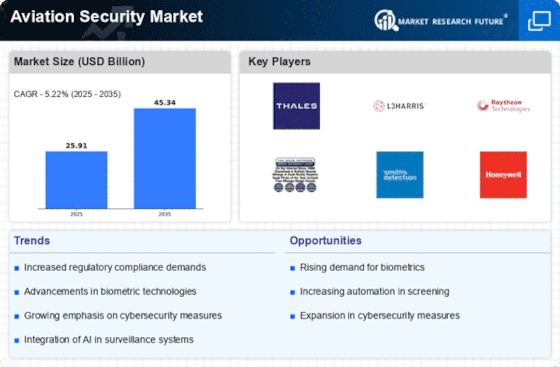
The persistent threat of terrorism continues to drive the Aviation Security Market. As incidents of aviation-related terrorism have shown, the need for enhanced security measures is paramount. Governments and aviation authorities are increasingly investing in advanced screening technologies and personnel training to mitigate risks. The Aviation Security Market is projected to grow significantly, with estimates suggesting a compound annual growth rate of over 7% in the coming years. This growth is largely attributed to the necessity of safeguarding passengers and cargo against potential threats, thereby ensuring the safety and integrity of air travel.
Increased Passenger Traffic
The continuous rise in passenger traffic is a significant driver for the Aviation Security Market. With air travel becoming more accessible, airports are experiencing unprecedented volumes of travelers. This surge necessitates the implementation of robust security measures to ensure safety without compromising efficiency. The Aviation Security Market is responding to this challenge by adopting scalable security solutions that can accommodate fluctuating passenger numbers. It is estimated that the number of air passengers will reach over 8 billion by 2030, further emphasizing the need for enhanced security infrastructure and technologies to manage this growth effectively.
Regulatory Frameworks and Compliance
The Aviation Security Market is heavily influenced by stringent regulatory frameworks established by international and national authorities. Compliance with these regulations is essential for airlines and airports to operate legally and maintain public trust. The implementation of the International Civil Aviation Organization (ICAO) standards and other regulatory requirements drives investments in security technologies and personnel training. As regulations evolve, the Aviation Security Market must adapt to meet new compliance standards, which may include enhanced screening processes and data management systems. This dynamic regulatory environment presents both challenges and opportunities for market participants.
Public Awareness and Demand for Safety
Growing public awareness regarding aviation safety is a pivotal driver for the Aviation Security Market. As travelers become more informed about security threats, their expectations for safety measures increase. This heightened awareness compels airlines and airports to invest in comprehensive security solutions that not only meet regulatory requirements but also address passenger concerns. The Aviation Security Market is likely to see a shift towards more transparent security practices, including real-time updates and communication with passengers. This trend indicates a potential for increased investment in customer-centric security technologies that enhance the overall travel experience.
Technological Advancements in Security Systems
Technological innovations play a crucial role in shaping the Aviation Security Market. The integration of artificial intelligence, machine learning, and biometric systems is revolutionizing security protocols at airports. These technologies enhance threat detection capabilities and streamline passenger processing, thereby improving overall efficiency. The Aviation Security Market is witnessing a surge in demand for automated screening lanes and advanced imaging technologies, which are expected to account for a substantial share of the market. As these technologies evolve, they are likely to redefine security standards and practices within the aviation sector.