Innovation in Food Technology
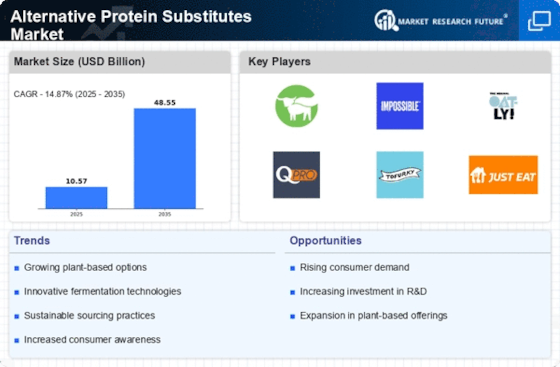
Technological advancements in food production are playing a crucial role in the evolution of the alternative protein substitutes Market. Innovations such as fermentation technology and cellular agriculture are enabling the development of high-quality protein substitutes that closely mimic the taste and texture of traditional meat products. These advancements not only enhance product appeal but also improve the nutritional profile of alternative proteins. Market data indicates that investments in food technology are on the rise, with companies focusing on creating more palatable and diverse protein options. As a result, the Alternative Protein Substitutes Market is likely to experience accelerated growth driven by these technological innovations.
Health Consciousness and Dietary Shifts
The increasing awareness of health and wellness among consumers appears to be a driving force in the Alternative Protein Substitutes Market. As individuals seek to reduce their intake of saturated fats and cholesterol, they are gravitating towards plant-based proteins. Reports indicate that the demand for alternative protein sources has surged, with a notable increase in sales of plant-based products. This shift is not merely a trend but reflects a broader dietary transformation, where consumers are prioritizing nutritional value and health benefits. The Alternative Protein Substitutes Market is thus witnessing a significant uptick in products that cater to these health-conscious consumers, including protein-rich snacks and meat alternatives that align with their dietary preferences.
Environmental Concerns and Sustainability
Growing environmental concerns are reshaping consumer preferences, leading to a notable rise in the Alternative Protein Substitutes Market. The production of traditional animal-based proteins is often associated with high greenhouse gas emissions and resource depletion. In contrast, alternative proteins, particularly those derived from plants, are perceived as more sustainable options. Data suggests that plant-based proteins require significantly less land and water compared to their animal counterparts. This awareness is prompting consumers to seek out sustainable food choices, thereby driving the demand for alternative protein products. The Alternative Protein Substitutes Market is thus positioned to benefit from this shift towards environmentally friendly consumption patterns.
Regulatory Support and Policy Initiatives
Regulatory frameworks and policy initiatives aimed at promoting sustainable food systems are emerging as significant drivers in the Alternative Protein Substitutes Market. Governments are increasingly recognizing the need to support alternative protein sources as part of their strategies to combat climate change and promote public health. Initiatives such as subsidies for plant-based food production and research grants for alternative protein innovation are becoming more common. This supportive regulatory environment is likely to encourage investment and development within the Alternative Protein Substitutes Market, fostering a more robust ecosystem for alternative protein products.
Changing Consumer Preferences and Demographics
The demographic shift towards younger, more diverse populations is influencing the Alternative Protein Substitutes Market. Millennials and Generation Z consumers are more inclined to embrace plant-based diets, driven by ethical considerations and a desire for healthier lifestyles. Market Research Future indicates that these demographics are willing to pay a premium for products that align with their values, such as sustainability and animal welfare. This trend is prompting food manufacturers to innovate and expand their offerings in the alternative protein sector. As consumer preferences continue to evolve, the Alternative Protein Substitutes Market is likely to adapt, leading to a broader range of products that cater to these changing tastes.