×
Request Free Sample ×

Kindly complete the form below to receive a free sample of this Report

* Please use a valid business email

Leading companies partner with us for data-driven Insights

clients tt-cursor
Hero Background

Wet Wipes Canister Market

ID: MRFR/PCM/35922-HCR
128 Pages
Snehal Singh
February 2026

Global Wet Wipes Market Research Report: By Application (Personal Care, Household Cleaning, Healthcare, Automotive, Industrial), By Type (Baby Wipes, Disinfecting Wipes, Moist Towelettes, Makeup Remover Wipes, Surface Wipes), By Material (Non-Woven Fabric, Cotton, Viscose, Polyester, Bamboo), By End Use (Residential, Commercial, Institutional) and By Regional (North America, Europe, South America, Asia Pacific, Middle East and Africa) - Forecast to 2035.

Share:
Download PDF ×

We do not share your information with anyone. However, we may send you emails based on your report interest from time to time. You may contact us at any time to opt-out.

Wet Wipes Canister Market Infographic
Purchase Options

Wet Wipes Canister Market Summary

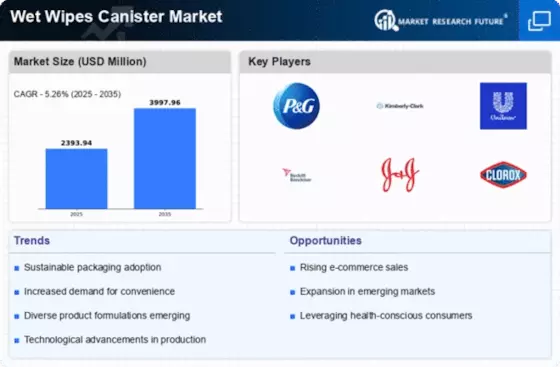
As per MRFR analysis, the Wet Wipes Canister Market Size was estimated at 2274.31 USD Million in 2024. The Wet Wipes Canister industry is projected to grow from 2393.99 in 2025 to 3997.96 by 2035, exhibiting a compound annual growth rate (CAGR) of 5.26 during the forecast period 2025 - 2035.

Key Market Trends & Highlights

The Wet Wipes Canister Market is experiencing a dynamic shift towards sustainability and innovation.

  • The market is increasingly driven by a focus on sustainability, with manufacturers prioritizing eco-friendly materials.
  • Enhanced formulations are gaining traction, catering to diverse consumer needs across various applications.
  • E-commerce is witnessing significant growth, particularly in North America, as consumers seek convenience and accessibility.
  • Rising hygiene awareness and the demand for portable solutions are major drivers propelling the market forward.

Market Size & Forecast

2024 Market Size 2274.31 (USD Million)
2035 Market Size 3997.96 (USD Million)
CAGR (2025 - 2035) 5.26%

Major Players

Procter & Gamble (US), Kimberly-Clark (US), Unilever (GB), Reckitt Benckiser (GB), Johnson & Johnson (US), Clorox (US), S.C. Johnson & Son (US), Essity (SE), Pigeon Corporation (JP)

Our Impact
Enabled $4.3B Revenue Impact for Fortune 500 and Leading Multinationals
Partnering with 2000+ Global Organizations Each Year
30K+ Citations by Top-Tier Firms in the Industry

Wet Wipes Canister Market Trends

The Wet Wipes Canister Market is currently experiencing a notable transformation, driven by evolving consumer preferences and increasing awareness regarding hygiene. As individuals become more health-conscious, the demand for convenient and effective cleaning solutions has surged. This trend is particularly evident in households and commercial settings, where the need for quick sanitation methods is paramount. Furthermore, the rise of eco-friendly products is influencing purchasing decisions, as consumers seek sustainable options that align with their values. Manufacturers are responding to this shift by innovating their product lines to include biodegradable materials and environmentally responsible packaging. In addition to sustainability, the Wet Wipes Canister Market is witnessing advancements in product formulation. Companies are investing in research and development to create wipes that are not only effective but also gentle on the skin. This focus on quality is likely to enhance customer satisfaction and loyalty. Moreover, the expansion of distribution channels, including online platforms, is making these products more accessible to a broader audience. As the market continues to evolve, it appears poised for growth, with potential opportunities for new entrants and established brands alike to capitalize on changing consumer dynamics.

Sustainability Focus

The Wet Wipes Canister Market is increasingly prioritizing sustainability, as consumers demand eco-friendly alternatives. Manufacturers are exploring biodegradable materials and recyclable packaging to meet this growing expectation.

Enhanced Formulations

There is a noticeable trend towards improved formulations in wet wipes, with companies developing products that are both effective and gentle on the skin. This focus on quality is likely to attract a wider customer base.

E-commerce Growth

The expansion of e-commerce platforms is significantly impacting the Wet Wipes Canister Market. Online shopping provides consumers with greater access to a variety of products, enhancing convenience and choice.

Wet Wipes Canister Market Drivers

Diverse Applications

The versatility of wet wipes is a crucial factor driving the Wet Wipes Canister Market. These products are utilized across various sectors, including healthcare, hospitality, and household cleaning. The ability to cater to different needs, such as disinfecting surfaces or personal care, broadens the market's appeal. Recent statistics reveal that the healthcare sector, in particular, has seen a surge in the adoption of wet wipes for infection control and sanitation purposes. This diverse range of applications suggests that the Wet Wipes Canister Market is well-positioned for growth, as it can adapt to the specific requirements of various consumer segments.

E-commerce Expansion

The expansion of e-commerce platforms is transforming the retail landscape for the Wet Wipes Canister Market. With the rise of online shopping, consumers have greater access to a variety of wet wipe products, often at competitive prices. This shift in purchasing behavior is supported by data showing a significant increase in online sales of personal care products, including wet wipes. The convenience of home delivery and the ability to compare products easily are likely to drive further growth in the Wet Wipes Canister Market. As e-commerce continues to evolve, it presents new opportunities for manufacturers to reach a broader audience.

Rising Hygiene Awareness

The increasing awareness regarding personal hygiene and cleanliness is a pivotal driver for the Wet Wipes Canister Market. Consumers are becoming more conscious of the importance of maintaining hygiene, particularly in public spaces and during travel. This heightened awareness is reflected in the growing demand for wet wipes, which are perceived as convenient and effective solutions for on-the-go cleaning. According to recent data, the wet wipes segment has experienced a notable growth rate, with projections indicating a continued upward trajectory. This trend suggests that as consumers prioritize hygiene, the Wet Wipes Canister Market is likely to expand, catering to the evolving needs of health-conscious individuals.

Convenience and Portability

The convenience and portability offered by wet wipes in canisters significantly contribute to the growth of the Wet Wipes Canister Market. These products are designed for easy access and use, making them ideal for busy lifestyles. The ability to carry a canister of wet wipes in bags or vehicles enhances their appeal, particularly among parents, travelers, and professionals. Market data indicates that the demand for portable cleaning solutions is on the rise, with wet wipes being favored for their ease of use. This trend underscores the potential for the Wet Wipes Canister Market to thrive as consumers seek practical and efficient cleaning options.

Innovative Product Development

Innovation in product development is a significant driver for the Wet Wipes Canister Market. Manufacturers are increasingly focusing on enhancing the formulations and packaging of wet wipes to meet consumer preferences. This includes the introduction of eco-friendly materials, hypoallergenic options, and specialized wipes for different uses. Market analysis indicates that consumers are gravitating towards products that align with their values, such as sustainability and skin sensitivity. As a result, the Wet Wipes Canister Market is likely to benefit from ongoing innovations that cater to these evolving consumer demands, fostering a competitive landscape.


Market Segment Insights

By Application: Personal Care (Largest) vs. Healthcare (Fastest-Growing)

The Wet Wipes Canister Market showcases a diverse range of applications, with 'Personal Care' leading the market. This segment captures a significant share due to increasing consumer demand for convenient hygiene products. Following closely are the 'Household Cleaning' and 'Healthcare' applications, reflecting growing awareness of cleanliness and sanitation in both domestic and healthcare settings. In contrast, 'Industrial Cleaning' and 'Food Service' are smaller yet essential niches within the market, catering to specific cleanliness and safety needs. As the market evolves, the application landscape is shifting towards more specialized uses. The 'Healthcare' segment is emerging rapidly, driven by heightened focus on hygiene in medical environments amid global health concerns. Innovation in formulations and packaging technologies is fostering growth across all applications, while the expanding consumer base for 'Household Cleaning' products signals a robust future for these segments. The increased emphasis on sustainability and eco-friendly products further contributes to the market's dynamics, as brands adapt to consumer preferences for environmentally conscious solutions.

Personal Care: Dominant vs. Healthcare: Emerging

The 'Personal Care' segment in the Wet Wipes Canister Market is characterized by its widespread usage among consumers seeking convenience and efficiency in their hygiene routines. This segment encompasses a variety of products, from facial wipes to baby wipes, addressing the diverse needs of consumers. The strong brand loyalty and increasing availability of these products across retail channels have solidified its dominant position. On the other hand, the 'Healthcare' segment is swiftly becoming an emerging force, driven by the growing need for sanitization and infection control in medical settings. The rise of healthcare-associated infections has heightened the demand for effective cleaning solutions, prompting innovation in formulation and packaging. As healthcare providers seek reliable and efficient hygiene products, this segment is expected to gain a larger share of the market, reflecting shifting consumer priorities towards health and safety.

By Material Type: Non-Woven Fabric (Largest) vs. Cotton (Fastest-Growing)

In the Wet Wipes Canister Market, the material type segment showcases a diverse range of options including Non-Woven Fabric, Cotton, Polyester, Viscose, and Bamboo. Non-Woven Fabric dominates the market share due to its superior absorbency and cost-effectiveness, making it a preferred choice for manufacturers. On the other hand, Cotton is steadily gaining traction as a preferred material for its softness and biodegradable nature, appealing to eco-conscious consumers.

Cotton (Dominant) vs. Bamboo (Emerging)

Cotton has established itself as a dominant material in the Wet Wipes Canister Market, due to its natural fibers which offer excellent softness and absorbency, making it ideal for personal care products. As consumers become increasingly environmentally aware, Bamboo emerges as a leading alternative, characterized by its sustainability and rapid growth rate. Though still a smaller segment, Bamboo is gaining recognition for its hypoallergenic properties and biodegradability, catering to a niche market seeking eco-friendlier options. Together, Cotton and Bamboo signify a shift towards more natural materials in wet wipes, responding to consumer demand for sustainable and responsible products.

By Packaging Type: Canister (Largest) vs. Pouch (Fastest-Growing)

In the Wet Wipes Canister Market, the packaging type segments reveal a diverse landscape with each format catering to varying consumer preferences. The canister packaging is the largest segment, holding a significant share of the market due to its convenience and reusability. In contrast, the pouch format is emerging rapidly, gaining traction among consumers looking for portable and easy-to-use options, particularly for on-the-go lifestyles.

Canister (Dominant) vs. Pouch (Emerging)

The canister packaging stands out in the Wet Wipes Canister Market as a dominant choice for consumers who prioritize durability and storage. Its sturdy design allows for extended shelf life and ease of access, enhancing user experience. Conversely, the pouch packaging represents an emerging trend, appealing to a younger demographic seeking lightweight and portable solutions. Pouches are often seen as more versatile, catering to spontaneous use and travel needs, and they typically incorporate user-friendly resealable features. This contrast showcases a shift in consumer preferences, with canisters capturing foundational usage, while pouches are rapidly adapting to modern lifestyles.

By End User: Households (Largest) vs. Healthcare Facilities (Fastest-Growing)

The Wet Wipes Canister Market is primarily characterized by its end user segments, where households currently hold the largest share. This segment benefits from a consistent demand for versatile cleaning solutions, with consumers increasingly recognizing the convenience and effectiveness of wet wipes. Among the other segments, healthcare facilities are emerging as a significant contributor to market growth, fueled by heightened hygiene awareness and stringent cleaning protocols instigated by global health concerns.

Households: Dominant vs. Healthcare Facilities: Emerging

Households represent the dominant end user segment in the Wet Wipes Canister Market, driven by consumer preferences for quick and efficient cleaning outside traditional house-cleaning routines. This segment enjoys extensive product availability and diverse use cases, including personal care, surface cleaning, and pet care. On the other hand, healthcare facilities are the emerging segment, rapidly expanding due to increased regulatory standards for sanitation and infection control. The reliance on wet wipes for disinfection and convenience in hospitals, clinics, and nursing homes showcases their critical role in enhancing cleanliness, which is increasingly prioritized in health service settings.

By Distribution Channel: Online Retail (Largest) vs. Supermarkets (Fastest-Growing)

The Wet Wipes Canister Market shows a diverse distribution channel landscape, with Online Retail holding a substantial market share as the largest channel. The growth of e-commerce and changing consumer preferences toward online shopping has significantly contributed to its dominance. In contrast, Supermarkets are emerging as the fastest-growing segment, appealing to consumers through convenience and accessibility, in a traditional shopping environment. This duality in distribution strategy is indicative of shifting consumer behaviors that prioritize both online convenience and in-store experiences. As the market evolves, the shift towards online retailing is driven by increased smartphone penetration and the pandemic-induced acceleration of e-commerce. Meanwhile, supermarkets are increasingly enhancing in-store experiences and implementing promotions to attract foot traffic, leading to their rapid growth. The expansion of product lines and innovation in convenience products also support growth across these channels, indicating a broader trend where both online and brick-and-mortar strategies are crucial for capturing consumer attention.

Online Retail: Dominant vs. Supermarkets: Emerging

Online Retail in the Wet Wipes Canister Market showcases its dominance due to its ability to provide a wider range of products, competitive pricing, and the convenience of home delivery. This channel attracts tech-savvy consumers seeking convenience, leading to increased market penetration. On the other hand, Supermarkets are emerging as critical players, leveraging their physical presence to create impulse purchases and providing consumers the ability to see and feel products before buying. Supermarkets also amplify their product offerings by positioning wet wipes as essential personal care items in high-traffic areas. The combination of strategic promotions, loyalty programs, and shelf space allocation positions these retailers favorably against the backdrop of evolving consumer needs and preferences.

Get more detailed insights about Wet Wipes Canister Market

Regional Insights

North America : Market Leader in Wet Wipes

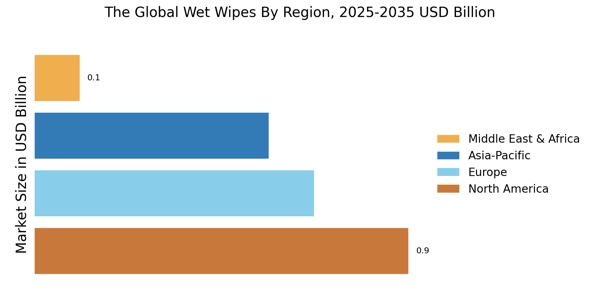
North America is the largest market for wet wipes canisters, holding a significant share of 1136.92 million in 2024. The growth is driven by increasing consumer demand for convenience and hygiene, particularly in households and healthcare settings. Regulatory support for safe and effective cleaning products further boosts market expansion, with a focus on eco-friendly formulations gaining traction among consumers. The competitive landscape is robust, featuring key players like Procter & Gamble, Kimberly-Clark, and Johnson & Johnson. These companies leverage innovative marketing strategies and product diversification to capture market share. The U.S. leads the region, with Canada and Mexico also contributing to growth. The presence of established brands ensures a competitive environment, fostering continuous product improvements and consumer engagement.

Europe : Emerging Market Dynamics

Europe's wet wipes canister market is valued at 682.59 million, reflecting a growing trend towards convenience and hygiene. Factors such as increasing urbanization, busy lifestyles, and heightened awareness of cleanliness are driving demand. Regulatory frameworks in the EU emphasize sustainability, pushing manufacturers to innovate with biodegradable materials and eco-friendly packaging, aligning with consumer preferences for greener products. Leading countries include Germany, France, and the UK, where major players like Unilever and Reckitt Benckiser are prominent. The competitive landscape is characterized by a mix of established brands and emerging local companies. The market is witnessing a shift towards premium products, with consumers willing to pay more for quality and sustainability, enhancing overall market dynamics.

Asia-Pacific : Rapid Growth Potential

The Asia-Pacific wet wipes canister market, valued at 368.87 million, is experiencing rapid growth driven by rising disposable incomes and changing consumer lifestyles. The demand for personal care and hygiene products is increasing, particularly in countries like China and India. Regulatory initiatives aimed at improving product safety and environmental standards are also influencing market dynamics, encouraging manufacturers to adopt sustainable practices. China is the leading market in the region, with significant contributions from Japan and Australia. Key players such as Pigeon Corporation and local manufacturers are expanding their product lines to cater to diverse consumer needs. The competitive landscape is evolving, with a focus on innovation and quality, as brands strive to differentiate themselves in a crowded market.

Middle East and Africa : Emerging Market Opportunities

The Middle East and Africa wet wipes canister market, valued at 86.93 million, is gradually expanding, driven by increasing urbanization and a growing middle class. The demand for hygiene products is on the rise, particularly in the healthcare and personal care sectors. Regulatory bodies are beginning to implement stricter guidelines on product safety and environmental impact, which is encouraging manufacturers to innovate and improve their offerings. Countries like South Africa and the UAE are leading the market, with a mix of local and international brands competing for market share. Key players are focusing on product differentiation and marketing strategies to capture the attention of consumers. The competitive landscape is characterized by a growing interest in eco-friendly products, aligning with global sustainability trends.

Wet Wipes Canister Market Regional Image

Key Players and Competitive Insights

The Wet Wipes Canister Market is currently characterized by a dynamic competitive landscape, driven by increasing consumer demand for convenience and hygiene. Major players such as Procter & Gamble (US), Kimberly-Clark (US), and Unilever (GB) are strategically positioned to leverage innovation and sustainability in their product offerings. Procter & Gamble (US) focuses on enhancing its product line with eco-friendly materials, while Kimberly-Clark (US) emphasizes digital transformation to streamline operations and improve customer engagement. Unilever (GB) is actively pursuing partnerships to expand its market reach, particularly in emerging economies, thereby shaping a competitive environment that prioritizes sustainability and consumer-centric solutions.

Key business tactics within the Wet Wipes Canister Market include localizing manufacturing and optimizing supply chains to enhance efficiency and reduce costs. The market appears moderately fragmented, with a mix of established players and emerging brands vying for market share. The collective influence of these key players fosters a competitive structure that encourages innovation and responsiveness to consumer trends, ultimately benefiting the market as a whole.

In January 2026, Procter & Gamble (US) announced the launch of a new line of biodegradable wet wipes, which aligns with the growing consumer preference for sustainable products. This strategic move not only enhances their product portfolio but also positions the company as a leader in environmental responsibility, potentially attracting a broader customer base concerned with sustainability.

In December 2025, Kimberly-Clark (US) unveiled a new digital platform aimed at improving customer interaction and feedback mechanisms. This initiative is significant as it allows the company to gather real-time insights into consumer preferences, enabling more agile product development and marketing strategies. Such digital integration is likely to enhance customer loyalty and drive sales growth in a competitive market.

In November 2025, Unilever (GB) entered into a strategic partnership with a local manufacturer in Southeast Asia to expand its distribution network for wet wipes. This collaboration is crucial as it not only facilitates market penetration in a rapidly growing region but also allows Unilever to adapt its products to local preferences, thereby enhancing its competitive edge.

As of February 2026, current trends in the Wet Wipes Canister Market indicate a strong emphasis on digitalization, sustainability, and the integration of AI technologies. Strategic alliances are increasingly shaping the competitive landscape, allowing companies to pool resources and expertise. Moving forward, competitive differentiation is likely to evolve from traditional price-based competition to a focus on innovation, technological advancements, and supply chain reliability, reflecting a broader shift in consumer expectations and market dynamics.

Key Companies in the Wet Wipes Canister Market include

Industry Developments

Recent developments in the Global Wet Wipes Market show continued growth and expansion among several prominent companies. Unilever, Essity, and Reckitt Benckiser are focusing on sustainability initiatives within their product lines, leading to increased demand for eco-friendly wet wipes. In September 2023, Edgewell Personal Care announced a strategic plan to enhance their manufacturing capabilities, aiming to increase production efficiency and support market expansion.

Significant market valuation shifts were observed, primarily driven by heightened consumer awareness regarding hygiene products post-pandemic, impacting Kimberly-Clark and Procter and Gamble positively.In recent M&A news, Clorox completed the acquisition of a leading cleaning products company in June 2023, positioning itself to strengthen its portfolio within the wet wipes segment. Additionally, an acquisition by Berry Global took place in August 2023, further consolidating its position in the market.

The overall trend in the last few years, particularly since early 2021, has shown a robust demand for wet wipes, with a notable increase in sales linked to antibacterial and disinfectant properties, highlighting a continuous shift towards personal hygiene and sanitation products globally.

Future Outlook

Wet Wipes Canister Market Future Outlook

The Wet Wipes Canister Market is projected to grow at a 5.26% CAGR from 2024 to 2035, driven by increasing consumer demand for convenience and hygiene.

New opportunities lie in:

  • Expansion into eco-friendly packaging solutions
  • Development of subscription-based delivery services
  • Integration of smart technology for inventory management

By 2035, the market is expected to achieve robust growth, reflecting evolving consumer preferences and innovative product offerings.

Market Segmentation

Wet Wipes Canister Market End User Outlook

  • Households
  • Commercial
  • Healthcare Facilities
  • Food Industry
  • Educational Institutions

Wet Wipes Canister Market Application Outlook

  • Personal Care
  • Household Cleaning
  • Industrial Cleaning
  • Healthcare
  • Food Service

Wet Wipes Canister Market Material Type Outlook

  • Non-Woven Fabric
  • Cotton
  • Polyester
  • Viscose
  • Bamboo

Wet Wipes Canister Market Packaging Type Outlook

  • Canister
  • Pouch
  • Refill Pack
  • Bulk Pack
  • Single Pack

Wet Wipes Canister Market Distribution Channel Outlook

  • Online Retail
  • Supermarkets
  • Pharmacies
  • Convenience Stores
  • Wholesale

Report Scope

MARKET SIZE 20242274.31(USD Million)
MARKET SIZE 20252393.99(USD Million)
MARKET SIZE 20353997.96(USD Million)
COMPOUND ANNUAL GROWTH RATE (CAGR)5.26% (2024 - 2035)
REPORT COVERAGERevenue Forecast, Competitive Landscape, Growth Factors, and Trends
BASE YEAR2024
Market Forecast Period2025 - 2035
Historical Data2019 - 2024
Market Forecast UnitsUSD Million
Key Companies ProfiledProcter & Gamble (US), Kimberly-Clark (US), Unilever (GB), Reckitt Benckiser (GB), Johnson & Johnson (US), Clorox (US), S.C. Johnson & Son (US), Essity (SE), Pigeon Corporation (JP)
Segments CoveredApplication, Material Type, Packaging Type, End User, Distribution Channel
Key Market OpportunitiesGrowing demand for eco-friendly packaging solutions in the Wet Wipes Canister Market presents significant opportunities.
Key Market DynamicsRising consumer preference for eco-friendly packaging drives innovation in the Wet Wipes Canister Market.
Countries CoveredNorth America, Europe, APAC, South America, MEA
Leave a Comment

FAQs

What is the projected market valuation of The Global Wet Wipes by 2035?

The projected market valuation for The Global Wet Wipes is expected to reach 3.998 USD Billion by 2035.

Download Free Sample

Kindly complete the form below to receive a free sample of this Report

Compare Licence

×
Features License Type
Single User Multiuser License Enterprise User
Price $4,950 $ $7,250
Maximum User Access Limit 1 User Upto 10 Users Unrestricted Access Throughout the Organization
Free Customization
Direct Access to Analyst
Deliverable Format
Platform Access
Discount on Next Purchase 10% 15% 15%
Printable Versions