Increased Awareness and Education
There is a growing awareness and education regarding vascular diseases and their treatment options among both healthcare professionals and patients. This trend is fostering a more informed patient population that actively seeks out embolization procedures as viable treatment alternatives. Educational initiatives and outreach programs are likely to contribute to the rising demand for vascular embolization, as patients become more knowledgeable about their health conditions and the benefits of minimally invasive treatments. Consequently, this heightened awareness is expected to positively impact the vascular embolization market.
Advancements in Imaging Technologies
Innovations in imaging technologies are playing a crucial role in the vascular embolization market. Enhanced imaging modalities, such as 3D angiography and intraoperative imaging, allow for more precise targeting of embolization procedures. These advancements improve patient outcomes by increasing the accuracy of interventions and reducing the likelihood of complications. The integration of advanced imaging techniques is expected to bolster the growth of the vascular embolization market, as healthcare facilities adopt these technologies to enhance procedural efficacy and safety.
Supportive Healthcare Policies and Funding
Supportive healthcare policies and funding initiatives are emerging as key drivers for the vascular embolization market. Government programs and private insurance plans are increasingly covering embolization procedures, making them more accessible to patients. This financial support is crucial in encouraging healthcare providers to offer these services, as reimbursement rates for embolization procedures have shown improvement. As a result, the vascular embolization market is likely to benefit from these favorable policies, which enhance patient access to necessary treatments and promote the growth of the industry.
Aging Population and Associated Health Issues
The aging population in the United States is contributing significantly to the growth of the vascular embolization market. As individuals age, they become more susceptible to various vascular diseases, including aneurysms and arteriovenous malformations. The U.S. Census Bureau projects that by 2030, approximately 20% of the population will be 65 years or older, leading to an increased incidence of conditions requiring embolization. This demographic shift is likely to drive demand for vascular embolization procedures, as healthcare providers seek effective solutions to manage age-related vascular health issues.
Rising Demand for Minimally Invasive Procedures
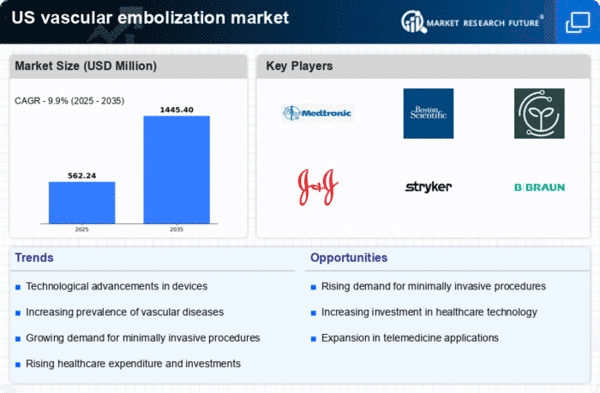
The vascular embolization market is experiencing a notable increase in demand for minimally invasive procedures. Patients and healthcare providers are increasingly favoring these techniques due to their reduced recovery times and lower risk of complications compared to traditional surgical methods. This shift is reflected in the growing number of embolization procedures performed annually, which has been reported to increase by approximately 10% in recent years. As a result, the vascular embolization market is likely to expand, driven by the need for effective and less invasive treatment options for conditions such as tumors and vascular malformations.