×
Request Free Sample ×

Kindly complete the form below to receive a free sample of this Report

* Please use a valid business email

Leading companies partner with us for data-driven Insights

clients tt-cursor
Hero Background

US Varicocele treatment Market

ID: MRFR/Pharma/18535-HCR
100 Pages
Rahul Gotadki
February 2026

US Varicocele Treatment Market Research Report By Grade (Grade I, Grade II, Grade III, others), By Diagnosis (physical exam, imaging test, others) and By Treatment (Varicocele repair, Varicocele Embolization, others) - Growth & Industry Forecast 2025 To 2035

Share:
Download PDF ×

We do not share your information with anyone. However, we may send you emails based on your report interest from time to time. You may contact us at any time to opt-out.

US Varicocele treatment Market Infographic
Purchase Options

US Varicocele treatment Market Summary

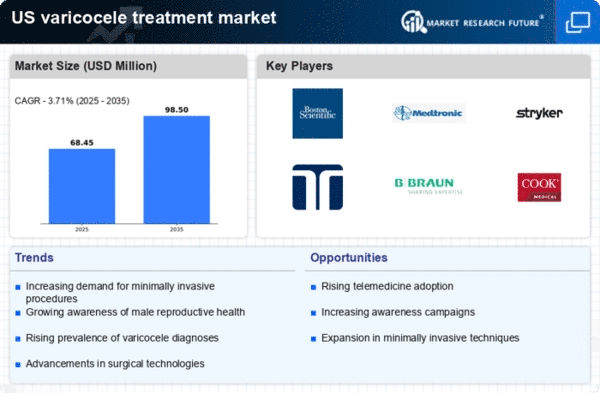
As per Market Research Future analysis, the US varicocele treatment market size was estimated at 66.0 USD Million in 2024. The US varicocele treatment market is projected to grow from 68.45 USD Million in 2025 to 98.5 USD Million by 2035, exhibiting a compound annual growth rate (CAGR) of 3.7% during the forecast period 2025 - 2035

Key Market Trends & Highlights

The US varicocele treatment market is experiencing a shift towards advanced, patient-centered care.

  • The market is witnessing a rise in minimally invasive techniques, enhancing patient recovery and satisfaction.
  • There is an increased focus on male fertility, driving demand for effective varicocele treatments.
  • Telemedicine integration is becoming prevalent, facilitating remote consultations and follow-ups for patients.
  • Key market drivers include growing awareness of male health issues and technological advancements in treatment options.

Market Size & Forecast

2024 Market Size 66.0 (USD Million)
2035 Market Size 98.5 (USD Million)
CAGR (2025 - 2035) 3.71%

Major Players

Boston Scientific (US), Medtronic (US), Stryker (US), Teleflex (US), B. Braun (DE), Cook Medical (US), Johnson & Johnson (US), Olympus (JP), Smith & Nephew (GB)

Our Impact
Enabled $4.3B Revenue Impact for Fortune 500 and Leading Multinationals
Partnering with 2000+ Global Organizations Each Year
30K+ Citations by Top-Tier Firms in the Industry

US Varicocele treatment Market Trends

The varicocele treatment market is currently experiencing notable developments, driven by a combination of increasing awareness regarding male reproductive health and advancements in medical technology. As more individuals seek treatment for varicoceles, healthcare providers are adapting their approaches to meet the growing demand. This shift is reflected in the rising number of minimally invasive procedures, which are becoming the preferred choice for patients due to their reduced recovery times and lower complication rates. Furthermore, the integration of telemedicine into treatment protocols appears to enhance patient access to specialists, thereby facilitating timely interventions. In addition, the varicocele treatment market is influenced by ongoing research into the long-term effects of untreated varicoceles on fertility and overall health. This research underscores the importance of early diagnosis and intervention, potentially leading to increased screening initiatives. As healthcare policies evolve to prioritize preventive care, the market may witness a surge in demand for both surgical and non-surgical treatment options. Overall, the landscape of the varicocele treatment market is shifting towards more patient-centered care, with an emphasis on effective outcomes and improved quality of life for those affected by this condition.

Rise of Minimally Invasive Techniques

Minimally invasive procedures are gaining traction within the varicocele treatment market. Techniques such as laparoscopic surgery and percutaneous embolization are preferred due to their reduced recovery times and lower risk of complications. This trend reflects a broader shift towards less invasive options in medical treatments, aligning with patient preferences for quicker recovery and less discomfort.

Increased Focus on Male Fertility

There is a growing emphasis on male fertility issues, particularly in relation to varicoceles. As awareness increases, more men are seeking treatment to address potential fertility challenges. This trend is likely to drive demand for both surgical and non-surgical interventions, as healthcare providers recognize the importance of addressing male reproductive health.

Integration of Telemedicine

The integration of telemedicine into the varicocele treatment market is transforming patient access to care. Virtual consultations allow patients to connect with specialists without geographical constraints, facilitating timely diagnosis and treatment. This trend may enhance patient engagement and adherence to treatment plans, ultimately improving health outcomes.

US Varicocele treatment Market Drivers

Focus on Research and Development

A heightened focus on research and development within the medical field is driving innovation in the varicocele treatment market. Ongoing studies are exploring new treatment modalities and improving existing ones, which could lead to more effective and safer options for patients. This investment in R&D is crucial, as it not only enhances treatment efficacy but also addresses patient concerns regarding side effects and recovery times. The varicocele treatment market is likely to see a surge in new product launches and clinical trials, which may further stimulate market growth and improve patient outcomes in the coming years.

Growing Awareness of Male Health Issues

The increasing awareness surrounding male health issues, particularly those related to reproductive health, is driving the varicocele treatment market. Educational campaigns and initiatives by healthcare organizations have highlighted the importance of addressing conditions like varicocele, which can lead to infertility and other complications. As men become more informed about the potential impacts of varicocele on their health, they are more likely to seek treatment. This trend is reflected in the rising number of consultations and treatments, with estimates suggesting that the market could grow at a CAGR of around 5% over the next few years. The varicocele treatment market is thus benefiting from a shift in societal attitudes towards male health, encouraging proactive management of such conditions.

Rising Incidence of Varicocele Diagnoses

The rising incidence of varicocele diagnoses is a critical driver for the varicocele treatment market. Studies indicate that varicocele affects about 15% of the male population, with higher rates observed in men seeking fertility treatment. This increasing prevalence is prompting more men to seek medical advice and treatment options. As awareness grows and diagnostic techniques improve, more cases are being identified, leading to a higher demand for treatment solutions. The varicocele treatment market is thus positioned for growth, as healthcare providers respond to the increasing need for effective treatment options to address this common condition.

Expansion of Healthcare Insurance Coverage

The expansion of healthcare insurance coverage for reproductive health treatments is positively impacting the varicocele treatment market. As more insurance plans begin to cover procedures related to male infertility and varicocele treatment, patients are more likely to pursue these options without the burden of high out-of-pocket costs. This trend is particularly evident in the US, where legislative changes and policy adjustments are making treatments more accessible. The varicocele treatment market stands to benefit from this shift, as increased insurance coverage can lead to a rise in treatment uptake, potentially increasing market revenues by an estimated 10% over the next few years.

Technological Advancements in Treatment Options

Technological advancements in medical devices and treatment methodologies are significantly influencing the varicocele treatment market. Innovations such as laparoscopic surgery and ultrasound-guided sclerotherapy have improved treatment efficacy and patient outcomes. These minimally invasive techniques not only reduce recovery time but also minimize complications, making them more appealing to patients. The introduction of new technologies is expected to enhance the overall market landscape, with the potential for the market to reach a valuation of approximately $500 million by 2027. As healthcare providers adopt these advanced techniques, the varicocele treatment market is likely to experience substantial growth, driven by improved patient satisfaction and outcomes.


Market Segment Insights

By Treatment Type: Surgical Treatment (Largest) vs. Non-Surgical Treatment (Fastest-Growing)

In the US varicocele treatment market, Surgical Treatment currently holds the largest share as it has been the traditional approach for addressing the condition. With effective outcomes and a significant number of patients opting for surgical intervention, it remains a preferred choice among healthcare providers. Non-Surgical Treatment, while trailing in terms of market share, is rapidly gaining traction as more patients seek less invasive options, with various techniques showing promising results. Growth trends in the US varicocele treatment market indicate a shift towards Non-Surgical Treatment modalities, driven by advancements in medical technologies and increasing patient awareness. Many individuals are now more inclined to explore minimally invasive options due to shorter recovery times and reduced risks. In contrast, Surgical Treatment continues to be fortified by established protocols and a strong belief in its efficacy, although Non-Surgical alternatives are expected to capture a larger market share over the coming years.

Surgical Treatment: Dominant vs. Non-Surgical Treatment: Emerging

Surgical Treatment in the US varicocele treatment market represents the dominant approach, characterized by its proven efficacy and comprehensive care offered by surgeons. This method typically includes techniques like varicocelectomy, which are well-recognized for their success rates. Patients undergoing surgical treatment often benefit from long-lasting results, addressing the underlying issues effectively. On the other hand, Non-Surgical Treatment is emerging as an attractive alternative, appealing to patients seeking options with less risk and minimal downtime. Techniques such as ultrasound-guided embolization fall into this category, making Non-Surgical Treatment a growing segment aiming to satisfy the rising demand for patient-centric care solutions. As more practitioners adopt these methods, they contribute to a rapidly evolving landscape.

By Procedure Type: Varicocelectomy (Largest) vs. Embolization (Fastest-Growing)

The US varicocele treatment market is characterized by three primary procedure types: varicocelectomy, embolization, and sclerotherapy. Among these, varicocelectomy holds the largest market share, being the traditional and most widely accepted surgical procedure for varicocele repair. Embolization has emerged as a popular alternative due to its minimally invasive nature, contributing to its rapid growth in recent years while sclerotherapy remains a less common option for treatment. Recent trends indicate a shift towards less invasive procedures, with embolization leading the charge as the fastest-growing segment. Factors contributing to this growth include increased patient awareness, technological advancements, and a higher preference for outpatient treatment options. Moreover, the aging male population and rising rates of infertility issues are also driving the demand for effective varicocele treatments, positioning embolization favorably in the evolving market landscape.

Varicocelectomy (Dominant) vs. Embolization (Emerging)

Varicocelectomy is recognized as the dominant procedure in the US varicocele treatment market, known for its effectiveness in treating varicocele through surgical intervention that involves ligation of the affected veins. Its long-standing reputation and established results make it the go-to choice for many practitioners and patients alike. On the other hand, embolization represents an emerging option, leveraging innovative techniques to occlude the problematic veins using a catheter, resulting in reduced recovery times and minimal invasiveness. This trend towards embolization showcases the market's evolving preferences, with patients increasingly opting for solutions that align with modern healthcare trends emphasizing convenience and efficiency.

By End User: Hospitals (Largest) vs. Clinics (Fastest-Growing)

In the US varicocele treatment market, hospitals hold a significant market share due to their comprehensive facilities and specialized staff, catering to a large number of patients requiring surgical intervention. This segment's dominance is attributed to the availability of advanced medical technologies and integrated care pathways that enhance treatment outcomes. Conversely, clinics, while smaller in market share, are witnessing rapid growth as more patients prefer outpatient services for varicocele treatment, seeing them as more accessible and convenient alternatives to hospitals. Growth trends in this segment are driven by an increasing awareness of varicocele-related health issues, leading to more individuals seeking treatment. Clinics are emerging as an attractive option for patients, offering competitive pricing and shorter wait times. In contrast, hospitals continue to invest in cutting-edge technologies to remain competitive. This dynamic environment suggests an evolving preference among patients towards outpatient care, which will shape future strategies for both hospitals and clinics.

Hospitals (Dominant) vs. Clinics (Emerging)

Hospitals, as a dominant force in the US varicocele treatment market, offer a full range of services and technologies necessary for comprehensive patient care, including surgeries, imaging, and post-operative support. They benefit from established patient trust and robust infrastructure. Meanwhile, clinics represent an emerging segment, appealing to a growing demographic that values convenience and personalized care. Their focus on outpatient procedures allows clinics to capture patients seeking efficient treatment with reduced recovery times. This rivalry signifies a pivotal shift in patient preferences, fostering innovation and competition within the market.

By Patient Demographics: Adults (Largest) vs. Adolescents (Fastest-Growing)

In the US varicocele treatment market, the patient demographic distribution reveals that adults represent the largest segment, substantially comprising a significant portion of the overall treatment population. Adolescents, while smaller in number, are identified as the fastest-growing group due to rising awareness and earlier diagnosis of varicocele conditions among younger patients. This shift highlights the changing landscape and the need for tailored treatment approaches across different age groups. Growth trends within the patient demographics depict a positive trajectory for adolescents, as increased educational initiatives and healthcare access promote early intervention. Concurrently, the adult segment continues to benefit from established treatment methodologies, but may face saturation. Factors such as lifestyle choices, increased incidence rates, and evolving treatment options are pivotal in driving dynamics in the US varicocele treatment market, ensuring each demographic's distinct needs are addressed effectively.

Adults (Dominant) vs. Adolescents (Emerging)

Adults are the dominant demographic in the US varicocele treatment market, characterized by a higher prevalence of varicocele cases due to various factors including lifestyle and reproductive health concerns. They typically seek treatment options that offer effective management of symptoms and improvement in fertility outcomes. In contrast, adolescents represent an emerging segment, increasingly recognized for their unique treatment needs. This group is often affected by a lack of awareness and misconceptions about varicocele, but growing advocacy and educational efforts are pushing healthcare providers to prioritize early detection and intervention. As such, tailored treatment solutions and targeted awareness campaigns are essential in leveraging this developmental potential within the adolescent segment.

By Severity of Condition: Moderate (Largest) vs. Severe (Fastest-Growing)

In the US varicocele treatment market, the severity of condition segment showcases a diverse distribution of market share among mild, moderate, and severe cases. Moderate conditions represent the largest share, primarily driven by a higher prevalence and increased awareness regarding treatment options. Mild cases, while significant, contribute less to the market due to limited treatment necessity, whereas severe cases, although fewer, are emerging as notable contributors due to their specific treatment requirements. Growth trends within this segment indicate a robust interest in severe cases as they represent an urgent need for intervention. The increasing focus on patient-centered treatment approaches and advanced medical technologies is driving the demand for severe condition treatments. The rise in diagnosis rates and rising healthcare expenditures are encouraging healthcare providers to seek innovative and effective treatment modalities, thus positioning the severe segment as the fastest-growing in the market.

Moderate: Dominant vs. Severe: Emerging

The moderate severity segment is characterized by its considerable prevalence among the patient population, often falling within a range where treatment is necessary yet not urgent. This segment commands attention due to its lion's share of market participation and reflects a well-established path for treatment options. On the other hand, the severe segment, although less common, is marked by a crucial need for immediate medical intervention. This emerging group attracts attention from healthcare providers due to its specific, aggressive treatment plans and the potential for innovative solutions. As such, it represents a rapidly growing portion of the US varicocele treatment market, aligning with broader healthcare trends favoring specialized and urgent care.

Get more detailed insights about US Varicocele treatment Market

Key Players and Competitive Insights

The varicocele treatment market is characterized by a competitive landscape that is increasingly shaped by innovation, strategic partnerships, and a focus on patient-centric solutions. Key players such as Boston Scientific (US), Medtronic (US), and Johnson & Johnson (US) are actively engaged in enhancing their product offerings and expanding their market presence. Boston Scientific (US) has positioned itself as a leader in minimally invasive procedures, emphasizing the development of advanced technologies that improve patient outcomes. Medtronic (US) focuses on integrating digital health solutions into its treatment protocols, thereby enhancing the overall patient experience. Meanwhile, Johnson & Johnson (US) is leveraging its extensive research capabilities to innovate in surgical techniques and devices, which collectively influences the competitive dynamics of the market.The business tactics employed by these companies reflect a strategic emphasis on localizing manufacturing and optimizing supply chains to enhance efficiency and reduce costs. The market structure appears moderately fragmented, with several players vying for market share, yet the influence of major companies remains substantial. This competitive environment fosters innovation and drives advancements in treatment methodologies, as companies seek to differentiate themselves through unique value propositions.

In October Boston Scientific (US) announced the launch of a new line of varicocele treatment devices designed to enhance procedural efficiency and patient recovery times. This strategic move is likely to solidify its market position by addressing the growing demand for less invasive treatment options. The introduction of these devices not only reflects Boston Scientific's commitment to innovation but also aligns with broader trends towards patient-centered care.

In September Medtronic (US) expanded its digital health platform to include remote monitoring capabilities for patients undergoing varicocele treatment. This initiative is significant as it enhances patient engagement and allows for real-time data collection, which can lead to improved treatment outcomes. By integrating technology into its offerings, Medtronic is positioning itself as a forward-thinking leader in the market, potentially setting new standards for patient management.

In August Johnson & Johnson (US) entered into a strategic partnership with a leading telehealth provider to facilitate remote consultations for varicocele patients. This collaboration is indicative of a broader trend towards digital health solutions, enabling patients to access care more conveniently. Such partnerships may enhance the company's reach and improve patient access to specialized care, thereby reinforcing its competitive edge.

As of November the varicocele treatment market is witnessing trends that emphasize digitalization, sustainability, and the integration of artificial intelligence (AI) into treatment protocols. Strategic alliances are increasingly shaping the competitive landscape, allowing companies to pool resources and expertise. The shift from price-based competition to a focus on innovation, technology, and supply chain reliability is evident, suggesting that future differentiation will hinge on the ability to deliver superior patient outcomes through advanced treatment solutions.

Key Companies in the US Varicocele treatment Market include

Industry Developments

The US Varicocele Treatment Market has recently seen significant developments, reflecting advancements in medical technology and growing awareness about male reproductive health. Companies such as Teleflex, CR Bard, Boston Scientific, Medtronic, and Stryker continue to innovate within the sector, focusing on minimally invasive procedures to improve patient outcomes. In October 2023, the FDA approved new technologies that enhance diagnostic imaging and treatment efficacy for varicocele, signaling further investment in this sector.

Recent valuations suggest that the market is on an upward trajectory, driven by increased demand for effective treatment options. Notably, in August 2023, Teleflex announced an acquisition of a specialized vascular access company to expand its product portfolio and enhance its presence in the varicocele treatment space. Additionally, Boston Scientific partnered with health systems to facilitate better patient access to treatment options.

Over the past few years, awareness campaigns in 2022 and 2023 have helped educate the public about varicoceles, contributing to a higher incidence of diagnoses and treatments sought. According to recent reports, the market is projected to grow substantially as clinical guidelines and patient care standards evolve.

Future Outlook

US Varicocele treatment Market Future Outlook

The Varicocele treatment Market is projected to grow at a 3.71% CAGR from 2025 to 2035, driven by increasing awareness and advancements in surgical techniques.

New opportunities lie in:

  • Development of minimally invasive treatment devices
  • Expansion of telemedicine platforms for consultations
  • Partnerships with fertility clinics for integrated services

By 2035, the market is expected to achieve substantial growth, reflecting evolving treatment methodologies.

Market Segmentation

US Varicocele treatment Market End User Outlook

  • Hospitals
  • Clinics
  • Research Institutions

US Varicocele treatment Market Procedure Type Outlook

  • Varicocelectomy
  • Embolization
  • Sclerotherapy

US Varicocele treatment Market Treatment Type Outlook

  • Surgical Treatment
  • Non-Surgical Treatment
  • Laparoscopic Treatment

US Varicocele treatment Market Patient Demographics Outlook

  • Adolescents
  • Adults
  • Geriatrics

US Varicocele treatment Market Severity of Condition Outlook

  • Mild
  • Moderate
  • Severe

Report Scope

MARKET SIZE 2024 66.0(USD Million)
MARKET SIZE 2025 68.45(USD Million)
MARKET SIZE 2035 98.5(USD Million)
COMPOUND ANNUAL GROWTH RATE (CAGR) 3.71% (2025 - 2035)
REPORT COVERAGE Revenue Forecast, Competitive Landscape, Growth Factors, and Trends
BASE YEAR 2024
Market Forecast Period 2025 - 2035
Historical Data 2019 - 2024
Market Forecast Units USD Million
Key Companies Profiled Boston Scientific (US), Medtronic (US), Stryker (US), Teleflex (US), B. Braun (DE), Cook Medical (US), Johnson & Johnson (US), Olympus (JP), Smith & Nephew (GB)
Segments Covered Treatment Type, Procedure Type, End User, Patient Demographics, Severity of Condition
Key Market Opportunities Emergence of minimally invasive techniques enhances patient outcomes in the varicocele treatment market.
Key Market Dynamics Technological advancements in minimally invasive procedures drive growth in the varicocele treatment market.
Countries Covered US
Leave a Comment

FAQs

What is the market size of the US Varicocele Treatment Market in 2024?

The market size of the US Varicocele Treatment Market is expected to be valued at 39.22 million USD in 2024.

What is the projected market size of the US Varicocele Treatment Market by 2035?

By 2035, the US Varicocele Treatment Market is projected to reach a value of 173.8 million USD.

What is the expected CAGR for the US Varicocele Treatment Market from 2025 to 2035?

The US Varicocele Treatment Market is expected to grow at a CAGR of 14.493 percent between 2025 and 2035.

Which grade segment has the largest market value in 2024?

In 2024, the Grade II segment of the US Varicocele Treatment Market is projected to have the largest market value at 10.2 million USD.

What will be the market value of Grade I segment by 2035?

The Grade I segment of the US Varicocele Treatment Market is expected to reach a value of 41.8 million USD by 2035.

Who are the key players in the US Varicocele Treatment Market?

Major players in the US Varicocele Treatment Market include Teleflex, C.R. Bard, Boston Scientific, and Medtronic among others.

What is the market value of the Others grade segment in 2024?

The Others grade segment is expected to be valued at 12.2 million USD in 2024.

What is the projected market value of the Grade III segment by 2035?

By 2035, the Grade III segment is projected to have a market value of 31.8 million USD.

What are the growth drivers for the US Varicocele Treatment Market?

Growth drivers include increasing awareness about varicocele treatment options and advancements in medical technology.

What are some emerging trends in the US Varicocele Treatment Market?

Emerging trends include minimally invasive procedures and the development of new therapeutic techniques in varicocele treatment.

Download Free Sample

Kindly complete the form below to receive a free sample of this Report

Compare Licence

×
Features License Type
Single User Multiuser License Enterprise User
Price $4,950 $5,950 $7,250
Maximum User Access Limit 1 User Upto 10 Users Unrestricted Access Throughout the Organization
Free Customization
Direct Access to Analyst
Deliverable Format
Platform Access
Discount on Next Purchase 10% 15% 15%
Printable Versions