Rising Energy Costs
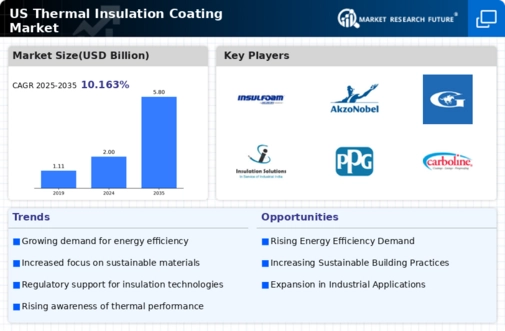
The US thermal insulation coating market is experiencing a notable surge in demand due to rising energy costs. As energy prices continue to escalate, consumers and businesses alike are seeking effective solutions to reduce their energy consumption. Thermal insulation coatings provide a viable option by enhancing the energy efficiency of buildings and industrial facilities. According to the US Energy Information Administration, energy expenditures are projected to increase, prompting a shift towards energy-saving technologies. This trend is likely to drive the adoption of thermal insulation coatings, as they can significantly lower heating and cooling costs. Furthermore, the potential for long-term savings on energy bills makes these coatings an attractive investment for property owners. As awareness of energy efficiency grows, the US thermal insulation coating market is poised for substantial growth.
Regulatory Support for Energy Efficiency
The US thermal insulation coating market benefits from a favorable regulatory environment that promotes energy efficiency. Various federal and state policies incentivize the adoption of energy-efficient technologies, including thermal insulation coatings. For instance, the Energy Policy Act encourages the use of energy-saving products, which aligns with the objectives of the thermal insulation coating market. Additionally, state-level initiatives often provide rebates and tax credits for energy-efficient upgrades, further stimulating demand. As regulations become increasingly stringent regarding energy consumption and emissions, the market for thermal insulation coatings is likely to expand. This regulatory support not only enhances the market's growth potential but also encourages innovation within the industry, leading to the development of more advanced and effective coating solutions.
Growing Awareness of Environmental Impact
The US thermal insulation coating market is witnessing a shift in consumer preferences towards environmentally friendly products. As awareness of climate change and environmental degradation increases, consumers are more inclined to choose products that minimize their ecological footprint. Thermal insulation coatings, which often contain low volatile organic compounds (VOCs) and are designed to improve energy efficiency, align with these preferences. The market is responding to this trend by developing eco-friendly formulations that meet consumer demands. According to the US Environmental Protection Agency, the construction sector is a significant contributor to greenhouse gas emissions, making energy-efficient solutions like thermal insulation coatings essential. This growing awareness is likely to drive the adoption of these coatings, as consumers seek sustainable options that contribute to a healthier planet.
Increased Construction and Renovation Activities
The US thermal insulation coating market is poised for growth due to increased construction and renovation activities across the country. As the construction sector rebounds, there is a heightened demand for energy-efficient building materials, including thermal insulation coatings. The US Census Bureau reports a steady rise in residential and commercial construction projects, which creates opportunities for the application of thermal insulation coatings. Renovation projects, particularly in older buildings, often require energy-efficient upgrades to meet modern standards. This trend is likely to drive the demand for thermal insulation coatings, as property owners seek to improve energy efficiency and reduce operational costs. The combination of new construction and renovation activities presents a favorable landscape for the US thermal insulation coating market.
Technological Innovations in Coating Applications
The US thermal insulation coating market is benefiting from ongoing technological innovations that enhance the performance and application of coatings. Advances in nanotechnology and material science have led to the development of high-performance thermal insulation coatings that offer superior thermal resistance and durability. These innovations not only improve the effectiveness of the coatings but also expand their applicability across various sectors, including residential, commercial, and industrial markets. The introduction of spray-applied coatings and easy-to-apply formulations has simplified the application process, making it more accessible for contractors and DIY enthusiasts. As technology continues to evolve, the US thermal insulation coating market is likely to see increased adoption rates, driven by the promise of enhanced performance and ease of use.