Labor Shortages
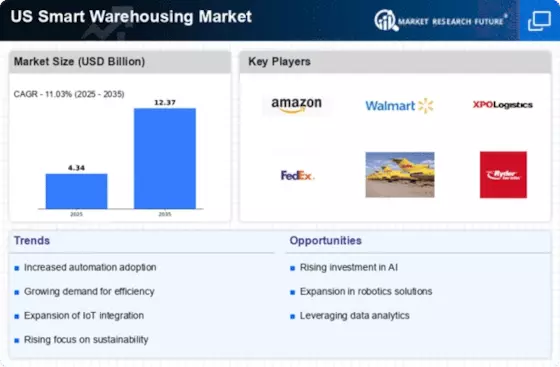
The US Smart Warehousing Market is currently facing challenges related to labor shortages, which are prompting companies to seek automation solutions. The logistics sector has been grappling with a significant workforce deficit, with estimates indicating a shortage of over 1 million workers by 2025. This situation compels businesses to invest in smart warehousing technologies that can mitigate the impact of labor shortages. Automated systems, such as robotic picking and packing solutions, can help maintain productivity levels despite the lack of available labor. As companies strive to maintain operational efficiency in the face of these challenges, the demand for smart warehousing solutions is likely to increase, further driving market growth.
Regulatory Compliance
The US Smart Warehousing Market is also influenced by the need for regulatory compliance, particularly concerning safety and environmental standards. As regulations become more stringent, companies are compelled to adopt smart warehousing solutions that ensure compliance with these requirements. For example, the Occupational Safety and Health Administration (OSHA) has established guidelines that warehouses must follow to ensure worker safety. Implementing smart technologies, such as automated safety monitoring systems, can help companies adhere to these regulations while enhancing overall operational efficiency. As businesses prioritize compliance, the demand for smart warehousing solutions that facilitate adherence to regulatory standards is expected to grow, contributing to market expansion.
Rising E-commerce Demand
The US Smart Warehousing Market is experiencing a surge in demand driven by the rapid growth of e-commerce. As online shopping continues to gain traction, retailers are increasingly investing in smart warehousing solutions to enhance their logistics capabilities. According to recent data, e-commerce sales in the US reached approximately 900 billion USD in 2022, and this figure is projected to grow significantly in the coming years. This growth necessitates the implementation of advanced warehousing technologies, such as automated storage and retrieval systems, to manage inventory efficiently and meet customer expectations for faster delivery. Consequently, the demand for smart warehousing solutions is likely to rise, as businesses seek to optimize their supply chains and improve operational efficiency.
Technological Advancements
The US Smart Warehousing Market is significantly influenced by ongoing technological advancements. Innovations in robotics, artificial intelligence, and the Internet of Things (IoT) are transforming traditional warehousing operations into highly automated and efficient systems. For instance, the integration of autonomous mobile robots (AMRs) in warehouses has been shown to enhance productivity by up to 30%. Furthermore, the adoption of IoT devices allows for real-time tracking of inventory and assets, leading to improved decision-making and reduced operational costs. As these technologies continue to evolve, they are expected to play a crucial role in shaping the future of smart warehousing in the US, driving further investment and adoption across various sectors.
Focus on Supply Chain Resilience
The US Smart Warehousing Market is increasingly focused on enhancing supply chain resilience, particularly in light of recent disruptions. Companies are recognizing the importance of building robust supply chains that can withstand unforeseen challenges. Smart warehousing solutions, such as predictive analytics and real-time inventory management, enable businesses to respond swiftly to changes in demand and supply. According to industry reports, organizations that invest in smart warehousing technologies can improve their supply chain agility by up to 40%. As firms strive to create more resilient supply chains, the adoption of smart warehousing solutions is likely to accelerate, driving growth in the US market.