×
Request Free Sample ×

Kindly complete the form below to receive a free sample of this Report

* Please use a valid business email

Leading companies partner with us for data-driven Insights

clients tt-cursor
Hero Background

US Sleeping Pillow Market

ID: MRFR/CG/19413-HCR
128 Pages
Garvit Vyas
February 2026

US Pillow Market Size, Share, Industry Trend & Analysis Research Report: By Material (100% Cotton, 100% Bamboo Fiber, 100% Silk, 100% Polyester, Others), By Filling Material (Memory Foam, Hollow Fibre, Latex, Microfiber, Others), By Shape (Square, U-Shape, Rectangle, Wave, Round, Convex, Others), By Feature (Therapy, Cooling, Anit-Static, Anti-Bacteria, Others) and By Application (Decorative, Sleeping, Bedding, Travel, Massage, Others) - Forecast to 2035.

Share:
Download PDF ×

We do not share your information with anyone. However, we may send you emails based on your report interest from time to time. You may contact us at any time to opt-out.

US Sleeping Pillow Market Infographic
Purchase Options

US Sleeping Pillow Market Summary

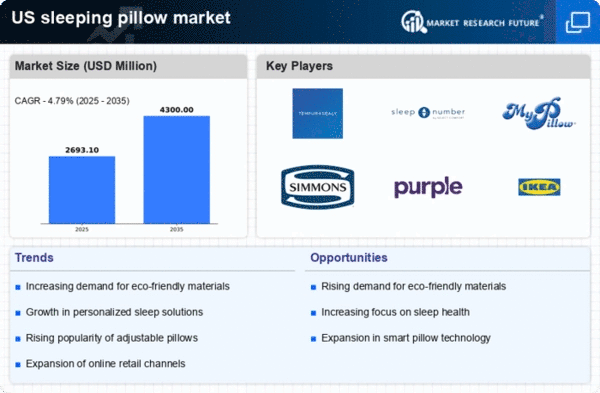
As per Market Research Future analysis, the US sleeping pillow market Size was estimated at $2570.0 Million in 2024. The Sleeping Pillow market is projected to grow from $2693.1 Million in 2025 to $4300.0 Million by 2035, exhibiting a compound annual growth rate (CAGR) of 4.7% during the forecast period 2025 - 2035

Key Market Trends & Highlights

The US sleeping pillow market is experiencing a shift towards personalized and sustainable solutions driven by health awareness and e-commerce growth.

  • The largest segment in the US sleeping pillow market is memory foam, while the fastest-growing segment is eco-friendly pillows.
  • Personalized comfort solutions are becoming increasingly popular as consumers seek tailored sleep experiences.
  • Sustainable material usage is gaining traction, reflecting a broader trend towards environmentally conscious consumerism.
  • Rising health awareness and e-commerce growth are key drivers propelling the market forward.

Market Size & Forecast

2024 Market Size 2570.0 (USD Million)
2035 Market Size 4300.0 (USD Million)
CAGR (2025 - 2035) 4.79%

Major Players

Tempur Sealy International (US), Sleep Number Corporation (US), MyPillow Inc (US), Simmons Bedding Company (US), Purple Innovation Inc (US), IKEA (SE), Hästens (SE), Dunlopillo (GB), Boll & Branch (US)

Our Impact
Enabled $4.3B Revenue Impact for Fortune 500 and Leading Multinationals
Partnering with 2000+ Global Organizations Each Year
30K+ Citations by Top-Tier Firms in the Industry

US Sleeping Pillow Market Trends

The sleeping pillow market is currently experiencing a notable transformation, driven by evolving consumer preferences and an increasing awareness of sleep health. As individuals prioritize quality sleep, there is a growing demand for pillows that cater to specific needs, such as neck support, temperature regulation, and hypoallergenic materials. This shift appears to be influenced by a broader trend towards wellness and self-care, prompting manufacturers to innovate and diversify their product offerings. Furthermore, the rise of e-commerce has facilitated easier access to a variety of sleeping pillows, allowing consumers to make informed choices based on reviews and product specifications. In addition, sustainability is becoming a focal point within the sleeping pillow market. Many consumers are now seeking eco-friendly options, which has led to an increase in the availability of pillows made from organic materials and recycled components. This trend suggests a potential shift in manufacturing practices, as companies may need to adapt to meet the growing demand for sustainable products. Overall, the sleeping pillow market is poised for continued growth, with an emphasis on health, comfort, and environmental responsibility shaping its future.

Personalized Comfort Solutions

There is a rising trend towards personalized sleeping solutions, as consumers increasingly seek pillows tailored to their individual sleep styles and preferences. This includes options for varying firmness levels, shapes, and materials that cater to specific sleeping positions, such as side, back, or stomach sleeping. Manufacturers are responding by offering customizable products that allow users to adjust their pillows for optimal comfort.

Sustainable Material Usage

The sleeping pillow market is witnessing a shift towards the use of sustainable materials, as consumers become more environmentally conscious. Pillows made from organic cotton, natural latex, and recycled materials are gaining popularity. This trend indicates a growing demand for products that not only provide comfort but also align with eco-friendly values.

Technological Integration

Innovations in technology are beginning to influence the sleeping pillow market, with smart pillows that incorporate features such as sleep tracking and temperature control emerging. These advancements suggest a potential for enhanced sleep quality, as consumers look for solutions that integrate seamlessly into their sleep environments.

US Sleeping Pillow Market Drivers

E-commerce Growth

The rapid expansion of e-commerce platforms is transforming the sleeping pillow market. With the convenience of online shopping, consumers can easily access a wide variety of sleeping pillows from the comfort of their homes. Data suggests that online sales of bedding products, including pillows, have increased by over 40% in recent years. This shift towards digital purchasing is likely to continue, as consumers appreciate the ability to compare products, read reviews, and take advantage of competitive pricing. Additionally, e-commerce allows brands to reach a broader audience, including niche markets that may not be served by traditional retail outlets. As a result, the sleeping pillow market is expected to benefit from this trend, with online sales becoming a significant revenue stream for manufacturers and retailers alike.

Demographic Shifts

Demographic changes, particularly among millennials and Generation Z, are influencing the sleeping pillow market. Younger consumers tend to prioritize sleep quality and are more likely to invest in premium sleeping products. Research indicates that millennials are willing to spend up to 20% more on sleep-related products compared to older generations. This shift in consumer behavior is prompting brands to tailor their marketing strategies and product offerings to appeal to these demographics. Additionally, as more individuals work remotely, the demand for comfortable sleeping solutions is likely to rise, further propelling the sleeping pillow market. Companies that effectively engage with younger consumers through social media and targeted advertising may experience significant growth in this segment.

Sustainability Trends

The growing emphasis on sustainability is becoming a crucial driver in the sleeping pillow market. Consumers are increasingly seeking eco-friendly products made from organic or recycled materials. Reports indicate that approximately 25% of consumers are willing to pay a premium for sustainable options. This trend is prompting manufacturers to adopt environmentally responsible practices, such as using natural fibers and reducing waste in production. As awareness of environmental issues continues to rise, the sleeping pillow market is likely to see a shift towards more sustainable offerings. Brands that successfully communicate their commitment to sustainability may enhance their appeal to environmentally conscious consumers, thereby gaining a competitive edge in the market.

Rising Health Awareness

The increasing awareness of health and wellness among consumers appears to be a pivotal driver for the sleeping pillow market. As individuals prioritize sleep quality, they are more inclined to invest in pillows that support proper spinal alignment and alleviate neck pain. Reports indicate that approximately 30% of consumers actively seek ergonomic solutions, which has led to a surge in demand for specialized sleeping pillows. This trend is likely to continue as more people recognize the correlation between sleep quality and overall health. Consequently, manufacturers are responding by innovating products that cater to these health-conscious consumers, thereby expanding the sleeping pillow market. The focus on health benefits is expected to drive sales, as consumers are willing to spend more on products that promise improved sleep quality and comfort.

Innovative Product Features

The introduction of innovative features in sleeping pillows is driving consumer interest and sales in the sleeping pillow market. Pillows with adjustable loft, cooling technology, and hypoallergenic materials are gaining traction among consumers seeking personalized comfort. For instance, pillows that incorporate memory foam or gel-infused materials are reported to enhance sleep quality by providing better support and temperature regulation. Market analysis indicates that products with such advanced features are likely to capture a larger share of the market, as consumers are increasingly willing to pay a premium for enhanced functionality. This trend suggests that manufacturers who invest in research and development to create unique product offerings may find themselves at a competitive advantage in the evolving sleeping pillow market.


Market Segment Insights

By Type: Memory Foam Sleeping Pillows (Largest) vs. Down Sleeping Pillows (Fastest-Growing)

In the US sleeping pillow market, Memory Foam Sleeping Pillows hold the largest share, driven by their popularity due to comfort and support features. Feather Sleeping Pillows and Microbead Sleeping Pillows cater to specific preferences, while Down Sleeping Pillows, despite a smaller market share, are gaining traction owing to increasing consumer demand for luxury and softness. The growth trends reveal a shift towards Memory Foam and Down Sleeping Pillows, with consumers prioritizing sleep quality and tailored comfort. The rise in awareness regarding sleep health and the influence of e-commerce platforms are significant drivers. As people invest in better sleep, the Down Sleeping Pillows segment is witnessing rapid expansion, appealing to those seeking premium options.

Memory Foam (Dominant) vs. Down (Emerging)

Memory Foam Sleeping Pillows are characterized by their ability to conform to the sleeper's head and neck, providing excellent support and pressure relief, making them the dominant choice for many consumers. Their popularity is enhanced by advancements in foam technology, which have improved durability and comfort. In contrast, Down Sleeping Pillows offer a luxurious feel that many consumers seek, contributing to their status as an emerging segment. The soft and lightweight nature of Down makes it appealing, especially to those looking for plush, high-end pillows. While Memory Foam dominates with robust sales, Down is quickly gaining market share as consumers increasingly value high-quality, luxurious products.

By End-Use: Residential (Largest) vs. Commercial (Fastest-Growing)

In the US sleeping pillow market, the residential segment holds the largest market share, driven mainly by a growing trend towards home improvement and enhanced sleep quality. Consumers are increasingly recognizing the importance of a good pillow, which leads to higher adoption rates of premium products. On the other hand, the commercial segment is witnessing rapid growth as more businesses invest in improving employee comfort and reducing health issues related to poor sleep. Growth trends in the US sleeping pillow market are heavily influenced by changing consumer preferences and increasing awareness about sleep health. The residential segment continues to dominate due to high consumer spending on home products and personalized sleep solutions. Meanwhile, the commercial segment is becoming a focal point for hotels and wellness industries, aiming to provide high-quality sleep experiences for their clientele, further accelerating its market expansion.

End-Use: Residential (Dominant) vs. Commercial (Emerging)

The residential segment is characterized by a wide variety of sleeping pillows tailored for personal comfort and health, appealing to diverse consumer needs. With innovations such as memory foam and adjustable features, this segment successfully meets growing demands for high-quality sleep. Meanwhile, the emerging commercial segment, while smaller in comparison, is leveraging increased investments from businesses looking to enhance employee productivity through better sleep solutions. Hotels and wellness centers are particularly focusing on pillow quality, recognizing that superior sleep environments significantly contribute to guest satisfaction and overall well-being. The dynamic between these segments illustrates evolving consumer attitudes towards sleep, with both segments playing crucial yet distinct roles in the market.

By Distribution Channel: Store-Based (Largest) vs. Non-Store-Based (Fastest-Growing)

In the US sleeping pillow market, the distribution of sales between store-based and non-store-based channels shows a significant preference for store-based retailing. This segment comprises a substantial share of the market, driven by consumer inclination to physically evaluate products before purchasing. Store-based channels include department stores, specialty shops, and larger retail chains that offer a variety of brands, enhancing the overall shopping experience for customers. On the other hand, the non-store-based distribution channel is emerging rapidly, primarily fueled by the rise of e-commerce platforms. This segment is expanding as more consumers turn to online shopping for convenience and accessibility. The ongoing growth trend is supported by improvements in logistics and delivery systems, which are making online pillow purchases increasingly attractive and reliable.

Store-Based: Dominant vs. Non-Store-Based: Emerging

The store-based distribution channel remains a dominant force in the US sleeping pillow market, characterized by its extensive reach and ability to provide a tactile shopping experience. Consumers often prefer this channel to explore various options, seek expert advice, and make informed purchasing decisions. Store-based retailers typically carry well-known brands and exclusive collections, appealing to consumers looking for quality. Meanwhile, the non-store-based segment is swiftly emerging, particularly due to the convenience and variety offered by e-commerce platforms. This segment attracts tech-savvy consumers who appreciate easy access to customer reviews and competitive pricing. The rise of subscription services and targeted online marketing is also catalyzing the growth of non-store-based sales, appealing to a broader audience.

Get more detailed insights about US Sleeping Pillow Market

Key Players and Competitive Insights

The sleeping pillow market exhibits a dynamic competitive landscape characterized by innovation and strategic positioning among key players. Companies such as Tempur Sealy International (US), Sleep Number Corporation (US), and Purple Innovation Inc (US) are at the forefront, leveraging their strengths in product development and customer engagement. Tempur Sealy International (US) focuses on premium memory foam technology, while Sleep Number Corporation (US) emphasizes personalized sleep solutions through adjustable firmness. Purple Innovation Inc (US) differentiates itself with its unique hyper-elastic polymer technology, appealing to consumers seeking innovative comfort solutions. Collectively, these strategies foster a competitive environment that prioritizes product differentiation and consumer-centric approaches.Key business tactics within the market include localizing manufacturing and optimizing supply chains to enhance responsiveness to consumer demands. The competitive structure appears moderately fragmented, with several players vying for market share. However, the influence of major companies is substantial, as they set trends and standards that smaller firms often follow. This interplay between established brands and emerging competitors shapes the overall market dynamics, driving innovation and consumer choice.

In October Tempur Sealy International (US) announced a strategic partnership with a leading sleep technology firm to integrate smart features into their pillow offerings. This move is likely to enhance their product line by incorporating sleep tracking and personalized comfort adjustments, aligning with the growing consumer interest in health and wellness. Such innovations may position Tempur Sealy as a leader in the tech-enhanced sleep segment, potentially increasing their market share.

In September Sleep Number Corporation (US) launched a new line of eco-friendly pillows made from sustainable materials. This initiative not only caters to the rising demand for environmentally conscious products but also reinforces the company's commitment to sustainability. By aligning their product offerings with consumer values, Sleep Number may strengthen brand loyalty and attract a broader customer base.

In August Purple Innovation Inc (US) expanded its distribution channels by partnering with major online retailers, enhancing accessibility to its innovative pillow products. This strategic move is indicative of a broader trend towards e-commerce, allowing Purple to reach a wider audience and capitalize on the growing online shopping preference among consumers. Such expansions could significantly impact their sales trajectory and market presence.

As of November current competitive trends in the sleeping pillow market are increasingly defined by digitalization, sustainability, and the integration of artificial intelligence. Strategic alliances among companies are shaping the landscape, fostering innovation and enhancing product offerings. The shift from price-based competition to a focus on technological advancements and supply chain reliability is evident. Moving forward, competitive differentiation is likely to evolve, with companies prioritizing unique product features and sustainable practices to capture consumer interest.

Key Companies in the US Sleeping Pillow Market include

Industry Developments

In recent developments within the US Pillow Market, notable growth has been observed, attributed to increased consumer focus on health and wellness, along with heightened interest in sleep quality. In October 2023, Sleep Number reported an expansion of its product offerings, enhancing smart bed technology, which is now leveraging advanced sleep tracking features, further appealing to an increasingly health-conscious consumer base. Major Motion Pillow and Tempur Sealy International have also partnered to explore innovations in sustainable materials, addressing environmental concerns that are becoming pivotal in consumer purchasing decisions.

In terms of mergers and acquisitions, Restonic announced a strategic acquisition of Cacoon by Sealy in August 2023, aiming to bolster its position in the eco-friendly segment of the market. Additionally, Serta Simmons Bedding has recently teamed up with major retailers to expand its distribution channels, emphasizing enhanced consumer accessibility. Over the past couple of years, the market has seen an upswing in online sales, particularly through platforms like Brookstone and IKEA, which have shifted focus to e-commerce, driven by changing consumer behavior post-pandemic.

Overall, these changes reflect a dynamic shift within the US Pillow Market, aligning with consumer trends and preferences.

Future Outlook

US Sleeping Pillow Market Future Outlook

The Sleeping Pillow Market is projected to grow at a 4.79% CAGR from 2025 to 2035, driven by increasing consumer awareness and demand for ergonomic products.

New opportunities lie in:

  • Development of eco-friendly materials for sustainable pillows.
  • Integration of smart technology for personalized sleep solutions.
  • Expansion into subscription-based pillow delivery services.

By 2035, the market is expected to achieve substantial growth, reflecting evolving consumer preferences.

Market Segmentation

US Sleeping Pillow Market Type Outlook

  • Feather Sleeping Pillows
  • Down Sleeping Pillows
  • Memory Foam Sleeping Pillows
  • Microbead Sleeping Pillows

US Sleeping Pillow Market End-Use Outlook

  • Residential
  • Commercial

US Sleeping Pillow Market Distribution Channel Outlook

  • Store-Based
  • Non-Store-Based

Report Scope

MARKET SIZE 2024 2570.0 (USD Million)
MARKET SIZE 2025 2693.1 (USD Million)
MARKET SIZE 2035 4300.0 (USD Million)
COMPOUND ANNUAL GROWTH RATE (CAGR) 4.79% (2025 - 2035)
REPORT COVERAGE Revenue Forecast, Competitive Landscape, Growth Factors, and Trends
BASE YEAR 2024
Market Forecast Period 2025 - 2035
Historical Data 2019 - 2024
Market Forecast Units USD Million
Key Companies Profiled Tempur Sealy International (US), Sleep Number Corporation (US), MyPillow Inc (US), Simmons Bedding Company (US), Purple Innovation Inc (US), IKEA (SE), Hästens (SE), Dunlopillo (GB), Boll & Branch (US)
Segments Covered Type, End-Use, Distribution Channel
Key Market Opportunities Growing demand for eco-friendly materials and personalized designs in the sleeping pillow market.

Key Market Dynamics Rising consumer preference for eco-friendly materials drives innovation in the sleeping pillow market.
Countries Covered US
Leave a Comment

FAQs

What is the expected market size of the US Sleeping Pillow Market in 2024?

The US Sleeping Pillow Market is expected to be valued at 2.94 billion USD in 2024.

What is the projected market size of the US Sleeping Pillow Market by 2035?

By 2035, the market size for the US Sleeping Pillow Market is anticipated to reach 5.6 billion USD.

What is the expected CAGR for the US Sleeping Pillow Market from 2025 to 2035?

The US Sleeping Pillow Market is projected to grow at a CAGR of 6.033% from 2025 to 2035.

Which type of sleeping pillow is expected to dominate the market by 2035?

Memory Foam Sleeping Pillows are projected to dominate with a value of 2.5 billion USD by 2035.

What are the estimated revenues for Feather Sleeping Pillows in 2024 and 2035?

Feather Sleeping Pillows are expected to generate revenues of 0.7 billion USD in 2024 and 1.3 billion USD in 2035.

Who are the key players in the US Sleeping Pillow Market?

Major players in the market include MyPillow, Tempur Sealy International, and Sleep Number among others.

What is the anticipated market size for Down Sleeping Pillows in 2035?

Down Sleeping Pillows are anticipated to reach a market size of 1.1 billion USD by 2035.

What segment is expected to show significant growth within the US Sleeping Pillow Market?

The Memory Foam Sleeping Pillows segment is expected to show significant growth and demand in the market.

What are the projected revenues for Microbead Sleeping Pillows in 2024 and 2035?

Microbead Sleeping Pillows are expected to achieve revenues of 0.44 billion USD in 2024 and 0.7 billion USD in 2035.

What growth opportunities exist in the US Sleeping Pillow Market?

Emerging trends towards customizable and sustainable sleeping solutions provide growth opportunities in the market.

Download Free Sample

Kindly complete the form below to receive a free sample of this Report

Compare Licence

×
Features License Type
Single User Multiuser License Enterprise User
Price $4,950 $5,950 $7,250
Maximum User Access Limit 1 User Upto 10 Users Unrestricted Access Throughout the Organization
Free Customization
Direct Access to Analyst
Deliverable Format
Platform Access
Discount on Next Purchase 10% 15% 15%
Printable Versions