×
Request Free Sample ×

Kindly complete the form below to receive a free sample of this Report

* Please use a valid business email

Leading companies partner with us for data-driven Insights

clients tt-cursor
Hero Background

US Peripheral Neuropathy Market

ID: MRFR/HC/18463-HCR
100 Pages
Garvit Vyas
February 2026

US Peripheral Neuropathy Market Research Report: Size, Share, Trend Analysis By Types (Diabetic Peripheral Neuropathy, Chemotherapy-induced Peripheral Neuropathy, Idiopathic Peripheral Neuropathy, HIV/AIDS Associated Peripheral Neuropathy), By Treatment (Pharmacological Therapies, Non-Pharmacological Therapies, Others) and By End Users (Hospitals and Clinics, Ambulatory Centers, Others) - Growth Outlook & Industry Forecast 2025 To 2035

Share:
Download PDF ×

We do not share your information with anyone. However, we may send you emails based on your report interest from time to time. You may contact us at any time to opt-out.

US Peripheral Neuropathy Market Infographic
Purchase Options

US Peripheral Neuropathy Market Summary

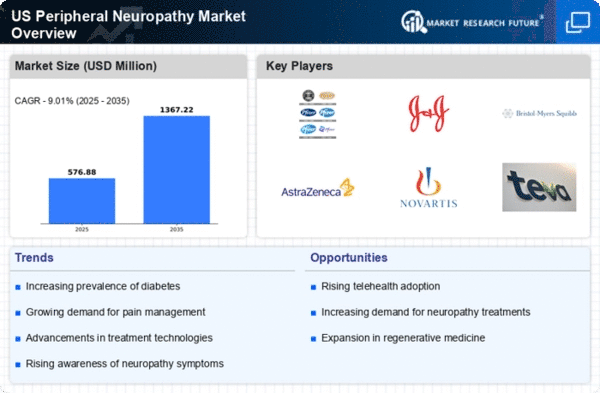
As per Market Research Future analysis, the US peripheral neuropathy market size was estimated at 529.2 USD Million in 2024. The US peripheral neuropathy market is projected to grow from 576.88 USD Million in 2025 to 1367.22 USD Million by 2035, exhibiting a compound annual growth rate (CAGR) of 9.0% during the forecast period 2025 - 2035

Key Market Trends & Highlights

The US peripheral neuropathy market is experiencing notable growth driven by increasing awareness and advancements in treatment.

  • The market is witnessing a rising incidence of neuropathic conditions, indicating a growing patient population.
  • Advancements in treatment modalities are enhancing patient outcomes and expanding therapeutic options.
  • The shift towards personalized medicine is becoming more pronounced, tailoring treatments to individual patient needs.
  • Key market drivers include the aging population and increasing awareness of peripheral neuropathy, which are propelling market growth.

Market Size & Forecast

2024 Market Size 529.2 (USD Million)
2035 Market Size 1367.22 (USD Million)
CAGR (2025 - 2035) 9.01%

Major Players

Pfizer Inc (US), Johnson & Johnson (US), Bristol-Myers Squibb Company (US), AstraZeneca PLC (GB), Novartis AG (CH), Teva Pharmaceutical Industries Ltd (IL), Eli Lilly and Company (US), Sanofi S.A. (FR), Mylan N.V. (US)

Our Impact
Enabled $4.3B Revenue Impact for Fortune 500 and Leading Multinationals
Partnering with 2000+ Global Organizations Each Year
30K+ Citations by Top-Tier Firms in the Industry

US Peripheral Neuropathy Market Trends

This market is currently experiencing notable developments, driven by an increasing prevalence of neuropathic conditions and a growing awareness of treatment options. Factors such as diabetes, chemotherapy, and autoimmune diseases contribute to the rising incidence of peripheral neuropathy, prompting healthcare providers to seek effective management strategies. As a result, there is a heightened focus on innovative therapies, including pharmacological treatments and non-pharmacological interventions. The market landscape is evolving, with advancements in technology and research leading to improved patient outcomes and quality of life. In addition, the peripheral neuropathy market is witnessing a shift towards personalized medicine, where treatment plans are tailored to individual patient needs. This approach is supported by ongoing research into the underlying mechanisms of neuropathy, which may lead to more targeted therapies. Furthermore, the integration of telemedicine and digital health solutions is enhancing access to care, allowing patients to receive timely interventions. Overall, the peripheral neuropathy market appears poised for growth, with a strong emphasis on patient-centered care and innovative treatment modalities.

Rising Incidence of Neuropathic Conditions

The increasing prevalence of conditions such as diabetes and autoimmune diseases is significantly impacting the peripheral neuropathy market. As more individuals are diagnosed with these disorders, The demand for effective treatment options is likely to rise. This will prompt healthcare providers to explore various management strategies..

Advancements in Treatment Modalities

Innovative therapies are emerging within the peripheral neuropathy market, focusing on both pharmacological and non-pharmacological interventions. Research into new medications and alternative therapies is expected to enhance patient outcomes, providing a broader range of options for managing symptoms.

Shift Towards Personalized Medicine

The trend towards personalized medicine is becoming more pronounced in the peripheral neuropathy market. Tailoring treatment plans to individual patient profiles may lead to improved efficacy and satisfaction, as ongoing research uncovers the complexities of neuropathic conditions.

US Peripheral Neuropathy Market Drivers

Rising Healthcare Expenditure

The increase in healthcare expenditure in the US is another driver impacting the peripheral neuropathy market. With healthcare spending projected to reach approximately $6 trillion by 2027, there is a growing investment in research and development for new therapies and treatment options. This financial commitment is likely to enhance the availability of innovative drugs and therapies for managing peripheral neuropathy. Furthermore, as insurance coverage expands, more patients may gain access to necessary treatments, thereby boosting the overall market. The peripheral neuropathy market stands to gain from this trend as healthcare systems prioritize effective management of chronic conditions.

Technological Innovations in Diagnostics

Technological advancements in diagnostic tools are transforming the landscape of the peripheral neuropathy market. Innovations such as high-resolution imaging and electrophysiological testing have improved the accuracy of diagnosing neuropathic conditions. These advancements enable healthcare providers to identify peripheral neuropathy more effectively, leading to timely interventions. The market for diagnostic devices is projected to grow significantly. Estimates suggest a compound annual growth rate (CAGR) of around 8% over the next five years.. As diagnostic capabilities improve, the peripheral neuropathy market is likely to benefit from increased patient referrals and treatment initiation.

Aging Population and Associated Health Issues

The aging population in the US is a significant factor influencing the peripheral neuropathy market. As individuals age, they become more susceptible to various health issues, including diabetes and other conditions that can lead to neuropathy. It is estimated that approximately 30% of older adults experience some form of neuropathic pain. This demographic shift is likely to increase the prevalence of peripheral neuropathy, thereby driving demand for treatments and therapies. The healthcare system is adapting to this trend by focusing on developing targeted interventions for older patients, which may further stimulate growth in the peripheral neuropathy market.

Increasing Awareness of Peripheral Neuropathy

The growing awareness of peripheral neuropathy among healthcare professionals and patients is a crucial driver for the peripheral neuropathy market. Educational initiatives and campaigns have been implemented to inform the public about the symptoms and potential causes of this condition. As awareness increases, more individuals are likely to seek medical advice, leading to higher diagnosis rates. This trend is reflected in the rising number of patients diagnosed with neuropathic conditions, which has been reported to be around 20 million in the US. Consequently, the demand for effective treatment options and management strategies is expected to rise, thereby propelling the peripheral neuropathy market forward.

Emergence of Multidisciplinary Treatment Approaches

The emergence of multidisciplinary treatment approaches is reshaping the peripheral neuropathy market. Healthcare providers are increasingly recognizing the need for comprehensive care that addresses the multifaceted nature of neuropathic pain. This approach often involves collaboration among neurologists, pain specialists, physical therapists, and psychologists. By integrating various treatment modalities, including pharmacological and non-pharmacological interventions, patient outcomes may improve significantly. This trend is likely to drive demand for a wider range of therapeutic options, thereby expanding the peripheral neuropathy market as healthcare systems adapt to more holistic treatment paradigms.


Market Segment Insights

By Type: Diabetic Peripheral Neuropathy (Largest) vs. Chemotherapy-induced Peripheral Neuropathy (Fastest-Growing)

The US peripheral neuropathy market is characterized by a diverse range of segment values, with Diabetic Peripheral Neuropathy holding the largest market share. This segment is primarily driven by the rising prevalence of diabetes across the nation, leading to an increased demand for effective treatment options. Following this, Chemotherapy-induced Peripheral Neuropathy is emerging as a significant player, attributed to the growing incidence of cancer treatments that often result in nerve damage. In terms of growth trends, Chemotherapy-induced Peripheral Neuropathy is witnessing rapid expansion as healthcare providers focus on managing treatment-related symptoms. Factors such as improved awareness of neuropathy symptoms among patients and advancements in treatment modalities are fueling growth in this segment. Additionally, ongoing research aimed at understanding peripheral neuropathy's etiology and long-term impacts is expected to drive innovation and expand market offerings.

Diabetic Peripheral Neuropathy (Dominant) vs. Chemotherapy-induced Peripheral Neuropathy (Emerging)

Diabetic Peripheral Neuropathy stands as the dominant segment within the US peripheral neuropathy market, primarily due to its correlation with the rising rates of diabetes. This condition leads to significant nerve damage, significantly affecting the quality of life of patients. Treatments for this segment are continually evolving, focusing on both symptomatic relief and addressing underlying metabolic issues. Meanwhile, Chemotherapy-induced Peripheral Neuropathy is recognized as an emerging segment, largely due to an uptick in cancer therapies that inadvertently cause nerve damage. This segment's growth is bolstered by the increasing focus on supportive care practices for cancer patients, fostering the development of specialized treatment options that cater to this unique patient demographic.

By Treatment: Pharmacological Therapies (Largest) vs. Non-Pharmacological Therapies (Fastest-Growing)

In the US peripheral neuropathy market, the treatment segment is characterized by a notable distribution of market share among its primary categories. Pharmacological therapies are the largest segment, capturing a significant portion of the market due to their established efficacy and widespread usage in managing symptoms. Non-pharmacological therapies are gaining traction, reflecting a growing preference for holistic and integrated treatment approaches that address both physical and psychological aspects of peripheral neuropathy. Growth trends in the treatment segment are heavily influenced by advancements in drug development and a rising demand for alternative therapies. The shift towards non-invasive treatments aligns with increasing patient awareness and preference for personalized healthcare solutions. Additionally, ongoing research and clinical innovations are likely to propel both pharmacological and non-pharmacological therapies, as patients seek comprehensive management strategies that offer better quality of life.

Pharmacological Therapies (Dominant) vs. Non-Pharmacological Therapies (Emerging)

Pharmacological therapies remain the dominant approach in the treatment of peripheral neuropathy, leveraging a wide array of medications including anti-seizure drugs, antidepressants, and topical treatments. These therapies are favored for their direct effects on nerve pain and are backed by substantial clinical evidence. However, non-pharmacological therapies are emerging as a popular alternative, focusing on methods like physical therapy, acupuncture, and cognitive behavioral therapy. These approaches not only offer symptom relief but also emphasize overall well-being through lifestyle changes. The synergy between these segments is essential, as they cater to diverse patient needs, ensuring a comprehensive treatment landscape.

By End User: Hospitals and Clinics (Largest) vs. Ambulatory Centers (Fastest-Growing)

In the US peripheral neuropathy market, the distribution of market share reflects a significant dominance of hospitals and clinics, which hold the largest share due to their capacity to provide comprehensive treatment options and advanced care. Ambulatory centers, while smaller in market share, are rapidly gaining traction as they offer convenient and cost-effective services that cater to the needs of patients seeking outpatient care. This shift towards outpatient treatments is indicative of evolving patient preferences and healthcare dynamics. The growth trends in the end user segment are driven largely by an increasing prevalence of peripheral neuropathy and the rising awareness among patients regarding treatment options. As hospitals continue to invest in specialized care for chronic conditions, ambulatory centers are well-positioned to emerge as fast-growing alternatives that meet the demand for more accessible healthcare solutions. The overall trend suggests a potential shift in patient treatment pathways, influenced by both demographic changes and technological advancements.

Hospitals and Clinics (Dominant) vs. Ambulatory Centers (Emerging)

Hospitals and clinics in the US peripheral neuropathy market are characterized by their extensive capabilities to provide comprehensive diagnostics and personalized treatment plans, making them the dominant force in this segment. They tend to have multidisciplinary teams that focus on chronic pain management and neurological rehabilitation, contributing to higher patient retention and satisfaction rates. On the other hand, ambulatory centers present an emerging alternative, appealing to patients looking for more accessible treatment options. These centers typically offer streamlined services, shorter wait times, and reduced costs, which resonate well with patients seeking outpatient care. As patient preferences shift towards convenience and efficiency, the competitive landscape is changing, with ambulatory centers poised to capture a growing share of the market.

Get more detailed insights about US Peripheral Neuropathy Market

Key Players and Competitive Insights

The peripheral neuropathy market is characterized by a competitive landscape that is increasingly shaped by innovation, strategic partnerships, and a focus on patient-centric solutions. Key players such as Pfizer Inc (US), Johnson & Johnson (US), and Eli Lilly and Company (US) are actively engaged in developing advanced therapies and expanding their market presence. Pfizer Inc (US) has positioned itself as a leader in the development of novel pain management solutions, while Johnson & Johnson (US) emphasizes a diversified portfolio that includes both pharmaceuticals and medical devices. Eli Lilly and Company (US) focuses on leveraging biotechnology to create targeted treatments, thereby enhancing its competitive edge in this dynamic market.The business tactics employed by these companies reflect a concerted effort to optimize supply chains and localize manufacturing processes. The market structure appears moderately fragmented, with a mix of established players and emerging companies vying for market share. This fragmentation allows for a variety of therapeutic options, which may benefit patients but also intensifies competition among key players. The collective influence of these companies is significant, as they drive innovation and set industry standards through their strategic initiatives.
In October Pfizer Inc (US) announced a collaboration with a leading biotechnology firm to develop a new class of neuropathic pain medications. This partnership is expected to enhance Pfizer's research capabilities and accelerate the development of innovative therapies, potentially positioning the company as a frontrunner in the neuropathy treatment landscape. The strategic importance of this collaboration lies in its potential to address unmet medical needs and expand Pfizer's therapeutic offerings.
In September Johnson & Johnson (US) launched a digital health platform aimed at improving patient engagement and adherence to treatment regimens for neuropathy patients. This initiative underscores the company's commitment to integrating technology into healthcare solutions, which may enhance patient outcomes and foster brand loyalty. By focusing on digital transformation, Johnson & Johnson is likely to strengthen its market position and respond effectively to evolving patient expectations.
In August Eli Lilly and Company (US) received FDA approval for a new drug specifically targeting diabetic neuropathy, marking a significant milestone in its product pipeline. This approval not only reinforces Eli Lilly's commitment to addressing chronic pain conditions but also highlights the company's ability to navigate regulatory challenges effectively. The introduction of this drug is anticipated to capture a substantial share of the market, given the rising prevalence of diabetes-related neuropathy in the US.
As of November the competitive trends in the peripheral neuropathy market are increasingly defined by digitalization, sustainability, and the integration of artificial intelligence (AI) in drug development. Strategic alliances among key players are shaping the landscape, fostering innovation and enhancing operational efficiencies. Looking ahead, it is likely that competitive differentiation will evolve, with a shift from price-based competition to a focus on technological advancements, innovative therapies, and reliable supply chains. This transition may ultimately lead to improved patient outcomes and a more sustainable market environment.

Key Companies in the US Peripheral Neuropathy Market include

Industry Developments

The US Peripheral Neuropathy Market has seen significant developments recently, particularly with advancements in therapies and treatment modalities. Companies such as Teva Pharmaceutical Industries, Bristol Myers Squibb, and Eli Lilly and Company are currently focusing on innovative therapies to manage chronic pain associated with peripheral neuropathy. In 2023, Gilead Sciences announced progress in clinical trials for a new treatment targeting diabetic neuropathy, potentially expanding their product portfolio.

Meanwhile, Novartis has been enhancing its Research and Development efforts, leading to the potential launch of new drug candidates aimed at alleviating symptoms of peripheral neuropathy. Growth trends have indicated a rising market valuation, driven by increasing incidences of diabetes and chemotherapy-induced neuropathy, thus impacting the overall market positively.

In terms of mergers and acquisitions, it has been noted that AstraZeneca is exploring partnership opportunities to boost its pipeline in neurology, however, no finalized deals have been disclosed yet as of October 2023. Additionally, trends from previous years, such as significant regulatory approvals and the introduction of novel therapies, continue to shape the landscape of this sector in the US, signaling a promising future for treatments in peripheral neuropathy.

Future Outlook

US Peripheral Neuropathy Market Future Outlook

The Peripheral Neuropathy Market is projected to grow at a 9.01% CAGR from 2025 to 2035, driven by increasing prevalence, advancements in treatment options, and rising awareness.

New opportunities lie in:

  • Development of telehealth platforms for remote patient monitoring. Investment in regenerative medicine therapies targeting nerve repair. Expansion of personalized medicine approaches for neuropathy treatment.

By 2035, the market is expected to achieve substantial growth, reflecting evolving treatment paradigms and increased patient engagement.

Market Segmentation

US Peripheral Neuropathy Market Type Outlook

  • Diabetic Peripheral Neuropathy
  • Chemotherapy-induced Peripheral Neuropathy
  • Idiopathic Peripheral Neuropathy
  • HIV/AIDS Associated Peripheral Neuropathy

US Peripheral Neuropathy Market End User Outlook

  • Hospitals and Clinics
  • Ambulatory Centers
  • Others

US Peripheral Neuropathy Market Treatment Outlook

  • Pharmacological Therapies
  • Non-Pharmacological Therapies
  • Others

Report Scope

MARKET SIZE 2024 529.2(USD Million)
MARKET SIZE 2025 576.88(USD Million)
MARKET SIZE 2035 1367.22(USD Million)
COMPOUND ANNUAL GROWTH RATE (CAGR) 9.01% (2025 - 2035)
REPORT COVERAGE Revenue Forecast, Competitive Landscape, Growth Factors, and Trends
BASE YEAR 2024
Market Forecast Period 2025 - 2035
Historical Data 2019 - 2024
Market Forecast Units USD Million
Key Companies Profiled Pfizer Inc (US), Johnson & Johnson (US), Bristol-Myers Squibb Company (US), AstraZeneca PLC (GB), Novartis AG (CH), Teva Pharmaceutical Industries Ltd (IL), Eli Lilly and Company (US), Sanofi S.A. (FR), Mylan N.V. (US)
Segments Covered Type, Treatment, End User
Key Market Opportunities Advancements in digital therapeutics and personalized medicine enhance treatment options in the peripheral neuropathy market.
Key Market Dynamics Rising demand for innovative therapies drives competition and regulatory scrutiny in the peripheral neuropathy market.
Countries Covered US
Leave a Comment

FAQs

What is the projected market size of the US Peripheral Neuropathy Market in 2024?

The US Peripheral Neuropathy Market is expected to be valued at 530.0 million USD in 2024.

What is the expected market size of the US Peripheral Neuropathy Market in 2035?

By 2035, the US Peripheral Neuropathy Market is anticipated to reach a valuation of 2020.0 million USD.

What is the expected CAGR for the US Peripheral Neuropathy Market from 2025 to 2035?

The expected CAGR for the US Peripheral Neuropathy Market from 2025 to 2035 is 12.934%.

What type of Peripheral Neuropathy holds the largest market share in 2024?

Diabetic Peripheral Neuropathy is anticipated to have the largest market share, valued at 250.0 million USD in 2024.

What is the market size of Chemotherapy-induced Peripheral Neuropathy in 2024?

The market size for Chemotherapy-induced Peripheral Neuropathy is projected to be 130.0 million USD in 2024.

Who are the key players in the US Peripheral Neuropathy Market?

Major players in the market include Teva Pharmaceutical Industries, Bristol Myers Squibb, AstraZeneca, Novartis, and Gilead Sciences.

What is the expected market size for Idiopathic Peripheral Neuropathy in 2035?

The expected market size for Idiopathic Peripheral Neuropathy is projected to be 400.0 million USD by 2035.

What segment is anticipated to show significant growth in the US Peripheral Neuropathy Market?

Diabetic Peripheral Neuropathy is anticipated to show substantial growth, reaching 1000.0 million USD by 2035.

What is the expected market size for HIV/AIDS Associated Peripheral Neuropathy in 2024?

The expected market size for HIV/AIDS Associated Peripheral Neuropathy is 50.0 million USD in 2024.

What challenges may impact the growth of the US Peripheral Neuropathy Market?

Challenges may include regulatory hurdles and the evolving landscape of treatment options impacting market dynamics.

Download Free Sample

Kindly complete the form below to receive a free sample of this Report

Compare Licence

×
Features License Type
Single User Multiuser License Enterprise User
Price $4,950 $5,950 $7,250
Maximum User Access Limit 1 User Upto 10 Users Unrestricted Access Throughout the Organization
Free Customization
Direct Access to Analyst
Deliverable Format
Platform Access
Discount on Next Purchase 10% 15% 15%
Printable Versions