×
Request Free Sample ×

Kindly complete the form below to receive a free sample of this Report

* Please use a valid business email

Leading companies partner with us for data-driven Insights

clients tt-cursor
Hero Background
English
Chinese
French
Japanese
Korean
German
Spanish

US Oyster Mushroom Market Size

ID: MRFR/FnB/12423-HCR
128 Pages
Snehal Singh
October 2025

US Oyster Mushroom Market Size, Share, Industry Trend & Analysis Research Report Information By Type (Pearl Oyster, Blue Oyster, Golden Oyster, Pink Oyster, Phoenix Oyster, and King Oyster), By Form (Fresh and Processed), By Distribution Channel (Hypermarkets and Supermarkets, Convenience Stores, Specialty Stores, Online Sales Channel, Medical, and Others), - Market Size, Share, Industry Trend & Analysis Forecast Till 2035

Share:
Download PDF ×

We do not share your information with anyone. However, we may send you emails based on your report interest from time to time. You may contact us at any time to opt-out.

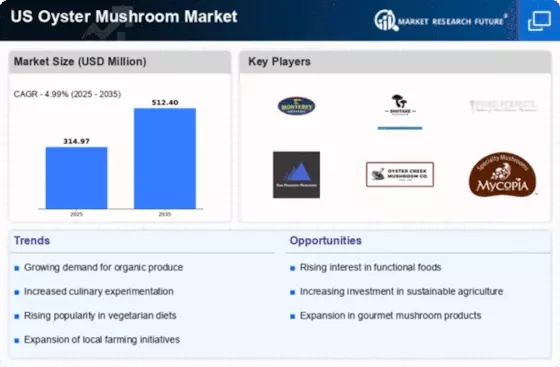
US Oyster Mushroom Market Infographic
Purchase Options

Us Oyster Mushroom Size

The US oyster mushroom market is influenced by a variety of factors that collectively shape its growth and dynamics. One of the primary drivers is the increasing popularity of oyster mushrooms as a nutritious and versatile food choice. Consumers are becoming more health-conscious, seeking plant-based alternatives, and recognizing the nutritional benefits of oyster mushrooms, which are low in calories, fat-free, and rich in vitamins and minerals. This growing awareness of the health benefits associated with oyster mushrooms contributes to a steady demand for these fungi in the US market.

Culinary trends and the rising interest in gourmet and exotic foods also play a pivotal role in shaping the US oyster mushroom market. Oyster mushrooms are valued for their unique taste and texture, making them a preferred choice for chefs and home cooks alike. As the culinary landscape evolves, with a focus on diverse and flavorful ingredients, oyster mushrooms have found a place in various recipes, contributing to their market growth. The adaptability of oyster mushrooms to different cuisines and cooking methods further enhances their appeal among consumers.

Environmental and sustainability considerations are significant factors influencing the US oyster mushroom market. Oyster mushrooms are known for their ability to thrive on agricultural waste, such as straw or sawdust, making them an eco-friendly and sustainable crop. Consumers increasingly prioritize products with minimal environmental impact, and companies adopting sustainable cultivation practices often gain a competitive advantage. The emphasis on sustainability resonates well with environmentally conscious consumers, contributing to the market's growth.

Geographical factors and regional preferences also influence the US oyster mushroom market. The availability of locally grown oyster mushrooms can impact consumer choices, with some preferring to support local producers. Additionally, regional culinary traditions and preferences may influence the demand for oyster mushrooms in specific areas. Understanding these regional nuances is crucial for market participants to tailor their strategies and meet the diverse needs of consumers across different parts of the country.

Market dynamics are also shaped by factors related to production and distribution. Oyster mushrooms have a relatively short shelf life, and efficient distribution channels are essential to ensure fresh and high-quality products reach consumers. Proximity to distribution centers and transportation infrastructure are critical considerations for producers and suppliers in the oyster mushroom market. Furthermore, the adoption of technology in cultivation practices, such as controlled environment agriculture, contributes to consistent production and supply.

Economic conditions and consumer purchasing power are significant influencers in the US oyster mushroom market. In periods of economic stability, consumers may be more willing to spend on specialty and gourmet food items, positively impacting the demand for oyster mushrooms. Conversely, economic downturns may lead to shifts in consumer spending patterns, and market participants need to adapt their strategies to align with changing economic conditions.

The impact of educational and promotional efforts on consumer awareness cannot be overlooked. Efforts to educate consumers about the nutritional benefits, culinary uses, and sustainability aspects of oyster mushrooms can stimulate demand. Marketing campaigns that highlight the versatility of oyster mushrooms in various dishes and emphasize their role in a healthy lifestyle can contribute to market growth and increased consumer adoption.
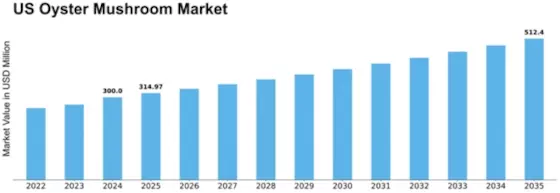

US Oyster Mushroom Market Size Graph
Author
Snehal Singh
Assistant Manager - Research

High acumen in analyzing complex macro & micro markets with more than 6 years of work experience in the field of market research. By implementing her analytical skills in forecasting and estimation into market research reports, she has expertise in Packaging, Construction, and Equipment domains. She handles a team size of 20-25 resources and ensures smooth running of the projects, associated marketing activities, and client servicing.

Leave a Comment

FAQs

What is the current valuation of the US Oyster Mushroom Market?

<p>The US Oyster Mushroom Market was valued at 300.0 USD Million in 2024.</p>

What is the projected market valuation for the US Oyster Mushroom Market by 2035?

<p>The market is projected to reach 512.4 USD Million by 2035.</p>

What is the expected CAGR for the US Oyster Mushroom Market during the forecast period?

<p>The expected CAGR for the US Oyster Mushroom Market from 2025 to 2035 is 4.99%.</p>

Which companies are considered key players in the US Oyster Mushroom Market?

<p>Key players include Monterey Mushrooms, Shiitake Mushroom Company, Fungi Perfecti, and others.</p>

What are the main applications of oyster mushrooms in the market?

<p>The main applications include Culinary, Medicinal, Nutraceutical, and Cosmetic, with Culinary valued at 205.0 USD Million.</p>

How do distribution channels impact the US Oyster Mushroom Market?

Distribution channels such as Supermarkets and Online Retail are crucial, with Supermarkets valued at 204.0 USD Million.

What forms of oyster mushrooms are available in the market?

The market offers Fresh, Dried, and Processed forms, with Fresh valued at 200.0 USD Million.

What are the end-use segments for oyster mushrooms?

End-use segments include Household, Food Service, and Food Processing, with Food Service valued at 200.0 USD Million.

How does the market for medicinal oyster mushrooms compare to other applications?

The Medicinal segment is valued at 130.0 USD Million, indicating a growing interest in health-related applications.

What trends are influencing the growth of the US Oyster Mushroom Market?

Trends include increasing consumer interest in health benefits and diverse culinary applications, driving market expansion.

Market Summary

As per analysis, the US Oyster Mushroom Market is projected to grow from USD 300.0 Million in 2024 to USD 512.4 Million by 2035, exhibiting a compound annual growth rate (CAGR) of 4.99% during the forecast period (2025 - 2035).

Key Market Trends & Highlights

The US Oyster Mushroom Market is experiencing a robust upward trajectory driven by health consciousness and sustainable practices.

  • The culinary segment remains the largest, reflecting a growing consumer preference for versatile ingredients.
  • The medicinal segment is the fastest-growing, indicating an increasing awareness of the health benefits associated with oyster mushrooms.
  • Supermarkets dominate the distribution landscape, while online retail is emerging as the fastest-growing channel for mushroom sales.
  • Key market drivers include the health benefits of oyster mushrooms and the rising interest in sustainable farming practices.

Market Size & Forecast

2024 Market Size 300.0 (USD Million)
2035 Market Size 512.4 (USD Million)
CAGR (2025 - 2035) 4.99%

Major Players

<p>Monterey Mushrooms (US), Shiitake Mushroom Company (US), Fungi Perfecti (US), Blue Mountain Mushrooms (US), Oyster Creek Mushrooms (US), Mycopia Mushrooms (US), North Spore (US), Mushroom Mountain (US)</p>

Market Trends

The US Oyster Mushroom Market is currently experiencing a notable transformation, driven by increasing consumer awareness regarding health benefits and sustainable food sources. As individuals become more health-conscious, the demand for nutritious food options, including oyster mushrooms, appears to be on the rise. These mushrooms are recognized for their rich nutritional profile, which includes essential vitamins, minerals, and antioxidants. Furthermore, the trend towards plant-based diets is likely to bolster the market, as oyster mushrooms serve as a versatile ingredient in various culinary applications. This shift in dietary preferences suggests a promising future for the US Oyster Mushroom Market, as consumers seek alternatives to traditional protein sources. In addition to health trends, the US Oyster Mushroom Market is also influenced by advancements in cultivation techniques. Innovative farming practices, such as vertical farming and controlled-environment agriculture, may enhance production efficiency and yield quality. These methods not only optimize space but also reduce the environmental impact associated with traditional farming. Moreover, the growing interest in local sourcing and organic produce could further stimulate market growth. As consumers increasingly prioritize sustainability, the US Oyster Mushroom Market is poised to benefit from these evolving preferences, indicating a dynamic landscape for producers and retailers alike.

Health Consciousness Driving Demand

The rising awareness of health benefits associated with oyster mushrooms is likely to propel market growth. Consumers are increasingly seeking nutritious food options, and oyster mushrooms are recognized for their rich vitamin and mineral content, making them an attractive choice.

Sustainable Cultivation Practices

Innovations in farming techniques, such as vertical farming and controlled-environment agriculture, may enhance production efficiency. These methods could lead to higher yields while minimizing environmental impact, aligning with consumer preferences for sustainable food sources.

Local Sourcing Trends

The growing interest in locally sourced and organic produce appears to influence the US Oyster Mushroom Market positively. As consumers prioritize sustainability and freshness, local producers may find increased opportunities to meet this demand.

US Oyster Mushroom Market Market Drivers

Sustainable Farming Practices

Sustainability is becoming a pivotal factor in the US Oyster Mushroom Market, as consumers increasingly prefer products that are cultivated using environmentally friendly methods. The adoption of sustainable farming practices, such as organic cultivation and waste recycling, is gaining traction among mushroom producers. These practices not only reduce the environmental impact but also enhance the quality of the mushrooms. According to recent data, a significant portion of oyster mushrooms sold in the US is now certified organic, appealing to eco-conscious consumers. This shift towards sustainability is likely to bolster the market, as it aligns with the growing demand for responsibly sourced food products. As the US Oyster Mushroom Market evolves, the emphasis on sustainable practices may become a key differentiator for producers.

Innovative Marketing Strategies

Innovative marketing strategies are playing a crucial role in shaping the US Oyster Mushroom Market. Producers are increasingly leveraging social media and digital platforms to reach a broader audience and educate consumers about the benefits and uses of oyster mushrooms. Engaging content, such as recipes and cooking demonstrations, is being utilized to attract interest and drive sales. Additionally, collaborations with chefs and influencers are helping to elevate the profile of oyster mushrooms in the culinary world. Market analysis indicates that these marketing efforts are yielding positive results, as consumer awareness and interest in oyster mushrooms continue to grow. As these strategies evolve, they are likely to contribute significantly to the expansion of the US Oyster Mushroom Market.

Health Benefits of Oyster Mushrooms

The US Oyster Mushroom Market is experiencing a surge in demand due to the increasing awareness of health benefits associated with oyster mushrooms. These mushrooms are rich in essential nutrients, including vitamins, minerals, and antioxidants, which contribute to overall health. Research indicates that oyster mushrooms may help in lowering cholesterol levels and boosting the immune system. As consumers become more health-conscious, they are actively seeking out food products that offer nutritional advantages. This trend is reflected in the growing sales of oyster mushrooms, which have seen a notable increase in market share within the broader mushroom category. The health benefits associated with oyster mushrooms are likely to continue driving consumer interest and expanding the US Oyster Mushroom Market in the coming years.

Rising Interest in Local Food Systems

The US Oyster Mushroom Market is benefiting from the rising interest in local food systems. Consumers are increasingly inclined to support local farmers and businesses, which has led to a surge in demand for locally sourced oyster mushrooms. Farmers' markets and community-supported agriculture (CSA) programs are becoming popular venues for the sale of these mushrooms, fostering a direct connection between producers and consumers. This trend not only supports local economies but also ensures fresher produce for consumers. As the movement towards local sourcing continues to gain momentum, it is likely to further enhance the visibility and sales of oyster mushrooms within the US Oyster Mushroom Market.

Culinary Versatility of Oyster Mushrooms

The culinary versatility of oyster mushrooms is a driving force in the US Oyster Mushroom Market. These mushrooms can be utilized in a wide array of dishes, ranging from soups and stir-fries to gourmet entrees. Their unique texture and flavor profile make them a popular choice among chefs and home cooks alike. The increasing popularity of plant-based diets has further propelled the demand for oyster mushrooms, as they serve as an excellent meat substitute. Market data suggests that the sales of oyster mushrooms have risen significantly in restaurants and grocery stores, reflecting their growing acceptance in various cuisines. This versatility is likely to continue attracting consumers, thereby enhancing the growth prospects of the US Oyster Mushroom Market.

Market Segment Insights

By Application: Culinary (Largest) vs. Medicinal (Fastest-Growing)

<p>In the US Oyster Mushroom Market, the culinary application currently holds the largest market share, driven by rising consumer interest in plant-based diets and gourmet cooking. Within the culinary segment, oyster mushrooms are favored for their unique flavors, texture, and versatility in various dishes, contributing significantly to their prominence. Meanwhile, the medicinal application is witnessing rapid growth due to increased consumer awareness about the health benefits associated with oyster mushrooms, such as boosting immunity and reducing inflammation. This segment is emerging as a key player in the market due to heightened focus on wellness and natural remedies.</p>

<p>Culinary: Dominant vs. Medicinal: Emerging</p>

<p>In the US market, the culinary application of oyster mushrooms presents a dominant force, appealing to chefs and home cooks alike who are pursuing innovative and healthy cooking options. This segment thrives on the gourmet and organic food trends, with oyster mushrooms often showcased in restaurants and culinary showcases. Conversely, the medicinal segment is considered emerging, capturing attention for its therapeutic benefits backed by research and supported by the growing demand for functional foods. This application is becoming increasingly recognized for its potential health properties, positioning it to attract health-conscious consumers seeking natural solutions for wellness.</p>

By Distribution Channel: Supermarkets (Largest) vs. Online Retail (Fastest-Growing)

<p>In the US Oyster Mushroom Market, distribution occurs through various channels, with supermarkets holding the largest share. This supremacy is attributed to their broad reach and established supply chains that make fresh products readily available to consumers. Following supermarkets, online retail is gaining traction as a potent channel for oyster mushroom distribution, appealing to tech-savvy consumers seeking convenience and variety. Farmers markets and specialty stores, while important, contribute relatively smaller shares to the overall distribution landscape. Growth trends indicate a shifting consumer preference toward purchasing mushrooms online, driven by the increasing popularity of e-commerce and delivery services. The convenience associated with online shopping and the ability to find niche products, such as organic oyster mushrooms, contribute to its rapid growth. Additionally, the rising health awareness among consumers encourages more specialized offerings, pushing both online and specialty stores to adapt to market demands.</p>

<p>Supermarkets (Dominant) vs. Online Retail (Emerging)</p>

<p>Supermarkets dominate the US Oyster Mushroom distribution landscape due to their extensive network and ability to offer a wide variety of fresh produce. They benefit from established customer loyalty and significant visibility, capitalizing on consumers' tendency to purchase food items during regular grocery shopping trips. On the other hand, online retail is an emerging force in this sector, demonstrating rapid growth as more consumers turn to digital platforms for their grocery needs. The flexibility of online shopping, coupled with an ability to cater to niche market demands, positions this channel as a strong competitor to traditional supermarkets. Both channels exhibit unique strengths; thus, partnerships between supermarkets and online platforms may enhance overall market penetration.</p>

By Form: Fresh (Largest) vs. Dried (Fastest-Growing)

<p>In the US Oyster Mushroom Market, the form segment reveals a distinct distribution among fresh, dried, and processed varieties. Fresh oyster mushrooms hold the largest share, favored for their rich flavors and culinary versatility. Consumers increasingly demand fresh produce, driving its dominance in the market. Dried oyster mushrooms, meanwhile, are gaining traction among food manufacturers and home cooks due to their long shelf life and concentrated flavor, making them a popular alternative for various recipes.</p>

<p>Fresh (Dominant) vs. Dried (Emerging)</p>

<p>Fresh oyster mushrooms are celebrated for their texture and taste, often sought after in gourmet cooking and by health-conscious consumers. Their dominance in the market is fueled by a growing trend toward organic and locally sourced food products. On the other hand, dried oyster mushrooms represent an emerging segment, appealing particularly to the snack and convenience food sectors. Their ease of storage and longer shelf life have allowed them to capture a niche market, with innovation in packaging and culinary uses further propelling their growth. As interest in mushroom varieties rises, both segments are positioned for sustained relevance in the US culinary landscape.</p>

By End Use: Household (Largest) vs. Food Service (Fastest-Growing)

<p>In the US Oyster Mushroom Market, the end-use segments are primarily divided into Household, Food Service, and Food Processing. The Household segment holds the largest market share, driven by the increasing preference for home cooking and the growing trend of incorporating nutritious ingredients into family meals. Meanwhile, the Food Service sector is gaining traction, accounting for a significant portion of the market as restaurants and cafes emphasize using fresh and local produce to enhance their menus.</p>

<p>Household (Dominant) vs. Food Service (Emerging)</p>

<p>The Household segment of the US Oyster Mushroom Market is characterized by its significant consumption driven by a health-conscious populace and an interest in gourmet cooking at home. Households are increasingly incorporating oyster mushrooms into their diets due to their nutritional benefits and versatility in various dishes. Conversely, the Food Service segment is emerging rapidly, as chefs and restaurateurs capitalize on the unique flavor and texture of oyster mushrooms. This segment is experiencing growth due to a growing consumer demand for novel culinary experiences, promoting the use of gourmet ingredients in restaurants and catering services.</p>

Get more detailed insights about US Oyster Mushroom Market Research Report— Forecast till 2035

Regional Insights

North America : Market Leader in Production

North America is the largest market for oyster mushrooms, accounting for approximately 45% of the global share. The region benefits from a growing health-conscious consumer base, increasing demand for organic produce, and supportive agricultural policies. Regulatory frameworks promoting sustainable farming practices further enhance market growth. The U.S. is the primary contributor, followed by Canada, which holds around 15% of the market share. The competitive landscape in North America is robust, featuring key players such as Monterey Mushrooms and FreshCap Mushrooms. These companies leverage advanced cultivation techniques and distribution networks to meet rising consumer demand. The presence of established brands and a focus on innovation in mushroom farming contribute to a dynamic market environment, ensuring a steady supply of high-quality oyster mushrooms.

Europe : Emerging Market with Growth Potential

Europe is witnessing a significant increase in the demand for oyster mushrooms, holding approximately 30% of the global market share. Factors driving this growth include a shift towards plant-based diets, increasing awareness of the health benefits of mushrooms, and supportive EU regulations promoting sustainable agriculture. Germany and the Netherlands are the largest markets, together accounting for nearly 20% of the European share. The competitive landscape in Europe is characterized by a mix of local producers and larger companies. Countries like France and Italy are also emerging as key players in the oyster mushroom market. The presence of innovative companies focusing on organic and specialty mushrooms is enhancing market dynamics. Regulatory support from the European Commission for sustainable farming practices further boosts the sector's growth.

Asia-Pacific : Rapid Growth in Emerging Economies

Asia-Pacific is rapidly emerging as a significant player in the oyster mushroom market, holding around 20% of the global share. The region's growth is driven by increasing urbanization, rising disposable incomes, and a growing preference for healthy food options. Countries like China and Japan are leading the market, with China alone accounting for a substantial portion of the production and consumption of oyster mushrooms. The competitive landscape in Asia-Pacific is diverse, with numerous small and medium enterprises contributing to the market. The presence of traditional mushroom cultivation practices alongside modern farming techniques creates a unique market environment. Key players are focusing on innovation and sustainability to meet the growing demand, ensuring a steady supply of oyster mushrooms to both local and international markets.

Middle East and Africa : Untapped Market with Potential

The Middle East and Africa region is an emerging market for oyster mushrooms, currently holding about 5% of the global share. The growth is driven by increasing awareness of health benefits, rising demand for organic produce, and government initiatives to promote agricultural diversification. Countries like South Africa and Kenya are leading the way, with potential for significant growth in local production and consumption. The competitive landscape is still developing, with a mix of local producers and international companies entering the market. The presence of key players is limited, but there is a growing interest in sustainable farming practices. As the region continues to invest in agricultural technology and infrastructure, the oyster mushroom market is expected to expand, catering to both local and export demands.

Key Players and Competitive Insights

The Oyster Mushroom Market in the US is characterized by a dynamic competitive landscape, driven by increasing consumer demand for plant-based foods and the growing recognition of the health benefits associated with mushrooms. Key players such as Monterey Mushrooms (US), Fungi Perfecti (US), and Mycopia Mushrooms (US) are strategically positioned to leverage these trends. Monterey Mushrooms (US) focuses on innovation in cultivation techniques, enhancing yield and quality, while Fungi Perfecti (US) emphasizes sustainability through organic farming practices. Mycopia Mushrooms (US) has carved a niche in gourmet mushrooms, appealing to high-end culinary markets. Collectively, these strategies foster a competitive environment that prioritizes quality, sustainability, and consumer engagement.

In terms of business tactics, companies are increasingly localizing manufacturing to reduce transportation costs and enhance freshness. Supply chain optimization remains a critical focus, as firms seek to streamline operations and improve efficiency. The market structure appears moderately fragmented, with several players competing for market share, yet the influence of major companies is palpable, as they set trends and standards that smaller entities often follow.

In December 2025, Monterey Mushrooms (US) announced the launch of a new line of organic oyster mushrooms, aimed at capturing the growing health-conscious consumer segment. This strategic move not only aligns with current consumer preferences for organic products but also positions the company to enhance its market share in a competitive landscape increasingly focused on health and sustainability. The introduction of this product line is likely to bolster brand loyalty and attract new customers.

In November 2025, Fungi Perfecti (US) expanded its distribution network by partnering with a major grocery chain, significantly increasing its market reach. This partnership is strategically important as it allows Fungi Perfecti (US) to tap into a broader consumer base, enhancing visibility and accessibility of its products. Such collaborations may also lead to increased sales volumes and brand recognition in a crowded market.

In October 2025, Mycopia Mushrooms (US) launched an innovative online platform that allows consumers to order directly from the farm, thereby enhancing customer engagement and streamlining the purchasing process. This digital transformation reflects a broader trend in the market, where companies are increasingly adopting technology to improve customer experience and operational efficiency. The move is likely to set a precedent for other players in the market, emphasizing the importance of direct-to-consumer sales channels.

As of January 2026, current competitive trends in the Oyster Mushroom Market are heavily influenced by digitalization, sustainability initiatives, and the integration of AI in production processes. Strategic alliances are becoming more prevalent, as companies recognize the value of collaboration in enhancing their market positions. Looking ahead, competitive differentiation is expected to evolve, shifting from traditional price-based competition to a focus on innovation, technological advancements, and supply chain reliability. This transition may redefine market dynamics, compelling companies to invest in research and development to stay ahead.

Key Companies in the US Oyster Mushroom Market include

Industry Developments

June 2023: Accreditation by the Better Business Bureau (BBB) allowed Bio-Botanica to join the ranks of companies across North America that are committed to fostering consumer trust in the marketplace through the maintenance of integrity and ethics.

October 2021: Nammex, a supplier of organic mushroom extract ingredients, reached a noteworthy milestone after spending a whole three years on research and development. Almost 80 tons of fresh Trametes versicolor, sometimes known as turkey tail mushrooms, have been successfully grown and harvested for commercial use this year.

Future Outlook

US Oyster Mushroom Market Future Outlook

The US Oyster Mushroom Market is projected to grow at a 4.99% CAGR from 2025 to 2035, driven by increasing health awareness, culinary trends, and sustainable farming practices.

New opportunities lie in:

  • Expansion of organic oyster mushroom product lines
  • Development of value-added mushroom-based food products
  • Implementation of vertical farming technologies for urban markets

By 2035, the market is expected to achieve robust growth, solidifying its position in the food industry.

Market Segmentation

US Oyster Mushroom Market Form Outlook

  • Fresh
  • Dried
  • Processed

US Oyster Mushroom Market End Use Outlook

  • Household
  • Food Service
  • Food Processing

US Oyster Mushroom Market Application Outlook

  • Culinary
  • Medicinal
  • Nutraceutical
  • Cosmetic

US Oyster Mushroom Market Distribution Channel Outlook

  • Supermarkets
  • Online Retail
  • Farmers Markets
  • Specialty Stores

Report Scope

MARKET SIZE 2024300.0(USD Million)
MARKET SIZE 2025316.8(USD Million)
MARKET SIZE 2035512.4(USD Million)
COMPOUND ANNUAL GROWTH RATE (CAGR)4.99% (2024 - 2035)
REPORT COVERAGERevenue Forecast, Competitive Landscape, Growth Factors, and Trends
BASE YEAR2024
Market Forecast Period2025 - 2035
Historical Data2019 - 2024
Market Forecast UnitsUSD Million
Key Companies ProfiledMonterey Mushrooms (US), Shiitake Mushroom Company (US), Fungi Perfecti (US), Blue Mountain Mushrooms (US), Oyster Creek Mushrooms (US), Mycopia Mushrooms (US), North Spore (US), Mushroom Mountain (US)
Segments CoveredApplication, Distribution Channel, Form, End Use
Key Market OpportunitiesGrowing consumer demand for plant-based proteins enhances opportunities in the US Oyster Mushroom Market.
Key Market DynamicsRising consumer demand for organic produce drives growth in the US Oyster Mushroom Market.
Countries CoveredUS

FAQs

What is the current valuation of the US Oyster Mushroom Market?

<p>The US Oyster Mushroom Market was valued at 300.0 USD Million in 2024.</p>

What is the projected market valuation for the US Oyster Mushroom Market by 2035?

<p>The market is projected to reach 512.4 USD Million by 2035.</p>

What is the expected CAGR for the US Oyster Mushroom Market during the forecast period?

<p>The expected CAGR for the US Oyster Mushroom Market from 2025 to 2035 is 4.99%.</p>

Which companies are considered key players in the US Oyster Mushroom Market?

<p>Key players include Monterey Mushrooms, Shiitake Mushroom Company, Fungi Perfecti, and others.</p>

What are the main applications of oyster mushrooms in the market?

<p>The main applications include Culinary, Medicinal, Nutraceutical, and Cosmetic, with Culinary valued at 205.0 USD Million.</p>

How do distribution channels impact the US Oyster Mushroom Market?

Distribution channels such as Supermarkets and Online Retail are crucial, with Supermarkets valued at 204.0 USD Million.

What forms of oyster mushrooms are available in the market?

The market offers Fresh, Dried, and Processed forms, with Fresh valued at 200.0 USD Million.

What are the end-use segments for oyster mushrooms?

End-use segments include Household, Food Service, and Food Processing, with Food Service valued at 200.0 USD Million.

How does the market for medicinal oyster mushrooms compare to other applications?

The Medicinal segment is valued at 130.0 USD Million, indicating a growing interest in health-related applications.

What trends are influencing the growth of the US Oyster Mushroom Market?

Trends include increasing consumer interest in health benefits and diverse culinary applications, driving market expansion.

  1. SECTION I: EXECUTIVE SUMMARY AND KEY HIGHLIGHTS
    1. | 1.1 EXECUTIVE SUMMARY
  2. SECTION II: SCOPING, METHODOLOGY AND MARKET STRUCTURE
    1. | 2.1 MARKET INTRODUCTION
    2. | 2.2 RESEARCH METHODOLOGY
  3. SECTION III: QUALITATIVE ANALYSIS
    1. | 3.1 MARKET DYNAMICS
    2. | 3.2 MARKET FACTOR ANALYSIS
  4. SECTION IV: QUANTITATIVE ANALYSIS
    1. | 4.1 Food, Beverages & Nutrition, BY Application (USD Million)
    2. | 4.2 Food, Beverages & Nutrition, BY Distribution Channel (USD Million)
    3. | 4.3 Food, Beverages & Nutrition, BY Form (USD Million)
    4. | 4.4 Food, Beverages & Nutrition, BY End Use (USD Million)
  5. SECTION V: COMPETITIVE ANALYSIS
    1. | 5.1 Competitive Landscape
    2. | 5.2 Company Profiles
    3. | 5.3 Appendix

US Oyster Mushroom Market Segmentation

Market Segmentation Overview

  • Detailed segmentation data will be available in the full report
  • Comprehensive analysis by multiple parameters
  • Regional and country-level breakdowns
  • Market size forecasts by segment
Infographic

Free Sample Request

Kindly complete the form below to receive a free sample of this Report

Get Free Sample

Customer Strories

Compare Licence

×
Features License Type
Single User Multiuser License Enterprise User
Price $4,950 $5,950 $7,250
Maximum User Access Limit 1 User Upto 10 Users Unrestricted Access Throughout the Organization
Free Customization
Direct Access to Analyst
Deliverable Format
Platform Access
Discount on Next Purchase 10% 15% 15%
Printable Versions