×
Request Free Sample ×

Kindly complete the form below to receive a free sample of this Report

* Please use a valid business email

Leading companies partner with us for data-driven Insights

clients tt-cursor
Hero Background

US Omega 3 PUFA Market

ID: MRFR/FnB/12229-HCR
100 Pages
Garvit Vyas
February 2026

US Omega 3 PUFA Market

Share:
Download PDF ×

We do not share your information with anyone. However, we may send you emails based on your report interest from time to time. You may contact us at any time to opt-out.

US Omega 3 PUFA Market Infographic
Purchase Options

US Omega 3 PUFA Market Summary

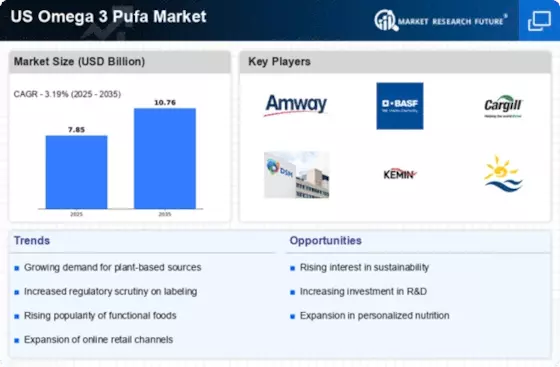
As per analysis, the US Omega 3 Pufa Market is projected to grow from USD 7.88 Billion in 2025 to USD 10.76 Billion by 2035, exhibiting a compound annual growth rate (CAGR) of 3.19% during the forecast period (2025 - 2035).

Key Market Trends & Highlights

The US Omega 3 PUFA market is experiencing a dynamic shift towards health-oriented and sustainable products.

  • The Dietary Supplements segment remains the largest contributor to the market, driven by increasing health consciousness among consumers.
  • Functional Foods are emerging as the fastest-growing segment, reflecting a rising demand for health-enhancing food options.
  • Fish Oil continues to dominate the market, while Algal Oil is rapidly gaining traction due to its plant-based appeal.
  • Key market drivers include the growing demand for functional foods and increased awareness of mental health benefits.

Market Size & Forecast

2024 Market Size 7.61 (USD Billion)
2035 Market Size 10.76 (USD Billion)
CAGR (2025 - 2035) 3.19%

Major Players

Amway (US), BASF (US), Cargill (US), DSM (US), Kemin Industries (US), Nordic Naturals (US), Omega Protein (US), Pioneer (US), Solgar (US), Twinlab (US)

Our Impact
Enabled $4.3B Revenue Impact for Fortune 500 and Leading Multinationals
Partnering with 2000+ Global Organizations Each Year
30K+ Citations by Top-Tier Firms in the Industry

US Omega 3 PUFA Market Trends

The US Omega 3 Pufa Market is currently experiencing a notable shift in consumer preferences, driven by an increasing awareness of health benefits associated with omega-3 fatty acids. This market encompasses a variety of products, including dietary supplements, functional foods, and beverages, all of which are gaining traction among health-conscious individuals. The growing inclination towards preventive healthcare and the rising incidence of chronic diseases have prompted consumers to seek out omega-3-rich options. Furthermore, the emphasis on sustainable sourcing and environmentally friendly practices is influencing purchasing decisions, as consumers become more discerning about the origins of their food and supplements. In addition, the regulatory landscape surrounding omega-3 products is evolving, with agencies focusing on labeling accuracy and health claims. This scrutiny may lead to enhanced transparency in the market, fostering consumer trust. The US Omega 3 Pufa Market is also witnessing innovation in product formulations, with manufacturers exploring new delivery methods and combinations with other beneficial ingredients. As the market continues to develop, it appears poised for growth, driven by both consumer demand and regulatory advancements that promote quality and safety in omega-3 products.

Rising Health Consciousness

There is a discernible trend towards increased health awareness among consumers in the US, leading to a heightened demand for omega-3 products. Individuals are actively seeking dietary supplements and functional foods that offer health benefits, particularly those related to heart health and cognitive function.

Sustainability and Ethical Sourcing

Consumers are increasingly prioritizing sustainability in their purchasing decisions. The US Omega 3 Pufa Market is responding to this demand by emphasizing ethical sourcing practices, with a focus on environmentally friendly fishing methods and sustainable aquaculture.

Innovation in Product Offerings

The market is witnessing a wave of innovation, with manufacturers developing new formulations and delivery methods for omega-3 products. This includes the introduction of plant-based omega-3 sources and enhanced bioavailability, catering to diverse consumer preferences and dietary restrictions.

US Omega 3 PUFA Market Drivers

Regulatory Support and Guidelines

The US Omega 3 Pufa Market benefits from a supportive regulatory environment that encourages the incorporation of Omega 3 fatty acids in food products. The Food and Drug Administration (FDA) has established guidelines that promote the consumption of Omega 3s, particularly EPA and DHA, due to their recognized health benefits. These regulations not only facilitate the marketing of Omega 3 products but also enhance consumer trust in their safety and efficacy. Furthermore, the Dietary Guidelines for Americans recommend the consumption of seafood, a primary source of Omega 3s, thereby reinforcing the market's growth potential. This regulatory backing is likely to stimulate further innovation and investment in the Omega 3 sector.

Growing Demand for Functional Foods

The US Omega 3 Pufa Market is experiencing a notable increase in demand for functional foods, which are perceived as beneficial for health beyond basic nutrition. Consumers are increasingly seeking products fortified with Omega 3 fatty acids, recognizing their potential to support heart health, cognitive function, and overall well-being. According to recent data, the functional food market in the US is projected to reach approximately 275 billion USD by 2026, with Omega 3-enriched products playing a pivotal role in this growth. This trend is further fueled by the rising awareness of the health benefits associated with Omega 3 consumption, leading to a surge in product innovation and marketing strategies aimed at health-conscious consumers.

Increased Awareness of Mental Health Benefits

The US Omega 3 Pufa Market is witnessing a heightened awareness regarding the mental health benefits associated with Omega 3 fatty acids. Research suggests that Omega 3s may play a crucial role in alleviating symptoms of depression and anxiety, leading to a growing consumer interest in supplements and fortified foods containing these essential fatty acids. As mental health continues to gain prominence in public discourse, the demand for Omega 3 products is expected to rise. This trend is reflected in the increasing number of dietary supplements marketed specifically for mental health support, indicating a potential growth trajectory for the Omega 3 market in the coming years.

Rising Popularity of Plant-Based Alternatives

The US Omega 3 Pufa Market is adapting to the rising popularity of plant-based diets, which has led to an increased demand for plant-derived Omega 3 sources, such as algal oil. As consumers become more environmentally conscious and seek sustainable dietary options, the market for plant-based Omega 3 supplements is likely to expand. This shift is supported by research indicating that algal oil can provide a comparable source of EPA and DHA, making it an attractive alternative for vegetarians and vegans. The growth of this segment may contribute to a diversification of product offerings within the Omega 3 market, catering to a broader audience and enhancing overall market growth.

Technological Advancements in Extraction Methods

The US Omega 3 Pufa Market is benefiting from technological advancements in extraction and processing methods, which enhance the quality and bioavailability of Omega 3 fatty acids. Innovations such as supercritical CO2 extraction and molecular distillation are improving the efficiency of Omega 3 extraction from fish and algae, resulting in higher purity levels and better product stability. These advancements not only ensure that consumers receive high-quality Omega 3 products but also reduce production costs, potentially leading to lower prices for consumers. As technology continues to evolve, it is likely that the US Omega 3 market will see an influx of new products that meet the growing demand for high-quality Omega 3 supplements.


Market Segment Insights

By Application: Dietary Supplements (Largest) vs. Functional Foods (Fastest-Growing)

In the US Omega 3 PUFA market, the application segment is primarily driven by Dietary Supplements, which holds the largest market share. This segment has gained significant traction among health-conscious consumers seeking to improve heart health, cognitive function, and overall well-being. Functional Foods, while currently smaller, represent the fastest-growing area, as more consumers opt for food products enriched with omega-3 fatty acids to enhance nutritional value and combat various health issues.

Dietary Supplements (Dominant) vs. Functional Foods (Emerging)

Dietary Supplements have established themselves as the dominant application in the US Omega 3 PUFA market, characterized by their wide acceptance and demand among consumers for health-enhancing products. This segment includes capsules, soft gels, and liquid forms, which cater to the needs of various demographics, including those with dietary restrictions. Meanwhile, Functional Foods emerge as an innovative application, integrating omega-3s into everyday food items like snacks, dairy, and beverages, appealing to consumers interested in convenient health solutions. The rise in awareness about nutrition and preventive health measures supports the growth of both segments, yet Dietary Supplements are seen as a more established market leader.

By Source: Fish Oil (Largest) vs. Algal Oil (Fastest-Growing)

In the US Omega 3 PUFA Market, Fish Oil holds the largest share among the various source segments, showcasing its long-standing popularity among consumers. Algal Oil, however, has carved a niche for itself, attracting attention due to its vegetarian appeal and sustainability factors. Together, these two segments demonstrate a dynamic balance of tradition and innovation within the market, catering to diverse consumer preferences and dietary needs.

Fish Oil (Dominant) vs. Algal Oil (Emerging)

Fish Oil remains the dominant player in the US Omega 3 PUFA market, primarily driven by its extensive nutritional benefits and established reputation. It is favored for its high concentration of EPA and DHA, making it a go-to source for health-conscious consumers. In contrast, Algal Oil is emerging as a significant contender, particularly amongst vegan and vegetarian populations seeking alternatives to fish-derived products. Algal Oil is cultivated sustainably, aligning with the growing environmental consciousness among consumers. This trend points to a shifting dynamic where traditional sources face competition from innovative alternatives that cater to changing dietary choices.

By Form: Liquid (Largest) vs. Softgel (Fastest-Growing)

In the US Omega 3 Pufa Market, the segment distribution highlights Liquid forms as the most significant contributor, dominating the market share due to consumer preference for versatile usage in culinary applications and supplements. Softgels are emerging as a preferred choice, particularly among health-conscious consumers seeking convenience and easy ingestion, which has led to an increasing market demand for this format.

Liquid (Dominant) vs. Softgel (Emerging)

The Liquid form plays a crucial role in the US Omega 3 Pufa Market, largely due to its versatility and effectiveness in delivering health benefits. It is favored in dietary supplements and cooking, making it the dominant choice among consumers. Softgels, on the other hand, are rapidly gaining traction, especially among those who prioritize convenience and ease of use. As the market evolves, manufacturers are increasingly innovating to enhance the appeal of softgels, integrating novel delivery systems and promoting their advantages in terms of absorption and user experience. This growth reflects broader health trends, as consumers seek effective and convenient ways to incorporate Omega 3s into their diets.

By Distribution Channel: Online Retail (Largest) vs. Supermarkets (Fastest-Growing)

In the US Omega 3 PUFA Market, distribution channels play a crucial role in reaching consumers. Online Retail currently dominates this segment, catering to the growing demand for convenience and a wider range of product availability. Supermarkets, while not the largest channel, are rapidly increasing their market shares through strategic placements and promotions of Omega 3 products, appealing to health-conscious shoppers seeking easy access to supplements. Growth trends for distribution channels indicate a shift towards digital platforms, as consumers favor online shopping for its ease and efficiency. Health Food Stores and Pharmacies also contribute to the market, focusing on niche segments and personalized customer engagement. However, as more consumers turn to online shopping and supermarkets enhance their offerings, these traditional channels may have to adapt to remain competitive.

Online Retail (Dominant) vs. Health Food Stores (Emerging)

In the US Omega 3 PUFA Market, Online Retail stands out as the dominant distribution channel, leveraging the convenience of e-commerce and an expansive selection of products. This segment appeals to a broad consumer base, including millennials and tech-savvy shoppers, who prioritize ease of access and product variety. On the other hand, Health Food Stores represent an emerging segment, cultivating a loyal clientele interested in organic and natural supplements. These stores emphasize personalized service and expertise in health products, which differentiates them from larger retailers. While they may lack the extensive reach of online platforms, their targeted offerings cater to health-conscious consumers looking for specific Omega 3 formulations. As both segments evolve, collaboration and innovation within these channels will be key to capturing consumer interest.

Get more detailed insights about US Omega 3 PUFA Market

Key Players and Competitive Insights

The Omega 3 Pufa Market is characterized by a dynamic competitive landscape, driven by increasing consumer awareness regarding health benefits and a growing demand for dietary supplements. Key players such as Amway (US), BASF (US), and Nordic Naturals (US) are strategically positioned to leverage innovation and sustainability in their operations. Amway (US) focuses on expanding its product portfolio with a strong emphasis on natural ingredients, while BASF (US) is enhancing its research capabilities to develop high-quality Omega 3 products. Nordic Naturals (US) emphasizes transparency and sustainability, which resonates well with environmentally conscious consumers. Collectively, these strategies contribute to a competitive environment that prioritizes quality, sustainability, and consumer trust.

In terms of business tactics, companies are increasingly localizing manufacturing to reduce supply chain vulnerabilities and optimize logistics. The market structure appears moderately fragmented, with several players vying for market share. However, the influence of major companies is significant, as they set industry standards and drive innovation. This competitive structure allows for a diverse range of products, catering to various consumer preferences and dietary needs.

In December 2025, Amway (US) announced a partnership with a leading research institution to develop a new line of Omega 3 supplements aimed at specific health conditions. This strategic move underscores Amway's commitment to innovation and positions the company to capture a niche market segment. By aligning with research experts, Amway (US) is likely to enhance its credibility and attract health-conscious consumers seeking targeted solutions.

In November 2025, BASF (US) launched a new Omega 3 product derived from algae, which is expected to appeal to the growing vegan and vegetarian market. This initiative not only diversifies BASF's product offerings but also aligns with the increasing consumer demand for plant-based alternatives. The strategic importance of this launch lies in its potential to capture a broader audience while addressing sustainability concerns associated with traditional fish-derived Omega 3 sources.

In October 2025, Nordic Naturals (US) introduced a new sustainability initiative aimed at reducing its carbon footprint across its supply chain. This initiative reflects the company's ongoing commitment to environmental stewardship and is likely to enhance its brand reputation among eco-conscious consumers. By prioritizing sustainability, Nordic Naturals (US) positions itself as a leader in responsible sourcing, which may provide a competitive edge in a market increasingly driven by ethical considerations.

As of January 2026, current trends in the Omega 3 Pufa Market indicate a strong shift towards digitalization, sustainability, and the integration of AI in product development and marketing strategies. Strategic alliances are becoming increasingly important, as companies collaborate to enhance their product offerings and market reach. The competitive differentiation is likely to evolve from traditional price-based competition to a focus on innovation, technology, and supply chain reliability. This shift suggests that companies that prioritize research and development, alongside sustainable practices, will be better positioned to thrive in the future.

Key Companies in the US Omega 3 PUFA Market include

Future Outlook

US Omega 3 PUFA Market Future Outlook

The US Omega 3 Pufa Market is projected to grow at a 3.19% CAGR from 2025 to 2035, driven by increasing health awareness and demand for dietary supplements.

New opportunities lie in:

  • Development of innovative delivery formats for Omega 3 supplements
  • Expansion into plant-based Omega 3 product lines
  • Strategic partnerships with health and wellness influencers

By 2035, the market is expected to solidify its position as a leader in health supplements.

Market Segmentation

US Omega 3 PUFA Market Form Outlook

  • Liquid
  • Softgel
  • Capsule
  • Powder

US Omega 3 PUFA Market Source Outlook

  • Fish Oil
  • Algal Oil
  • Krill Oil
  • Flaxseed Oil

US Omega 3 PUFA Market Application Outlook

  • Dietary Supplements
  • Functional Foods
  • Pharmaceuticals
  • Animal Feed

US Omega 3 PUFA Market Distribution Channel Outlook

  • Online Retail
  • Supermarkets
  • Health Food Stores
  • Pharmacies

Report Scope

MARKET SIZE 20247.61(USD Billion)
MARKET SIZE 20257.88(USD Billion)
MARKET SIZE 203510.76(USD Billion)
COMPOUND ANNUAL GROWTH RATE (CAGR)3.19% (2024 - 2035)
REPORT COVERAGERevenue Forecast, Competitive Landscape, Growth Factors, and Trends
BASE YEAR2024
Market Forecast Period2025 - 2035
Historical Data2019 - 2024
Market Forecast UnitsUSD Billion
Key Companies ProfiledAmway (US), BASF (US), Cargill (US), DSM (US), Kemin Industries (US), Nordic Naturals (US), Omega Protein (US), Pioneer (US), Solgar (US), Twinlab (US)
Segments CoveredApplication, Source, Form, Distribution Channel
Key Market OpportunitiesGrowing consumer demand for plant-based Omega 3 sources presents a unique opportunity in the US Omega 3 Pufa Market.
Key Market DynamicsRising consumer demand for plant-based Omega 3 sources drives innovation and competition in the US Omega 3 Pufa Market.
Countries CoveredUS
Leave a Comment

FAQs

What is the current valuation of the US Omega 3 PUFA market?

The US Omega 3 PUFA market was valued at 7.61 USD Billion in 2024.

What is the projected market size for the US Omega 3 PUFA market by 2035?

The market is projected to reach 10.76 USD Billion by 2035.

What is the expected CAGR for the US Omega 3 PUFA market during the forecast period?

The expected CAGR for the US Omega 3 PUFA market from 2025 to 2035 is 3.19%.

Which companies are considered key players in the US Omega 3 PUFA market?

Key players include Amway, BASF, Cargill, DSM, Kemin Industries, Nordic Naturals, Omega Protein, Pioneer, Solgar, and Twinlab.

What are the main applications of Omega 3 PUFA in the US market?

The main applications include Dietary Supplements, Functional Foods, Pharmaceuticals, and Animal Feed.

How did the Dietary Supplements segment perform in 2024?

The Dietary Supplements segment was valued at 2.5 USD Billion in 2024 and is expected to grow to 3.5 USD Billion.

What is the valuation of the Fish Oil segment in the US Omega 3 PUFA market?

The Fish Oil segment was valued at 4.0 USD Billion in 2024 and is projected to reach 5.5 USD Billion.

Which distribution channels are most prominent in the US Omega 3 PUFA market?

Prominent distribution channels include Online Retail, Supermarkets, Health Food Stores, and Pharmacies.

What is the expected growth for the Softgel form of Omega 3 PUFA?

The Softgel form was valued at 2.8 USD Billion in 2024 and is anticipated to grow to 4.0 USD Billion.

How does the Algal Oil segment compare to other sources in the market?

The Algal Oil segment was valued at 1.5 USD Billion in 2024 and is projected to grow to 2.5 USD Billion, indicating strong potential.

Download Free Sample

Kindly complete the form below to receive a free sample of this Report

Compare Licence

×
Features License Type
Single User Multiuser License Enterprise User
Price $4,950 $5,950 $7,250
Maximum User Access Limit 1 User Upto 10 Users Unrestricted Access Throughout the Organization
Free Customization
Direct Access to Analyst
Deliverable Format
Platform Access
Discount on Next Purchase 10% 15% 15%
Printable Versions