×
Request Free Sample ×

Kindly complete the form below to receive a free sample of this Report

* Please use a valid business email

Leading companies partner with us for data-driven Insights

clients tt-cursor
Hero Background

US Nisin Market

ID: MRFR/FnB/16217-HCR
100 Pages
Garvit Vyas
February 2026

US Nisin Market

Share:
Download PDF ×

We do not share your information with anyone. However, we may send you emails based on your report interest from time to time. You may contact us at any time to opt-out.

US Nisin Market Infographic
Purchase Options

US Nisin Market Summary

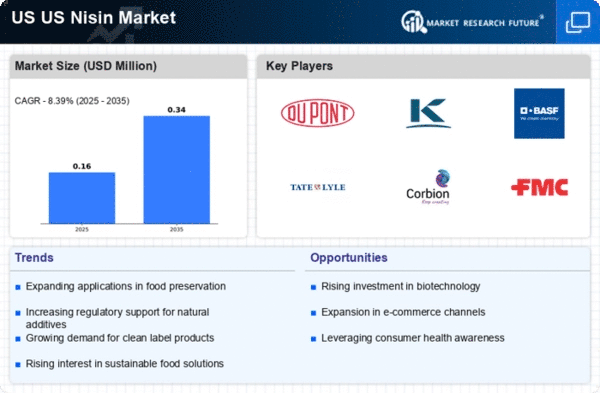
As per analysis, the US Nisin Market is projected to grow from USD 0.164 Million in 2025 to USD 0.336 Million by 2035, exhibiting a compound annual growth rate (CAGR) of 7.62% during the forecast period (2025 - 2035).

Key Market Trends & Highlights

The US Nisin Market is experiencing a dynamic shift driven by evolving consumer preferences and regulatory support.

  • The demand for clean label products is propelling growth in the US Nisin Market.
  • The food preservation segment remains the largest, while the pharmaceuticals segment is the fastest-growing.
  • Liquid Nisin products dominate the market, although powder forms are gaining traction rapidly.
  • Rising consumer awareness of food safety and increased adoption in dairy and meat products are key drivers of market expansion.

Market Size & Forecast

2024 Market Size 0.15 (USD Million)
2035 Market Size 0.336 (USD Million)
CAGR (2025 - 2035) 7.62%

Major Players

DuPont (US), Corbion (US), Kerry Group (US), BASF (US), Tate & Lyle (US), Chr. Hansen (US), Cargill (US), FMC Corporation (US)

Our Impact
Enabled $4.3B Revenue Impact for Fortune 500 and Leading Multinationals
Partnering with 2000+ Global Organizations Each Year
30K+ Citations by Top-Tier Firms in the Industry

US Nisin Market Trends

The US Nisin Market is currently experiencing a notable evolution, driven by increasing consumer awareness regarding food safety and preservation. Nisin, a natural preservative derived from the bacterium Lactococcus lactis, is gaining traction among food manufacturers as a viable alternative to synthetic preservatives. This shift is largely influenced by regulatory support and a growing preference for clean-label products. As consumers demand transparency in food ingredients, the adoption of nisin is likely to rise, reflecting a broader trend towards healthier and safer food options. Furthermore, the food and beverage industry in the United States is increasingly recognizing the benefits of nisin in extending shelf life and enhancing product quality, which may lead to its wider application across various food categories. In addition to food safety, the US Nisin Market is also influenced by the rising trend of plant-based diets. As more consumers gravitate towards vegetarian and vegan options, the need for effective preservation methods becomes paramount. Nisin's efficacy in inhibiting spoilage organisms positions it as a favorable choice for plant-based food products. Moreover, ongoing research into the antimicrobial properties of nisin suggests potential applications beyond food preservation, possibly extending into pharmaceuticals and personal care products. This diversification could further bolster the market's growth, as manufacturers explore innovative uses for this versatile compound.

Growing Demand for Clean Label Products

The US Nisin Market is witnessing an increasing demand for clean label products, as consumers become more conscious of the ingredients in their food. Nisin, being a natural preservative, aligns well with this trend, offering manufacturers a way to meet consumer expectations for transparency and health.

Expansion in Plant-Based Food Sector

The rise of plant-based diets in the United States is influencing the US Nisin Market significantly. As more consumers opt for vegetarian and vegan options, the need for effective preservation methods is critical, positioning nisin as a suitable choice for extending the shelf life of these products.

Regulatory Support and Innovation

Regulatory bodies in the US are increasingly recognizing the safety and efficacy of nisin, which may lead to expanded approvals for its use in various food applications. This regulatory support, combined with ongoing research into nisin's antimicrobial properties, suggests a promising future for innovation within the market.

US Nisin Market Drivers

Growth in the Snack Food Sector

The US Nisin Market is poised for growth, particularly within the snack food sector. As consumers increasingly seek convenient and safe snack options, manufacturers are turning to nisin to enhance the shelf life and safety of their products. The snack food market in the US is projected to reach over 100 billion USD by 2026, with a growing emphasis on healthier and safer options. Nisin's effectiveness in preventing microbial growth makes it an attractive choice for snack producers aiming to meet consumer demands. This trend suggests that the integration of nisin into snack foods could significantly contribute to the expansion of the US Nisin Market.

Rising Consumer Awareness of Food Safety

The US Nisin Market is experiencing a notable increase in consumer awareness regarding food safety. As consumers become more informed about food preservation methods, the demand for natural preservatives like nisin is likely to rise. Nisin, a bacteriocin produced by Lactococcus lactis, is recognized for its efficacy in inhibiting spoilage and pathogenic bacteria. According to recent data, the US food safety market is projected to grow significantly, with a compound annual growth rate (CAGR) of approximately 5% over the next five years. This trend suggests that food manufacturers are increasingly incorporating nisin into their products to meet consumer expectations for safety and quality, thereby driving growth in the US Nisin Market.

Innovation in Food Processing Technologies

The US Nisin Market is influenced by ongoing innovation in food processing technologies. Advances in food preservation techniques, including the use of nisin, are becoming increasingly prevalent as manufacturers seek to improve product quality and safety. The integration of nisin into new processing methods, such as high-pressure processing and modified atmosphere packaging, is likely to enhance its effectiveness as a preservative. This innovation aligns with the broader trend of utilizing natural ingredients in food production, which is gaining traction among consumers. As food processors adopt these technologies, the US Nisin Market is expected to benefit from increased demand for nisin as a key ingredient in modern food preservation.

Regulatory Endorsements and Safety Approvals

The US Nisin Market benefits from regulatory endorsements and safety approvals that bolster consumer confidence. The Food and Drug Administration (FDA) has recognized nisin as safe for use in food products, which encourages manufacturers to incorporate it into their formulations. This regulatory support is crucial, as it not only legitimizes nisin's use but also aligns with the increasing demand for clean label products. Furthermore, the approval of nisin for various applications in food preservation is likely to stimulate market growth. As more companies seek to comply with safety regulations, the US Nisin Market is expected to expand, driven by the adoption of nisin as a natural preservative.

Increased Adoption in Dairy and Meat Products

The US Nisin Market is witnessing increased adoption of nisin in dairy and meat products. Nisin's ability to extend shelf life and enhance food safety makes it particularly appealing to manufacturers in these sectors. The dairy industry, which is valued at over 60 billion USD, is increasingly utilizing nisin to prevent spoilage and maintain product integrity. Similarly, the meat processing sector is projected to grow, with nisin being employed to combat pathogens such as Listeria and Salmonella. This trend indicates a growing recognition of nisin's benefits, potentially leading to a substantial increase in its application across various food categories within the US Nisin Market.


Market Segment Insights

By Application: Food Preservation (Largest) vs. Pharmaceuticals (Fastest-Growing)

The application segment of the US Nisin Market is witnessing a notable distribution, with Food Preservation holding the largest share. This segment capitalizes on the rising consumer demand for natural preservatives in various food products, ensuring longer shelf life and enhanced safety. Pharmaceuticals follow as a significant segment, driven by the increasing demand for antibiotics and preservatives in a diverse range of healthcare products. As such, these two applications dominate the landscape of the nisin market in the United States, reflecting a clear preference among manufacturers and consumers alike. Growth trends within the US Nisin Market are significantly influenced by the Food Preservation segment's established position. However, the Pharmaceuticals sector is catching up, experiencing the fastest growth amidst rising consumer health awareness and the demand for effective preservative solutions. The increased focus on sustainable and natural formulations further propels nisin's adoption in pharmaceuticals, making it a vital ingredient in the development of new healthcare products. This trend underscores the robust potential for growth as stakeholders adapt to shifting market dynamics and consumer preferences.

Food Preservation (Dominant) vs. Pharmaceuticals (Emerging)

Food Preservation serves as the dominant application in the US Nisin Market, leveraging the increasing consumer demand for clean-label products and natural preservation methods. This segment benefits from nisin's efficacy in inhibiting spoilage and enhancing the safety of various food items. Conversely, the Pharmaceuticals application is emerging, characterized by its increasing integration in formulating health products, including creams, ointments, and dietary supplements. This growth is propelled by rising trends toward natural solutions within healthcare, as consumers advocate for safer preservatives. While Food Preservation remains the traditional stronghold, the rapid advancements in the Pharmaceuticals segment indicate a transformative shift, positioning nisin as a crucial element across both sectors.

By Formulation Type: Liquid (Largest) vs. Powder (Fastest-Growing)

In the US Nisin Market, the formulation type segment is characterized by three main categories: liquid, powder, and gel. Among these, the liquid form holds the largest market share due to its versatile applications in food preservation and safety. The powder formulation, while smaller in share, is quickly gaining traction, especially in food products requiring specific preservation methods, indicating a shift in consumer preferences towards powdered agents for their convenience and effectiveness.

Liquid (Dominant) vs. Powder (Emerging)

The liquid formulation of nisin remains dominant within the US market, favored for its ease of use and effectiveness in a variety of food applications. It is particularly important in dairy and meat industries due to its strong antimicrobial properties. On the other hand, the powder formulation is emerging as a popular choice among manufacturers looking for convenience and longer shelf life. Its ability to be easily incorporated into various products without altering taste or texture makes it an attractive option for food producers. This evolving demand showcases a dynamic market landscape where liquid nisin leads but powder is poised for substantial growth.

By End Use: Food Industry (Largest) vs. Healthcare (Fastest-Growing)

The US Nisin Market sees a robust distribution of its market share across various end-use applications. The food industry remains the largest segment, driven by the increasing demand for food preservation and shelf-life extension among various food products. In contrast, the healthcare sector is emerging as a significant player, characterized by its rapid growth due to the rising adoption of nisin as an antimicrobial agent in pharmaceuticals and medical products.

Food Industry: Dominant vs. Healthcare: Emerging

The food industry is recognized as the dominant force in the US Nisin Market, leveraging its capacity for food preservation in diverse products such as meats and dairy. Nisin's ability to inhibit spoilage bacteria enhances food safety and significantly extends shelf life. Meanwhile, the healthcare segment, while emerging, is witnessing exponential growth as awareness of nisin's antifungal and antibacterial properties increases among pharmaceutical manufacturers. The healthcare industry is integrating nisin into various applications, including wound dressings and topical agents, marking a shift towards innovative uses of nisin that cater to health needs.

By Distribution Channel: Online (Largest) vs. Offline (Fastest-Growing)

In the US Nisin Market, the distribution channel segment showcases a dynamic landscape. Online channels currently dominate the market, driven by increasing consumer preference for e-commerce and digital platforms that allow for easy accessibility and convenience in purchasing. Conversely, offline channels also maintain significant relevance, catering to traditional retail preferences and providing direct interaction between consumers and products. Additionally, the offline segment is experiencing robust growth, fueled by a resurgence in brick-and-mortar stores and a consumer shift towards experiential purchases. Direct sales avenues are also gaining traction, offering personalized engagement and tailored solutions to customers, which complements both online and offline methods. This multifaceted approach allows stakeholders to optimize their reach and enhance product visibility across diverse consumer demographics.

Online (Dominant) vs. Direct Sales (Emerging)

The online distribution channel establishes itself as the dominant force in the US Nisin Market, capitalizing on technological advancements and shifting consumer buying behaviors. It offers unparalleled convenience, allowing customers to browse and purchase products at any time, contributing to its leading market position. On the other hand, direct sales emerge as an increasingly vital channel, characterized by personalized customer interactions and tailored experiences. While still developing compared to online sales, this channel fosters strong relationships between suppliers and customers, ensuring higher customer satisfaction and loyalty. As the market evolves, both channels present unique opportunities and strategies for brands to enhance their visibility and engagement in the competitive landscape.

Get more detailed insights about US Nisin Market

Key Players and Competitive Insights

The Nisin Market is characterized by a competitive landscape that is increasingly shaped by innovation, strategic partnerships, and a focus on sustainability. Key players such as DuPont (US), Corbion (US), and Kerry Group (US) are actively pursuing strategies that enhance their market positioning. DuPont (US) emphasizes innovation in biopreservation technologies, aiming to expand its product offerings and improve food safety. Corbion (US) focuses on sustainable practices, integrating renewable resources into its production processes, which aligns with the growing consumer demand for environmentally friendly products. Meanwhile, Kerry Group (US) is leveraging its extensive distribution network to enhance its market reach, indicating a strategic focus on regional expansion and customer engagement. Collectively, these strategies contribute to a dynamic competitive environment where differentiation is increasingly based on innovation and sustainability rather than solely on price.

In terms of business tactics, companies are localizing manufacturing and optimizing supply chains to enhance efficiency and responsiveness to market demands. The Nisin Market appears to be moderately fragmented, with several key players exerting influence over their respective segments. This structure allows for a diverse range of products and innovations, fostering competition that drives advancements in technology and product development.

In December 2025, DuPont (US) announced a partnership with a leading food manufacturer to develop a new line of nisin-based preservatives aimed at extending shelf life and improving food safety. This collaboration is strategically significant as it not only enhances DuPont's product portfolio but also positions the company as a leader in food safety solutions, responding to increasing regulatory pressures and consumer preferences for safer food products.

In November 2025, Corbion (US) launched a new initiative focused on reducing carbon emissions in its nisin production processes. This move underscores Corbion's commitment to sustainability and aligns with global trends towards greener manufacturing practices. By investing in eco-friendly technologies, Corbion is likely to strengthen its market position and appeal to environmentally conscious consumers and businesses alike.

In October 2025, Kerry Group (US) expanded its production capabilities by acquiring a facility dedicated to nisin production. This strategic acquisition is expected to enhance Kerry's operational efficiency and increase its capacity to meet growing demand. The move reflects a broader trend in the industry where companies are investing in infrastructure to support innovation and scalability in response to market needs.

As of January 2026, the Nisin Market is witnessing trends that emphasize digitalization, sustainability, and the integration of AI technologies. Strategic alliances are becoming increasingly important, as companies seek to leverage complementary strengths to enhance their competitive edge. The shift from price-based competition to a focus on innovation, technology, and supply chain reliability is evident, suggesting that future differentiation will hinge on the ability to deliver unique, high-quality products that meet evolving consumer expectations.

Key Companies in the US Nisin Market include

Future Outlook

US Nisin Market Future Outlook

The US Nisin Market is projected to grow at a 7.62% CAGR from 2025 to 2035, driven by increasing demand for natural preservatives and food safety regulations.

New opportunities lie in:

  • Expansion into plant-based food sectors
  • Development of innovative packaging solutions
  • Strategic partnerships with food manufacturers

By 2035, the Nisin Market is expected to solidify its position as a leader in food preservation.

Market Segmentation

US Nisin Market End Use Outlook

  • Food Industry
  • Healthcare
  • Agriculture

US Nisin Market Application Outlook

  • Food Preservation
  • Pharmaceuticals
  • Cosmetics
  • Animal Feed

US Nisin Market Formulation Type Outlook

  • Liquid
  • Powder
  • Gel

US Nisin Market Distribution Channel Outlook

  • Online
  • Offline
  • Direct Sales

Report Scope

MARKET SIZE 20240.15(USD Million)
MARKET SIZE 20250.164(USD Million)
MARKET SIZE 20350.336(USD Million)
COMPOUND ANNUAL GROWTH RATE (CAGR)7.62% (2024 - 2035)
REPORT COVERAGERevenue Forecast, Competitive Landscape, Growth Factors, and Trends
BASE YEAR2024
Market Forecast Period2025 - 2035
Historical Data2019 - 2024
Market Forecast UnitsUSD Million
Key Companies ProfiledDuPont (US), Corbion (US), Kerry Group (US), BASF (US), Tate & Lyle (US), Chr. Hansen (US), Cargill (US), FMC Corporation (US)
Segments CoveredApplication, Formulation Type, End Use, Distribution Channel
Key Market OpportunitiesGrowing demand for natural preservatives in food products enhances opportunities in the US Nisin Market.
Key Market DynamicsRising demand for natural preservatives in food products drives growth in the US Nisin Market.

Countries CoveredUS
Leave a Comment
Download Free Sample

Kindly complete the form below to receive a free sample of this Report

Compare Licence

×
Features License Type
Single User Multiuser License Enterprise User
Price $4,950 $5,950 $7,250
Maximum User Access Limit 1 User Upto 10 Users Unrestricted Access Throughout the Organization
Free Customization
Direct Access to Analyst
Deliverable Format
Platform Access
Discount on Next Purchase 10% 15% 15%
Printable Versions