×
Request Free Sample ×

Kindly complete the form below to receive a free sample of this Report

* Please use a valid business email

Leading companies partner with us for data-driven Insights

clients tt-cursor
Hero Background

US Gut Health Products Market

ID: MRFR/FnB/18252-HCR
128 Pages
Snehal Singh
February 2026

US Gut Health Products Market Size, Share, Industry Trend & Analysis Research Report: By Type of Cover (Prebiotics, Probiotics), By Form (Capsules, Powder, Liquid, Gummies, Others), By Category (Organic, Conventional), By Application (Energy Management, Digestive Health, Immune System, Stomach Health, Metabolism Management) andBy Distribution Channel (Supermarkets & Hypermarkets, Pharmaceuticals, Drug Stores, Online)- Forecast to 2035

Share:
Download PDF ×

We do not share your information with anyone. However, we may send you emails based on your report interest from time to time. You may contact us at any time to opt-out.

US Gut Health Products Market Infographic
Purchase Options

US Gut Health Products Market Summary

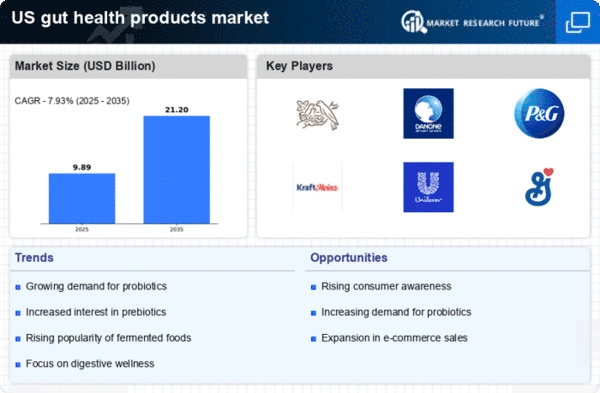
As per Market Research Future analysis, the US gut health products market size was estimated at 9.16 USD Billion in 2024. The US gut health-products market is projected to grow from 9.89 USD Billion in 2025 to 21.2 USD Billion by 2035, exhibiting a compound annual growth rate (CAGR) of 7.9% during the forecast period 2025 - 2035

Key Market Trends & Highlights

The US gut health-products market is experiencing a dynamic shift towards personalized and clean label offerings, driven by consumer awareness and technological advancements.

  • The market is witnessing a rise in personalized nutrition, catering to individual health needs and preferences.
  • There is an increased focus on clean label products, reflecting consumer demand for transparency and natural ingredients.
  • Technology integration in product development is enhancing the efficacy and appeal of gut health solutions.
  • Key market drivers include growing awareness of gut health and the rising incidence of digestive disorders, influencing consumer choices.

Market Size & Forecast

2024 Market Size 9.16 (USD Billion)
2035 Market Size 21.2 (USD Billion)
CAGR (2025 - 2035) 7.93%

Major Players

Nestle (CH), Danone (FR), Procter & Gamble (US), Kraft Heinz (US), Unilever (GB), General Mills (US), Kerry Group (IE), Abbott Laboratories (US), Bifidobacterium (JP)

Our Impact
Enabled $4.3B Revenue Impact for Fortune 500 and Leading Multinationals
Partnering with 2000+ Global Organizations Each Year
30K+ Citations by Top-Tier Firms in the Industry

US Gut Health Products Market Trends

The gut health-products market is experiencing notable growth, driven by increasing consumer awareness regarding the importance of digestive health. This heightened awareness is often linked to a broader understanding of the gut's role in overall well-being, including its influence on immunity, mental health, and chronic diseases. As a result, consumers are actively seeking products that promote gut health, such as probiotics, prebiotics, and fermented foods. The market is characterized by a diverse range of offerings, catering to various dietary preferences and health needs. Furthermore, the rise of e-commerce platforms has facilitated easier access to these products, allowing consumers to explore and purchase gut health solutions conveniently. In addition to consumer demand, regulatory support and scientific research are contributing to the evolution of the gut health-products market. Government agencies are increasingly recognizing the significance of gut health, leading to initiatives that promote research and development in this area. This support is likely to foster innovation, resulting in new formulations and product types that address specific health concerns. As the market continues to expand, it appears poised for further growth, with potential opportunities for both established brands and new entrants to capture consumer interest and loyalty.

Rise of Personalized Nutrition

There is a growing trend towards personalized nutrition within the gut health-products market. Consumers are increasingly interested in products tailored to their specific health needs and genetic profiles. This shift suggests a move away from one-size-fits-all solutions, as individuals seek more effective ways to enhance their digestive health.

Increased Focus on Clean Label Products

The demand for clean label products is becoming more pronounced in the gut health-products market. Consumers are looking for transparency in ingredient sourcing and production processes. This trend indicates a preference for natural, minimally processed ingredients, reflecting a broader desire for healthier lifestyle choices.

Integration of Technology in Product Development

The integration of technology in product development is emerging as a key trend in the gut health-products market. Innovations such as app-based tracking of gut health and personalized recommendations are gaining traction. This suggests that consumers are not only interested in products but also in the technology that supports their health journeys.

US Gut Health Products Market Drivers

Growing Awareness of Gut Health

The increasing awareness of gut health among consumers is a pivotal driver for the gut health-products market. Educational campaigns and health initiatives have highlighted the importance of gut microbiota in overall health, leading to a surge in demand for products that support digestive wellness. According to recent surveys, approximately 70% of consumers in the US are now more conscious of their gut health than they were five years ago. This heightened awareness is translating into a willingness to invest in supplements, probiotics, and functional foods that promote gut health. As a result, the gut health-products market is experiencing robust growth, with projections indicating a compound annual growth rate (CAGR) of around 8% over the next five years. This trend suggests that as consumers continue to prioritize gut health, the market will likely expand significantly.

Shift Towards Preventive Healthcare

The shift towards preventive healthcare is significantly impacting the gut health-products market. Consumers are increasingly adopting proactive health measures, focusing on maintaining wellness rather than merely treating illnesses. This paradigm shift is fostering a greater interest in dietary supplements, probiotics, and functional foods that support gut health as a means of preventing digestive issues and enhancing overall well-being. Data suggests that around 60% of US consumers are now prioritizing preventive health strategies, which is driving the growth of the gut health-products market. As individuals seek to optimize their health through dietary choices, the market is likely to see an influx of innovative products designed to cater to this preventive approach, further solidifying its position in the health and wellness sector.

Rising Incidence of Digestive Disorders

The rising incidence of digestive disorders in the US is a critical factor influencing the gut health-products market. Conditions such as irritable bowel syndrome (IBS), inflammatory bowel disease (IBD), and other gastrointestinal issues are becoming increasingly prevalent, prompting consumers to seek effective solutions. Recent statistics indicate that nearly 20% of the US population suffers from some form of digestive disorder, which has led to a growing demand for products that alleviate symptoms and promote gut health. This trend is driving innovation within the gut health-products market, as manufacturers develop targeted formulations to address specific digestive concerns. The market is expected to reach a valuation of $10 billion by 2026, reflecting the urgent need for effective gut health solutions in response to the rising prevalence of these disorders.

Expansion of Retail Channels and E-commerce

The expansion of retail channels and e-commerce is transforming the gut health-products market landscape. With the rise of online shopping, consumers now have greater access to a diverse range of gut health products, from supplements to functional foods. E-commerce platforms have made it easier for consumers to explore and purchase products tailored to their specific gut health needs. Recent data shows that online sales of gut health products have increased by over 40% in the past year, reflecting a shift in consumer purchasing behavior. This trend is likely to continue, as more retailers invest in their online presence and offer convenient delivery options. Consequently, the gut health-products market is poised for further growth, driven by the increasing availability and accessibility of products through various retail channels.

Influence of Social Media and Health Trends

The influence of social media and emerging health trends is a notable driver of the gut health-products market. Platforms such as Instagram and TikTok have become vital channels for health influencers and nutritionists to share information about gut health, leading to increased consumer interest in related products. This trend is particularly pronounced among younger demographics, who are more likely to engage with health content online. As a result, the gut health-products market is witnessing a surge in demand for trendy items such as kombucha, kefir, and other fermented foods. Market analysis indicates that social media-driven trends could account for up to 30% of new product launches in the gut health-products market, highlighting the significant role that digital platforms play in shaping consumer preferences and driving market growth.


Market Segment Insights

By Type: Probiotics (Largest) vs. Prebiotics (Fastest-Growing)

In the US gut health-products market, probiotics hold the largest share, significantly dominating consumer preferences with their established reputation for enhancing gut flora and overall health. This segment's enduring popularity is attributed to its effectiveness in promoting digestive health, which resonates well with a health-conscious demographic. In contrast, prebiotics, while smaller in market share, are swiftly gaining traction among consumers seeking natural ways to support their gut health, reflecting a growing awareness of dietary fibers. The growth trends indicate a robust increase in both segments, particularly for prebiotics, which are becoming more popular due to rising health consciousness and a shift towards preventive healthcare. Increasing research supporting the long-term benefits of prebiotics on gut microbiota is driving this growth. Probiotics, although already well-established, continue to expand their offerings, particularly in specialized formulations that appeal to diverse health needs, helping sustain their leading position in the market.

Probiotics: Dominant vs. Prebiotics: Emerging

Probiotics are recognized as the dominant player in the gut health-products market, with a well-established presence that resonates with a wide range of consumers. Their effectiveness in restoring and maintaining gut balance makes them a staple in many households. In contrast, prebiotics are emerging as an important segment, characterized by their role in feeding beneficial gut bacteria and enhancing the efficacy of probiotics. They cater to an evolving consumer base seeking more holistic approaches to health. The increased demand for diverse formulations in prebiotics, including foods and supplements tailored for specific health benefits, illustrates their potential for significant growth. This dual dynamic highlights the complementary nature of these segments, providing consumers with comprehensive gut health solutions.

By Form: Capsules (Largest) vs. Gummies (Fastest-Growing)

In the US gut health-products market, the segment distribution reveals that capsules hold the largest market share, favored for their convenience and precise dosing. Other forms such as powders, liquids, and gummies are also present but share a smaller part of the market. Gummies are particularly gaining traction among younger consumers, reflecting a shift in preferences towards more palatable formats. The growth trends within this segment are primarily driven by the increasing awareness of gut health and the desire for supplements that are easy to consume. Gummies are rapidly emerging as a go-to option due to their attractive taste and chewy texture, appealing predominantly to adults looking for convenient alternatives. The push towards natural ingredients in gummies also supports their rapid growth in this vibrant market.

Capsules: Dominant vs. Gummies: Emerging

Capsules have established themselves as the dominant form in the gut health-products market, preferred for their ease of use and controlled dosing, making them a consistent choice among health-conscious consumers. Their effectiveness is often highlighted through targeted formulations aimed at various gut health issues. On the other hand, gummies are emerging rapidly, especially appealing to younger demographics who favor a more enjoyable consumption experience. The soft texture and pleasant flavors make gummies an attractive option, and their formulation is increasingly focusing on natural and organic ingredients. This combination of taste and health benefits positions gummies strongly against traditional forms, signaling a shifting landscape in consumer preferences.

By Category: Organic (Largest) vs. Conventional (Fastest-Growing)

In the US gut health-products market, the market share distribution between organic and conventional categories reveals that organic products hold a significant portion, appealing to health-conscious consumers prioritizing natural options. Conversely, conventional gut health products are gaining traction, specifically among those seeking cost-effective solutions and immediate availability. Both segments continue to carve their niches, reflecting diverse consumer preferences and market dynamics. Growth trends within the US gut health-products market indicate a robust increase in demand for organic products, driven by rising awareness of the health benefits associated with natural ingredients. Meanwhile, the conventional segment is experiencing rapid growth, attributed to innovations in product formulations and aggressive marketing strategies. This convergence of trends showcases how both segments are evolving to meet the varying needs of consumers seeking gut health solutions.

Organic (Dominant) vs. Conventional (Emerging)

The organic segment of the US gut health-products market is characterized by its emphasis on natural, non-GMO ingredients that resonate with consumers who are increasingly conscious of the quality of their food and its impact on health. This dominant position is supported by a loyal customer base and the perception of organic products as a superior choice for gut health. In contrast, the conventional segment is emerging rapidly, appealing to a broader audience with diverse product offerings at competitive price points. This segment often leverages new marketing techniques and product innovations to attract consumers who prioritize value while still seeking effective gut health solutions.

Get more detailed insights about US Gut Health Products Market

Key Players and Competitive Insights

The gut health-products market is currently characterized by a dynamic competitive landscape, driven by increasing consumer awareness regarding digestive health and the growing prevalence of gut-related disorders. Major players such as Nestle (CH), Danone (FR), and Abbott Laboratories (US) are strategically positioned to leverage innovation and product diversification. Nestle (CH) focuses on enhancing its portfolio with science-backed formulations, while Danone (FR) emphasizes sustainability in its product offerings. Abbott Laboratories (US) is investing heavily in research and development to introduce cutting-edge probiotic solutions. Collectively, these strategies not only enhance their market presence but also foster a competitive environment that prioritizes health benefits and consumer trust.Key business tactics within the market include localizing manufacturing and optimizing supply chains to meet regional demands effectively. The competitive structure appears moderately fragmented, with several key players holding substantial market shares. This fragmentation allows for niche players to emerge, yet the influence of established companies remains significant, as they continue to set industry standards through innovation and quality assurance.

In October Nestle (CH) announced a partnership with a leading biotechnology firm to develop a new line of probiotic supplements aimed at specific gut health issues. This collaboration is likely to enhance Nestle's product efficacy and expand its market reach, aligning with the growing consumer demand for targeted health solutions. The strategic importance of this move lies in its potential to position Nestle as a leader in personalized nutrition, a trend that is gaining traction in the health products sector.

In September Danone (FR) launched a new initiative focused on sustainable sourcing of ingredients for its probiotic yogurts. This initiative not only addresses consumer concerns regarding environmental impact but also strengthens Danone's brand image as a responsible company. The strategic significance of this action is evident in its alignment with the increasing consumer preference for eco-friendly products, which could enhance customer loyalty and market share.

In August Abbott Laboratories (US) unveiled a new line of gut health products that incorporate artificial intelligence (AI) to personalize dietary recommendations based on individual microbiome analysis. This innovative approach is likely to set Abbott apart from competitors, as it combines technology with health, catering to the growing demand for personalized health solutions. The strategic importance of this development lies in its potential to revolutionize consumer engagement and product effectiveness in the gut health sector.

As of November current competitive trends indicate a strong shift towards digitalization, sustainability, and AI integration within the gut health-products market. Strategic alliances are increasingly shaping the landscape, allowing companies to pool resources and expertise to innovate more effectively. Looking ahead, competitive differentiation is expected to evolve, moving away from traditional price-based competition towards a focus on innovation, technological advancements, and supply chain reliability. This shift underscores the importance of adaptability and forward-thinking strategies in maintaining a competitive edge.

Key Companies in the US Gut Health Products Market include

Industry Developments

The US Gut Health Products Market has seen significant developments recently, particularly in consumer awareness surrounding digestive health. Companies like Culturelle, GNC Holdings, and Procter and Gamble are capitalizing on the growing demand for probiotics and functional foods that promote gut health. In trends noticed since 2021, there has been increased consumer inclination towards gut health products generally fueled by the pandemic's impact on health consciousness. Notably, in August 2023, PepsiCo announced advancements in its gut health product line, emphasizing their portfolio in functional beverages.

March 2023 marked the launch of a new probiotic range by Nestle, aiming to enhance their market presence in dietary supplements. Mergers and acquisitions have also been a focus; in July 2022, Abbott Laboratories acquired dietary supplement brand, ensuring its foothold in this lucrative sector. Reports indicate that Danone and Kraft Heinz are in discussions for potential collaborations to leverage their strong product lines in gut health. The market's growth is further underscored by a surge in venture capital investments, signifying robust future expansion opportunities in the US gut health segment.

Future Outlook

US Gut Health Products Market Future Outlook

The Gut Health Products Market is projected to grow at a 7.93% CAGR from 2025 to 2035, driven by increasing consumer awareness and demand for digestive health solutions.

New opportunities lie in:

  • Development of personalized probiotic formulations based on genetic profiling.
  • Expansion of subscription-based delivery services for gut health products.
  • Investment in educational marketing campaigns targeting health-conscious consumers.

By 2035, the market is expected to achieve substantial growth, reflecting evolving consumer preferences and innovative product offerings.

Market Segmentation

US Gut Health Products Market Form Outlook

  • Capsules
  • Powder
  • Liquid
  • Gummies
  • Others

US Gut Health Products Market Type Outlook

  • Prebiotics
  • Probiotics

US Gut Health Products Market Category Outlook

  • Organic
  • Conventional

Report Scope

MARKET SIZE 2024 9.16(USD Billion)
MARKET SIZE 2025 9.89(USD Billion)
MARKET SIZE 2035 21.2(USD Billion)
COMPOUND ANNUAL GROWTH RATE (CAGR) 7.93% (2025 - 2035)
REPORT COVERAGE Revenue Forecast, Competitive Landscape, Growth Factors, and Trends
BASE YEAR 2024
Market Forecast Period 2025 - 2035
Historical Data 2019 - 2024
Market Forecast Units USD Billion
Key Companies Profiled Nestle (CH), Danone (FR), Procter & Gamble (US), Kraft Heinz (US), Unilever (GB), General Mills (US), Kerry Group (IE), Abbott Laboratories (US), Bifidobacterium (JP)
Segments Covered Type, Form, Category
Key Market Opportunities Rising consumer awareness of gut health drives demand for innovative, natural gut health-products.
Key Market Dynamics Rising consumer awareness drives demand for innovative gut health products amid evolving regulatory standards.
Countries Covered US
Leave a Comment

FAQs

What is the expected market size of the US Gut Health Products Market in 2024?

In 2024, the US Gut Health Products Market is expected to be valued at 8.5 billion USD.

What is the projected market value for the US Gut Health Products Market by 2035?

The market is anticipated to reach a value of 20.5 billion USD by 2035.

What is the expected compound annual growth rate (CAGR) for the US Gut Health Products Market from 2025 to 2035?

The market is expected to grow at a CAGR of 8.332% during the forecast period from 2025 to 2035.

What is the estimated market size for Prebiotics in the US Gut Health Products Market for 2024?

The Prebiotics segment of the market is valued at 3.5 billion USD in 2024.

What will the value of Probiotics be in the US Gut Health Products Market by 2035?

By 2035, the Probiotics segment is projected to reach 12.0 billion USD.

Who are the key players in the US Gut Health Products Market?

Major players in the market include Culturelle, GNC Holdings, Procter and Gamble, PepsiCo, and Nestle among others.

What opportunities exist in the US Gut Health Products Market?

Emerging trends such as increased awareness of gut health and demand for natural products present growth opportunities.

What challenges does the US Gut Health Products Market currently face?

Regulatory challenges and intense competition are some of the significant hurdles faced by the market.

What are the expected growth drivers for the US Gut Health Products Market?

Factors like rising health consciousness and increasing consumer demand for functional foods are key growth drivers.

How is the regional market distribution shaping for the US Gut Health Products Market?

The market shows expanding interest across various regions as consumers increasingly focus on gut health solutions.

Download Free Sample

Kindly complete the form below to receive a free sample of this Report

Compare Licence

×
Features License Type
Single User Multiuser License Enterprise User
Price $4,950 $5,950 $7,250
Maximum User Access Limit 1 User Upto 10 Users Unrestricted Access Throughout the Organization
Free Customization
Direct Access to Analyst
Deliverable Format
Platform Access
Discount on Next Purchase 10% 15% 15%
Printable Versions