×
Request Free Sample ×

Kindly complete the form below to receive a free sample of this Report

* Please use a valid business email

Leading companies partner with us for data-driven Insights

clients tt-cursor
Hero Background

US Gum Arabic Market

ID: MRFR/FnB/19510-HCR
200 Pages
Snehal Singh
February 2026

US Gum Arabic Market Size, Share, Industry Trend & Analysis Research Report By Form Outlook, ( Kibbled Acacia Gum,Powdered Acacia Gum,Raw Gum Arabic,Spray-Dried Acacia Gum ), Grade Outlook,(Acacia Senegal,Acacia Seyal ), Nature Outlook,( Organic,Conventional ), Application Outlook,( Food and Beverages,Pharmaceuticals,Nutraceuticals,Cosmetics and Personal Care,Paints and Coating,Other Applications ), Functional Properties Outlook,( Emulsifier,Stabilizer,Thickener ) Forecast-2035

Share:
Download PDF ×

We do not share your information with anyone. However, we may send you emails based on your report interest from time to time. You may contact us at any time to opt-out.

US Gum Arabic Market Infographic
Purchase Options

US Gum Arabic Market Summary

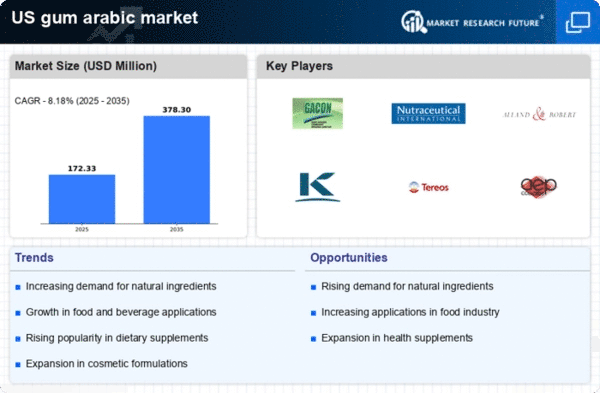
As per Market Research Future analysis, the US gum arabic market size was estimated at 159.3 USD Million in 2024. The US gum arabic market is projected to grow from 172.33 USD Million in 2025 to 378.3 USD Million by 2035, exhibiting a compound annual growth rate (CAGR) of 8.1% during the forecast period 2025 - 2035

Key Market Trends & Highlights

The US gum arabic market is experiencing robust growth driven by increasing demand for natural ingredients and diverse applications.

  • The largest segment in the US gum arabic market is the food and beverage sector, which continues to expand due to rising consumer preference for natural ingredients.
  • The pharmaceutical sector is the fastest-growing segment, reflecting a notable increase in the use of gum arabic for drug formulation and delivery.
  • Technological advancements in processing are enhancing the quality and efficiency of gum arabic production, thereby supporting market growth.
  • Key market drivers include the increasing applications in food and beverage and the rising demand in the cosmetics sector, which are fueling the overall market expansion.

Market Size & Forecast

2024 Market Size 159.3 (USD Million)
2035 Market Size 378.3 (USD Million)
CAGR (2025 - 2035) 8.18%

Major Players

Gum Arabic Company (SD), Nutraceutical International Corporation (US), Alland & Robert (FR), Kerry Group (IE), Tereos (FR), AEP Colloids (US), Gum Arabic Supplier (SD), Sambavanam (IN)

Our Impact
Enabled $4.3B Revenue Impact for Fortune 500 and Leading Multinationals
Partnering with 2000+ Global Organizations Each Year
30K+ Citations by Top-Tier Firms in the Industry

US Gum Arabic Market Trends

The gum arabic market is currently experiencing notable shifts driven by various factors. The increasing demand for natural food additives is a primary driver, as consumers become more health-conscious and seek products with fewer artificial ingredients. This trend is reflected in the food and beverage sector, where gum arabic serves as a stabilizer and emulsifier, enhancing product quality and shelf life. Additionally, the rise of plant-based diets has further propelled the use of gum arabic, as it is derived from the acacia tree and aligns with the preferences of environmentally aware consumers. Furthermore, the pharmaceutical industry is also recognizing the benefits of gum arabic, utilizing it in formulations for its binding and thickening properties. Moreover, the gum arabic market is likely to benefit from advancements in extraction and processing technologies. These innovations may lead to improved product quality and cost-effectiveness, making gum arabic more accessible to various industries. The regulatory landscape is also evolving, with increased scrutiny on food safety and ingredient transparency. This could potentially enhance the market's credibility, as manufacturers are compelled to adhere to stricter guidelines. Overall, the gum arabic market appears poised for growth, driven by consumer preferences for natural ingredients and technological advancements in production processes.

Rising Demand for Natural Ingredients

There is a growing trend towards the use of natural ingredients in food and beverages. Consumers are increasingly seeking products that contain fewer artificial additives, which has led to a surge in the demand for gum arabic as a natural emulsifier and stabilizer.

Expansion in the Pharmaceutical Sector

The pharmaceutical industry is recognizing the potential of gum arabic for its binding and thickening properties. This trend indicates a shift towards incorporating natural substances in drug formulations, which may enhance product efficacy and consumer acceptance.

Technological Advancements in Processing

Innovations in extraction and processing technologies are likely to improve the quality and cost-effectiveness of gum arabic. These advancements may facilitate broader applications across various industries, enhancing the market's growth potential.

US Gum Arabic Market Drivers

Rising Demand in the Cosmetics Sector

The gum arabic market is witnessing a significant uptick in demand from the cosmetics sector. As consumers increasingly prioritize natural and organic products, manufacturers are incorporating gum arabic into formulations for its binding and thickening properties. This trend aligns with the broader movement towards sustainability and eco-friendliness in personal care products. The US cosmetics market is expected to exceed $80 billion by 2025, with a substantial portion of this growth attributed to the inclusion of natural ingredients like gum arabic. This shift not only enhances product appeal but also positions the gum arabic market favorably within a rapidly evolving landscape.

Emerging Trends in Sustainable Sourcing

The gum arabic market is experiencing a shift towards sustainable sourcing practices, driven by consumer demand for ethically produced ingredients. As awareness of environmental issues grows, manufacturers are increasingly seeking suppliers who adhere to sustainable harvesting methods. This trend is particularly relevant in the US, where consumers are willing to pay a premium for products that align with their values. The gum arabic market stands to gain from this movement, as sustainable sourcing not only enhances brand reputation but also meets the expectations of a socially conscious consumer base. This could lead to increased market penetration and growth opportunities in the coming years.

Regulatory Support for Natural Ingredients

The gum arabic market is likely to benefit from favorable regulatory frameworks that promote the use of natural ingredients in food and cosmetics. Regulatory bodies in the US are increasingly recognizing the importance of clean-label products, which has led to a supportive environment for the incorporation of natural substances like gum arabic. This regulatory support not only enhances consumer trust but also encourages manufacturers to innovate and expand their product lines. As the market for natural ingredients continues to grow, the gum arabic market is well-positioned to capitalize on these developments, potentially leading to increased market share and profitability.

Increasing Applications in Food and Beverage

The gum arabic market is experiencing a notable surge in demand due to its increasing applications in the food and beverage sector. As consumers become more health-conscious, there is a growing preference for natural and clean-label ingredients. Gum arabic serves as a stabilizer, emulsifier, and thickening agent in various products, including soft drinks, confectionery, and dairy items. In the US, the food and beverage industry is projected to reach a market value of over $1 trillion by 2025, with gum arabic playing a crucial role in meeting consumer expectations for quality and safety. This trend indicates a robust growth trajectory for the gum arabic market, as manufacturers seek to enhance product formulations with natural ingredients.

Growth in Nutraceuticals and Dietary Supplements

The gum arabic market is benefiting from the expanding nutraceuticals and dietary supplements sector. As health awareness rises, consumers are increasingly seeking products that offer functional benefits. Gum arabic is recognized for its prebiotic properties, which support digestive health and overall wellness. The US dietary supplements market is projected to reach $60 billion by 2025, with a growing emphasis on natural ingredients. This trend suggests that the gum arabic market could see increased adoption in supplement formulations, as manufacturers aim to cater to health-conscious consumers looking for effective and natural solutions.


Market Segment Insights

By Nature: Organic (Largest) vs. Conventional (Fastest-Growing)

In the US gum arabic market, the market share is predominantly held by organic products, which cater to the increasing consumer demand for natural and health-oriented ingredients. With a significant segment of the health-conscious population seeking organic certification, this segment has established itself as the leading choice among manufacturers and consumers alike. On the other hand, conventional gum arabic is also notable, appealing to cost-sensitive customers and those less focused on organic credentials.

Organic: Dominant vs. Conventional: Emerging

Organic gum arabic is characterized by its natural sourcing and is a favorite among consumers due to its perceived health benefits and sustainability. This dominant segment has seen a robust market position as more brands pivot towards organic lines to meet consumer preferences. In contrast, conventional gum arabic, while emerging, is gaining traction due to its affordability and versatility in various applications, notably in the food and pharmaceutical industries. As consumers increasingly seek value without sacrificing quality, conventional options are witnessing rapid growth, driven by broader application in processed products.

By Functional Properties: Emulsifier (Largest) vs. Stabilizer (Fastest-Growing)

In the US gum arabic market, Emulsifiers have emerged as the largest functional property, accounting for a significant share of the market. This dominance is reflective of their critical role in various applications, especially in the food and beverage industry where maintaining consistency and texture is vital. Stabilizers are following closely, showing promising growth that signals a shift towards more versatile formulations in consumer products. The growth trends indicate a robust demand for emulsifiers due to their essential functions in improving the quality and stability of products. The rise in plant-based diets is a key driver, as emulsifiers are integral in creating textures that appeal to consumers. Furthermore, the rapid growth of stabilizers is attributed to advancements in food technology, enabling them to enhance product performance effectively.

Emulsifier: Dominant vs. Stabilizer: Emerging

Emulsifiers serve as the dominant functional property in the US gum arabic market, recognized for their ability to facilitate the mixing of oil and water-based components in various products such as sauces and dressings. Their established market presence is supported by consistent demand across food and beverage sectors. Conversely, stabilizers represent an emerging segment, gaining traction as manufacturers seek to enhance the shelf life and quality of their products. These two properties, while distinct in their applications, share a common goal of improving product stability and texture, making them critical components in the formulation of modern consumer goods.

By Grade: Acacia Senegal (Largest) vs. Acacia Seyal (Fastest-Growing)

In the US gum arabic market, the distribution of market share between the segment values reveals Acacia Senegal as the largest player, widely recognized for its superior quality and extensive applications in food and beverage industries. Meanwhile, Acacia Seyal is emerging as a significant contender, gaining traction due to its increasing acceptance in various application areas like pharmaceuticals and cosmetics. The current landscape underscores the advantages held by Acacia Senegal but also highlights the potential growth for Acacia Seyal as it garners more attention and usage across sectors. Growth trends indicate a favorable shift for Acacia Seyal, attributed to the rising demand for natural and organic ingredients. Consumers are becoming more health-conscious, which propels the growth of Acacia Seyal, particularly in the clean-label movement in products. Additionally, as manufacturers seek alternatives to synthetic gums, Acacia Seyal is positioned as a viable choice. This adaptability enhances its appeal, positioning it for robust growth in the competitive landscape of the US gum arabic market.

Acacia Senegal (Dominant) vs. Acacia Seyal (Emerging)

Acacia Senegal is characterized by its high viscosity and solubility, making it the preferred choice for manufacturers in the food industry, especially in products requiring emulsification or thickening. Its dominance in the market is underscored by its well-established supply chain and quality consistency. On the other hand, Acacia Seyal is emerging as a noteworthy alternative, offering unique properties that appeal to niche markets, particularly in health and wellness sectors. The manufacturing techniques for Acacia Seyal are evolving, allowing for better extraction methods that enhance its appeal. As demand for sustainable and naturally-derived ingredients increases, Acacia Seyal is set to capture a larger share of the market, showcasing its versatility in various applications.

By Form: Kibbled Acacia Gum (Largest) vs. Spray-Dried Acacia Gum (Fastest-Growing)

In the US gum arabic market, Kibbled Acacia Gum dominates the segment, accounting for a significant share due to its diverse applications in food and beverage sectors. Powdered Acacia Gum also holds a substantial position, offering ease of use and high solubility, appealing to various industrial users. Meanwhile, Spray-Dried Acacia Gum, while currently smaller in share, is emerging rapidly as more industries recognize its advantages in food preservation and formulation. Growth trends in the 'Form' segment are being driven by increasing demand for clean label ingredients and natural additives across industries. The versatility and functional properties of Acacia Gum products are spurring their application in innovative formulations. Moreover, the rising focus on health consciousness among consumers is propelling the market for powdered and spray-dried variants as they align with clean label trends and functional benefits, fostering their expansion in the market.

Kibbled Acacia Gum (Dominant) vs. Spray-Dried Acacia Gum (Emerging)

Kibbled Acacia Gum stands out as the dominant form in the segment due to its excellent emulsifying and stabilizing properties, making it a preferred choice in the beverage and confectionery industries. Its natural origin and adaptability lend to its wide acceptance. In contrast, Spray-Dried Acacia Gum is emerging strongly as a versatile ingredient, particularly valued in food formulations that require instant solubility and stability under various conditions. Its rapid growth is attributed to the increasing demand for processed food items that require long shelf life and enhanced sensory characteristics, positioning it as a key player for future market expansions.

By Application: Food and Beverages (Largest) vs. Pharmaceuticals (Fastest-Growing)

The market share distribution within the application segment of the US gum arabic market reveals that Food and Beverages capture the largest share. This segment benefits from the increasing demand for natural food additives, particularly in confectionery and beverages. Following closely, the Pharmaceuticals segment is rapidly gaining traction due to its use as an excipient and stabilizer in drug formulations. Understanding these dynamics is crucial for stakeholders looking to capitalize on market trends. Growth trends within the US gum arabic market are driven by the rising health consciousness among consumers, leading to a preference for natural ingredients in food and pharmaceuticals. The surge in demand for functional foods and dietary supplements is favoring the Nutraceuticals application, while Cosmetics and Personal Care is witnessing innovation in product formulations. Additionally, the need for eco-friendly paints and coatings is pushing the Paints and Coating segment to expand its market share.

Food and Beverages: Dominant vs. Pharmaceuticals: Emerging

The Food and Beverages segment stands as the dominant application within the US gum arabic market, primarily due to its extensive use as a food stabilizer, emulsifier, and thickening agent. Its versatility allows it to enhance texture and flavor in a variety of products, making it indispensable in the food industry. On the other hand, the Pharmaceuticals segment, though emerging, is rapidly gaining importance due to the increasing incorporation of gum arabic in drug formulations as a natural additive. This is driven by regulatory trends favoring natural, clean-label ingredients in pharmaceuticals. As awareness and innovation continue to blend in this space, these two segments are poised to shape the future landscape of the gum arabic market.

Get more detailed insights about US Gum Arabic Market

Key Players and Competitive Insights

The gum arabic market exhibits a dynamic competitive landscape characterized by a blend of established players and emerging companies. Key growth drivers include the increasing demand for natural food additives, the rising popularity of clean-label products, and the expanding applications of gum arabic in pharmaceuticals and cosmetics. Major companies such as Gum Arabic Company (SD), Nutraceutical International Corporation (US), and Kerry Group (IE) are strategically positioned to leverage these trends. For instance, Gum Arabic Company (SD) focuses on enhancing its supply chain efficiency, while Nutraceutical International Corporation (US) emphasizes product innovation to cater to health-conscious consumers. Collectively, these strategies contribute to a moderately fragmented market structure, where competition is shaped by both product differentiation and operational excellence.In terms of business tactics, companies are increasingly localizing manufacturing to reduce lead times and optimize supply chains. This approach not only enhances responsiveness to market demands but also mitigates risks associated with global supply chain disruptions. The competitive structure of the gum arabic market appears to be moderately fragmented, with several key players exerting influence through strategic partnerships and regional expansions. This fragmentation allows for niche players to thrive, while larger companies consolidate their market positions through acquisitions and collaborations.

In October Kerry Group (IE) announced a strategic partnership with a leading natural ingredient supplier to enhance its gum arabic sourcing capabilities. This move is likely to bolster Kerry's product portfolio, enabling the company to meet the growing demand for sustainable and natural food ingredients. The partnership underscores the importance of sourcing high-quality raw materials in maintaining competitive advantage within the market.

In September Nutraceutical International Corporation (US) launched a new line of organic gum arabic products aimed at the health and wellness sector. This initiative reflects the company's commitment to innovation and aligns with the increasing consumer preference for organic and clean-label products. By diversifying its product offerings, Nutraceutical positions itself to capture a larger share of the market, particularly among health-conscious consumers seeking natural alternatives.

In August Tereos (FR) expanded its production capacity for gum arabic in response to rising global demand. This expansion is indicative of Tereos' strategic focus on scaling operations to meet market needs. By increasing production capabilities, Tereos aims to solidify its position as a leading supplier in the gum arabic market, catering to diverse applications across various industries.

As of November current competitive trends in the gum arabic market are increasingly defined by digitalization, sustainability, and the integration of advanced technologies. Companies are forming strategic alliances to enhance their innovation capabilities and improve supply chain reliability. The shift from price-based competition to a focus on technological advancements and sustainable practices is becoming evident. Moving forward, competitive differentiation will likely hinge on the ability to innovate and adapt to evolving consumer preferences, with an emphasis on quality and sustainability.

Key Companies in the US Gum Arabic Market include

Future Outlook

US Gum Arabic Market Future Outlook

The Gum Arabic Market is projected to grow at an 8.18% CAGR from 2025 to 2035, driven by increasing demand in food and beverage applications, pharmaceuticals, and cosmetics.

New opportunities lie in:

  • Developing innovative gum arabic-based food additives for health-conscious consumers.
  • Expanding e-commerce platforms for direct-to-consumer sales of gum arabic products.
  • Investing in sustainable sourcing practices to enhance brand reputation and market share.

By 2035, the gum arabic market is expected to achieve robust growth, driven by diverse applications and strategic innovations.

Market Segmentation

US Gum Arabic Market Form Outlook

  • Kibbled Acacia Gum
  • Powdered Acacia Gum
  • Raw Gum Arabic
  • Spray-Dried Acacia Gum

US Gum Arabic Market Grade Outlook

  • Acacia Senegal
  • Acacia Seyal

US Gum Arabic Market Nature Outlook

  • Organic
  • Conventional

US Gum Arabic Market Application Outlook

  • Food and Beverages
  • Pharmaceuticals
  • Nutraceuticals
  • Cosmetics and Personal Care
  • Paints and Coating
  • Other Applications

US Gum Arabic Market Functional Properties Outlook

  • Emulsifier
  • Stabilizer
  • Thickener

Report Scope

MARKET SIZE 2024 159.3(USD Million)
MARKET SIZE 2025 172.33(USD Million)
MARKET SIZE 2035 378.3(USD Million)
COMPOUND ANNUAL GROWTH RATE (CAGR) 8.18% (2025 - 2035)
REPORT COVERAGE Revenue Forecast, Competitive Landscape, Growth Factors, and Trends
BASE YEAR 2024
Market Forecast Period 2025 - 2035
Historical Data 2019 - 2024
Market Forecast Units USD Million
Key Companies Profiled Gum Arabic Company (SD), Nutraceutical International Corporation (US), Alland & Robert (FR), Kerry Group (IE), Tereos (FR), AEP Colloids (US), Gum Arabic Supplier (SD), Sambavanam (IN)
Segments Covered Nature, Functional Properties, Grade, Form, Application
Key Market Opportunities Growing demand for natural food additives and clean label products enhances opportunities in the gum arabic market.
Key Market Dynamics Rising demand for natural food additives drives innovation and competition in the gum arabic market.
Countries Covered US
Leave a Comment
Download Free Sample

Kindly complete the form below to receive a free sample of this Report

Compare Licence

×
Features License Type
Single User Multiuser License Enterprise User
Price $4,950 $5,950 $7,250
Maximum User Access Limit 1 User Upto 10 Users Unrestricted Access Throughout the Organization
Free Customization
Direct Access to Analyst
Deliverable Format
Platform Access
Discount on Next Purchase 10% 15% 15%
Printable Versions