×
Request Free Sample ×

Kindly complete the form below to receive a free sample of this Report

* Please use a valid business email

Leading companies partner with us for data-driven Insights

clients tt-cursor
Hero Background

US Frozen Seafood Packaging Market

ID: MRFR/PCM/18991-HCR
111 Pages
Snehal Singh
February 2026

US Seafood Market Research Report By Seafood Type (Cephalopods, Shellfish, Mollusks, Level Fish, Groundfish, Salmonids, Fish, Pelagic), By Seafood Retail (Surrounding, Frozen, Chilled) and By Seafood Distribution Channel (Retail, Foodservice, Institutional) - Forecast to 2035

Share:
Download PDF ×

We do not share your information with anyone. However, we may send you emails based on your report interest from time to time. You may contact us at any time to opt-out.

US Frozen Seafood Packaging Market Infographic
Purchase Options

US Frozen Seafood Packaging Market Summary

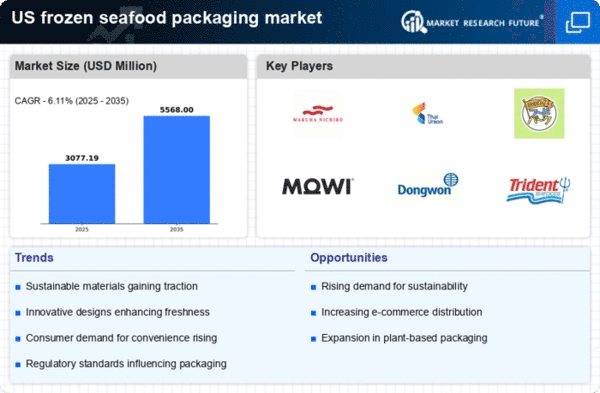
As per Market Research Future analysis, the US frozen seafood-packaging market Size was estimated at 2900.0 USD Million in 2024. The US frozen seafood-packaging market is projected to grow from 3077.19 USD Million in 2025 to 5568.0 USD Million by 2035, exhibiting a compound annual growth rate (CAGR) of 6.1% during the forecast period 2025 - 2035

Key Market Trends & Highlights

The US frozen seafood-packaging market is experiencing a shift towards sustainability and innovation.

  • Sustainable packaging solutions are gaining traction as consumers increasingly prioritize eco-friendly options.
  • Smart packaging innovations are emerging, enhancing product freshness and consumer engagement.
  • E-commerce is significantly influencing the market, with online shopping trends driving demand for convenient packaging.
  • Rising demand for convenience foods and health consciousness are key drivers propelling the market forward.

Market Size & Forecast

2024 Market Size 2900.0 (USD Million)
2035 Market Size 5568.0 (USD Million)
CAGR (2025 - 2035) 6.11%

Major Players

Maruha Nichiro Corporation (JP), Thai Union Group PCL (TH), Nissui (JP), Mowi ASA (NO), Dongwon Industries (KR), Trident Seafoods Corporation (US), High Liner Foods Incorporated (CA), Seafood Innovations (US)

Our Impact
Enabled $4.3B Revenue Impact for Fortune 500 and Leading Multinationals
Partnering with 2000+ Global Organizations Each Year
30K+ Citations by Top-Tier Firms in the Industry

US Frozen Seafood Packaging Market Trends

The frozen seafood-packaging market is currently experiencing notable transformations driven by evolving consumer preferences and sustainability initiatives. As awareness of environmental issues grows, there is a marked shift towards eco-friendly packaging solutions. This trend is reflected in the increasing demand for biodegradable and recyclable materials, which are perceived as more responsible choices by consumers. Additionally, advancements in packaging technology are enhancing product shelf life and maintaining quality, which is crucial for seafood products that are sensitive to spoilage. The integration of smart packaging solutions, such as QR codes and temperature indicators, is also gaining traction, allowing consumers to track freshness and origin, thereby fostering trust in the product. Moreover, the rise of e-commerce has significantly influenced the frozen seafood-packaging market. With more consumers opting for online grocery shopping, packaging must not only ensure product safety during transit but also appeal visually to attract buyers. This has led to innovative designs that prioritize both functionality and aesthetics. As the market continues to evolve, stakeholders must remain agile, adapting to these trends while addressing regulatory requirements and consumer expectations. The future of the frozen seafood-packaging market appears promising, with opportunities for growth in sustainable practices and technological advancements that enhance consumer experience.

Sustainable Packaging Solutions

There is a growing emphasis on eco-friendly materials within the frozen seafood-packaging market. Consumers increasingly prefer packaging that minimizes environmental impact, leading to a rise in biodegradable and recyclable options. This trend aligns with broader sustainability goals and reflects changing consumer values.

Smart Packaging Innovations

Technological advancements are shaping the frozen seafood-packaging market through the introduction of smart packaging solutions. Features such as QR codes and temperature indicators enhance product traceability and freshness monitoring, appealing to health-conscious consumers who prioritize quality.

E-commerce Influence

The expansion of online grocery shopping is reshaping packaging requirements in the frozen seafood-packaging market. Packaging must now ensure product integrity during shipping while also being visually appealing to attract consumers in a digital marketplace.

US Frozen Seafood Packaging Market Drivers

Rising Demand for Convenience Foods

The frozen seafood-packaging market experiences a notable surge in demand for convenience foods, driven by changing consumer lifestyles. As more individuals seek quick meal solutions, the market for frozen seafood products is expanding. According to recent data, the convenience food sector has grown by approximately 15% in the last year, indicating a shift in consumer preferences. This trend is particularly pronounced among busy professionals and families who prioritize time-saving options. Consequently, packaging solutions that enhance the convenience of frozen seafood products are becoming increasingly vital. The frozen seafood-packaging market must adapt to these evolving consumer needs by offering user-friendly packaging that facilitates easy storage and preparation.

E-commerce Growth and Online Shopping Trends

The growth of e-commerce is significantly influencing the frozen seafood-packaging market. As online shopping becomes more prevalent, consumers are increasingly purchasing frozen seafood products through digital platforms. Recent data shows that online grocery sales have surged by over 25% in the past year, indicating a shift in shopping behavior. This trend necessitates the development of packaging that ensures product integrity during transportation and storage. The frozen seafood-packaging market must adapt to these changes by creating packaging solutions that are not only visually appealing but also functional, ensuring that products remain fresh and intact upon delivery.

Health Consciousness and Nutritional Awareness

Growing health consciousness among consumers significantly impacts the frozen seafood-packaging market. As individuals become more aware of the nutritional benefits of seafood, there is an increasing preference for products that are rich in omega-3 fatty acids and low in saturated fats. Recent surveys indicate that nearly 70% of consumers actively seek healthier food options, which has led to a rise in demand for frozen seafood products. This trend necessitates the development of packaging that not only preserves the quality and freshness of seafood but also highlights its health benefits. The frozen seafood-packaging market is thus challenged to innovate packaging solutions that effectively communicate nutritional information and promote the health advantages of seafood consumption.

Sustainability Initiatives in Packaging Materials

Sustainability initiatives are becoming a driving force in the frozen seafood-packaging market. With rising environmental concerns, consumers are increasingly favoring products packaged in eco-friendly materials. Recent studies indicate that approximately 60% of consumers are willing to pay a premium for sustainable packaging options. This shift is prompting manufacturers to explore biodegradable and recyclable materials for their packaging solutions. The frozen seafood-packaging market must respond to this demand by investing in sustainable practices that not only meet consumer expectations but also comply with regulatory standards. This focus on sustainability could enhance brand loyalty and attract environmentally conscious consumers.

Technological Advancements in Preservation Techniques

Technological advancements in preservation techniques are reshaping the frozen seafood-packaging market. Innovations such as vacuum sealing and modified atmosphere packaging (MAP) are enhancing the shelf life and quality of frozen seafood products. These technologies help in minimizing spoilage and maintaining freshness, which is crucial for consumer satisfaction. Recent estimates suggest that the adoption of advanced preservation methods could reduce food waste by up to 30%, thereby benefiting both consumers and producers. As a result, the frozen seafood-packaging market is increasingly focusing on integrating these technologies into their packaging solutions to ensure optimal product quality and safety.


Market Segment Insights

By Type: Flexible Packaging (Largest) vs. Rigid Packaging (Fastest-Growing)

In the US frozen seafood-packaging market, flexible packaging holds a dominant share, primarily due to its adaptability and convenience for a variety of seafood products. The segment's market presence is bolstered by consumer preferences for resealable packaging options, which aid in maintaining freshness and extending shelf life. Rigid packaging, while smaller in market share, is gaining traction due to its protective qualities and suitability for bulk packaging needs. The growth trends in this segment are driven by evolving consumer demands for sustainable packaging solutions and the increased focus on convenience in food storage. Flexible packaging is increasingly being adopted for its lightweight nature and lower material costs, while the rigid packaging segment is experiencing rapid growth fueled by innovations in design and functionality. As environmental concerns rise, producers are also exploring recyclable materials, thus enhancing the appeal of both packaging types.

Flexible Packaging (Dominant) vs. Rigid Packaging (Emerging)

Flexible packaging serves as a dominant force in the packaging segment due to its versatility and cost-effectiveness. Characterized by its lightweight design, it reduces transportation costs while ensuring seafood freshness. The demand for resealable options and easy disposal further boosts its appeal. On the other hand, rigid packaging is emerging, capturing attention for its sturdiness and ability to protect products during transit. It appeals to consumers looking for premium seafood experiences with enhanced presentation. As both segments evolve, innovative designs aimed at sustainability and functionality are becoming increasingly popular, allowing for greater consumer engagement and satisfaction.

By Application: Frozen Shrimp (Largest) vs. Frozen Fish (Fastest-Growing)

In the US frozen seafood-packaging market, the distribution of market share among various application segments reveals that Frozen Shrimp holds the largest portion, significantly contributing to both retail and foodservice channels. Meanwhile, Frozen Fish is notable for its rapid growth, spurred by changing consumer preferences towards healthier protein options, reflecting a notable shift in market dynamics. Growth trends for the application segment show a significant uptrend in demand for Frozen Shrimp, influenced by rising ethnically diverse culinary practices leading to increased consumption. Moreover, Frozen Fish is emerging as a fast-growing contender, driven by health trends emphasizing seafood intake. Sustainable sourcing and awareness around nutritional benefits are also vital drivers of this acceleration in market dynamics.

Frozen Shrimp (Dominant) vs. Frozen Fish (Emerging)

Frozen Shrimp has established itself as the dominant application in the sector, benefiting from a broad appeal and versatility in various cuisines. Its packaging plays a critical role in maintaining quality and freshness, aligning with consumer expectations. In contrast, Frozen Fish is seen as an emerging category, attracting attention due to the increasing awareness around the health benefits of fish consumption. This segment is evolving with innovative packaging solutions that enhance convenience and shelf-life. Both segments reflect a growing trend where sustainability in packaging materials is increasingly prioritized, catering to environmentally-conscious consumers.

Get more detailed insights about US Frozen Seafood Packaging Market

Key Players and Competitive Insights

The frozen seafood-packaging market is characterized by a dynamic competitive landscape, driven by increasing consumer demand for convenience and sustainability. Key players such as Trident Seafoods Corporation (US), Thai Union Group PCL (TH), and Mowi ASA (NO) are strategically positioned to leverage these trends. Trident Seafoods Corporation (US) focuses on innovation in packaging solutions that enhance product freshness and shelf life, while Thai Union Group PCL (TH) emphasizes sustainability in sourcing and packaging, aligning with consumer preferences for environmentally friendly products. Mowi ASA (NO) has adopted a strategy of vertical integration, controlling the supply chain from aquaculture to packaging, which enhances operational efficiency and product quality. Collectively, these strategies shape a competitive environment that prioritizes sustainability and innovation, reflecting broader market trends.Key business tactics within the frozen seafood-packaging market include localizing manufacturing and optimizing supply chains to reduce costs and improve responsiveness to market demands. The market structure appears moderately fragmented, with several key players exerting influence over their respective segments. This fragmentation allows for niche players to thrive, while larger companies leverage economies of scale to maintain competitive pricing and product offerings.

In October Trident Seafoods Corporation (US) announced a partnership with a leading technology firm to develop smart packaging solutions that utilize QR codes for traceability. This strategic move is significant as it enhances transparency in the supply chain, allowing consumers to access information about the origin and sustainability of their seafood products. Such innovations are likely to resonate with increasingly conscious consumers, thereby strengthening Trident's market position.

In September Thai Union Group PCL (TH) launched a new line of eco-friendly packaging made from biodegradable materials. This initiative not only aligns with global sustainability goals but also positions Thai Union as a leader in environmentally responsible practices within the seafood industry. The strategic importance of this move lies in its potential to attract environmentally conscious consumers and differentiate the brand in a competitive market.

In August Mowi ASA (NO) expanded its production capabilities by investing in a state-of-the-art packaging facility in the US. This expansion is crucial as it allows Mowi to enhance its operational efficiency and meet the growing demand for frozen seafood products. By increasing production capacity, Mowi is likely to strengthen its competitive edge and respond more effectively to market fluctuations.

As of November current competitive trends in the frozen seafood-packaging market include a pronounced focus on digitalization, sustainability, and the integration of artificial intelligence in supply chain management. Strategic alliances are increasingly shaping the landscape, enabling companies to pool resources and expertise to innovate more rapidly. Looking ahead, competitive differentiation is expected to evolve from traditional price-based competition to a focus on innovation, technology, and supply chain reliability. This shift underscores the importance of adapting to consumer preferences and market dynamics in a rapidly changing environment.

Key Companies in the US Frozen Seafood Packaging Market include

Industry Developments

Recent developments in the US Seafood Market have witnessed a notable surge in demand driven by health-conscious consumer trends. Companies like Bumble Bee Foods and Trident Seafoods have reported increased market valuations, reflecting a growing interest in seafood as a healthier protein alternative. In September 2022, AquaBounty Technologies announced a manufacturing partnership aimed at scaling up its genetically modified salmon production, tapping into sustainable aquaculture solutions. The landscape also experienced changes with the acquisition of Smoky Mountain Seafood by Pacific Seafood in June 2023, further consolidating market competitiveness.

Companies like Sysco and Compass Group are pivoting towards ethical sourcing and carbon-neutral initiatives, aligning with the increasing consumer preference for sustainability. Moreover, Mowi USA and High Liner Foods are actively expanding their product lines to include plant-based alternatives. In recent years, the launch of seafood delivery services has gained traction, reflecting shifts in consumer purchasing habits. Overall, the US Seafood Market is adapting to evolving trends, with companies emphasizing sustainability, innovation, and health benefits while continuously adjusting to changing consumer preferences.

Future Outlook

US Frozen Seafood Packaging Market Future Outlook

The frozen seafood-packaging market is projected to grow at 6.11% CAGR from 2025 to 2035, driven by increasing consumer demand and sustainable packaging innovations.

New opportunities lie in:

  • Development of biodegradable packaging solutions for seafood products.
  • Implementation of smart packaging technologies to enhance freshness tracking.
  • Expansion of e-commerce distribution channels for frozen seafood products.

By 2035, the market is expected to achieve robust growth, driven by innovation and evolving consumer preferences.

Market Segmentation

US Frozen Seafood Packaging Market Type Outlook

  • Flexible Packaging
  • Rigid Packaging

US Frozen Seafood Packaging Market Application Outlook

  • Frozen Fish
  • Frozen Shrimp
  • Frozen Shellfish
  • Others

Report Scope

MARKET SIZE 2024 2900.0(USD Million)
MARKET SIZE 2025 3077.19(USD Million)
MARKET SIZE 2035 5568.0(USD Million)
COMPOUND ANNUAL GROWTH RATE (CAGR) 6.11% (2025 - 2035)
REPORT COVERAGE Revenue Forecast, Competitive Landscape, Growth Factors, and Trends
BASE YEAR 2024
Market Forecast Period 2025 - 2035
Historical Data 2019 - 2024
Market Forecast Units USD Million
Key Companies Profiled Maruha Nichiro Corporation (JP), Thai Union Group PCL (TH), Nissui (JP), Mowi ASA (NO), Dongwon Industries (KR), Trident Seafoods Corporation (US), High Liner Foods Incorporated (CA), Seafood Innovations (US)
Segments Covered Type, Application
Key Market Opportunities Adoption of sustainable packaging solutions driven by consumer demand for eco-friendly frozen seafood options.
Key Market Dynamics Rising demand for sustainable packaging solutions drives innovation in the frozen seafood-packaging market.
Countries Covered US
Leave a Comment

FAQs

What is the projected market size of the US Frozen Food Packaging Market by 2035?

The US Frozen Food Packaging Market is expected to reach a valuation of 11.3 billion USD by 2035.

What was the market value of the US Frozen Food Packaging Market in 2024?

In 2024, the US Frozen Food Packaging Market is valued at 5.8 billion USD.

What is the anticipated compound annual growth rate (CAGR) for the US Frozen Food Packaging Market from 2025 to 2035?

The market is expected to grow at a CAGR of 6.251 percent from 2025 to 2035.

What are the estimated values of the boxes segment in the US Frozen Food Packaging Market by 2035?

The boxes segment is projected to reach a value of 3.1 billion USD by 2035.

What market share do major players hold in the US Frozen Food Packaging Market?

Some key players in the market include Berry Global, Sealed Air, Amcor, and Sonoco Products among others, contributing to a significant market share.

How are the bags segment projected to perform by 2035 in terms of market value?

The bags segment of the US Frozen Food Packaging Market is expected to be valued at 2.5 billion USD by 2035.

What is the market forecast for the tubs & cups segment by 2035?

The tubs & cups segment is anticipated to reach a valuation of 2.3 billion USD by 2035.

How much is the others category projected to grow by 2035?

The others category is expected to be valued at 3.4 billion USD by 2035.

What are the key growth drivers for the US Frozen Food Packaging Market?

Key growth drivers for the market include increasing consumer demand for convenience and ready-to-eat frozen food options.

What regions are expected to show significant growth in the US Frozen Food Packaging Market?

The market is anticipated to witness growth across various regions, fueled by rising frozen food consumption trends.

Download Free Sample

Kindly complete the form below to receive a free sample of this Report

Compare Licence

×
Features License Type
Single User Multiuser License Enterprise User
Price $4,950 $5,950 $7,250
Maximum User Access Limit 1 User Upto 10 Users Unrestricted Access Throughout the Organization
Free Customization
Direct Access to Analyst
Deliverable Format
Platform Access
Discount on Next Purchase 10% 15% 15%
Printable Versions