×
Request Free Sample ×

Kindly complete the form below to receive a free sample of this Report

* Please use a valid business email

Leading companies partner with us for data-driven Insights

clients tt-cursor
Hero Background

US Flavored Yogurt Market

ID: MRFR/FnB/19660-HCR
200 Pages
Snehal Singh
February 2026

US Flavored Yogurt Market Size, Share, Industry Trend & Analysis Research Report: By Flavors (Fruits, Vanilla, Chocolate, Honey, Mixed Berry), By Packaging Type (Plastic Cups, Glass Jars, Tetra Packs, Pouches), By Fat Content (Non-fat, Low-fat, Full-fat) andBy Formulation (Probiotic, Non-Probiotic, Organic)- Forecast to 2035

Share:
Download PDF ×

We do not share your information with anyone. However, we may send you emails based on your report interest from time to time. You may contact us at any time to opt-out.

US Flavored Yogurt Market Infographic
Purchase Options

US Flavored Yogurt Market Summary

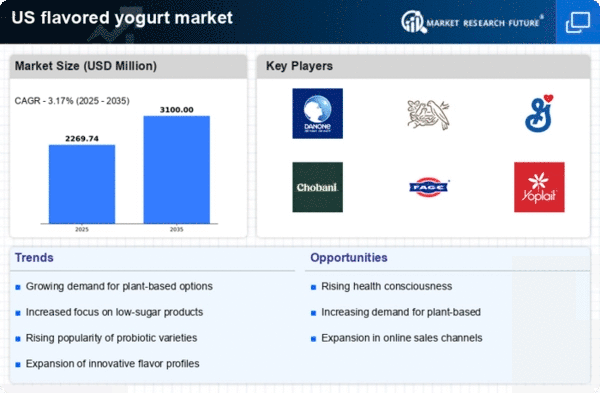
As per Market Research Future analysis, the US flavored yogurt market Size was estimated at 2200.0 $ Million in 2024. The US flavored yogurt market is projected to grow from 2269.74 $ Million in 2025 to 3100.0 $ Million by 2035, exhibiting a compound annual growth rate (CAGR) of 3.1% during the forecast period 2025 - 2035

Key Market Trends & Highlights

The US flavored yogurt market is experiencing a dynamic shift towards health-conscious and innovative offerings.

  • Health-conscious choices are driving consumer preferences, leading to a surge in demand for nutritious yogurt options.
  • Diverse flavor profiles are emerging, appealing to a wide range of taste preferences and enhancing market appeal.
  • Sustainability and ethical sourcing are becoming increasingly important, influencing purchasing decisions among environmentally aware consumers.
  • Rising demand for convenient snacks and innovative flavor combinations are key drivers propelling market growth.

Market Size & Forecast

2024 Market Size 2200.0 (USD Million)
2035 Market Size 3100.0 (USD Million)
CAGR (2025 - 2035) 3.17%

Major Players

Danone (FR), Nestle (CH), General Mills (US), Chobani (US), Fage (GR), Yoplait (FR), Stonyfield Farm (US), Müller (DE), Lactalis (FR)

Our Impact
Enabled $4.3B Revenue Impact for Fortune 500 and Leading Multinationals
Partnering with 2000+ Global Organizations Each Year
30K+ Citations by Top-Tier Firms in the Industry

US Flavored Yogurt Market Trends

The flavored yogurt market is currently experiencing a dynamic evolution, driven by changing consumer preferences and an increasing focus on health and wellness. As individuals become more health-conscious, there is a noticeable shift towards products that offer nutritional benefits without compromising on taste. This trend is reflected in the growing demand for low-sugar, high-protein, and probiotic-rich options. Additionally, the rise of plant-based diets has led to an expansion of non-dairy flavored yogurt alternatives, catering to a diverse range of dietary needs and preferences. The market appears to be adapting to these shifts, with manufacturers innovating to create products that align with contemporary consumer values. Moreover, the flavored yogurt market is witnessing a surge in creative flavor combinations and unique ingredients, appealing to adventurous consumers seeking novel experiences. This trend is not only about taste but also about the overall sensory experience, as brands experiment with textures and packaging to enhance consumer engagement. The emphasis on sustainability and ethical sourcing is also becoming increasingly relevant, as consumers express a preference for products that reflect their values. Overall, the flavored yogurt market is poised for continued growth, driven by innovation and a deeper understanding of consumer desires.

Health-Conscious Choices

There is a growing inclination among consumers towards healthier options in the flavored yogurt market. This trend encompasses a preference for products that are low in sugar, high in protein, and enriched with probiotics, reflecting a broader movement towards wellness and nutrition.

Diverse Flavor Profiles

The flavored yogurt market is characterized by an increasing variety of flavor profiles. Manufacturers are exploring unique and exotic flavors to attract consumers looking for new taste experiences, thereby enhancing product differentiation.

Sustainability and Ethical Sourcing

Sustainability is becoming a key consideration for consumers in the flavored yogurt market. Brands are responding by adopting eco-friendly practices and sourcing ingredients ethically, aligning their products with the values of environmentally conscious consumers.

US Flavored Yogurt Market Drivers

Innovative Flavor Combinations

Innovation in flavor combinations is a driving force within the flavored yogurt market. As consumer preferences evolve, there is a growing appetite for unique and exotic flavors that go beyond traditional offerings. This trend is reflected in the introduction of products featuring ingredients such as superfoods, spices, and international flavor profiles. Market Research Future indicates that flavored yogurt products with innovative flavors have seen a sales increase of around 20% over the last year. The flavored yogurt market is thus witnessing a dynamic shift, as brands strive to differentiate themselves through creative flavor profiles that appeal to adventurous consumers seeking new taste experiences.

Rising Demand for Convenient Snacks

The flavored yogurt market is experiencing a notable surge in demand for convenient snack options. As consumers increasingly seek on-the-go food solutions, flavored yogurt products are positioned favorably due to their portability and ease of consumption. This trend is particularly pronounced among busy professionals and parents looking for quick, nutritious snacks for themselves and their children. According to recent data, the convenience food sector has grown by approximately 15% in the past year, with flavored yogurt capturing a significant share of this market. The flavored yogurt market is thus likely to benefit from this shift towards convenience, as manufacturers innovate to create single-serve packaging and ready-to-eat formats that cater to the fast-paced lifestyle of modern consumers.

Increased Focus on Nutritional Benefits

The flavored yogurt market is increasingly characterized by a focus on nutritional benefits, as health-conscious consumers prioritize products that offer functional advantages. Many brands are now fortifying their flavored yogurt with probiotics, vitamins, and minerals, appealing to consumers looking for health-enhancing options. Recent surveys indicate that approximately 60% of consumers are willing to pay a premium for yogurt products that provide added health benefits. This trend suggests that the flavored yogurt market is likely to continue evolving, with manufacturers investing in research and development to create products that not only taste good but also contribute positively to overall health.

Evolving Consumer Preferences for Clean Labels

The flavored yogurt market is increasingly influenced by consumer preferences for clean labels, as shoppers become more discerning about the ingredients in their food. There is a growing demand for products that are free from artificial additives, preservatives, and high levels of sugar. Recent studies suggest that nearly 70% of consumers actively seek out clean label products, which has prompted many brands to reformulate their offerings. The flavored yogurt market is responding to this trend by emphasizing transparency in ingredient sourcing and production processes, thereby appealing to health-conscious consumers who prioritize quality and authenticity in their food choices.

Growing Popularity of Plant-Based Alternatives

The flavored yogurt market is witnessing a significant shift towards plant-based alternatives, driven by the increasing number of consumers adopting vegan and vegetarian diets. This trend is further fueled by rising awareness of the environmental impact of dairy production and a growing preference for sustainable food choices. Data shows that sales of plant-based yogurt have surged by over 30% in the past year, indicating a robust demand for non-dairy options. The flavored yogurt market is thus adapting to this change, with many brands expanding their product lines to include almond, coconut, and soy-based yogurts, catering to the diverse dietary preferences of consumers.


Market Segment Insights

By Flavor: Fruits (Largest) vs. Mixed Berry (Fastest-Growing)

In the US flavored yogurt market, the distribution of market share among different flavors shows that Fruits holds the largest portion, appealing to a broad consumer base seeking natural sweetness and health benefits. Vanilla follows closely, known for its versatility in use and appeal. Other flavors like Chocolate, Honey, and Mixed Berry contribute to the diversification of choices available, allowing for a more personalized yogurt experience among consumers. Growth trends in this segment indicate a rising preference for innovative and unique flavors. Consumers increasingly gravitate towards healthier options and exotic fruit blends, driving Mixed Berry to emerge as the fastest-growing flavor. The inclination towards healthier snacking alternatives and cleaner labels further propels the demand for flavored yogurt, as it aligns with consumer trends prioritizing nutrition without sacrificing taste.

Fruits: Dominant vs. Mixed Berry: Emerging

Fruits represents a dominant flavor in the US flavored yogurt market, well-regarded for its association with freshness and healthiness. This segment includes popular options like strawberry, blueberry, and peach, which cater to health-conscious consumers looking for nutritious and delicious snacks. On the other hand, Mixed Berry is an emerging flavor that appeals to consumers seeking more adventurous combinations. Its rapid growth is fueled by trends favoring natural ingredients and vibrant flavors. The versatility of Mixed Berry allows it to attract a younger demographic eager for innovative and visually appealing products, positioning it as a strong contender in the evolving market landscape.

By Packaging Type: Plastic Cups (Largest) vs. Tetra Packs (Fastest-Growing)

In the US flavored yogurt market, the Plastic Cups segment holds the largest market share, primarily due to its convenience and widespread consumer preference. This segment has established itself as a staple in retail outlets, appealing to a broad demographic seeking easy and portable yogurt options. Meanwhile, Tetra Packs have emerged as a significant player, catering to the growing demand for sustainable and eco-friendly packaging solutions that align with consumer trends toward environmental consciousness. Growth trends indicate that while Plastic Cups dominate, Tetra Packs are rapidly gaining traction. The increasing focus on sustainability, along with innovative designs that enhance product shelf life, are driving the popularity of Tetra Packs. Additionally, the rising trend of on-the-go consumption supports the expansion of both segments, though Tetra Packs are expected to capture a larger share of the market in the upcoming years due to their perceived environmental benefits.

Plastic Cups (Dominant) vs. Tetra Packs (Emerging)

Plastic Cups have become the dominant packaging type in the flavored yogurt segment due to their practicality and effective marketing strategies that emphasize convenience and portability. They are widely used for single-serving portions, making them an attractive choice for busy consumers. In contrast, Tetra Packs are considered an emerging option, appealing to those who prioritize sustainability and innovative packaging. They not only facilitate longer shelf life and reduce spoilage but also resonate with environmentally conscious consumers. Both packaging types cater to different consumer needs; however, the shift towards eco-friendliness is positioning Tetra Packs as a formidable competitor in the market.

By Fat Content: Low-fat (Largest) vs. Full-fat (Fastest-Growing)

In the US flavored yogurt market, the distribution of fat content segments reveals that low-fat yogurt holds the largest market share, driven by consumer preferences for healthier options and weight management. Non-fat yogurt also maintains a significant presence, appealing particularly to fitness-conscious consumers. Full-fat yogurt, though smaller in market share, has been gaining popularity due to a shift towards natural and organic products, contributing to its growth. Growth trends show that full-fat yogurt is emerging as the fastest-growing segment, fueled by an increasing acceptance of full-fat dairy in diets, driven by dietary trends that favor natural fats over processed alternatives. Additionally, the demand for rich flavors and higher quality ingredients is attracting consumers to full-fat options. As awareness of health benefits associated with full-fat dairy rises, this segment is expected to continue its upward trajectory.

Low-fat: Dominant vs. Full-fat: Emerging

Low-fat yogurt dominates the US flavored yogurt market, appealing broadly to health-focused consumers who seek lower calorie options without sacrificing flavor. It is characterized by its reduced fat content while still providing rich taste and texture. On the other hand, full-fat yogurt represents an emerging trend, gaining traction among consumers looking for more indulgent, creamy experiences. Combining flavors with premium ingredients, full-fat yogurt caters to a niche market that values quality and health benefits associated with full-fat dairy, making it a strong competitor in the evolving landscape of flavored yogurt.

By Formulation: Probiotic (Largest) vs. Organic (Fastest-Growing)

In the US flavored yogurt market, the formulation segment showcases a diverse landscape with probiotic yogurt holding the largest market share. This category resonates well with health-conscious consumers due to its potential health benefits, particularly in gut health. Meanwhile, organic yogurt is emerging as a formidable competitor, appealing to a growing segment of consumers prioritizing clean-label and sustainably sourced products. Recent trends indicate that the organic segment is experiencing the fastest growth, driven by heightened consumer awareness regarding health and wellness. The increasing demand for natural and organic ingredients supports this trend, as more consumers shift towards products perceived as healthier and environmentally friendly. This shift fosters competition among brands aiming to satisfy evolving consumer preferences while ensuring product quality and authenticity.

Probiotic (Dominant) vs. Organic (Emerging)

Probiotic yogurt continues to solidify its position as the dominant force in the formulation segment of the US flavored yogurt market. This popularity is grounded in its various health benefits, including improved digestion and enhanced immunity, appealing significantly to the health-centric demographic. On the other hand, organic yogurt is emerging as a strong contender, driven by a rising consumer base that seeks transparency and sustainability in their food choices. Many brands are now emphasizing organic formulations, which are perceived as higher quality. As consumer preferences evolve, both segments are likely to grow, yet probiotic yogurt remains the staple choice for its health advantages, whereas organic yogurt captures attention for its environmental impact and clean-label attributes.

Get more detailed insights about US Flavored Yogurt Market

Key Players and Competitive Insights

The flavored yogurt market exhibits a dynamic competitive landscape characterized by innovation, health consciousness, and evolving consumer preferences. Major players such as Danone (FR), Chobani (US), and General Mills (US) are actively shaping the market through strategic initiatives. Danone (FR) emphasizes sustainability and health-focused products, aligning with consumer trends towards natural ingredients. Chobani (US) leverages its strong brand identity and commitment to high-quality, nutritious offerings, while General Mills (US) focuses on expanding its product range to cater to diverse consumer tastes. Collectively, these strategies foster a competitive environment that prioritizes product differentiation and consumer engagement.Key business tactics within the flavored yogurt market include localizing manufacturing and optimizing supply chains to enhance efficiency and responsiveness. The market structure appears moderately fragmented, with several key players holding substantial market shares. This fragmentation allows for a variety of product offerings, yet the influence of major companies remains significant, as they set trends and standards that smaller brands often follow.

In October Chobani (US) announced a partnership with a leading health and wellness app to integrate personalized nutrition tracking features into its product offerings. This strategic move not only enhances consumer engagement but also positions Chobani (US) as a pioneer in the intersection of food and technology, potentially increasing brand loyalty among health-conscious consumers. The integration of technology into the consumer experience may redefine how yogurt products are marketed and consumed.

In September Danone (FR) launched a new line of plant-based flavored yogurts, responding to the growing demand for dairy alternatives. This initiative reflects Danone's (FR) commitment to sustainability and innovation, as it seeks to capture a larger share of the health-conscious and environmentally aware consumer segment. The introduction of plant-based options may also serve to attract a demographic that prioritizes ethical consumption, thereby expanding Danone's (FR) market reach.

In August General Mills (US) acquired a small but innovative yogurt brand specializing in probiotic-rich products. This acquisition is indicative of General Mills' (US) strategy to diversify its portfolio and enhance its presence in the health-focused segment of the market. By integrating this brand's unique offerings, General Mills (US) could potentially strengthen its competitive position and appeal to consumers seeking functional foods.

As of November current trends in the flavored yogurt market include a pronounced shift towards digitalization, sustainability, and the integration of artificial intelligence in product development and marketing strategies. Strategic alliances are increasingly shaping the competitive landscape, enabling companies to leverage shared resources and expertise. Looking ahead, competitive differentiation is likely to evolve from traditional price-based competition to a focus on innovation, technological advancements, and supply chain reliability. This shift underscores the importance of adaptability and responsiveness in meeting the changing demands of consumers.

Key Companies in the US Flavored Yogurt Market include

Industry Developments

The US Flavored Yogurt Market has witnessed notable developments recently, particularly in August 2023, when Chobani introduced a new line of plant-based yogurts to cater to the growing demand for dairy alternatives. In July 2023, Siggi's announced the expansion of its product range, adding new flavors to its Icelandic-style yogurt portfolio. The market has also seen a significant trend toward healthier options, with brands like Stonyfield Farm and Oikos launching organic and low-sugar varieties to meet consumer preferences.

Significant growth has been reported among major players, with Sabra and Yoplait experiencing substantial sales increases as they tap into diverse flavor options and health-conscious ingredients.Regarding mergers and acquisitions, in June 2023, Danone finalized its acquisition of a minority stake in Noosa, enhancing its footprint in the premium yogurt segment. Similarly, Wells Enterprises, known for its Blue Bunny brand, moved to acquire a regional yogurt producer to expand its product offerings. The market is projected to continue expanding due to increased interest in probiotic-rich foods and innovative flavors, reshaping consumer buying behavior and brand strategies in the sector.

Future Outlook

US Flavored Yogurt Market Future Outlook

The Flavored Yogurt Market is projected to grow at a 3.17% CAGR from 2025 to 2035, driven by health trends, innovative flavors, and increased consumer demand for convenience.

New opportunities lie in:

  • Development of plant-based flavored yogurt lines
  • Expansion into e-commerce platforms for direct-to-consumer sales
  • Partnerships with fitness brands for co-branded yogurt products

By 2035, the flavored yogurt market is expected to achieve robust growth and diversification.

Market Segmentation

US Flavored Yogurt Market Flavor Outlook

  • Fruits
  • Vanilla
  • Chocolate
  • Honey
  • Mixed Berry

US Flavored Yogurt Market Fat Content Outlook

  • Non-fat
  • Low-fat
  • Full-fat

US Flavored Yogurt Market Formulation Outlook

  • Probiotic
  • Non-Probiotic
  • Organic

US Flavored Yogurt Market Packaging Type Outlook

  • Plastic Cups
  • Glass Jars
  • Tetra Packs
  • Pouches

Report Scope

MARKET SIZE 2024 2200.0(USD Million)
MARKET SIZE 2025 2269.74(USD Million)
MARKET SIZE 2035 3100.0(USD Million)
COMPOUND ANNUAL GROWTH RATE (CAGR) 3.17% (2025 - 2035)
REPORT COVERAGE Revenue Forecast, Competitive Landscape, Growth Factors, and Trends
BASE YEAR 2024
Market Forecast Period 2025 - 2035
Historical Data 2019 - 2024
Market Forecast Units USD Million
Key Companies Profiled Danone (FR), Nestle (CH), General Mills (US), Chobani (US), Fage (GR), Yoplait (FR), Stonyfield Farm (US), Müller (DE), Lactalis (FR)
Segments Covered Flavor, Packaging Type, Fat Content, Formulation
Key Market Opportunities Growing consumer demand for healthier, innovative flavors in the flavored yogurt market presents significant growth opportunities.
Key Market Dynamics Rising consumer preference for healthier options drives innovation in flavored yogurt formulations and product offerings.
Countries Covered US
Leave a Comment

FAQs

What is the expected market size of the US Flavored Yogurt Market in 2024?

The US Flavored Yogurt Market is expected to be valued at 1.85 USD Billion in 2024.

How much is the US Flavored Yogurt Market projected to grow by 2035?

By 2035, the US Flavored Yogurt Market is projected to grow to 2.7 USD Billion.

What is the expected CAGR for the US Flavored Yogurt Market from 2025 to 2035?

The expected CAGR for the US Flavored Yogurt Market from 2025 to 2035 is 3.497%.

Which segment of the US Flavored Yogurt Market is expected to generate the most revenue in 2024?

The Fruits flavor segment is expected to generate the most revenue, valued at 0.54 USD Billion in 2024.

What is the projected market value of the Vanilla segment in 2035?

The Vanilla segment is projected to reach a market value of 0.65 USD Billion in 2035.

Who are the key players in the US Flavored Yogurt Market?

Major players in the US Flavored Yogurt Market include Sabra, Chobani, Siggi's, and Danone.

What is the projected market value of the Chocolate segment in 2024?

The Chocolate segment is expected to be valued at 0.3 USD Billion in 2024.

What challenges are impacting the growth of the US Flavored Yogurt Market?

Challenges impacting the market include changing consumer preferences and competition from alternative dairy products.

What is the market value of the Honey flavor segment by 2035?

The Honey flavor segment is expected to reach a market value of 0.4 USD Billion by 2035.

Which regional market for flavored yogurt shows the highest growth potential?

The overall US market for flavored yogurt shows significant growth potential across all segments from 2025 to 2035.

Download Free Sample

Kindly complete the form below to receive a free sample of this Report

Compare Licence

×
Features License Type
Single User Multiuser License Enterprise User
Price $4,950 $5,950 $7,250
Maximum User Access Limit 1 User Upto 10 Users Unrestricted Access Throughout the Organization
Free Customization
Direct Access to Analyst
Deliverable Format
Platform Access
Discount on Next Purchase 10% 15% 15%
Printable Versions