×
Request Free Sample ×

Kindly complete the form below to receive a free sample of this Report

* Please use a valid business email

Leading companies partner with us for data-driven Insights

clients tt-cursor
Hero Background

US Eye Cancer Market

ID: MRFR/Pharma/18386-HCR
100 Pages
Garvit Vyas
February 2026

US Eye Cancer Market Research Report By Type of Eye Cancer (Retinoblastoma, Melanoma, Lymphoma, Carcinoma), By Diagnosis Method (Optical Coherence Tomography, Ultrasound, CT Scan, MRI), By Treatment Type (Radiation Therapy, Chemotherapy, Surgery, Immunotherapy) and By End User (Hospitals, Oncology Clinics, Research Institutions) - Growth & Industry Forecast 2025 To 2035

Share:
Download PDF ×

We do not share your information with anyone. However, we may send you emails based on your report interest from time to time. You may contact us at any time to opt-out.

US Eye Cancer Market Infographic
Purchase Options

US Eye Cancer Market Summary

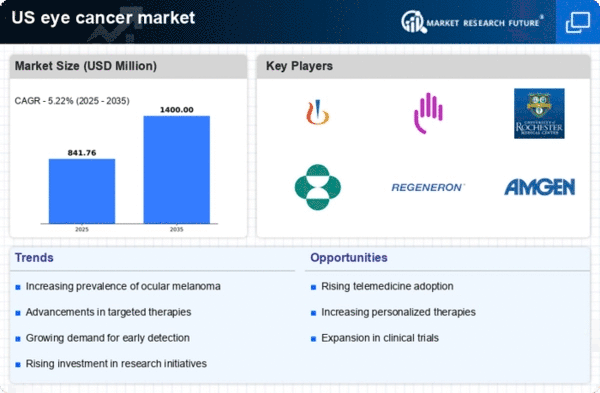
As per Market Research Future analysis, the US eye cancer market Size was estimated at 800.0 USD Million in 2024. The US eye cancer market is projected to grow from 841.76 USD Million in 2025 to 1400.0 USD Million by 2035, exhibiting a compound annual growth rate (CAGR) of 5.2% during the forecast period 2025 - 2035

Key Market Trends & Highlights

The US eye cancer market is experiencing a transformative shift driven by innovative therapies and heightened awareness.

  • The emergence of targeted therapies is reshaping treatment paradigms in the eye cancer market.
  • Advancements in diagnostic technologies are enhancing early detection and improving patient outcomes.
  • Increased focus on patient education is fostering greater awareness and engagement in eye health.
  • The rising incidence of eye cancer and technological innovations in treatment are key drivers propelling market growth.

Market Size & Forecast

2024 Market Size 800.0 (USD Million)
2035 Market Size 1400.0 (USD Million)
CAGR (2025 - 2035) 5.22%

Major Players

Novartis (CH), Bristol-Myers Squibb (US), Roche (CH), Merck & Co (US), Regeneron Pharmaceuticals (US), Amgen (US), Pfizer (US), AstraZeneca (GB), Eli Lilly and Company (US)

Our Impact
Enabled $4.3B Revenue Impact for Fortune 500 and Leading Multinationals
Partnering with 2000+ Global Organizations Each Year
30K+ Citations by Top-Tier Firms in the Industry

US Eye Cancer Market Trends

The eye cancer market is currently experiencing notable developments, driven by advancements in treatment modalities and increasing awareness among healthcare professionals and patients. Innovative therapies, including targeted therapies and immunotherapies, are emerging as promising options for managing various types of eye cancers. This shift towards personalized medicine appears to enhance treatment efficacy and improve patient outcomes. Furthermore, the growing emphasis on early detection and screening programs is likely to contribute to better prognoses, as timely intervention can significantly impact survival rates. In addition, the landscape of the eye cancer market is evolving with the integration of advanced diagnostic technologies. Techniques such as optical coherence tomography and genetic testing are becoming more prevalent, enabling healthcare providers to identify eye cancers at earlier stages. This trend may lead to a more proactive approach in treatment planning and patient management. As the market continues to develop, collaboration between research institutions and pharmaceutical companies is expected to foster innovation, ultimately benefiting patients and healthcare systems alike.

Emergence of Targeted Therapies

Targeted therapies are gaining traction within the eye cancer market, offering more precise treatment options that focus on specific molecular targets associated with cancer cells. This approach may lead to improved efficacy and reduced side effects compared to traditional therapies.

Advancements in Diagnostic Technologies

The integration of advanced diagnostic tools is transforming the eye cancer market. Techniques such as optical coherence tomography and genetic profiling are enhancing early detection capabilities, which could result in better treatment outcomes and patient survival rates.

Increased Focus on Patient Education

There is a growing emphasis on patient education and awareness regarding eye cancer. Initiatives aimed at informing the public about risk factors, symptoms, and the importance of early detection are likely to drive demand for screening and treatment services.

US Eye Cancer Market Drivers

Growing Awareness and Advocacy

The eye cancer market is also influenced by growing awareness and advocacy efforts aimed at educating the public about eye health. Organizations dedicated to eye cancer research and patient support are actively working to disseminate information regarding symptoms, risk factors, and treatment options. This heightened awareness is likely to lead to earlier diagnoses and increased patient engagement in treatment decisions. The eye cancer market may see a surge in demand for educational resources and support services, as patients become more informed about their conditions. Additionally, advocacy campaigns can drive funding for research initiatives, further propelling advancements in treatment options and technologies.

Rising Incidence of Eye Cancer

The eye cancer market is experiencing growth due to the rising incidence of eye cancer in the United States. According to the American Cancer Society, there were approximately 3,000 new cases of eye cancer reported annually. This increase in cases is likely to drive demand for innovative treatment options and diagnostic tools. As awareness of eye cancer grows, healthcare providers are focusing on early detection and intervention, which may lead to an increase in screening programs. The eye cancer market is thus positioned to expand as more patients seek treatment and as healthcare systems prioritize eye health. This trend suggests a potential increase in market revenue, as the need for specialized care and advanced therapies becomes more pronounced.

Aging Population and Eye Health

The aging population in the United States is a significant driver of the eye cancer market. As individuals age, the risk of developing various types of cancer, including eye cancer, increases. The U.S. Census Bureau projects that by 2030, approximately 20% of the population will be aged 65 and older. This demographic shift is likely to result in a higher prevalence of eye cancer, thereby increasing the demand for specialized care and treatment options. The eye cancer market must adapt to this growing need by developing targeted therapies and comprehensive care plans for older patients. This trend indicates a potential for market expansion as healthcare providers seek to address the unique challenges associated with treating eye cancer in an aging population.

Investment in Research and Development

Investment in research and development (R&D) is a critical factor driving the eye cancer market. Pharmaceutical companies and research institutions are increasingly focusing on developing new therapies and improving existing treatment modalities. This investment is essential for advancing the understanding of eye cancer biology and identifying novel therapeutic targets. The eye cancer market is likely to benefit from increased funding for clinical trials and innovative research initiatives. As new treatments emerge, the market may experience a shift towards more effective and personalized therapies. This trend suggests a promising future for the eye cancer market, as ongoing R&D efforts could lead to breakthroughs that significantly enhance patient care.

Technological Innovations in Treatment

Technological advancements are playing a crucial role in shaping the eye cancer market. Innovations such as targeted therapies and minimally invasive surgical techniques are becoming more prevalent. For instance, the introduction of new laser therapies and photodynamic therapy has shown promising results in treating specific types of eye cancer. The eye cancer market is likely to benefit from these advancements, as they not only improve patient outcomes but also reduce recovery times. Furthermore, the market for ocular oncology is projected to grow significantly, with estimates suggesting a compound annual growth rate (CAGR) of around 7% over the next few years. This growth is indicative of the increasing investment in research and development within the eye cancer market.


Market Segment Insights

By Type of Eye Cancer: Retinoblastoma (Largest) vs. Melanoma (Fastest-Growing)

In the US eye cancer market, the segmentation by type of eye cancer reveals that Retinoblastoma holds the largest market share, recognized for its prominence among pediatric cancers. Melanoma, while representing a smaller share, is gradually capturing attention due to increasing incidences among adults, thus distinguishing itself with robust growth potential. The remaining segments, Lymphoma and Carcinoma, provide essential contributions yet lag behind the leading types in terms of overall market presence. Current growth trends indicate an increasing awareness and advancements in diagnostic techniques, which are contributing significantly to the rising detection rates of eye cancer types. Innovative treatments and supportive care options are also driving the market forward, particularly for Melanoma, which is seeing rapid developments in targeted therapies. As research expands, it is expected that smaller segments like Lymphoma and Carcinoma may experience uplift in market dynamics, responding to evolving patient needs and treatment options.

Retinoblastoma (Dominant) vs. Melanoma (Emerging)

Retinoblastoma is predominant in the US eye cancer market, especially affecting children, thus shaping its dominance in terms of awareness and treatment paradigms. The advancements in early detection and treatment options for Retinoblastoma foster a strong foundation for its continued leadership. Conversely, Melanoma, known for its aggressive nature and increasing prevalence among adults, is labeled as an emerging segment. The acceleration in research and breakthroughs in immunotherapy and targeted treatments for Melanoma are gaining momentum. This segment's growth is also propelled by increasing awareness about skin cancer risks, leading to more extensive screenings and vigilance regarding potential eye involvement, thus marking a significant shift in market dynamics.

By Diagnosis Method: Optical Coherence Tomography (Largest) vs. Ultrasound (Fastest-Growing)

In the US eye cancer market, Optical Coherence Tomography (OCT) holds the largest market share among the diagnosis methods, preferred for its non-invasive nature and high-resolution cross-sectional imaging. Following OCT, Ultrasound is gaining traction due to its accessibility and cost-effectiveness, making it a key player in areas with limited advanced imaging technologies. CT Scans and MRIs, while essential, account for a smaller portion of the market as they are often used in conjunction with other diagnostic methods rather than as standalone solutions. The growth trends for diagnosis methods in the eye cancer segment show a notable shift towards advanced imaging technologies, driven by increasing awareness of eye cancer and advancements in imaging techniques. Optical Coherence Tomography continues to enhance its capabilities, while Ultrasound is emerging as a rapid diagnostic tool, appealing to healthcare providers focused on efficiency and patient comfort. Factors such as technological advancements, rising prevalence of eye cancer, and the need for early detection propel the demand for these diagnostics, leading to a competitive and evolving market landscape.

OCT (Dominant) vs. Ultrasound (Emerging)

Optical Coherence Tomography (OCT) is the dominant player in the diagnosis methods segment due to its ability to provide detailed imaging of the retina, enabling early detection and management of eye cancer. Its precision and non-invasive nature position it favorably among ophthalmologists and patients alike. Conversely, Ultrasound is emerging rapidly, particularly in emergency settings and rural healthcare facilities, due to its portability and cost-effectiveness. While OCT is preferred for detailed assessments, Ultrasound has carved a niche by facilitating quick evaluations and follow-ups. As both technologies evolve, their integration with artificial intelligence could further enhance diagnostic accuracy and patient outcomes, reinforcing their roles in the US eye cancer market.

By Treatment Type: Radiation Therapy (Largest) vs. Immunotherapy (Fastest-Growing)

The treatment type market share in the US eye cancer market is primarily dominated by Radiation Therapy, which has established itself as the most utilized method among practitioners due to its proven efficacy and minimal invasiveness. Following closely are Surgery and Chemotherapy, with varying shares reflecting their specific use cases and patient conditions. Immunotherapy, despite being less established, is gaining traction rapidly due to increasing clinical evidence supporting its effectiveness, thus altering the market dynamics. Growth trends indicate a significant shift towards Immunotherapy, spurred by advances in biotechnology and a deeper understanding of the immune system's role in fighting cancer. This segment exhibits the fastest growth rate as more treatment options are approved, and the adoption of personalized medicine escalates. The increasing prevalence of eye cancer cases and the resultant demand for innovative therapies further drive this trend, positioning the market for dynamic changes in upcoming years.

Radiation Therapy (Dominant) vs. Immunotherapy (Emerging)

Radiation Therapy stands as the dominant treatment modality within the US eye cancer market, widely chosen for its ability to target tumors effectively while minimizing damage to surrounding healthy tissues. Its long-standing presence in clinical practice is supported by a wealth of research and numerous successful case studies. In contrast, Immunotherapy is an emerging treatment option that leverages the body's own immune system to combat cancer. This segment is characterized by a rapid evolution of therapies, supported by ongoing clinical trials and robust research initiatives. As patients and healthcare professionals increasingly seek newer, less invasive treatments, Immunotherapy is poised to capture a larger share of the market, driven by its potential benefits and growing acceptance among oncologists.

By End User: Hospitals (Largest) vs. Oncology Clinics (Fastest-Growing)

In the US eye cancer market, hospitals represent the largest segment, characterized by their comprehensive care offerings and advanced treatment technologies. Oncology clinics follow, showing impressive growth driven by a shift towards outpatient care and specialized cancer treatment. Research institutions play a crucial role but cater primarily to experimental treatments and clinical trials, thus occupying a smaller share of the market. The growth trends in this segment are heavily influenced by increasing awareness of eye cancer and advancements in treatment options. Rising incidences of eye cancer and a growing focus on early detection propel the demand for specialized services in oncology clinics. As hospitals continue to embrace innovative technologies and treatment methodologies, oncology clinics are emerging rapidly, driven by their ability to deliver personalized care and targeted therapies to patients.

Hospitals: Dominant vs. Oncology Clinics: Emerging

Hospitals are the dominant players in the US eye cancer market because they offer a wide range of services, including surgery, chemotherapy, and radiation therapy, all within a single facility. They are equipped with the latest technology and specialist teams, enabling them to handle complex cases effectively. In contrast, oncology clinics are emerging as competitive alternatives, focusing on tailored treatment plans and patient-centered care that appeals to a growing patient base seeking specialized support. The efficient, less invasive procedures offered at oncology clinics contribute to their rapid growth. As the landscape evolves, both segments will likely adapt to meet the increasing demands and preferences of patients navigating eye cancer treatments.

Get more detailed insights about US Eye Cancer Market

Key Players and Competitive Insights

The eye cancer market is currently characterized by a dynamic competitive landscape, driven by advancements in treatment modalities and a growing emphasis on personalized medicine. Key players such as Novartis (CH), Bristol-Myers Squibb (US), and Regeneron Pharmaceuticals (US) are actively shaping the market through innovative product offerings and strategic collaborations. Novartis (CH) focuses on expanding its portfolio of targeted therapies, while Bristol-Myers Squibb (US) emphasizes immunotherapy advancements. Regeneron Pharmaceuticals (US) is leveraging its expertise in monoclonal antibodies to enhance treatment efficacy, collectively fostering a competitive environment that prioritizes innovation and patient-centric solutions.In terms of business tactics, companies are increasingly localizing manufacturing and optimizing supply chains to enhance operational efficiency. The market structure appears moderately fragmented, with several players vying for market share. However, the collective influence of major companies is significant, as they engage in strategic partnerships and collaborations to bolster their market positions and drive growth.

In October Novartis (CH) announced a strategic partnership with a leading biotechnology firm to co-develop a novel gene therapy for retinoblastoma, a rare form of eye cancer. This collaboration is expected to accelerate the development timeline and enhance the therapeutic options available for patients, indicating Novartis's commitment to innovation in the eye cancer space. The partnership not only strengthens Novartis's pipeline but also positions it as a leader in cutting-edge treatment modalities.

In September Bristol-Myers Squibb (US) received FDA approval for a new combination therapy targeting ocular melanoma, which is a significant milestone in the treatment landscape. This approval underscores the company's focus on expanding its immunotherapy portfolio and reflects a broader trend towards combination therapies that enhance treatment efficacy. The strategic importance of this approval lies in its potential to improve patient outcomes and solidify Bristol-Myers Squibb's competitive edge in the market.

In August Regeneron Pharmaceuticals (US) launched a clinical trial for a novel monoclonal antibody aimed at treating age-related macular degeneration, a leading cause of vision loss. This initiative highlights Regeneron's commitment to addressing unmet medical needs in the eye care sector. The trial's outcomes could significantly influence treatment paradigms and reinforce Regeneron's position as a key player in the eye cancer market.

As of November current competitive trends indicate a strong focus on digitalization, sustainability, and the integration of artificial intelligence in drug development processes. Strategic alliances are increasingly shaping the landscape, enabling companies to pool resources and expertise to drive innovation. Looking ahead, competitive differentiation is likely to evolve from traditional price-based competition to a focus on technological advancements, innovative therapies, and reliable supply chains, reflecting a broader shift towards value-based care in the healthcare sector.

Key Companies in the US Eye Cancer Market include

Industry Developments

Recent developments in the US Eye Cancer Market have highlighted significant advancements and ongoing trends. Companies such as Genentech and Novartis are actively involved in Research and Development, focusing on innovative treatment solutions for eye cancers. There has been notable growth in the market capitalization of firms like Regeneron Pharmaceuticals, corresponding with increased investments in novel therapies.

In terms of mergers and acquisitions, while recent data indicates a heightened interest in strategic partnerships, specific public announcements related to companies like Aerie Pharmaceuticals and Bristol Myers Squibb have not been reported in recent months. Noteworthy occurrences in the past few years include the FDA approval of new medications in October 2021, aimed at better targeting eye cancer treatment. Pfizer and Bayer have been collaborating on product pipelines as part of their long-term growth strategies.

The increased prevalence of eye cancers in the US necessitates ongoing innovation, motivating companies to enhance their portfolios in this field. The evolving landscape of US healthcare regulation continues to impact market dynamics, prompting companies to adapt to new compliance mandates and competitive pressures. This market is projected to continue expanding, driven by advancements in technology and the growing focus on patient-centered care.

Future Outlook

US Eye Cancer Market Future Outlook

The Eye Cancer Market is projected to grow at a 5.22% CAGR from 2025 to 2035, driven by advancements in treatment technologies and increasing awareness.

New opportunities lie in:

  • Development of targeted therapies for specific eye cancer types.
  • Expansion of telemedicine services for remote patient monitoring.
  • Investment in AI-driven diagnostic tools for early detection.

By 2035, the eye cancer market is expected to achieve substantial growth and innovation.

Market Segmentation

US Eye Cancer Market End User Outlook

  • Hospitals
  • Oncology Clinics
  • Research Institutions

US Eye Cancer Market Treatment Type Outlook

  • Radiation Therapy
  • Chemotherapy
  • Surgery
  • Immunotherapy

US Eye Cancer Market Diagnosis Method Outlook

  • Optical Coherence Tomography
  • Ultrasound
  • CT Scan
  • MRI

US Eye Cancer Market Type of Eye Cancer Outlook

  • Retinoblastoma
  • Melanoma
  • Lymphoma
  • Carcinoma

Report Scope

MARKET SIZE 2024 800.0(USD Million)
MARKET SIZE 2025 841.76(USD Million)
MARKET SIZE 2035 1400.0(USD Million)
COMPOUND ANNUAL GROWTH RATE (CAGR) 5.22% (2025 - 2035)
REPORT COVERAGE Revenue Forecast, Competitive Landscape, Growth Factors, and Trends
BASE YEAR 2024
Market Forecast Period 2025 - 2035
Historical Data 2019 - 2024
Market Forecast Units USD Million
Key Companies Profiled Novartis (CH), Bristol-Myers Squibb (US), Roche (CH), Merck & Co (US), Regeneron Pharmaceuticals (US), Amgen (US), Pfizer (US), AstraZeneca (GB), Eli Lilly and Company (US)
Segments Covered Type of Eye Cancer, Diagnosis Method, Treatment Type, End User
Key Market Opportunities Advancements in targeted therapies and personalized medicine enhance treatment options in the eye cancer market.

Key Market Dynamics Technological advancements in treatment options are reshaping the competitive landscape of the eye cancer market.
Countries Covered US
Leave a Comment

FAQs

What is the projected market size of the US Eye Cancer Market by 2035?

The US Eye Cancer Market is expected to reach a valuation of 1300.0 million USD by the year 2035.

What was the market value of the US Eye Cancer Market in 2024?

In 2024, the market value of the US Eye Cancer Market is anticipated to be 500.0 million USD.

What is the expected CAGR for the US Eye Cancer Market from 2025 to 2035?

The expected CAGR for the US Eye Cancer Market from 2025 to 2035 is projected to be 9.075%.

Which company holds a significant market share in the US Eye Cancer Market?

Major players in the US Eye Cancer Market include Genentech, Aerie Pharmaceuticals, and Novartis among others.

What was the market value for Retinoblastoma in 2024?

In 2024, the market value for Retinoblastoma is estimated to be 100.0 million USD.

How significant is the market value for Melanoma in 2035?

The market value for Melanoma is expected to reach 390.0 million USD by the year 2035.

What is the forecasted market value for Lymphoma by 2035?

The forecasted market value for Lymphoma is anticipated to be 310.0 million USD by 2035.

How much is the Carcinoma segment expected to be valued at in 2024?

The Carcinoma segment is projected to be valued at 130.0 million USD in 2024.

What growth opportunities exist in the US Eye Cancer Market?

Emerging trends and advancements in treatment options are expected to provide significant growth opportunities in the US Eye Cancer Market.

What challenges does the US Eye Cancer Market currently face?

The US Eye Cancer Market faces challenges related to regulatory hurdles and the high cost of innovative treatments.

Download Free Sample

Kindly complete the form below to receive a free sample of this Report

Compare Licence

×
Features License Type
Single User Multiuser License Enterprise User
Price $4,950 $5,950 $7,250
Maximum User Access Limit 1 User Upto 10 Users Unrestricted Access Throughout the Organization
Free Customization
Direct Access to Analyst
Deliverable Format
Platform Access
Discount on Next Purchase 10% 15% 15%
Printable Versions