×
Request Free Sample ×

Kindly complete the form below to receive a free sample of this Report

* Please use a valid business email

Leading companies partner with us for data-driven Insights

clients tt-cursor
Hero Background

US Cosmetic Packaging Market

ID: MRFR/PCM/18654-HCR
111 Pages
Snehal Singh
February 2026

US Cosmetic Packaging Market Research Report: By Material (Plastic, Metal, PaperPaperboard, Glass, Others), By Product (Tube, Bottle, Palette, Stick, JarTubs, BlistersStrips, Folding Cartons, Aerosol Cans, Others) andBy Application (Skincare, Fragrance, Color cosmetics, Others)- Forecast to 2035.

Share:
Download PDF ×

We do not share your information with anyone. However, we may send you emails based on your report interest from time to time. You may contact us at any time to opt-out.

US Cosmetic Packaging Market Infographic
Purchase Options

US Cosmetic Packaging Market Summary

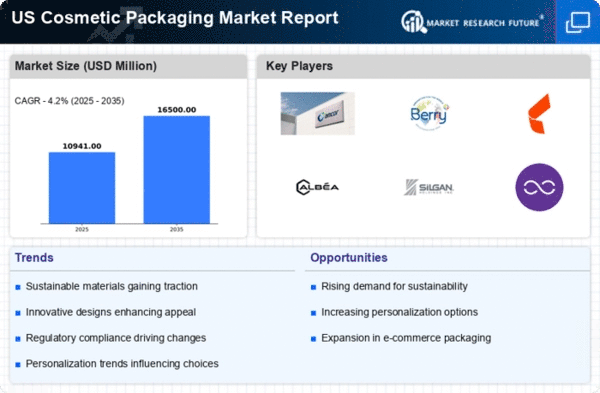
As per Market Research Future analysis, the US cosmetic packaging market size was estimated at 10500.0 USD Million in 2024.. The US cosmetic packaging market is projected to grow from 10941.0 USD Million in 2025 to 16500.0 USD Million by 2035, exhibiting a compound annual growth rate (CAGR) of 4% during the forecast period 2025 - 2035

Key Market Trends & Highlights

The US cosmetic packaging market is experiencing a transformative shift towards sustainability and technological innovation.

  • Sustainable packaging solutions are increasingly prioritized by consumers and brands alike, reflecting a broader trend towards environmental responsibility.
  • Technological integration in packaging design is enhancing user experience and operational efficiency, particularly in the largest segment of skincare products.
  • Customization and personalization are becoming essential as brands seek to differentiate themselves in a competitive market, especially in the fastest-growing segment of color cosmetics.
  • The rising demand for eco-friendly materials and the growth of e-commerce are key drivers propelling the market forward.

Market Size & Forecast

2024 Market Size 10500.0 (USD Million)
2035 Market Size 16500.0 (USD Million)
CAGR (2025 - 2035) 4.2%

Major Players

Amcor (AU), Berry Global (US), Mondi Group (GB), Albea (FR), Silgan Holdings (US), Quadpack (ES), HCP Packaging (CN), Cosmopak (HK), Graham Packaging (US)

Our Impact
Enabled $4.3B Revenue Impact for Fortune 500 and Leading Multinationals
Partnering with 2000+ Global Organizations Each Year
30K+ Citations by Top-Tier Firms in the Industry

US Cosmetic Packaging Market Trends

the cosmetic packaging market is currently experiencing a dynamic shift, driven by shifting consumer preferences and increasing environmental awareness. As consumers become more conscious of sustainability, brands are compelled to adopt eco-friendly materials and innovative designs that minimize environmental impact. This trend is not merely a response to consumer demand; it reflects a broader societal shift towards responsible consumption. Additionally, the rise of e-commerce has transformed packaging requirements, necessitating designs that ensure product safety during transit while also appealing to online shoppers. The integration of technology into packaging, such as QR codes and augmented reality features, further enhances consumer engagement and provides valuable product information. Moreover, the cosmetic packaging market is witnessing a surge in demand for customization. Brands are increasingly offering tailored packaging solutions that resonate with individual consumer identities, thereby fostering brand loyalty. This trend is particularly evident among younger demographics, who seek unique and aesthetically pleasing packaging that reflects their personal style. As the market continues to evolve, it is likely that innovation will remain at the forefront, with companies exploring new materials and designs to meet the diverse needs of consumers. Overall, the current landscape of the cosmetic packaging market suggests a vibrant future, characterized by sustainability, technology integration, and personalization.

Sustainable Packaging Solutions

There is a notable shift towards sustainable packaging solutions within the cosmetic packaging market. Brands are increasingly utilizing biodegradable, recyclable, and reusable materials to align with consumer preferences for environmentally friendly products. This trend not only addresses ecological concerns but also enhances brand image and consumer loyalty.

Technological Integration

The incorporation of technology into packaging is becoming more prevalent. Features such as QR codes and augmented reality are being integrated to provide consumers with interactive experiences and detailed product information. This trend enhances consumer engagement and allows brands to communicate their values effectively.

Customization and Personalization

Customization is gaining traction as consumers seek unique packaging that reflects their individual identities. Brands are responding by offering personalized packaging solutions, which fosters a deeper connection with consumers. This trend is particularly strong among younger demographics who prioritize aesthetics and personal expression.

US Cosmetic Packaging Market Drivers

Rising Demand for Eco-Friendly Materials

The cosmetic packaging market is experiencing a notable shift towards eco-friendly materials, driven by increasing consumer awareness regarding environmental sustainability. As consumers become more conscious of their ecological footprint, brands are compelled to adopt sustainable packaging solutions. This trend is reflected in the market, where the use of biodegradable and recyclable materials is projected to grow significantly. In fact, the market for sustainable packaging in the cosmetic sector is expected to reach approximately $10 billion by 2026, indicating a robust growth trajectory. Companies that prioritize eco-friendly packaging not only enhance their brand image but also cater to a growing demographic that values sustainability, thereby influencing purchasing decisions in the cosmetic packaging market.

Growth of E-commerce and Online Retailing

The rise of e-commerce has transformed the cosmetic packaging market, as more consumers opt for online shopping. This shift necessitates packaging that is not only visually appealing but also functional and protective during transit. The demand for packaging that can withstand shipping conditions while maintaining product integrity is paramount. According to recent data, e-commerce sales in the beauty sector are projected to account for over 30% of total sales by 2025. Consequently, brands are investing in innovative packaging solutions that enhance the unboxing experience, thereby driving growth in the cosmetic packaging market. This trend underscores the importance of adapting packaging strategies to meet the evolving preferences of consumers who increasingly favor online shopping.

Regulatory Compliance and Safety Standards

The cosmetic packaging market is increasingly impacted by stringent regulatory compliance and safety standards. As consumer safety becomes a priority, brands must ensure that their packaging materials meet specific regulations set forth by authorities. This includes the use of non-toxic materials and proper labeling to inform consumers about product contents. The market is witnessing a trend where companies invest in research and development to create packaging that adheres to these regulations while also being innovative. Compliance not only protects consumers but also enhances brand reputation, which is crucial in the competitive landscape of the cosmetic packaging market. As regulations evolve, brands that proactively adapt their packaging strategies are likely to gain a competitive edge.

Technological Advancements in Packaging Solutions

Technological advancements are playing a crucial role in the evolution of the cosmetic packaging market. Innovations such as smart packaging, which incorporates QR codes and augmented reality, are enhancing consumer engagement and providing additional product information. These technologies allow brands to create interactive experiences that resonate with tech-savvy consumers. Furthermore, advancements in materials science are leading to the development of lighter, more durable packaging options that reduce shipping costs and environmental impact. The integration of technology in packaging is expected to grow, with the market projected to expand by approximately 15% annually over the next five years. This trend indicates a shift towards more sophisticated packaging solutions that cater to the demands of modern consumers in the cosmetic packaging market.

Influence of Social Media and Influencer Marketing

The cosmetic packaging market is significantly influenced by social media and influencer marketing, which have become pivotal in shaping consumer preferences. As beauty influencers showcase products through visually appealing packaging, brands are motivated to invest in attractive and innovative designs. This trend is particularly pronounced among younger consumers, who are more likely to purchase products that are featured on social media platforms. The cosmetic packaging market is thus witnessing a surge in demand for unique and eye-catching designs that resonate with the aesthetic values of this demographic. Brands that successfully leverage social media trends can enhance their visibility and appeal, ultimately driving sales and growth in the cosmetic packaging market.


Market Segment Insights

By Material: Plastic (Largest) vs. Metal (Fastest-Growing)

In the US cosmetic packaging market, the distribution among material segments reveals that plastic remains the predominant choice, holding a substantial share due to its versatility and cost-effectiveness. Metal follows as a significant player, attracting attention with growing interest in sustainable options and premium aesthetics. Meanwhile, paper & paperboard and glass are also essential but hold smaller shares, with 'Others' comprising niche materials catering to specific consumer preferences. Growth trends indicate an increasing shift toward eco-friendly packaging solutions, particularly for metal and paper materials. The rise of sustainability-conscious consumers is driving brands to innovate with recyclable and biodegradable options. Moreover, the luxury segment's demand for metal packaging is surging, positioning it as the fastest-growing category, thereby reshaping the overall landscape of the US cosmetic packaging market.

Plastic (Dominant) vs. Glass (Emerging)

Plastic packaging dominates the material segment due to its lightweight and flexible nature, making it the preferred choice for most cosmetic products. It allows for complex shapes and designs, catering to diverse brand requirements. However, the emerging trend towards glass packaging is notable, as it appeals to environmentally conscious consumers seeking recyclable options that do not compromise product integrity. Glass packaging offers premium quality and aesthetic appeal, making it popular for high-end cosmetics. As sustainability becomes increasingly important, both plastic's established role and glass's rising prominence are shaping the future landscape of the US cosmetic packaging market.

By Product: Bottles (Largest) vs. Jars & Tubs (Fastest-Growing)

In the US cosmetic packaging market, bottles represent the largest segment, commanding a significant share of the market due to their versatility and user-friendly design. Tubes and jars & tubs closely follow, collectively contributing to a robust competitive landscape. Each packaging type plays a vital role, with folding cartons and blister packs also carving out notable positions in niche areas, catering to specific consumer needs. The growth trends in the product segment reflect rising consumer demand for sustainable and aesthetically pleasing packaging options. Bottles remain a staple, while jars & tubs have emerged as the fastest-growing segment, driven by the booming skincare industry and the increasing preference for cream-based products. Innovations in packaging design and materials further enhance market dynamics, ensuring adaptability to consumer preferences.

Bottles (Dominant) vs. Jars & Tubs (Emerging)

Bottles are a dominant force in the US cosmetic packaging market, largely because of their functionality and adaptability for various product types, including liquids and creams. Their robust design and aesthetic appeal make them a preferred choice among manufacturers and consumers alike. In contrast, jars & tubs are emerging as an increasingly popular option, especially within the skincare segment, where products like face creams and moisturizers are typically housed. This segment is gaining traction due to shifting consumer preferences towards more luxurious and accessible packaging. Both segments present unique advantages, with bottles leading in overall consumption and jars & tubs capturing a growing share due to their alignment with current beauty trends.

By Application: Skincare (Largest) vs. Fragrance (Fastest-Growing)

In the US cosmetic packaging market, the application segment is primarily driven by skincare products, which hold the largest market share due to the increasing consumer focus on skincare routines and the demand for innovative packaging solutions. Fragrance, while smaller in comparison, is witnessing significant growth as new brands and premium offerings emerge, catering to changing consumer preferences and lifestyle choices. Growth trends in this segment demonstrate a shifting landscape, with skincare continuing to enjoy robust demand, fueled by trends such as clean beauty and sustainable packaging. Meanwhile, fragrance categories are rapidly expanding, driven by younger demographics seeking personalized and unique scents. The overall trend reflects a dynamic interplay between established leaders and emerging players in the market.

Skincare (Dominant) vs. Color Cosmetics (Emerging)

Skincare has long been the dominant force in the cosmetic packaging segment, characterized by a wide array of products from moisturizers to serums, each requiring specialized packaging solutions that enhance user experience and preserve product integrity. This segment's enduring popularity can be attributed to an increasing awareness of skin health and a growing trend towards natural ingredients. In contrast, color cosmetics represent an emerging segment, attracting consumers with vibrant packaging that focuses on aesthetics and individuality. The rise of social media influencers and online beauty trends has fostered rapid growth in color cosmetics, appealing significantly to younger consumers eager to experiment with their looks. Both segments reflect unique consumer demands and are pivotal in shaping the future of the US cosmetic packaging market.

Get more detailed insights about US Cosmetic Packaging Market

Key Players and Competitive Insights

The cosmetic packaging market in the US is characterized by a dynamic competitive landscape, driven by innovation, sustainability, and consumer demand for personalized products. Key players such as Amcor (AU), Berry Global (US), and Silgan Holdings (US) are actively shaping the market through strategic initiatives. Amcor (AU) focuses on sustainable packaging solutions, aiming to reduce environmental impact while enhancing product appeal. Berry Global (US) emphasizes innovation in materials and design, catering to the growing demand for eco-friendly options. Silgan Holdings (US) is leveraging its extensive manufacturing capabilities to optimize supply chains and improve efficiency, thereby enhancing its competitive positioning.The market structure appears moderately fragmented, with several players vying for market share. Key business tactics include localizing manufacturing to reduce costs and improve responsiveness to consumer trends. This strategy not only enhances supply chain efficiency but also allows companies to tailor products to regional preferences. The collective influence of these major players fosters a competitive environment where innovation and sustainability are paramount.

In September Amcor (AU) announced a partnership with a leading beauty brand to develop a new line of biodegradable packaging. This strategic move underscores Amcor's commitment to sustainability and positions it favorably in a market increasingly focused on eco-conscious products. The collaboration is expected to enhance brand loyalty and attract environmentally aware consumers, thereby driving sales growth.

In October Berry Global (US) unveiled a new range of recyclable cosmetic containers designed to meet the rising demand for sustainable packaging solutions. This initiative not only aligns with consumer preferences but also reflects Berry's proactive approach to addressing regulatory pressures regarding plastic waste. By investing in recyclable materials, Berry The cosmetic packaging market position and appeal to a broader customer base.

In August Silgan Holdings (US) expanded its manufacturing capabilities by acquiring a facility specializing in advanced packaging technologies. This acquisition is strategically significant as it enhances Silgan's ability to innovate and respond to market demands swiftly. The integration of advanced technologies is expected to improve product quality and reduce production costs, thereby reinforcing Silgan's competitive edge.

As of November the cosmetic packaging market is witnessing trends such as digitalization, sustainability, and the integration of artificial intelligence in design processes. Strategic alliances among companies are increasingly shaping the competitive landscape, fostering innovation and resource sharing. Looking ahead, competitive differentiation is likely to evolve from traditional price-based competition to a focus on innovation, technology, and supply chain reliability. Companies that prioritize these aspects may gain a substantial advantage in an ever-evolving market.

Key Companies in the US Cosmetic Packaging Market include

Industry Developments

In recent months, the US Cosmetic Packaging Market has witnessed several noteworthy developments. For instance, OWANT and Berry Global have made strides in developing sustainable packaging solutions that align with consumer demand for eco-friendly products.

In September 2023, Albea announced an expansion of its facility in North Carolina to meet the increasing demand for innovative cosmetic packaging, reflecting the growing emphasis on customization in the industry.

Meanwhile, Crown Holdings has ventured into new markets, focusing on lightweight materials to reduce overall packaging waste. Mergers and acquisitions have played a significant role as well, with Graham Packaging acquiring a smaller firm in July 2023, enhancing its portfolio in sustainable packaging options.

Additionally, Sonoco Products and Silgan Holdings have been collaborating on enhanced design initiatives to improve functionality and consumer appeal in cosmetic packaging, showcasing the continuous evolution in material science and design. The market has shown significant growth valuation due to increased demand for sustainable solutions driven by changing consumer preferences.

Over the last two years, major players like Amcor have emphasized investments in RD to innovate packaging solutions, responding effectively to the shifts within the supply chain and environmental considerations.

Future Outlook

US Cosmetic Packaging Market Future Outlook

The cosmetic packaging market is projected to grow at a 4.2% CAGR from 2025 to 2035, driven by sustainability trends, technological advancements, and consumer demand for innovative designs.

New opportunities lie in:

  • Invest in biodegradable packaging materials to meet eco-conscious consumer preferences.
  • Develop smart packaging solutions with integrated technology for enhanced user experience.
  • Expand e-commerce packaging options to cater to the growing online retail sector.

By 2035, the market is expected to achieve robust growth, driven by innovation and sustainability.

Market Segmentation

US Cosmetic Packaging Market Product Outlook

  • Tubes
  • Bottles
  • Palette
  • Stick
  • Jars & Tubs
  • Blister & Strip Packs
  • Folding Cartons
  • Aerosol Cans
  • Others

US Cosmetic Packaging Market Material Outlook

  • Plastic
  • Metal
  • Paper & Paperboard
  • Glass
  • Others

US Cosmetic Packaging Market Application Outlook

  • Skincare
  • Fragrance
  • Color Cosmetics
  • Others

Report Scope

MARKET SIZE 2024 10500.0(USD Million)
MARKET SIZE 2025 10941.0(USD Million)
MARKET SIZE 2035 16500.0(USD Million)
COMPOUND ANNUAL GROWTH RATE (CAGR) 4.2% (2025 - 2035)
REPORT COVERAGE Revenue Forecast, Competitive Landscape, Growth Factors, and Trends
BASE YEAR 2024
Market Forecast Period 2025 - 2035
Historical Data 2019 - 2024
Market Forecast Units USD Million
Key Companies Profiled Amcor (AU), Berry Global (US), Mondi Group (GB), Albea (FR), Silgan Holdings (US), Quadpack (ES), HCP Packaging (CN), Cosmopak (HK), Graham Packaging (US)
Segments Covered Material, Product, Application
Key Market Opportunities Adoption of sustainable materials and innovative designs in the cosmetic packaging market.
Key Market Dynamics Rising demand for sustainable materials drives innovation in cosmetic packaging solutions and reshapes competitive dynamics.
Countries Covered US
Leave a Comment

FAQs

What is the expected market size of the US Cosmetic Packaging Market in 2024?

The US Cosmetic Packaging Market is expected to be valued at 10888.24 USD Million in 2024.

What will be the market size of the US Cosmetic Packaging Market by 2035?

By 2035, the market is projected to reach a value of 17150.0 USD Million.

What is the expected CAGR for the US Cosmetic Packaging Market from 2025 to 2035?

The market is anticipated to grow at a CAGR of 4.217 % from 2025 to 2035.

Which material segment will dominate the US Cosmetic Packaging Market in 2024?

In 2024, the plastic segment is expected to dominate with a market value of 4200.0 USD Million.

What is the value of the metal packaging segment in 2024?

The metal packaging segment is valued at 2500.0 USD Million in 2024.

Who are the key players in the US Cosmetic Packaging Market?

Major players include OWANT, Stora Enso, Berry Global, Albea, and International Paper.

What opportunities exist in the US Cosmetic Packaging Market?

Emerging trends suggest opportunities in sustainable packaging and innovative designs.

What is the market size of the paper and paperboard segment in 2035?

By 2035, the paper and paperboard segment is projected to reach 2800.0 USD Million.

What challenges might the US Cosmetic Packaging Market face through 2035?

Challenges may include regulatory compliance and shifting consumer preferences towards eco-friendly options.

How much is the glass packaging segment projected to be worth in 2035?

The glass packaging segment is expected to reach a value of 2600.0 USD Million by 2035.

Download Free Sample

Kindly complete the form below to receive a free sample of this Report

Compare Licence

×
Features License Type
Single User Multiuser License Enterprise User
Price $4,950 $5,950 $7,250
Maximum User Access Limit 1 User Upto 10 Users Unrestricted Access Throughout the Organization
Free Customization
Direct Access to Analyst
Deliverable Format
Platform Access
Discount on Next Purchase 10% 15% 15%
Printable Versions