Regulatory Compliance and Standards
The clean room-robots market is significantly influenced by the stringent regulatory frameworks established by health and safety authorities. In the US, organizations are required to adhere to specific cleanliness standards, particularly in sectors like pharmaceuticals and food production. Compliance with these regulations often necessitates the integration of advanced robotic solutions capable of maintaining the required environmental conditions. The market is expected to expand as companies invest in clean room-robots to meet these compliance demands. For instance, the FDA mandates rigorous cleanliness protocols, which drives the adoption of automated systems. This regulatory landscape creates a robust opportunity for growth within the clean room-robots market, as businesses prioritize compliance to avoid penalties and ensure product safety.
Rising Demand for Clean Environments
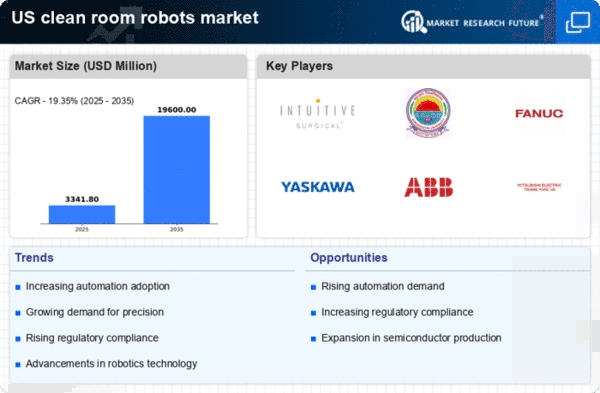
The clean room-robots market is experiencing a notable surge in demand driven by the increasing need for sterile environments across various industries. Sectors such as pharmaceuticals, biotechnology, and electronics are particularly sensitive to contamination, necessitating stringent cleanliness standards. As a result, the market for clean room-robots is projected to grow at a CAGR of approximately 12% from 2025 to 2030. This growth is largely attributed to the heightened awareness of contamination risks and the need for automated solutions that can maintain cleanliness without human intervention. The clean room-robots market is thus positioned to benefit from this trend, as organizations seek to enhance operational efficiency while ensuring compliance with regulatory standards.
Cost Efficiency and Operational Savings
The clean room-robots market is increasingly appealing to organizations seeking cost efficiency and operational savings. By automating cleaning processes, companies can significantly reduce labor costs and minimize the risk of contamination-related losses. The initial investment in clean room-robots is often offset by the long-term savings achieved through enhanced productivity and reduced downtime. As organizations in sectors such as pharmaceuticals and electronics recognize the financial benefits of automation, the clean room-robots market is expected to grow. In fact, studies indicate that businesses can save up to 30% on operational costs by implementing robotic solutions, making this market an attractive option for those aiming to optimize their operations.
Labor Shortages and Workforce Challenges
The clean room-robots market is also being shaped by the ongoing labor shortages affecting various industries. As companies struggle to find skilled workers, the reliance on automation is becoming more pronounced. Clean room-robots offer a viable solution to mitigate the impact of workforce challenges, allowing organizations to maintain operational efficiency without compromising on cleanliness. This trend is particularly relevant in sectors where human labor is limited due to health concerns or skill gaps. The clean room-robots market is likely to see increased adoption as businesses seek to automate processes that were traditionally performed by humans, thereby addressing labor shortages while ensuring compliance with cleanliness standards.
Technological Integration and Innovation
The clean room-robots market is witnessing a wave of innovation as technological advancements continue to reshape operational capabilities. The integration of artificial intelligence (AI) and machine learning into robotic systems enhances their efficiency and adaptability in clean room environments. These technologies enable robots to perform complex tasks with precision, thereby reducing human error and contamination risks. As of 2025, the market is projected to reach a valuation of $1.5 billion, reflecting the increasing investment in smart automation solutions. Companies are likely to prioritize the adoption of these advanced technologies to improve productivity and maintain high cleanliness standards, further propelling the clean room-robots market forward.