Sustainability Initiatives
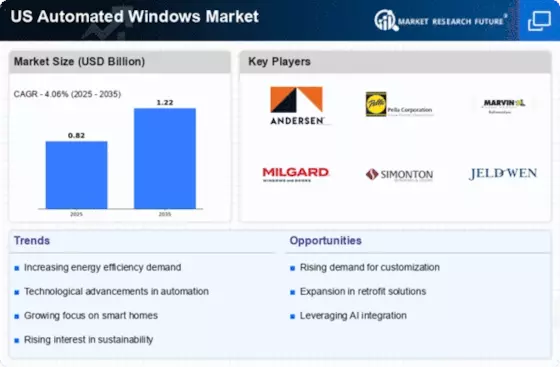
Sustainability initiatives are gaining traction in the US, significantly influencing the Automated Windows Market. As environmental concerns become more pronounced, both consumers and businesses are prioritizing sustainable building practices. Automated windows, which can enhance energy efficiency and reduce carbon footprints, align well with these sustainability goals. Government incentives for green building practices, such as tax credits and grants, further encourage the adoption of automated window solutions. According to the US Green Building Council, buildings that incorporate sustainable practices can achieve energy savings of up to 40%. This growing emphasis on sustainability is likely to drive demand for automated windows that contribute to eco-friendly construction in the US Automated Windows Market.
Technological Advancements
The US Automated Windows Market is experiencing a surge in technological advancements that enhance the functionality and appeal of automated windows. Innovations such as smart glass technology, which allows windows to change opacity based on sunlight, are becoming increasingly prevalent. Additionally, the integration of Internet of Things (IoT) capabilities enables remote control and monitoring of window systems, appealing to tech-savvy consumers. According to recent data, the market for smart windows is projected to grow significantly, with estimates suggesting a compound annual growth rate of over 20% in the coming years. This technological evolution not only improves energy efficiency but also elevates user convenience, thereby driving demand within the US Automated Windows Market.
Energy Efficiency Regulations
In the US, stringent energy efficiency regulations are shaping the landscape of the Automated Windows Market. The implementation of standards such as the Energy Star program encourages the adoption of energy-efficient window solutions. These regulations are designed to reduce energy consumption in residential and commercial buildings, prompting builders and homeowners to invest in automated window systems that meet these criteria. As a result, the market is witnessing a shift towards products that not only comply with these regulations but also offer enhanced performance. The US Department of Energy has reported that energy-efficient windows can reduce heating and cooling costs by up to 30%, further incentivizing their adoption in the Automated Windows Market.
Consumer Demand for Smart Homes
The growing consumer demand for smart home technologies is a pivotal driver in the US Automated Windows Market. As homeowners increasingly seek to integrate automation into their living spaces, automated windows are becoming a sought-after feature. This trend is fueled by the desire for convenience, security, and energy savings. Market Research Future indicates that nearly 70% of homeowners express interest in smart home features, with automated windows being a key component. The rise of home automation platforms, such as Google Home and Amazon Alexa, facilitates the integration of automated windows, making them more accessible to the average consumer. This shift in consumer preferences is likely to propel growth in the US Automated Windows Market.
Urbanization and Infrastructure Development
Urbanization and infrastructure development are key factors propelling the US Automated Windows Market. As urban areas expand, there is an increasing need for modern building solutions that enhance both aesthetics and functionality. Automated windows offer a contemporary solution that meets the demands of urban living, providing benefits such as improved ventilation and natural light. The US Census Bureau reports that urban populations are projected to grow, leading to a surge in new construction projects. This trend creates opportunities for automated window manufacturers to supply innovative products that cater to the evolving needs of urban dwellers. Consequently, the growth of urbanization is likely to stimulate demand within the US Automated Windows Market.