×
Request Free Sample ×

Kindly complete the form below to receive a free sample of this Report

* Please use a valid business email

Leading companies partner with us for data-driven Insights

clients tt-cursor
Hero Background

UK Medication Management Market

ID: MRFR/HC/51916-HCR
200 Pages
Rahul Gotadki
February 2026

UK Medication Management Market Research Report By Type (Medication Dispensing Systems, Medication Administration Systems, Medication Reconciliation Solutions, Electronic Health Records Integration, Clinical Decision Support Systems), By End User (Hospitals, Outpatient Clinics, Home Care Settings, Pharmacies, Long-term Care Facilities), By Component (Software, Hardware, Services) and By Deployment Mode (Cloud-based, On-premises, Hybrid) - Growth & Industry Forecast 2025 To 2035

Share:
Download PDF ×

We do not share your information with anyone. However, we may send you emails based on your report interest from time to time. You may contact us at any time to opt-out.

UK Medication Management Market Infographic
Purchase Options

UK Medication Management Market Summary

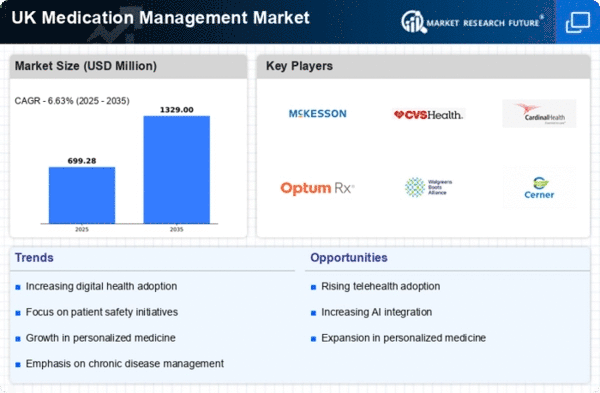
As per Market Research Future analysis, the UK medication management market size was estimated at 655.8 USD Million in 2024. The UK medication management market is projected to grow from 699.28 USD Million in 2025 to 1329.0 USD Million by 2035, exhibiting a compound annual growth rate (CAGR) of 6.6% during the forecast period 2025 - 2035

Key Market Trends & Highlights

The UK medication management market is experiencing a transformative shift towards digital integration and patient-centric care.

  • Digital health integration is becoming increasingly prevalent, enhancing medication adherence and management.
  • The focus on patient safety is driving innovations in medication management solutions across the healthcare sector.
  • Regulatory support and guidelines are evolving to facilitate the adoption of advanced medication management technologies.
  • Rising chronic disease prevalence and an aging population are key drivers propelling the demand for effective medication management solutions.

Market Size & Forecast

2024 Market Size 655.8 (USD Million)
2035 Market Size 1329.0 (USD Million)
CAGR (2025 - 2035) 6.63%

Major Players

McKesson Corporation (US), CVS Health Corporation (US), Cardinal Health Inc (US), OptumRx (US), Walgreens Boots Alliance (US), Cerner Corporation (US), Epic Systems Corporation (US), Allscripts Healthcare Solutions (US)

Our Impact
Enabled $4.3B Revenue Impact for Fortune 500 and Leading Multinationals
Partnering with 2000+ Global Organizations Each Year
30K+ Citations by Top-Tier Firms in the Industry

UK Medication Management Market Trends

The medication management market is currently experiencing a transformative phase. This change is driven by advancements in technology and an increasing emphasis on patient safety. The integration of digital health solutions, such as electronic prescribing and medication tracking systems, appears to enhance the efficiency of medication administration. Furthermore, the growing awareness of medication adherence among patients suggests a shift towards more personalized approaches in managing prescriptions. This trend is likely to improve health outcomes and reduce the incidence of medication errors, which have been a persistent challenge in healthcare settings. In addition, regulatory bodies in the UK are actively promoting initiatives aimed at optimizing medication management practices. These initiatives may include guidelines for healthcare professionals and the implementation of standardized protocols to ensure consistency in medication delivery. As a result, stakeholders in the healthcare sector are increasingly investing in training and resources to support these changes. The convergence of technology and regulatory support indicates a promising future for the medication management market, with potential benefits for both patients and healthcare providers.

Digital Health Integration

The rise of digital health technologies is reshaping the medication management market. Electronic health records and mobile applications facilitate real-time access to patient information, enabling healthcare providers to make informed decisions regarding prescriptions. This integration not only streamlines workflows but also enhances communication between patients and providers, fostering better adherence to medication regimens.

Focus on Patient Safety

There is a growing emphasis on patient safety within the medication management market. Initiatives aimed at reducing medication errors and adverse drug reactions are becoming more prevalent. Healthcare organizations are adopting standardized protocols and training programs to ensure that staff are well-equipped to manage medications safely, thereby improving overall patient outcomes.

Regulatory Support and Guidelines

Regulatory bodies in the UK are increasingly establishing guidelines to enhance medication management practices. These guidelines aim to standardize processes and improve the quality of care provided to patients. As healthcare providers align with these regulations, there is a potential for improved efficiency and effectiveness in medication administration, ultimately benefiting patient health.

UK Medication Management Market Drivers

Rising Chronic Disease Prevalence

The increasing prevalence of chronic diseases in the UK is a pivotal driver for the medication management market. As conditions such as diabetes, hypertension, and cardiovascular diseases become more common, the demand for effective medication management solutions intensifies. According to recent data, approximately 15 million people in the UK are living with a chronic condition, which necessitates ongoing medication adherence and management. This trend underscores the need for innovative solutions that can help patients manage their medications effectively, thereby reducing hospital admissions and improving health outcomes. The medication management market is likely to expand as healthcare providers seek to implement systems that support patients in adhering to their prescribed regimens. This will ultimately enhance the quality of care and reduce healthcare costs.

Emphasis on Patient-Centric Care Models

The shift towards patient-centric care models is a notable driver of the medication management market. In the UK, healthcare systems are increasingly focusing on personalized care that prioritizes patient engagement and empowerment. This approach encourages patients to take an active role in their medication management, leading to improved adherence and health outcomes. Initiatives aimed at enhancing patient education and support are gaining traction, with healthcare providers recognizing the importance of involving patients in their treatment plans. As a result, the medication management market is likely to see a rise in solutions that facilitate communication between patients and healthcare professionals, ultimately fostering a more collaborative approach to medication management.

Technological Advancements in Healthcare

Technological advancements are significantly influencing the medication management market. The integration of artificial intelligence, machine learning, and telehealth solutions is transforming how medications are prescribed, monitored, and managed. For instance, AI-driven platforms can analyze patient data to provide personalized medication recommendations, thereby improving adherence rates. The UK government has invested heavily in digital health initiatives, with funding exceeding £1 billion aimed at enhancing healthcare technology. This investment is expected to facilitate the development of sophisticated medication management systems that streamline processes and improve patient outcomes. As technology continues to evolve, the medication management market is poised for growth, driven by the need for more efficient and effective healthcare solutions.

Focus on Cost-Effectiveness in Healthcare

Cost-effectiveness is becoming increasingly important in the UK healthcare landscape, driving the medication management market. With the National Health Service (NHS) facing budget constraints, there is a pressing need for solutions that can enhance efficiency while reducing costs. Effective medication management can lead to significant savings by minimizing medication errors, reducing hospital readmissions, and improving patient adherence. Studies indicate that implementing comprehensive medication management programs can save the NHS millions of pounds annually. As healthcare providers seek to optimize their resources, the demand for cost-effective medication management solutions is likely to grow, fostering innovation and competition within the market.

Aging Population and Increased Healthcare Demand

The aging population in the UK is a crucial driver for the medication management market. As the demographic shifts towards an older population, the demand for healthcare services, including medication management, is expected to rise. By 2030, it is projected that over 20% of the UK population will be aged 65 and above, leading to an increased incidence of age-related health issues that require complex medication regimens. This demographic shift necessitates robust medication management strategies to ensure that older adults receive appropriate care and adhere to their treatment plans. Consequently, healthcare providers are likely to invest in medication management solutions that cater specifically to the needs of the elderly, thereby propelling market growth.


Market Segment Insights

By Type: Medication Dispensing Systems (Largest) vs. Medication Administration Systems (Fastest-Growing)

The UK medication management market exhibits a diverse array of segments, with Medication Dispensing Systems holding the largest share due to their efficiency in automating the medication distribution process. This segment is crucial for reducing human error and enhancing patient safety. Following closely, Medication Administration Systems are gaining traction, driven by the increasing emphasis on accurate medication delivery and monitoring, positioning them as a significant player in the market. Growth trends indicate that the Medication Administration Systems are emerging rapidly, primarily fueled by advancements in technology and increased adoption of digital health solutions. Factors such as governmental support for healthcare digitization and the need for improved patient outcomes are propelling this segment's expansion. Additionally, the integration of Clinical Decision Support Systems into workflows is enhancing the decision-making capabilities of healthcare professionals, thus supporting their growth in the UK medication management market.

Medication Dispensing Systems (Dominant) vs. Clinical Decision Support Systems (Emerging)

Medication Dispensing Systems are central to the operations of healthcare facilities, offering a reliable solution for the distribution of medications with minimal errors. Their dominant position in the market is attributable to the rising awareness of patient safety and the push for automation in the medication process. On the other hand, Clinical Decision Support Systems are an emerging segment, bringing innovative functionalities that assist healthcare providers in making informed decisions regarding patient medication. This segment is characterized by the integration of advanced analytics and patient data, which enhances adherence to best practices. As more healthcare facilities acknowledge the benefits of data-driven decision-making, the Clinical Decision Support Systems are projected to gain significant market share, solidifying their place in the UK medication management landscape.

By End User: Hospitals (Largest) vs. Home Care Settings (Fastest-Growing)

In the UK medication management market, hospitals account for the largest share of end users, largely due to their extensive resources and infrastructure devoted to patient care. This segment benefits from advanced technology and skilled personnel, allowing for complex medication management processes, while outpatient clinics and pharmacies also maintain significant, yet smaller, shares. Conversely, home care settings, while currently smaller in market size, are rapidly gaining traction due to the increasing preference for at-home healthcare services, particularly among aging populations. The growth trends within this segment are being driven by technological advancements and a shift towards personalized healthcare. With the rise of telehealth and remote monitoring, home care settings are expected to expand significantly. Additionally, the aging demographic across the UK is increasing demand for long-term care facilities, making them vital players in the medication management sphere. This trend reflects a broader movement towards patient-centric care models that prioritize convenience and accessibility.

Hospitals: Dominant vs. Home Care Settings: Emerging

Hospitals represent the dominant force in the UK medication management market, characterized by their comprehensive resources, advanced healthcare technology, and a wide array of medication management systems. Their capacity to implement systematic processes for medication reconciliation and adherence enhances patient safety and care outcomes. On the other hand, home care settings are emerging as a critical segment, reflecting a growing trend of delivering care in the comfort of one’s home. This segment is increasingly characterized by the use of digital solutions for medication monitoring and patient management, catering specifically to the independent living needs of elderly patients. The convergence of convenience and technology is enticing patients and providers alike to embrace home care solutions, indicating a robust growth trajectory.

By Component: Software (Largest) vs. Hardware (Fastest-Growing)

In the UK medication management market, the component segment is primarily dominated by software solutions, which capture the largest market share due to their adaptability and wide-scale implementation across healthcare facilities. Hardware components follow, showing robust demand driven by the advanced technological capabilities in medication administration equipment and devices that enhance patient safety and compliance. Services are gaining traction as well, although they currently hold a smaller portion compared to software and hardware. Growth trends in this segment are significantly influenced by the increasing need for efficient healthcare management systems and the aging population. The push towards digital transformation in healthcare is a major driver, encouraging investments in innovative software applications. Meanwhile, the expansion of hardware solutions for medication delivery systems is noted as the fastest-growing element as hospitals seek to reduce errors and improve patient outcomes through smarter technological integrations.

Software (Dominant) vs. Hardware (Emerging)

Software solutions stand out as the dominant component in the UK medication management market, providing critical functionalities such as electronic prescribing, medication tracking, and interoperability capabilities with existing health IT systems. Their ability to improve efficiency and accuracy in medication management makes them indispensable in modern healthcare facilities. In contrast, hardware is emerging as a key player, particularly with the introduction of cutting-edge devices such as smart pumps and automated dispensing systems that enhance accuracy and user safety. Although still trailing behind software in total market share, hardware is rapidly gaining recognition as hospitals invest in technology to streamline medication administration processes, indicating a shifting focus towards integrated systems that combine both software and hardware functionalities.

By Deployment Mode: Cloud-based (Largest) vs. Hybrid (Fastest-Growing)

In the UK medication management market, cloud-based deployment has emerged as the largest segment, capturing significant market share due to its scalability and cost-effectiveness. On-premises solutions, while still relevant, are gradually being overshadowed by the increasing preference for cloud services, which allow for seamless updates and remote accessibility. Hybrid systems are also becoming more popular as organizations seek flexible options that combine the benefits of both cloud and on-premises solutions. Growth trends in the UK medication management market indicate a robust shift towards cloud-based solutions, driven by rising demands for digital transformation in healthcare. Hybrid models are also witnessing accelerated adoption, particularly in organizations seeking a balanced approach to data security and accessibility. Furthermore, the push for improved patient outcomes and streamlined operations continues to bolster the growth of both cloud and hybrid deployment modes, making them pivotal in the evolving market landscape.

Cloud-based (Dominant) vs. On-premises (Emerging)

Cloud-based deployment in the UK medication management market is characterized by its dominance, offering flexibility, scalability, and easy integration with other digital health tools. Organizations are increasingly favoring these solutions due to the ability to access real-time data and manage patient care remotely. On-premises solutions, while considered emerging, still play a crucial role in environments where data security and regulatory compliance are paramount. As such, some healthcare providers are hesitant to transition fully to cloud services, opting instead for integrated systems that include on-premises components. This dynamic allows organizations to leverage the strengths of both deployment types as they navigate the complexities of medication management.

Get more detailed insights about UK Medication Management Market

Key Players and Competitive Insights

The medication management market in the UK is characterized by a dynamic competitive landscape, driven by technological advancements, regulatory changes, and an increasing emphasis on patient-centric care. Key players such as McKesson Corporation (US), CVS Health Corporation (US), and Walgreens Boots Alliance (US) are actively shaping the market through strategic initiatives focused on digital transformation and operational efficiency. These companies are leveraging innovations in data analytics and telehealth solutions to enhance medication adherence and streamline pharmacy operations, thereby collectively fostering a more integrated healthcare ecosystem.In terms of business tactics, companies are increasingly localizing their manufacturing processes and optimizing supply chains to respond swiftly to market demands. The competitive structure of the market appears moderately fragmented, with several players vying for market share. However, the influence of major corporations is substantial, as they set benchmarks for quality and service delivery, which smaller entities often strive to emulate.

In October McKesson Corporation (US) announced a partnership with a leading AI firm to develop predictive analytics tools aimed at improving medication management outcomes. This strategic move is likely to enhance McKesson's capabilities in anticipating patient needs and optimizing inventory management, thereby reinforcing its position as a leader in the market. The integration of AI into their operations may also facilitate more personalized patient care, aligning with broader industry trends towards individualized treatment plans.

In September CVS Health Corporation (US) launched a new digital platform designed to enhance patient engagement in medication management. This initiative reflects CVS's commitment to leveraging technology to improve health outcomes and patient satisfaction. By providing patients with tools to track their medication schedules and receive reminders, CVS is not only enhancing adherence but also positioning itself as a forward-thinking player in the healthcare landscape.

In August Walgreens Boots Alliance (US) expanded its telehealth services, allowing patients to consult with pharmacists remotely regarding their medication regimens. This expansion is indicative of a broader trend towards telehealth solutions, which have become increasingly vital in providing accessible healthcare. By enhancing its service offerings, Walgreens is likely to attract a more diverse patient base, thereby increasing its market share in the medication management sector.

As of November the competitive trends in the medication management market are heavily influenced by digitalization, sustainability, and the integration of artificial intelligence. Strategic alliances among key players are shaping the landscape, fostering innovation and enhancing service delivery. The shift from price-based competition to a focus on technological advancement and supply chain reliability is evident, suggesting that future competitive differentiation will hinge on the ability to innovate and adapt to evolving patient needs.

Key Companies in the UK Medication Management Market include

Industry Developments

The UK Medication Management Market has seen several important developments recently. The implementation of advanced technologies by companies like System C and Cerner aims to streamline medication administration and enhance patient safety. The NHS has been focusing on integrating electronic prescribing and medicines administration (ePMA) systems, which has increased collaboration with firms such as Allscripts and eMAR. Recent market growth has been driven by a rise in digital health investments, with NHS funding promoting innovation and efficiency in medication management.

In terms of mergers and acquisitions, there have been notable movements among key players like Celesio, which continues to align itself with digital healthcare trends. 

In June 2023, Alliance Healthcare and a major IT provider announced a strategic partnership to enhance pharmacy automation services across the UK, signaling a commitment to advancing technology in medication management. Over the last few years, investments from GE Healthcare in UK pharmaceutical logistics have also emphasized the importance of scalability and enhanced delivery systems, positively impacting market valuation. With ongoing trends in regulatory changes and an increasing emphasis on patient-centered care, the UK medication management landscape continues to evolve rapidly.


Future Outlook

UK Medication Management Market Future Outlook

The Medication Management Market is projected to grow at a 6.63% CAGR from 2025 to 2035, driven by technological advancements, increasing chronic diseases, and regulatory support.

New opportunities lie in:

  • Integration of AI-driven medication adherence apps
  • Expansion of telepharmacy services for remote consultations
  • Development of personalized medication management platforms

By 2035, the market is expected to achieve substantial growth, reflecting evolving healthcare needs.

Market Segmentation

UK Medication Management Market Type Outlook

  • Medication Dispensing Systems
  • Medication Administration Systems
  • Medication Reconciliation Solutions
  • Electronic Health Records Integration
  • Clinical Decision Support Systems

UK Medication Management Market End User Outlook

  • Hospitals
  • Outpatient Clinics
  • Home Care Settings
  • Pharmacies
  • Long-term Care Facilities

UK Medication Management Market Component Outlook

  • Software
  • Hardware
  • Services

UK Medication Management Market Deployment Mode Outlook

  • Cloud-based
  • On-premises
  • Hybrid

Report Scope

MARKET SIZE 2024 655.8(USD Million)
MARKET SIZE 2025 699.28(USD Million)
MARKET SIZE 2035 1329.0(USD Million)
COMPOUND ANNUAL GROWTH RATE (CAGR) 6.63% (2025 - 2035)
REPORT COVERAGE Revenue Forecast, Competitive Landscape, Growth Factors, and Trends
BASE YEAR 2024
Market Forecast Period 2025 - 2035
Historical Data 2019 - 2024
Market Forecast Units USD Million
Key Companies Profiled McKesson Corporation (US), CVS Health Corporation (US), Cardinal Health Inc (US), OptumRx (US), Walgreens Boots Alliance (US), Cerner Corporation (US), Epic Systems Corporation (US), Allscripts Healthcare Solutions (US)
Segments Covered Type, End User, Component, Deployment Mode
Key Market Opportunities Integration of digital health solutions enhances patient adherence in the medication management market.
Key Market Dynamics Technological advancements drive efficiency in medication management, enhancing patient adherence and safety in the UK.
Countries Covered UK
Leave a Comment

FAQs

What is the projected market size of the UK Medication Management Market in 2024?

The UK Medication Management Market is expected to be valued at 629.12 million USD in 2024.

What will the market size of the UK Medication Management Market be in 2035?

By 2035, the market is anticipated to reach a value of 1210.0 million USD.

What is the expected CAGR for the UK Medication Management Market from 2025 to 2035?

The expected compound annual growth rate (CAGR) for the market from 2025 to 2035 is 6.126%.

Which segment within the UK Medication Management Market holds the largest share?

The Medication Administration Systems segment holds a significant market value, projected at 134.12 million USD in 2024.

What is the market value of Medication Dispensing Systems in 2024?

Medication Dispensing Systems are valued at 126.12 million USD in 2024.

Who are the key players in the UK Medication Management Market?

Major players in the market include Alliance Healthcare, Celesio, Arden Gem, eMAR, and Allscripts among others.

What is the projected market size for Clinical Decision Support Systems by 2035?

The Clinical Decision Support Systems segment is projected to reach 349.0 million USD by 2035.

What opportunities are driving growth in the UK Medication Management Market?

Key growth drivers include advancements in technology and the increasing need for efficient medication management solutions.

How much is the Electronic Health Records Integration segment valued at in 2024?

The Electronic Health Records Integration segment is valued at 99.88 million USD in 2024.

What challenges does the UK Medication Management Market currently face?

Challenges include regulatory hurdles and the need for integration across various healthcare systems.

Download Free Sample

Kindly complete the form below to receive a free sample of this Report

Compare Licence

×
Features License Type
Single User Multiuser License Enterprise User
Price $4,950 $5,950 $7,250
Maximum User Access Limit 1 User Upto 10 Users Unrestricted Access Throughout the Organization
Free Customization
Direct Access to Analyst
Deliverable Format
Platform Access
Discount on Next Purchase 10% 15% 15%
Printable Versions