×
Request Free Sample ×

Kindly complete the form below to receive a free sample of this Report

* Please use a valid business email

Leading companies partner with us for data-driven Insights

clients tt-cursor
Hero Background

UK Marine Navigation Systems Market

ID: MRFR/AD/52392-HCR
128 Pages
Sejal Akre
February 2026

UK Marine Navigation Systems Market Size, Share, Industry Trend & Analysis Research Report: By Type (Chart Plotter, Electronic Navigation Chart, Others), By Application (Ship, Remotely Operated Underwater Vehicle, Autonomous Underwater Vehicle, Boat) andBy End-Use (Defense, Commercial)- Forecast to 2035 \n

Share:
Download PDF ×

We do not share your information with anyone. However, we may send you emails based on your report interest from time to time. You may contact us at any time to opt-out.

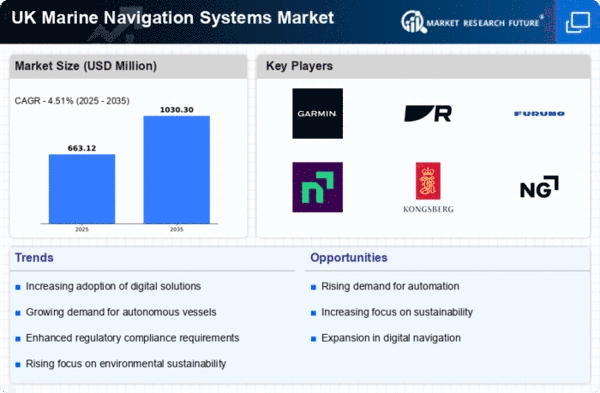
UK Marine Navigation Systems Market Infographic
Purchase Options

UK Marine Navigation Systems Market Summary

As per Market Research Future analysis, the UK marine navigation-systems market Size was estimated at 634.5 USD Million in 2024. The UK marine navigation-systems market is projected to grow from 663.12 USD Million in 2025 to 1030.3 USD Million by 2035, exhibiting a compound annual growth rate (CAGR) of 4.5% during the forecast period 2025 - 2035

Key Market Trends & Highlights

The UK marine navigation-systems market is experiencing a transformative shift driven by technological advancements and sustainability initiatives.

  • Technological advancements are enhancing the accuracy and efficiency of marine navigation systems, particularly in commercial shipping and recreational boating segments.
  • The sustainability focus is prompting the development of eco-friendly navigation solutions, appealing to environmentally conscious consumers and businesses.
  • The rise of autonomous vessels is reshaping the market landscape, with significant investments in automation technologies for both commercial and recreational applications.
  • Increased maritime trade activities and regulatory compliance are major drivers propelling the demand for advanced navigation systems in the UK.

Market Size & Forecast

2024 Market Size 634.5 (USD Million)
2035 Market Size 1030.3 (USD Million)
CAGR (2025 - 2035) 4.51%

Major Players

Garmin (US), Raymarine (GB), Furuno (JP), Navico (NO), Kongsberg (NO), Northrop Grumman (US), Siemens (DE), Thales (FR), Bae Systems (GB)

Our Impact
Enabled $4.3B Revenue Impact for Fortune 500 and Leading Multinationals
Partnering with 2000+ Global Organizations Each Year
30K+ Citations by Top-Tier Firms in the Industry

UK Marine Navigation Systems Market Trends

The marine navigation-systems market is currently experiencing a notable evolution, driven by advancements in technology and increasing demand for efficient maritime operations. The integration of satellite-based systems and digital mapping tools has transformed navigation practices, enhancing safety and accuracy for vessels operating in UK waters. Furthermore, the growing emphasis on environmental sustainability is prompting the adoption of eco-friendly navigation solutions, which may lead to a shift in consumer preferences towards systems that minimize ecological impact. As the maritime industry continues to adapt to regulatory changes and technological innovations, the marine navigation-systems market is poised for further growth. In addition, the rise of autonomous vessels is likely to influence the marine navigation-systems market significantly. These vessels require sophisticated navigation systems that can operate independently, which may drive investment in advanced technologies. The collaboration between technology providers and maritime operators appears to be strengthening, fostering innovation and improving the overall efficiency of navigation systems. As the market evolves, stakeholders must remain vigilant to emerging trends and adapt their strategies accordingly to maintain competitiveness.

Technological Advancements

The marine navigation-systems market is witnessing rapid technological advancements, particularly in satellite navigation and digital mapping. These innovations enhance the precision and reliability of navigation, which is crucial for safe maritime operations.

Sustainability Focus

There is a growing emphasis on sustainability within the marine navigation-systems market. Stakeholders are increasingly seeking eco-friendly solutions that reduce environmental impact, aligning with broader industry trends towards greener practices.

Rise of Autonomous Vessels

The emergence of autonomous vessels is reshaping the marine navigation-systems market. These vessels necessitate advanced navigation technologies, prompting investments in systems that can support autonomous operations effectively.

UK Marine Navigation Systems Market Drivers

Increased Maritime Trade Activities

The marine navigation-systems market in the UK is experiencing growth due to the rise in maritime trade activities. The UK, being a significant player in international trade, has seen an increase in shipping traffic, necessitating advanced navigation systems to ensure safe and efficient operations. According to recent data, the volume of goods transported by sea has increased by approximately 5% annually, highlighting the need for reliable navigation solutions. This trend is likely to drive investments in marine navigation technologies, as shipping companies seek to enhance their operational efficiency and safety standards. The marine navigation-systems market is thus poised to benefit from this uptick in maritime trade, as stakeholders prioritize the integration of sophisticated navigation systems to manage the growing complexities of maritime logistics.

Integration of Advanced Technologies

The integration of advanced technologies such as Artificial Intelligence (AI) and the Internet of Things (IoT) is transforming the marine navigation-systems market. These technologies enable real-time data analysis and improved decision-making capabilities for maritime operations. In the UK, the adoption of AI-driven navigation systems is projected to increase by 15% over the next five years, as companies seek to enhance their operational efficiency and safety. The marine navigation-systems market is witnessing a shift towards smart navigation solutions that leverage these technologies, allowing for better route optimization and risk management. This trend not only improves the safety of maritime operations but also contributes to cost savings, making it a key driver of market growth.

Investment in Maritime Infrastructure

Investment in maritime infrastructure is a crucial driver for the marine navigation-systems market in the UK. The government and private sector are increasingly allocating funds to upgrade ports and shipping facilities, which necessitates the implementation of advanced navigation systems. Recent reports indicate that the UK government plans to invest over £200 million in maritime infrastructure projects over the next few years. This investment is expected to enhance the efficiency of maritime operations and improve safety standards. Consequently, the marine navigation-systems market is likely to experience growth as stakeholders seek to integrate modern navigation technologies into these upgraded facilities, ensuring that they are equipped to handle the demands of contemporary maritime trade.

Growing Demand for Recreational Boating

The marine navigation-systems market is also benefiting from the growing demand for recreational boating in the UK. As more individuals engage in leisure activities on the water, the need for reliable navigation systems has become increasingly apparent. The recreational boating sector has seen a growth rate of approximately 7% annually, prompting manufacturers to develop user-friendly navigation solutions tailored for leisure boaters. This trend is likely to drive innovation within the marine navigation-systems market, as companies strive to create products that cater to the unique needs of recreational users. Enhanced navigation systems not only improve the overall boating experience but also ensure safety, thereby attracting more enthusiasts to the market.

Regulatory Compliance and Safety Standards

The marine navigation-systems market is significantly influenced by stringent regulatory compliance and safety standards imposed by maritime authorities in the UK. The International Maritime Organization (IMO) has established guidelines that require vessels to adopt advanced navigation systems to enhance safety and reduce maritime accidents. As a result, shipowners and operators are increasingly investing in modern navigation technologies to meet these regulations. The marine navigation-systems market is likely to see a surge in demand for systems that comply with these safety standards, as non-compliance can lead to hefty fines and operational disruptions. This regulatory landscape encourages innovation and the adoption of cutting-edge navigation solutions, thereby driving market growth.


Market Segment Insights

By Type: Chart Plotter (Largest) vs. Electronic Navigation Chart (Fastest-Growing)

In the UK marine navigation-systems market, the market share distribution shows that Chart Plotters hold the largest segment, benefiting from advanced features that enhance navigation capabilities for both recreational and commercial users. Electronic Navigation Charts, while currently smaller in share, are rapidly gaining traction thanks to their enhanced digital formats that allow for real-time updates and accuracy, appealing particularly to tech-savvy mariners. The growth trends in this segment are driven by the increasing reliance on precision navigation solutions in maritime activities. The rise of recreational boating and rising safety requirements among maritime operators are primary catalysts for adoption. The market is witnessing innovative developments, like integration with mobile technologies and cloud-based services, thus accelerating the growth of Electronic Navigation Charts as mariners seek more flexible and efficient solutions.

Chart Plotter: Dominant vs. Electronic Navigation Chart: Emerging

Chart Plotters are established as the dominant force in the UK marine navigation-systems market, known for their user-friendly interfaces and efficiency in providing comprehensive navigational data. These devices combine GPS technology with cartographic information, enabling users to plot precise courses easily. Conversely, Electronic Navigation Charts are emerging as a valuable alternative, characterized by their ability to provide timely updates and interactive features. While they initially appealed to a niche market, their growing presence among enthusiasts and professionals indicates a shift in user preferences towards more technologically integrated solutions. This dynamic between the dominant and emerging segments illustrates a market in transition, heavily influenced by innovation and changing user expectations.

By Application: Ship (Largest) vs. Autonomous Underwater Vehicle (Fastest-Growing)

The application segment in the UK marine navigation-systems market showcases a diverse distribution of value among four primary categories: Ship, Remotely Operated Underwater Vehicle, Autonomous Underwater Vehicle, and Boat. In this segment, the Ship category commands the largest market share, reflecting its vital role in commercial and military applications. Meanwhile, the Autonomous Underwater Vehicle segment is gaining traction, cementing its status as a key area for growth, as advancements in technology are enabling innovative applications. Growth trends in the application segment are driven by the increasing demand for efficient navigation solutions across various maritime operations. The transition to automated systems is propelling the Autonomous Underwater Vehicle segment forward, as industries seek to enhance operational capabilities and reduce manual intervention. Additionally, increasing investments in maritime security and ocean exploration are expected to bolster growth across all categories, with ships remaining the backbone of commercial marine navigation.

Ship (Dominant) vs. Autonomous Underwater Vehicle (Emerging)

Ships have long dominated the UK marine navigation-systems market due to their essential roles in global trade, logistics, and military operations. This segment benefits from established technologies and a vast infrastructure supporting traditional vessel navigation systems. In contrast, Autonomous Underwater Vehicles are emerging with significant potential, leveraging technological advancements to facilitate underwater exploration, environmental monitoring, and military applications. As these vehicles become more sophisticated, they are increasingly recognized for their ability to perform tasks that were once limited to manned operations, leading to a shift in focus and investment within the market.

By End-Use: Defense (Largest) vs. Commercial (Fastest-Growing)

In the UK marine navigation-systems market, the end-use segment is primarily bifurcated into defense and commercial sectors. The defense segment holds the largest share, driven by consistent government spending on naval capabilities and advancements in national security. Meanwhile, the commercial segment, while smaller in share, is gaining momentum due to increased maritime trade and advancements in technology, making navigation systems more accessible and efficient. Growth trends indicate a robust trajectory for the commercial sector, fueled by innovations that enhance operational efficiency and integration of cutting-edge technologies. The defense sector remains steadfast, with demand driven by geopolitical tensions and the need for enhanced maritime surveillance and defense capabilities. The commercial segment's rapid expansion is bolstered by the surge in e-commerce and global shipping requirements, making it a significant focus area for investors and developers.

Defense: Traditional (Dominant) vs. Commercial: Innovative (Emerging)

The defense segment in the UK marine navigation-systems market is characterized by established companies with a long-standing presence and trusted products that meet stringent military standards. These systems often include advanced radar, sonar, and integrated communication technologies that enhance situational awareness and operational effectiveness. In contrast, the commercial segment is emerging as innovative, catering to a diverse range of users from small vessels to large cargo ships. With the rise of autonomous shipping and increased emphasis on safety and efficiency, commercial navigation systems are quickly adopting state-of-the-art technologies that appeal to a broader market without compromising on performance. The dynamic nature of this segment reflects changing trends in maritime logistics and the growing demand for sustainability and automation.

Get more detailed insights about UK Marine Navigation Systems Market

Key Players and Competitive Insights

The marine navigation-systems market is currently characterized by a dynamic competitive landscape, driven by technological advancements and increasing demand for enhanced maritime safety and efficiency. Key players such as Garmin (US), Raymarine (GB), and Kongsberg (NO) are strategically positioned to leverage innovation and digital transformation. Garmin (US) focuses on integrating advanced GPS technology with user-friendly interfaces, while Raymarine (GB) emphasizes the development of smart marine electronics that enhance user experience. Kongsberg (NO) is investing heavily in automation and AI, aiming to optimize navigation systems for both commercial and recreational vessels. Collectively, these strategies foster a competitive environment that prioritizes technological superiority and customer-centric solutions.In terms of business tactics, companies are increasingly localizing manufacturing and optimizing supply chains to enhance operational efficiency. The market structure appears moderately fragmented, with several players vying for market share. However, the influence of major companies like Northrop Grumman (US) and Thales (FR) is notable, as they engage in strategic partnerships and collaborations to strengthen their market positions. This collective influence shapes a competitive landscape where innovation and reliability are paramount.

In October Garmin (US) announced the launch of its new line of marine navigation devices, which incorporate advanced AI algorithms for real-time data analysis. This strategic move is significant as it positions Garmin at the forefront of technological innovation, potentially enhancing user safety and navigation accuracy. The integration of AI into navigation systems may redefine user expectations and set new industry standards.

In September Raymarine (GB) unveiled a partnership with a leading software company to develop cloud-based navigation solutions. This collaboration is crucial as it reflects a growing trend towards digitalization in the marine sector, allowing for seamless updates and enhanced data sharing among users. Such advancements could significantly improve operational efficiency and user engagement.

In August Kongsberg (NO) secured a contract with a major shipping company to provide integrated navigation systems for its fleet. This contract underscores Kongsberg's commitment to automation and AI, suggesting a shift towards more sophisticated navigation solutions in commercial shipping. The strategic importance of this contract lies in its potential to enhance operational efficiency and reduce costs for shipping operators.

As of November current trends in the marine navigation-systems market are heavily influenced by digitalization, sustainability, and AI integration. Strategic alliances are increasingly shaping the competitive landscape, as companies recognize the need for collaboration to drive innovation. Looking ahead, competitive differentiation is likely to evolve, with a shift from price-based competition to a focus on technological innovation, reliability, and supply chain efficiency. This evolution may redefine market dynamics, compelling companies to prioritize R&D and customer-centric solutions.

Key Companies in the UK Marine Navigation Systems Market include

Industry Developments

In the UK Marine Navigation Systems Market, recent developments indicate a strong focus on technological advancements and integration for enhanced navigational safety. Companies like Thales and Raymarine have been emphasizing the importance of smart technologies, including artificial intelligence and automated navigation systems, to improve operational efficiency at sea. Additionally, notable growth has been observed in the market valuation, particularly for firms such as Garmin and Simrad, as demand for advanced navigation solutions continues to rise amidst increasing maritime activities and the push for sustainability in shipping practices.

In July 2023, Weatherdock announced a partnership with SRT Marine Systems for collaborative research in vessel tracking systems, aiming to boost safety through better surveillance technology. Furthermore, market expansions are facilitated by the UK’s commitment to advancing maritime infrastructure, which is evident from government investments and policy support over the past two years. Noteworthy happenings also include the rising adoption of Electronic Navigational Charts by organizations like CMAP, enhancing navigational accuracy in UK waters. As the marine navigation sector continues to evolve, these developments reflect a well-coordinated effort to stay ahead in innovation and safety standards in the UK.

Future Outlook

UK Marine Navigation Systems Market Future Outlook

The Marine Navigation Systems Market is projected to grow at 4.51% CAGR from 2025 to 2035, driven by technological advancements, regulatory support, and increasing maritime activities.

New opportunities lie in:

  • Development of integrated navigation software for real-time data analytics.
  • Expansion of subscription-based services for continuous software updates.
  • Investment in autonomous vessel navigation systems for commercial shipping.

By 2035, the market is expected to achieve robust growth, driven by innovation and increased demand.

Market Segmentation

UK Marine Navigation Systems Market Type Outlook

  • Chart Plotter
  • Electronic Navigation Chart
  • Others

UK Marine Navigation Systems Market End-Use Outlook

  • Defense
  • Commercial

UK Marine Navigation Systems Market Application Outlook

  • Ship
  • Remotely Operated Underwater Vehicle
  • Autonomous Underwater Vehicle
  • Boat

Report Scope

MARKET SIZE 2024 634.5(USD Million)
MARKET SIZE 2025 663.12(USD Million)
MARKET SIZE 2035 1030.3(USD Million)
COMPOUND ANNUAL GROWTH RATE (CAGR) 4.51% (2025 - 2035)
REPORT COVERAGE Revenue Forecast, Competitive Landscape, Growth Factors, and Trends
BASE YEAR 2024
Market Forecast Period 2025 - 2035
Historical Data 2019 - 2024
Market Forecast Units USD Million
Key Companies Profiled Garmin (US), Raymarine (GB), Furuno (JP), Navico (NO), Kongsberg (NO), Northrop Grumman (US), Siemens (DE), Thales (FR), Bae Systems (GB)
Segments Covered Type, Application, End-Use
Key Market Opportunities Integration of advanced artificial intelligence in marine navigation-systems enhances safety and efficiency.
Key Market Dynamics Technological advancements drive competitive dynamics in the marine navigation-systems market, enhancing safety and efficiency.
Countries Covered UK
Leave a Comment

FAQs

What is the expected market value of the UK Marine Navigation Systems Market in 2024?

The UK Marine Navigation Systems Market is expected to be valued at 486.45 million USD in 2024.

What is the projected market value for the UK Marine Navigation Systems Market by 2035?

By 2035, the UK Marine Navigation Systems Market is projected to reach a value of 677.02 million USD.

What is the expected CAGR for the UK Marine Navigation Systems Market from 2025 to 2035?

The expected compound annual growth rate (CAGR) for the UK Marine Navigation Systems Market from 2025 to 2035 is 3.051 percent.

Who are the key players in the UK Marine Navigation Systems Market?

Key players in the UK Marine Navigation Systems Market include Thales, Garmin, Raymarine, and Furuno among others.

Which segment of the UK Marine Navigation Systems Market is expected to have the largest value in 2024?

In 2024, the Chart Plotter segment is expected to be valued at 180.0 million USD, making it one of the largest segments.

How much is the Electronic Navigation Chart segment expected to grow by 2035?

The Electronic Navigation Chart segment is expected to grow from 150.0 million USD in 2024 to 200.0 million USD by 2035.

What is the anticipated market size for the 'Others' segment in the UK Marine Navigation Systems Market by 2035?

'Others' segment is anticipated to reach a market value of 227.02 million USD by 2035.

What are the main growth drivers for the UK Marine Navigation Systems Market?

Main growth drivers include technological advancements and increased demand for efficient maritime navigation solutions.

What are the challenges facing the UK Marine Navigation Systems Market currently?

Challenges currently affecting the market include the need for continual innovation and competitive pricing pressures from various players.

How does the current global scenario impact the UK Marine Navigation Systems Market?

The current global scenario influences the market by creating uncertainties that may affect supply chains and investment decisions.

Download Free Sample

Kindly complete the form below to receive a free sample of this Report

Compare Licence

×
Features License Type
Single User Multiuser License Enterprise User
Price $4,950 $5,950 $7,250
Maximum User Access Limit 1 User Upto 10 Users Unrestricted Access Throughout the Organization
Free Customization
Direct Access to Analyst
Deliverable Format
Platform Access
Discount on Next Purchase 10% 15% 15%
Printable Versions