×
Request Free Sample ×

Kindly complete the form below to receive a free sample of this Report

* Please use a valid business email

Leading companies partner with us for data-driven Insights

clients tt-cursor
Hero Background

UK Loungewear Market

ID: MRFR/CG/42666-HCR
128 Pages
Pradeep Nandi
February 2026

UK Loungewear Market Size, Share, Industry Trend & Analysis Research Report: By Type Outlook (Cotton, Wool, Silk, Others), By End User Outlook (Female, Male, Kids) andBy Distribution Channel Outlook (Store-Based, Non-Store-Based)- Forecast to 2035

Share:
Download PDF ×

We do not share your information with anyone. However, we may send you emails based on your report interest from time to time. You may contact us at any time to opt-out.

UK Loungewear Market Infographic
Purchase Options

UK Loungewear Market Summary

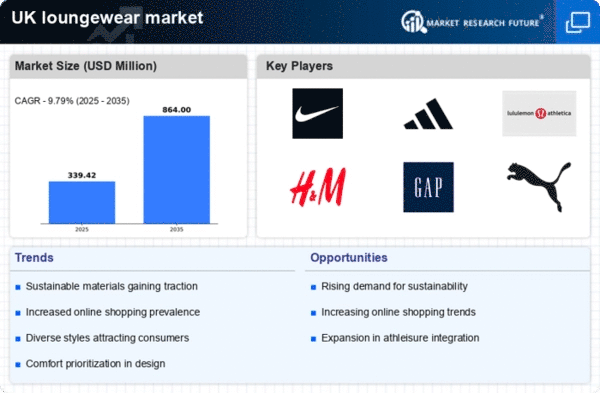
As per Market Research Future analysis, the UK loungewear market Size was estimated at 309.15 USD Million in 2024. The UK loungewear market is projected to grow from 339.42 USD Million in 2025 to 864.0 USD Million by 2035, exhibiting a compound annual growth rate (CAGR) of 9.7% during the forecast period 2025 - 2035

Key Market Trends & Highlights

The UK loungewear market is experiencing a transformative shift towards sustainability and comfort-driven designs.

  • The largest segment in the UK loungewear market is women's loungewear, reflecting a growing preference for comfort and style.
  • The fastest-growing segment is men's loungewear, indicating a rising trend in male consumers seeking versatile and comfortable clothing.
  • Sustainable materials are increasingly being adopted, as brands respond to consumer demand for eco-friendly options.
  • Key market drivers include the increased demand for comfort and the influence of celebrity endorsements, which are shaping consumer preferences.

Market Size & Forecast

2024 Market Size 309.15 (USD Million)
2035 Market Size 864.0 (USD Million)
CAGR (2025 - 2035) 9.79%

Major Players

Nike (US), Adidas (DE), Lululemon Athletica (CA), H&M (SE), Gap Inc. (US), Puma (DE), Under Armour (US), Zara (ES), American Eagle Outfitters (US)

Our Impact
Enabled $4.3B Revenue Impact for Fortune 500 and Leading Multinationals
Partnering with 2000+ Global Organizations Each Year
30K+ Citations by Top-Tier Firms in the Industry

UK Loungewear Market Trends

The loungewear market in the UK is currently experiencing a notable transformation, driven by evolving consumer preferences and lifestyle changes. As individuals increasingly prioritize comfort and versatility in their clothing choices, the demand for loungewear has surged. This shift appears to be influenced by a growing trend towards casualization in fashion, where traditional boundaries between home and outdoor attire are becoming blurred. Consequently, brands are adapting their offerings to meet the needs of consumers seeking stylish yet comfortable options for both relaxation and social activities. Moreover, sustainability has emerged as a pivotal factor in the loungewear market. Consumers are becoming more conscious of their purchasing decisions, favoring brands that demonstrate a commitment to ethical practices and environmentally friendly materials. This trend suggests that companies focusing on sustainable production methods and transparent supply chains may gain a competitive edge. As the market continues to evolve, it is likely that innovation in fabric technology and design will play a crucial role in shaping future offerings, catering to the diverse preferences of the modern consumer.

Rise of Sustainable Materials

There is a growing emphasis on eco-friendly fabrics within the loungewear market. Brands are increasingly utilizing organic cotton, recycled polyester, and other sustainable materials to appeal to environmentally conscious consumers. This trend indicates a shift towards responsible fashion, where consumers prioritize sustainability alongside style.

Blurring of Casual and Formal Wear

The lines between casual and formal attire are becoming increasingly indistinct. Consumers are seeking loungewear that can transition seamlessly from home to social settings. This trend suggests that brands are innovating designs that combine comfort with a polished appearance, catering to the demand for versatile clothing.

Technological Integration in Fabric

Advancements in fabric technology are influencing the loungewear market. Innovations such as moisture-wicking, temperature-regulating, and anti-odor properties are becoming more prevalent. This trend indicates that consumers are looking for functional benefits in their loungewear, enhancing comfort and performance.

UK Loungewear Market Drivers

E-commerce Expansion

The loungewear market in the UK is significantly benefiting from the rapid expansion of e-commerce platforms. With the increasing preference for online shopping, consumers are finding it more convenient to purchase loungewear from the comfort of their homes. Recent data indicates that online sales of loungewear have surged by approximately 30% in the past year, reflecting a broader trend towards digital retail. This shift not only enhances accessibility for consumers but also allows brands to reach a wider audience. Retailers are investing in user-friendly websites and mobile applications to facilitate seamless shopping experiences, which is likely to continue driving growth in the loungewear market. The convenience of online shopping, coupled with targeted marketing strategies, positions e-commerce as a crucial driver in the evolving landscape of loungewear.

Seasonal Versatility

The loungewear market is increasingly characterized by seasonal versatility, as consumers seek clothing that can be worn year-round. This trend reflects a shift in consumer preferences towards multifunctional apparel that adapts to various occasions, from lounging at home to casual outings. Brands are responding by designing loungewear that incorporates lightweight materials for warmer months and layering options for colder seasons. Recent Market Research Future indicate that sales of versatile loungewear have increased by approximately 25% as consumers embrace the practicality of such garments. This adaptability not only enhances the appeal of loungewear but also encourages repeat purchases, as consumers look for items that can seamlessly transition between different settings. The emphasis on seasonal versatility is likely to remain a key driver in the loungewear market.

Focus on Health and Wellness

The growing emphasis on health and wellness is influencing consumer choices within the loungewear market. As individuals become more health-conscious, there is a rising demand for loungewear that promotes well-being, such as garments made from breathable, moisture-wicking fabrics. This trend aligns with a broader societal shift towards prioritizing physical and mental health, which has led to an increase in the popularity of athleisure and comfortable homewear. Market analysis suggests that loungewear brands that incorporate health-oriented features are likely to capture a larger share of the market. This focus on wellness not only enhances the appeal of loungewear but also positions it as a lifestyle choice, further driving its growth in the UK.

Increased Demand for Comfort

The loungewear market in the UK experiences a notable surge in demand for comfort-driven apparel. As lifestyles evolve, consumers increasingly prioritize comfort in their clothing choices, particularly in the wake of changing work environments. This shift is reflected in a reported growth of approximately 15% in loungewear sales over the past year. The desire for relaxed yet stylish clothing options has led to a diversification of product offerings, catering to various consumer preferences. Retailers are responding by expanding their loungewear collections, which now include a range of fabrics and styles that emphasize comfort without sacrificing aesthetics. This trend indicates a long-term shift in consumer behavior, suggesting that comfort will remain a key driver in the loungewear market for the foreseeable future.

Influence of Celebrity Endorsements

Celebrity endorsements play a pivotal role in shaping consumer perceptions and preferences within the loungewear market. High-profile figures often set trends that resonate with the public, leading to increased visibility and desirability of specific brands. Recent collaborations between celebrities and loungewear brands have resulted in significant spikes in sales, with some brands reporting increases of up to 20% following such partnerships. This phenomenon underscores the power of social influence in the fashion industry, particularly in the realm of loungewear, where comfort and style converge. As celebrities continue to embrace and promote loungewear as a fashionable choice, their impact on consumer purchasing decisions is likely to persist, further driving growth in the market.


Market Segment Insights

By Material Type: Cotton (Largest) vs. Wool (Fastest-Growing)

The material type segment within the UK loungewear market showcases a varied distribution, with cotton holding the largest market share due to its popularity for its comfort and breathability. Wool, although having a smaller base currently, is emerging strongly in the market, appealing to consumers seeking warmth and luxury, therefore positioned for rapid growth in the coming years. As lifestyle trends shift towards sustainability and comfort, the demand for loungewear made from natural fibers such as cotton and wool is expected to rise. Wool is particularly gaining traction among consumers who appreciate its thermal regulation properties and eco-friendly nature. Innovations in wool processing and blends are also enhancing its appeal, leading to increased adoption, while cotton remains a staple owing to its versatility and familiarity among consumers.

Cotton (Dominant) vs. Wool (Emerging)

Cotton is the dominant material in the loungewear segment, favored for its soft texture, breathability, and ease of care, making it highly suitable for everyday wear. It appeals to a wide demographic, offering various styles and prices, which enhances its market position. In contrast, wool is emerging as a strong competitor, appealing to a niche market that values sustainability and comfort. The increasing awareness of eco-friendly products has stimulated interest in wool loungewear, which provides excellent insulation and durability. As manufacturers focus on innovation, including technology-driven fabric enhancements, wool is expected to capture a larger market share, making it a key player in the evolving UK loungewear market.

By End User: Female (Largest) vs. Male (Fastest-Growing)

The UK loungewear market exhibits a diverse distribution across its end-user segments, with females holding the largest share. This demographic has embraced loungewear not only for comfort but as a fashion statement, contributing significantly to sales and brand loyalty. On the other hand, the male segment is growing rapidly, reflecting changing attitudes towards leisure and home attire, as men increasingly prioritize comfort in their wardrobes. Growth trends in the end-user segments are influenced by various factors, such as lifestyle changes and the rise of remote working, which has blurred the lines between home and professional attire. The increasing focus on casual yet stylish clothing is driving both segments, with female loungewear setting trends that males are quickly adopting. Additionally, the kids' segment is steadily gaining traction as parents seek comfortable yet stylish options for their children, further enhancing the market dynamics.

Female: Dominant vs. Male: Emerging

In the UK loungewear market, the female segment stands as the dominant force, characterized by a wide array of styles, fabrics, and designs that cater to diverse preferences. Women prioritize comfort and versatility, leading to an extensive selection of loungewear that can transition from home to errands effortlessly. This demand drives innovation and variety within the market. Conversely, the male segment, identified as the emerging category, is increasingly being recognized for its potential as men seek stylish yet relaxed attire. Brands are responding by offering a broader range of loungewear options designed specifically for men, and this evolving focus on comfort and aesthetics is expected to spur significant growth in this segment.

By Distribution Channel: Store-Based (Largest) vs. Non-Store-Based (Fastest-Growing)

The UK loungewear market exhibits a significant distribution between Store-Based and Non-Store-Based channels. Store-Based channels dominate the market, capturing a substantial share due to established retail chains and the appeal of in-person shopping experiences. Shoppers appreciate the tactile experience of trying on loungewear, which enhances their buying confidence and bolsters sales in brick-and-mortar stores. In contrast, Non-Store-Based channels are emerging as the fastest-growing segment in the market. The increasing preference for online shopping, driven by convenience and wider product choices, is propelling the growth of e-commerce platforms. Consumers are attracted to the flexibility that online shopping offers, enabling them to browse a larger variety of brands and styles from the comfort of their homes. This trend is poised to reshape the competitive landscape of the UK loungewear market.

Store-Based (Dominant) vs. Non-Store-Based (Emerging)

The Store-Based distribution channel remains a dominant force in the UK loungewear market, characterized by well-established retail stores that offer a wide range of loungewear options. These stores benefit from foot traffic and the ability to create a sensory shopping experience for customers. On the other hand, the Non-Store-Based channel is rapidly emerging, primarily influenced by changing consumer preferences towards online shopping. This segment encompasses e-commerce platforms and social media sales, which cater to the growing demand for convenient and efficient shopping solutions. As technology advances and consumer reliance on digital platforms increases, Non-Store-Based channels are expected to continue their swift ascent in the market.

Get more detailed insights about UK Loungewear Market

Key Players and Competitive Insights

The loungewear market exhibits a dynamic competitive landscape characterized by a blend of established brands and emerging players. Key growth drivers include the increasing consumer preference for comfort and versatility in apparel, alongside a growing trend towards casualization in fashion. Major companies such as Nike (US), H&M (SE), and Lululemon Athletica (CA) are strategically positioned to capitalize on these trends. Nike (US) focuses on innovation and sustainability, recently launching a new line of eco-friendly loungewear that utilizes recycled materials. H&M (SE) emphasizes affordability and accessibility, expanding its online presence to cater to a broader audience. Lululemon Athletica (CA) continues to enhance its premium positioning through community engagement and experiential retail, which collectively shapes a competitive environment that is both collaborative and competitive.The market structure appears moderately fragmented, with a mix of global giants and niche brands vying for consumer attention. Key business tactics such as localizing manufacturing and optimizing supply chains are increasingly prevalent. For instance, companies are investing in regional production facilities to reduce lead times and enhance responsiveness to market demands. This strategy not only improves operational efficiency but also aligns with sustainability goals, as it reduces carbon footprints associated with long-distance shipping.

In October Nike (US) unveiled its latest sustainability initiative, aiming to reduce carbon emissions by 30% across its loungewear line by 2030. This move underscores the brand's commitment to environmental responsibility and positions it favorably among eco-conscious consumers. The initiative is likely to enhance brand loyalty and attract a demographic increasingly concerned with sustainability.

In September H&M (SE) announced a partnership with a leading tech firm to enhance its online shopping experience through AI-driven personalization. This strategic action aims to improve customer engagement and conversion rates, reflecting a broader trend towards digital transformation in retail. By leveraging technology, H&M (SE) seeks to create a more tailored shopping experience, which may lead to increased sales and customer retention.

In August Lululemon Athletica (CA) expanded its product line to include a new range of loungewear designed specifically for men, tapping into a previously underrepresented segment. This strategic diversification not only broadens its market appeal but also positions Lululemon (CA) as a more inclusive brand. The move is indicative of a growing trend towards gender-neutral and diverse offerings in the apparel sector.

As of November current competitive trends in the loungewear market are heavily influenced by digitalization, sustainability, and the integration of AI technologies. Strategic alliances are increasingly shaping the landscape, as companies collaborate to enhance their technological capabilities and sustainability efforts. Looking ahead, competitive differentiation is likely to evolve from traditional price-based competition to a focus on innovation, technological advancements, and supply chain reliability. This shift suggests that brands that prioritize these elements will be better positioned to thrive in an increasingly competitive market.

Key Companies in the UK Loungewear Market include

Industry Developments

In recent months, the UK loungewear market has experienced significant growth, particularly fueled by the ongoing demand for comfortable clothing as a result of lifestyle changes induced by the pandemic. Major brands like Next and John Lewis have reported an uptick in loungewear sales, aligning product offerings with consumer preferences for stylish yet functional apparel. ASOS and Boohoo have expanded their loungewear collections, capitalizing on the comfort trend. In terms of mergers and acquisitions, Zara's parent company, Inditex, announced a collaboration with the loungewear brand, highlighting strategic partnerships, although no major acquisitions within the highlighted companies were reported recently.

The market valuation for loungewear has been consistent, with many companies like Marks and Spencer and Primark increasing their share by enhancing digital sales platforms. Additionally, Skinnydip and In The Style have introduced new ranges aimed at appealing to a younger demographic. The UK loungewear market’s dynamics have been shaped by changing lifestyle choices, contributing to a projected growth trend indicative of a lasting shift in consumer behavior towards casual wear.

Future Outlook

UK Loungewear Market Future Outlook

The Loungewear Market is projected to grow at a 9.79% CAGR from 2025 to 2035, driven by increasing consumer demand for comfort and versatility.

New opportunities lie in:

  • Expansion of eco-friendly fabric lines to attract sustainability-focused consumers.
  • Development of smart loungewear integrating wearable technology for enhanced comfort.
  • Launch of subscription services for personalized loungewear selections based on consumer preferences.

By 2035, the loungewear market is expected to achieve substantial growth, reflecting evolving consumer lifestyles.

Market Segmentation

UK Loungewear Market End User Outlook

  • Female
  • Male
  • Kids

UK Loungewear Market Material Type Outlook

  • Cotton
  • Wool
  • Silk
  • Others

UK Loungewear Market Distribution Channel Outlook

  • Store-Based
  • Non-Store-Based

Report Scope

MARKET SIZE 2024 309.15(USD Million)
MARKET SIZE 2025 339.42(USD Million)
MARKET SIZE 2035 864.0(USD Million)
COMPOUND ANNUAL GROWTH RATE (CAGR) 9.79% (2025 - 2035)
REPORT COVERAGE Revenue Forecast, Competitive Landscape, Growth Factors, and Trends
BASE YEAR 2024
Market Forecast Period 2025 - 2035
Historical Data 2019 - 2024
Market Forecast Units USD Million
Key Companies Profiled Nike (US), Adidas (DE), Lululemon Athletica (CA), H&M (SE), Gap Inc. (US), Puma (DE), Under Armour (US), Zara (ES), American Eagle Outfitters (US)
Segments Covered Material Type, End User, Distribution Channel
Key Market Opportunities Growing consumer preference for sustainable materials in the loungewear market presents a unique opportunity.
Key Market Dynamics Shifting consumer preferences towards comfort and sustainability drive innovation in the loungewear market.
Countries Covered UK
Leave a Comment

FAQs

What is the expected market size of the UK Loungewear Market in 2024?

The UK Loungewear Market is expected to be valued at 361.5 million USD in 2024.

What is the projected market size of the UK Loungewear Market by 2035?

By 2035, the UK Loungewear Market is forecasted to reach 1325.0 million USD.

What is the expected CAGR for the UK Loungewear Market from 2025 to 2035?

The expected CAGR for the UK Loungewear Market from 2025 to 2035 is 12.534%.

Which type of loungewear is expected to hold the largest market share in 2024?

In 2024, cotton loungewear is projected to hold the largest market share valued at 145.0 million USD.

What is the market size for wool loungewear in 2035?

The market size for wool loungewear is expected to be 307.0 million USD by 2035.

Who are the key players in the UK Loungewear Market?

Major players in the UK Loungewear Market include Loungewear Club, Next, John Lewis, Zara, and ASOS.

What is the market value of silk loungewear in 2024?

Silk loungewear is valued at 45.0 million USD in the UK Loungewear Market in 2024.

What opportunities exist in the UK Loungewear Market?

The market offers opportunities driven by increasing consumer demand for comfortable and stylish home wear.

What challenges does the UK Loungewear Market currently face?

Challenges include increased competition and changing consumer preferences in fashion.

What is the market value for other loungewear types in 2035?

The market value for other loungewear types is projected to reach 340.0 million USD by 2035.

Download Free Sample

Kindly complete the form below to receive a free sample of this Report

Compare Licence

×
Features License Type
Single User Multiuser License Enterprise User
Price $4,950 $5,950 $7,250
Maximum User Access Limit 1 User Upto 10 Users Unrestricted Access Throughout the Organization
Free Customization
Direct Access to Analyst
Deliverable Format
Platform Access
Discount on Next Purchase 10% 15% 15%
Printable Versions