×
Request Free Sample ×

Kindly complete the form below to receive a free sample of this Report

* Please use a valid business email

Leading companies partner with us for data-driven Insights

clients tt-cursor
Hero Background

UK Hemiplegic Migraine Market

ID: MRFR/HC/51960-HCR
200 Pages
Rahul Gotadki
February 2026

UK Hemiplegic Migraine Market Research Report By Type (Familial, Sporadic), By Treatment (Acute, Preventive), By Distribution Channel (Retail Pharmacies, Hospital Pharmacies, Online Pharmacies), and By End-user (Hospitals & Clinics, Diagnostic Centers, Others) -Forecast to 2035

Share:
Download PDF ×

We do not share your information with anyone. However, we may send you emails based on your report interest from time to time. You may contact us at any time to opt-out.

UK Hemiplegic Migraine Market Infographic
Purchase Options

UK Hemiplegic Migraine Market Summary

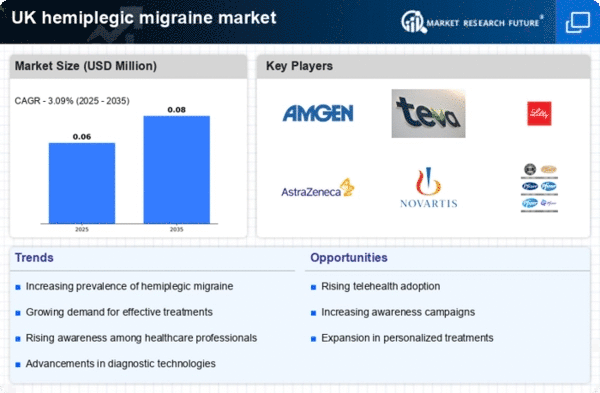
As per Market Research Future analysis, the UK hemiplegic migraine market size was estimated at 0.06 USD Million in 2024. The UK hemiplegic migraine market is projected to grow from 0.06 USD Million in 2025 to 0.08 USD Million by 2035, exhibiting a compound annual growth rate (CAGR) of 3.0% during the forecast period 2025 - 2035

Key Market Trends & Highlights

The UK hemiplegic migraine market is experiencing a transformative shift driven by increased awareness and innovative treatment options.

  • The largest segment in the UK hemiplegic migraine market is the pharmaceutical sector, which continues to evolve with new therapies.
  • The fastest-growing segment is telemedicine, reflecting a shift towards remote patient management and consultations.
  • There is a notable increase in awareness and diagnosis of hemiplegic migraine, leading to improved patient outcomes.
  • Key market drivers include the rising incidence of hemiplegic migraine and innovations in pharmaceutical research.

Market Size & Forecast

2024 Market Size 0.06 (USD Million)
2035 Market Size 0.08 (USD Million)
CAGR (2025 - 2035) 3.09%

Major Players

Amgen Inc (US), Teva Pharmaceutical Industries Ltd (IL), Eli Lilly and Company (US), AstraZeneca PLC (GB), Novartis AG (CH), Pfizer Inc (US), Boehringer Ingelheim GmbH (DE), Bristol-Myers Squibb Company (US)

Our Impact
Enabled $4.3B Revenue Impact for Fortune 500 and Leading Multinationals
Partnering with 2000+ Global Organizations Each Year
30K+ Citations by Top-Tier Firms in the Industry

UK Hemiplegic Migraine Market Trends

The hemiplegic migraine market is characterized by a complex interplay of neurological factors and patient experiences. This condition, which is a rare form of migraine, often presents with temporary paralysis or weakness on one side of the body, complicating diagnosis and treatment. In the UK, awareness of hemiplegic migraines is gradually increasing among healthcare professionals, which may lead to improved patient outcomes. The market is influenced by advancements in medical research, particularly in understanding the genetic components and triggers associated with this type of migraine. As a result, there is a growing interest in developing targeted therapies that address the unique needs of affected individuals. Moreover, the hemiplegic migraine market is witnessing a shift towards personalized medicine. This approach emphasizes tailored treatment plans based on individual patient profiles, which could enhance efficacy and minimize side effects. The UK healthcare system is adapting to these changes, with initiatives aimed at integrating innovative therapies into standard care practices. Additionally, patient advocacy groups are playing a crucial role in raising awareness and providing support, which may further drive demand for effective treatment options. Overall, the landscape of the hemiplegic migraine market appears to be evolving, with potential for significant advancements in both understanding and managing this challenging condition.

Increased Awareness and Diagnosis

There is a noticeable rise in awareness regarding hemiplegic migraines among healthcare providers in the UK. This trend is likely to lead to more accurate diagnoses and timely interventions, which could improve patient outcomes. Enhanced training and education for medical professionals may contribute to this shift, fostering a better understanding of the condition.

Advancements in Treatment Options

The hemiplegic migraine market is experiencing a surge in research focused on developing new treatment modalities. Innovative therapies, including targeted medications and preventive strategies, are being explored. This trend suggests a potential for improved management of symptoms and a reduction in the frequency of attacks.

Patient-Centric Approaches

There is a growing emphasis on patient-centric care within the hemiplegic migraine market. Healthcare providers are increasingly recognizing the importance of individualized treatment plans that consider the unique experiences and needs of patients. This approach may enhance treatment adherence and overall satisfaction.

UK Hemiplegic Migraine Market Drivers

Increased Healthcare Expenditure

Increased healthcare expenditure in the UK is a significant driver for the hemiplegic migraine market. The UK government has been investing more in healthcare services, which includes funding for neurological disorders. This financial commitment may lead to improved access to treatments and diagnostic tools for hemiplegic migraine. As healthcare budgets expand, the hemiplegic migraine market is likely to experience growth, as more resources become available for research, patient education, and treatment options. This trend suggests a positive outlook for patients seeking effective management of their condition.

Innovations in Pharmaceutical Research

Innovations in pharmaceutical research are propelling the hemiplegic migraine market forward. The development of new medications and therapies tailored specifically for hemiplegic migraine is gaining traction. For instance, recent advancements in biologics and targeted therapies have shown promise in clinical trials, potentially improving patient outcomes. The hemiplegic migraine market is likely to benefit from these innovations, as they may lead to more effective treatment options that address the unique challenges posed by this condition. As pharmaceutical companies invest in research and development, the market could see a surge in new product launches, enhancing competition and availability for patients.

Rising Incidence of Hemiplegic Migraine

The increasing incidence of hemiplegic migraine in the UK is a notable driver for the hemiplegic migraine market. Recent studies indicate that approximately 0.1% of the population may experience this rare form of migraine, which can lead to significant neurological symptoms. As awareness grows, more individuals are likely to seek medical attention, thereby increasing the demand for effective treatments. The hemiplegic migraine market is expected to expand as healthcare providers focus on diagnosing and managing this condition more effectively. Furthermore, the rising number of patients could lead to a greater need for specialized healthcare services, which may further stimulate market growth.

Integration of Telemedicine in Neurology

The integration of telemedicine into neurology practices is transforming the hemiplegic migraine market. Telehealth services provide patients with easier access to specialists, particularly in remote areas where neurological expertise may be limited. This shift towards digital healthcare solutions is likely to enhance patient engagement and adherence to treatment plans. The hemiplegic migraine market stands to benefit from this trend, as telemedicine can facilitate timely diagnosis and management of hemiplegic migraine, ultimately improving patient outcomes and satisfaction.

Growing Patient Advocacy and Support Groups

The emergence of patient advocacy and support groups is influencing the hemiplegic migraine market positively. These organizations play a crucial role in raising awareness about hemiplegic migraine, educating patients and healthcare providers alike. By fostering a community of support, they encourage individuals to seek diagnosis and treatment, which may lead to increased market demand. The hemiplegic migraine market could see a rise in engagement from pharmaceutical companies and healthcare providers as they recognize the importance of these groups in promoting awareness and improving patient outcomes.


Market Segment Insights

By Type: Familial Hemiplegic Migraine (Largest) vs. Sporadic Hemiplegic Migraine (Fastest-Growing)

In the UK hemiplegic migraine market, Familial Hemiplegic Migraine constitutes a significant portion of the overall segment, capturing the largest market share due to its genetic basis and hereditary nature. This segment's prominence can be attributed to several diagnosed cases that highlight the critical need for effective treatment and management options. Conversely, Sporadic Hemiplegic Migraine, while currently smaller in share, is gaining traction as increasing awareness and diagnosis lead to a rise in reported cases. The growth trends for Sporadic Hemiplegic Migraine are particularly noteworthy, with an accelerated increase attributed to improvements in diagnostic methods and a better understanding of its clinical features. As healthcare professionals become more familiar with the condition, the growth potential in this segment is expected to expand rapidly. Additionally, the rise in public awareness about the disorder has contributed to a more proactive approach in seeking treatment, further driving the market dynamics in favor of this emerging segment.

Familial Hemiplegic Migraine (Dominant) vs. Sporadic Hemiplegic Migraine (Emerging)

Familial Hemiplegic Migraine is recognized as the dominant segment in the UK hemiplegic migraine market, primarily due to its established understanding and recognition among neurologists. This type is hereditary, leading to a higher prevalence in certain families, facilitating targeted treatments for affected individuals. On the other hand, Sporadic Hemiplegic Migraine represents an emerging segment characterized by less predictable occurrences, often not linked to family history. As awareness grows, this segment is witnessing a rapid influx of new cases and treatment demands. The contrasting nature of these two segments highlights the complexity of hemiplegic migraines, with Familial types benefiting from established research, while Sporadic ones are becoming increasingly recognized for their unique clinical presentations.

By Treatment: Triptans (Largest) vs. NSAIDs (Fastest-Growing)

In the UK hemiplegic migraine market, the treatment segment is predominated by Triptans, which hold a significant market share due to their efficacy and rapid action in alleviating acute migraine symptoms. Following Triptans, NSAIDs are increasingly utilized and gaining traction, attracting attention from consumers seeking alternative pain relief options. Together, other treatments such as Ergotamines and Antiemetics also contribute to a diverse array of choices available in this competitive landscape. Growth trends within this segment indicate a rising acceptance of NSAIDs, viewed as a faster-growing alternative due to their widespread availability and effectiveness in pain management. The increasing incidence of hemiplegic migraines coupled with an evolving patient demographic is driving the demand for a broader spectrum of treatment options. Moreover, continuous developments and innovations in the formulation of these treatments, alongside efforts to improve patient adherence, are projected to further enhance market dynamics in coming years.

Triptans (Dominant) vs. NSAIDs (Emerging)

Triptans remain the dominant choice in the treatment segment of the UK hemiplegic migraine market due to their targeted mechanism of action, providing rapid relief for acute migraine attacks. Their established effectiveness and familiarity among healthcare providers foster strong patient trust and recommendation. In contrast, NSAIDs, while emerging, are rapidly gaining market presence owing to their versatility and lower barrier to access. Patients appreciate the convenience of using over-the-counter options and the relative cost-effectiveness compared to prescription medications. This shift towards NSAIDs is reflective of broader healthcare trends favoring accessible, self-managed treatment solutions. Both segment values highlight the ongoing evolution in the treatment landscape, emphasizing the need for innovative approaches catering to diverse patient needs.

By End-user: Hospitals & Clinics (Largest) vs. Diagnostic Centers (Fastest-Growing)

In the UK hemiplegic migraine market, the distribution of market share among end-users reveals that Hospitals & Clinics hold a dominant position, accounting for a significant portion of the total share. This segment benefits from high patient footfall and advanced treatment capabilities, making it a preferred choice for many patients seeking immediate care for hemiplegic migraines. In contrast, Diagnostic Centers, while smaller in share, have been gaining attention due to their specialized services in early diagnosis and management, which play a crucial role in treatment planning. Growth trends within the end-user segment indicate a shift towards increased investment in specialized facilities, particularly in Diagnostic Centers, which are emerging as the fastest-growing segment. Factors driving this growth include a rise in awareness about hemiplegic migraines, advancements in diagnostic technologies, and an increasing emphasis on personalized treatment options. As patient preferences evolve, Diagnostic Centers are likely to see heightened demand, enhancing their importance within the overall market landscape.

Hospitals & Clinics: Dominant vs. Diagnostic Centers: Emerging

Hospitals & Clinics serve as the dominant force within the UK hemiplegic migraine market, providing comprehensive care that includes diagnosis, treatment, and follow-up services. Their extensive infrastructure and availability of specialists enable them to manage complex cases effectively. On the other hand, Diagnostic Centers are emerging as crucial players in enhancing early detection and management of hemiplegic migraines. These centers focus on leveraging cutting-edge diagnostic tools and technologies to improve patient outcomes. While Hospitals & Clinics cater to a wide range of medical needs, Diagnostic Centers are carving out a niche by offering targeted services that fulfill the growing demand for precision medicine and specialized care.

By Preventive Treatment: Antidepressants (Largest) vs. Botox Injections (Fastest-Growing)

In the preventive treatment segment of the UK hemiplegic migraine market, antidepressants dominate the market share due to their established efficacy in managing migraine symptoms. Their comprehensive use among healthcare professionals along with favorable patient feedback solidifies their position as the primary choice for migraine prevention. On the other hand, Botox injections are capturing increasing interest, with a growing share thanks to their unique mode of action and proven benefits for chronic migraine sufferers. Growth trends in this segment are indicative of a shift towards personalized treatment options. As awareness of hemiplegic migraines increases, patients are becoming more proactive in discussing treatment alternatives with their healthcare providers. The rise of Botox injections is particularly notable as they expand their reach among patients seeking innovative solutions beyond traditional medications, driven by clinical studies demonstrating their effectiveness and lower side effect profiles compared to standard treatments.

Antidepressants (Dominant) vs. Botox Injections (Emerging)

Antidepressants hold a dominant position in the preventive treatment segment due to their widespread acceptance among clinicians and patients alike. They are often a first-line treatment option, providing both migraine prevention and mood stabilization. In contrast, Botox injections are emerging as a compelling alternative, especially for patients who do not respond well to conventional medications. The injection's unique action of blocking neurotransmitter release presents a breakthrough in treatment, appealing to a demographic that seeks innovative and less invasive options. As clinical evidence continues to accumulate, both segment values are expected to maintain significant relevance, with antidepressants providing reliability while Botox is seen as a forward-thinking choice for patients.

By Distribution Channel: Retail Pharmacies (Largest) vs. Online Pharmacies (Fastest-Growing)

In the UK hemiplegic migraine market, the distribution channels reveal a diverse competitive landscape. Retail pharmacies hold the largest market share, given their established presence and accessibility for patients seeking treatment. Conversely, online pharmacies, while currently smaller in share, are rapidly gaining traction as patients increasingly opt for the convenience and discreetness that digital platforms offer. The growth trends within this segment are largely driven by the rising preference for online shopping, especially for medications that require confidentiality, alongside the expansion of delivery services. Hospital pharmacies also play a critical role in managing acute treatments, but they cater primarily to inpatient cases. The overall trend suggests a gradual shift towards more flexible purchasing options, benefiting online and other emerging channels.

Retail Pharmacies (Dominant) vs. Online Pharmacies (Emerging)

Retail pharmacies are positioned as the dominant distribution channel in the UK hemiplegic migraine market, providing patients with easy access to treatments and a personalized service experience. Their established rapport with patients enables them to build trust and customer loyalty. In contrast, online pharmacies are emerging as a significant player, appealing to the tech-savvy patient demographic. These platforms are reshaping the market dynamics through convenience, often providing more competitive pricing and privacy. As patients become more accustomed to ordering health-related products online, the reliance on digital channels is expected to grow, prompting traditional retailers to adapt and enhance their service offerings.

Get more detailed insights about UK Hemiplegic Migraine Market

Key Players and Competitive Insights

The hemiplegic migraine market exhibits a complex competitive landscape characterized by a blend of innovation, strategic partnerships, and regional expansion. Key players such as Amgen Inc (US), Teva Pharmaceutical Industries Ltd (IL), and Eli Lilly and Company (US) are actively shaping the market dynamics. Amgen Inc (US) appears to focus on enhancing its product portfolio through innovative therapies, while Teva Pharmaceutical Industries Ltd (IL) emphasizes cost-effective solutions and broadening its market reach. Eli Lilly and Company (US) is strategically positioned with a strong emphasis on research and development, particularly in novel treatment modalities. Collectively, these strategies foster a competitive environment that is increasingly driven by innovation and patient-centric approaches.The market structure is moderately fragmented, with several players vying for market share. Key business tactics include localizing manufacturing to reduce costs and optimize supply chains, which is particularly relevant in the context of fluctuating global supply dynamics. The influence of major companies is significant, as their operational strategies not only enhance their competitive positioning but also set benchmarks for emerging players in the market.

In October Amgen Inc (US) announced a collaboration with a leading biotech firm to develop a new class of migraine therapies. This strategic partnership is likely to enhance Amgen's research capabilities and accelerate the development of innovative treatments, potentially positioning the company as a leader in the hemiplegic migraine segment. The collaboration underscores the importance of partnerships in driving innovation and expanding therapeutic options for patients.

In September Teva Pharmaceutical Industries Ltd (IL) launched a new generic formulation of a widely used migraine medication, aiming to increase accessibility and affordability for patients. This move not only strengthens Teva's market presence but also reflects a broader trend towards cost-effective treatment solutions in the hemiplegic migraine market. By providing affordable alternatives, Teva may capture a larger patient base, thereby enhancing its competitive edge.

In August Eli Lilly and Company (US) received regulatory approval for a novel migraine treatment that utilizes advanced AI technology for personalized patient care. This approval marks a significant milestone for Eli Lilly, as it positions the company at the forefront of integrating technology into treatment protocols. The use of AI in developing personalized therapies could redefine treatment paradigms and enhance patient outcomes, indicating a shift towards more tailored healthcare solutions.

As of November current trends in the hemiplegic migraine market are increasingly defined by digitalization, sustainability, and the integration of AI technologies. Strategic alliances are becoming pivotal in shaping the competitive landscape, as companies seek to leverage each other's strengths to foster innovation. Looking ahead, competitive differentiation is likely to evolve from traditional price-based competition to a focus on technological advancements, innovative treatment options, and reliable supply chains. This shift suggests that companies prioritizing research and development, alongside strategic partnerships, will be better positioned to thrive in the dynamic market environment.

Key Companies in the UK Hemiplegic Migraine Market include

Industry Developments

Significant developments have occurred in the UK Hemiplegic Migraine Market recently, reflecting changing dynamics in patient care and pharmaceutical innovation. Companies such as GlaxoSmithKline, Teva Pharmaceutical Industries, Eli Lilly and Company, and Amgen are focusing on advancing their drug offerings to better manage conditions related to hemiplegic migraine. Market valuations for several companies have notably increased, influenced by the growing awareness and understanding of migraine disorders, leading to an uptick in research and development efforts in the UK.

In September 2023, AstraZeneca announced partnership initiatives aimed at enhancing therapeutic options for migraine sufferers, demonstrating a collaborative direction in addressing hemiplegic migraine. Additionally, Eli Lilly and Company revealed plans to bolster their production capabilities in the UK to meet rising local demand. Over the last couple of years, regulatory changes have also prompted a greater emphasis on effective therapeutic strategies, with many companies actively seeking approvals for innovative treatments. Notably, the overall market landscape has shifted towards more biologically-based treatments, showing a pronounced growth in investment toward novel approaches to manage and mitigate hemiplegic migraines effectively.

Future Outlook

UK Hemiplegic Migraine Market Future Outlook

The Hemiplegic Migraine Market is projected to grow at a 3.09% CAGR from 2025 to 2035, driven by advancements in treatment options and increased awareness.

New opportunities lie in:

  • Development of telehealth platforms for remote patient monitoring
  • Investment in targeted therapies for acute migraine management
  • Expansion of patient education programs to enhance treatment adherence

By 2035, the market is expected to demonstrate robust growth and increased treatment accessibility.

Market Segmentation

UK Hemiplegic Migraine Market Type Outlook

  • Familial Hemiplegic Migraine
  • Sporadic Hemiplegic Migraine

UK Hemiplegic Migraine Market End-user Outlook

  • Hospitals & Clinics
  • Diagnostic Centers
  • Others

UK Hemiplegic Migraine Market Treatment Outlook

  • Acute treatment
  • Triptans
  • Ergotamines
  • NSAIDs
  • Antiemetics
  • Narcotic Analgesics
  • Others

UK Hemiplegic Migraine Market Distribution Channel Outlook

  • Retail Pharmacies
  • Hospital Pharmacies
  • Online Pharmacies
  • Others

UK Hemiplegic Migraine Market Preventive Treatment Outlook

  • Antidepressants
  • Botox Injections
  • Others

Report Scope

MARKET SIZE 2024 0.06(USD Million)
MARKET SIZE 2025 0.06(USD Million)
MARKET SIZE 2035 0.08(USD Million)
COMPOUND ANNUAL GROWTH RATE (CAGR) 3.09% (2025 - 2035)
REPORT COVERAGE Revenue Forecast, Competitive Landscape, Growth Factors, and Trends
BASE YEAR 2024
Market Forecast Period 2025 - 2035
Historical Data 2019 - 2024
Market Forecast Units USD Million
Key Companies Profiled Amgen Inc (US), Teva Pharmaceutical Industries Ltd (IL), Eli Lilly and Company (US), AstraZeneca PLC (GB), Novartis AG (CH), Pfizer Inc (US), Boehringer Ingelheim GmbH (DE), Bristol-Myers Squibb Company (US)
Segments Covered Type, Treatment, End-user, Preventive Treatment, Distribution Channel
Key Market Opportunities Advancements in personalized treatment options enhance patient outcomes in the hemiplegic migraine market.
Key Market Dynamics Rising demand for innovative therapies drives competition and regulatory scrutiny in the hemiplegic migraine market.
Countries Covered UK
Leave a Comment

FAQs

What is the expected market size of the UK Hemiplegic Migraine Market in 2024?

The expected market size of the UK Hemiplegic Migraine Market in 2024 is valued at 50.25 million USD.

What is the projected market size of the UK Hemiplegic Migraine Market by 2035?

The projected market size of the UK Hemiplegic Migraine Market by 2035 is expected to reach 90.0 million USD.

What is the expected compound annual growth rate (CAGR) for the UK Hemiplegic Migraine Market from 2025 to 2035?

The expected CAGR for the UK Hemiplegic Migraine Market from 2025 to 2035 is 5.441%.

Which segment of the UK Hemiplegic Migraine Market is forecasted to have significant growth?

Both Familial and Sporadic segments of the UK Hemiplegic Migraine Market are expected to show significant growth through 2035.

What is the market size of the Familial segment in 2024?

The market size of the Familial segment in 2024 is valued at 20.0 million USD.

What is the valuation of the Sporadic segment in the UK Hemiplegic Migraine Market by 2035?

The valuation of the Sporadic segment in the UK Hemiplegic Migraine Market is expected to reach 55.0 million USD by 2035.

Who are the major players in the UK Hemiplegic Migraine Market?

Major players in the UK Hemiplegic Migraine Market include GlaxoSmithKline, Teva Pharmaceutical Industries, and Eli Lilly among others.

What opportunities exist for growth in the UK Hemiplegic Migraine Market?

Opportunities for growth in the UK Hemiplegic Migraine Market include advancing treatment options and increased awareness.

What challenges does the UK Hemiplegic Migraine Market face?

Challenges faced by the UK Hemiplegic Migraine Market include increasing competition and regulatory hurdles.

How does the market size for the UK Hemiplegic Migraine Market compare between familial and sporadic types?

In 2024, the market size for the Familial type is 20.0 million USD and for the Sporadic type, it is 30.25 million USD.

Download Free Sample

Kindly complete the form below to receive a free sample of this Report

Compare Licence

×
Features License Type
Single User Multiuser License Enterprise User
Price $4,950 $5,950 $7,250
Maximum User Access Limit 1 User Upto 10 Users Unrestricted Access Throughout the Organization
Free Customization
Direct Access to Analyst
Deliverable Format
Platform Access
Discount on Next Purchase 10% 15% 15%
Printable Versions