×
Request Free Sample ×

Kindly complete the form below to receive a free sample of this Report

* Please use a valid business email

Leading companies partner with us for data-driven Insights

clients tt-cursor
Hero Background

UK Febrile Seizures Market

ID: MRFR/HC/51988-HCR
200 Pages
Rahul Gotadki
February 2026

UK Febrile Seizures Market Research Report By Type (Simple Febrile Seizures, Complex Febrile Seizures, Recurrent Febrile Seizures), By Treatment Type (Medication, Non-Medication, Emergency Care), By Age Group (Infants, Toddlers, Preschool Children, School-Aged Children) and By Diagnosis Method (Electroencephalogram, Clinical Evaluation, Blood Tests, Imaging Tests) -Forecast to 2035

Share:
Download PDF ×

We do not share your information with anyone. However, we may send you emails based on your report interest from time to time. You may contact us at any time to opt-out.

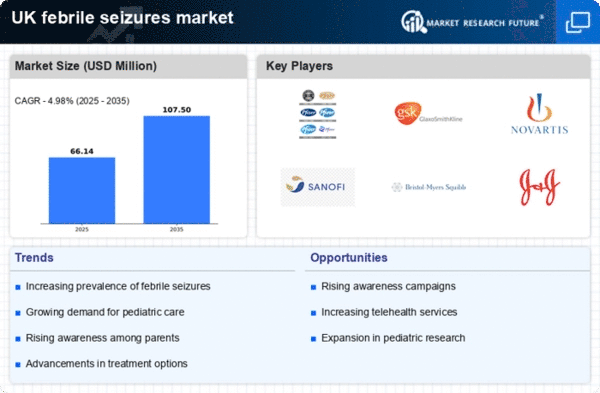
UK Febrile Seizures Market Infographic
Purchase Options

UK Febrile Seizures Market Summary

As per Market Research Future analysis, the UK febrile seizures market size was estimated at 63.0 USD Million in 2024. The UK febrile seizures market is projected to grow from 66.14 USD Million in 2025 to 107.5 USD Million by 2035, exhibiting a compound annual growth rate (CAGR) of 4.9% during the forecast period 2025 - 2035

Key Market Trends & Highlights

The UK febrile seizures market is experiencing a transformative shift driven by increased awareness and technological advancements.

  • The market is witnessing a surge in awareness and education regarding febrile seizures, leading to improved diagnosis and management.
  • Technological advancements in treatment options are enhancing patient outcomes and driving market growth.
  • The focus on personalized care is becoming more pronounced, catering to the unique needs of patients and their families.
  • Key market drivers include the rising incidence of febrile seizures and increased research funding, which are propelling innovation and development.

Market Size & Forecast

2024 Market Size 63.0 (USD Million)
2035 Market Size 107.5 (USD Million)
CAGR (2025 - 2035) 4.98%

Major Players

Pfizer Inc (US), GlaxoSmithKline plc (GB), Novartis AG (CH), Sanofi S.A. (FR), Bristol-Myers Squibb Company (US), Johnson & Johnson (US), AstraZeneca PLC (GB), Eli Lilly and Company (US)

Our Impact
Enabled $4.3B Revenue Impact for Fortune 500 and Leading Multinationals
Partnering with 2000+ Global Organizations Each Year
30K+ Citations by Top-Tier Firms in the Industry

UK Febrile Seizures Market Trends

The febrile seizures market is characterized by a growing awareness of the condition among parents and healthcare professionals. This increased awareness is likely leading to more frequent consultations and diagnoses, which may contribute to a rise in demand for treatment options. Additionally, the emphasis on early intervention and management strategies appears to be influencing the market dynamics. Healthcare providers are increasingly focusing on educating families about the nature of febrile seizures, which could potentially reduce anxiety and improve outcomes for affected children. Moreover, advancements in medical technology and research are fostering innovation in treatment methodologies. New therapeutic approaches, including the development of medications and non-pharmacological interventions, are emerging. This trend suggests a shift towards more personalized care, where treatment plans are tailored to individual patient needs. As the febrile seizures market evolves, it seems poised for growth, driven by both educational initiatives and technological advancements that aim to enhance patient care and management.

Increased Awareness and Education

There is a notable rise in awareness regarding febrile seizures among parents and healthcare providers. Educational campaigns are being implemented to inform families about the condition, which may lead to earlier diagnosis and intervention.

Technological Advancements in Treatment

Innovations in medical technology are paving the way for new treatment options in the febrile seizures market. These advancements may include novel medications and therapies that offer improved management of the condition.

Focus on Personalized Care

The trend towards personalized medicine is becoming more pronounced in the febrile seizures market. Treatment plans are increasingly being tailored to meet the specific needs of individual patients, enhancing overall care.

UK Febrile Seizures Market Drivers

Growing Parental Concerns

The febrile seizures market is influenced by growing parental concerns regarding the health and safety of their children. As awareness of febrile seizures increases, parents are becoming more proactive in seeking information and treatment options. This heightened concern drives demand for healthcare services and educational resources related to febrile seizures. The febrile seizures market is likely to respond by providing more comprehensive support systems, including informational campaigns and access to specialists. This trend may lead to an increase in consultations and treatments, as parents seek reassurance and effective management strategies for their children.

Increased Research Funding

The febrile seizures market is benefiting from increased research funding aimed at understanding the underlying mechanisms and potential treatments for febrile seizures. In the UK, government and private institutions are allocating more resources to research initiatives, which could lead to the development of novel therapies and interventions. This influx of funding is expected to stimulate innovation within the febrile seizures market, fostering collaborations between researchers and pharmaceutical companies. As new findings emerge, they may translate into improved treatment options, ultimately enhancing the quality of care for affected children and their families.

Advancements in Diagnostic Tools

The febrile seizures market is being positively influenced by advancements in diagnostic tools that enhance the accuracy and speed of identifying febrile seizures. Innovative technologies, such as portable EEG devices and advanced imaging techniques, are becoming more accessible in the UK. These tools allow for quicker diagnosis, which is crucial in managing febrile seizures effectively. The integration of these technologies into clinical practice may lead to improved patient outcomes and increased confidence among healthcare providers. Consequently, the febrile seizures market is likely to see a rise in demand for these diagnostic solutions, as they facilitate timely interventions and better management of the condition.

Rising Incidence of Febrile Seizures

The febrile seizures market is experiencing growth due to the rising incidence of febrile seizures among children in the UK. Recent studies indicate that approximately 3-5% of children under the age of 5 experience febrile seizures, which is a significant portion of the pediatric population. This increasing prevalence is likely to drive demand for effective treatment options and healthcare services. As awareness of febrile seizures grows, parents and healthcare providers are more inclined to seek medical intervention, thereby expanding the market. The febrile seizures market is poised to benefit from this trend, as healthcare systems adapt to accommodate the needs of affected families, potentially leading to increased funding and resources allocated to research and treatment options.

Regulatory Support for New Treatments

The febrile seizures market is experiencing a boost from regulatory support for new treatments and therapies. In the UK, regulatory bodies are increasingly prioritizing the approval of innovative medications aimed at managing febrile seizures. This supportive environment encourages pharmaceutical companies to invest in research and development, potentially leading to the introduction of new products in the market. The febrile seizures market stands to gain from this trend, as new treatments may offer improved efficacy and safety profiles, thereby attracting more healthcare providers and patients seeking effective solutions.


Market Segment Insights

By Type: Simple Febrile Seizures (Largest) vs. Recurrent Febrile Seizures (Fastest-Growing)

In the UK febrile seizures market, Simple Febrile Seizures hold the largest share due to their prevalence among children aged 6 months to 5 years. They account for about 75% of all cases, making them the most recognized form of febrile seizures. In contrast, Complex Febrile Seizures and Recurrent Febrile Seizures make up smaller segments, with the latter experiencing an increasing incidence driven by rising awareness and improved diagnosis. Growth trends for the segment are influenced by several factors, including increasing incidence rates and evolving healthcare practices. The focus on early detection and management is contributing to the faster growth of Recurrent Febrile Seizures, which is becoming more recognized as patients frequently seek medical attention. Additionally, advancements in the understanding of febrile seizures through ongoing research and rising healthcare expenditures are supporting the market dynamics.

Simple Febrile Seizures (Dominant) vs. Recurrent Febrile Seizures (Emerging)

Simple Febrile Seizures are characterized by their self-limiting nature and short duration, typically lasting less than 15 minutes. They are relatively benign and do not lead to long-term health issues, which contributes to their dominance in the market. Parents and healthcare providers focus on education and reassurance regarding their benign course. On the other hand, Recurrent Febrile Seizures, while still considered medically manageable, present unique challenges as they occur more than once in a child. This emerging segment is gaining importance as awareness increases, highlighting the need for effective management strategies and targeted treatments.

By Treatment Type: Medication (Largest) vs. Non-Medication (Fastest-Growing)

In the UK febrile seizures market, the treatment type segment is primarily divided into three categories: Medication, Non-Medication, and Emergency Care. Among these, Medication occupies the largest share due to its established efficacy in managing the condition. Non-Medication approaches, while growing in popularity, still represent a smaller portion of the market but are quickly gaining traction as parents and healthcare providers seek alternative methods of treatment. Emergency Care is also significant but tends to be more situational based on severe cases. The growth trends within the treatment type segment are driven by an increasing awareness of febrile seizures and advancements in therapeutic options. Non-Medication treatments are experiencing the fastest growth rate as there is a shift towards integrating lifestyle adjustments and preventive measures alongside traditional medications. This aligns with a broader trend focused on holistic care, making it a key area of development in the UK febrile seizures market.

Medication (Dominant) vs. Non-Medication (Emerging)

Medication acts as the dominant force in the treatment type segment, widely embraced for its proven effectiveness in controlling febrile seizures. This segment includes a range of pharmaceutical options prescribed to manage symptoms and prevent recurrence. Conversely, Non-Medication options are an emerging area characterized by techniques such as behavioral management, parental education, and lifestyle changes. As awareness rises, Non-Medication approaches are increasingly being recognized for their complementary benefits, offering a holistic strategy for managing febrile seizures. While Medication remains the go-to choice for immediate treatment, Non-Medication strategies are rising in acceptance and usage, presenting a balanced view of care strategies in the market.

By Age Group: Infants (Largest) vs. Toddlers (Fastest-Growing)

In the UK febrile seizures market, the distribution among age groups signifies a noteworthy trend. Infants represent the largest share, primarily due to their vulnerability to febrile seizures. The impact on their health drives significant attention from healthcare providers and parents alike. Following closely are toddlers, who are emerging as a notable segment thanks to their increasing recognition among pediatricians and healthcare professionals as demographics continuously evolve. The growth trends for these segments are propelled by growing awareness and early intervention strategies for febrile seizures. Healthcare initiatives and educational programs tailored for parents are expanding, recognizing the needs of toddlers in particular as the fastest-growing segment. Increased research into febrile seizures specific to preschool and school-aged children also contributes to a broader understanding and management strategy within this demographic.

Infants: Dominant vs. Toddlers: Emerging

Infants are undeniably the dominant segment in the UK febrile seizures market. They are particularly susceptible due to the immaturity of their immune systems and the high incidence of viral infections leading to fever. This age group's characteristics include the necessity for heightened medical attention and a plethora of diagnostic tools aimed explicitly at early detection. Conversely, toddlers represent an emerging segment, experiencing rapid growth driven by increased healthcare awareness and the push for educational resources. These children, often impacted by differing febrile conditions, demand tailored management approaches, further establishing their market presence. The unique health challenges faced by toddlers are reshaping clinical practices, highlighting the need for effective communication and support for families in dealing with febrile seizures.

By Diagnosis Method: Electroencephalogram (Largest) vs. Clinical Evaluation (Fastest-Growing)

In the UK febrile seizures market, the diagnosis method segment encompasses diverse techniques such as Electroencephalogram (EEG), Clinical Evaluation, Blood Tests, and Imaging Tests. Among these, the Electroencephalogram holds the largest market share owing to its ability to provide detailed insights into brain activity. Clinical Evaluation, while slightly smaller in share, is rapidly gaining momentum, attributed to its cost-effectiveness and ease of access in clinical settings. The growth trends in this segment are driven by advancements in diagnostic technologies, increased awareness among healthcare professionals, and a surge in febrile seizure cases. The transition towards non-invasive techniques is enhancing the adoption of Clinical Evaluations, making it the fastest-growing method. Moreover, integration of digital health solutions is streamlining the diagnostic process, providing timely and accurate results, thereby boosting overall market growth.

Electroencephalogram (Dominant) vs. Clinical Evaluation (Emerging)

The Electroencephalogram is the dominant diagnostic method in the market, renowned for its ability to accurately monitor and record electrical activity in the brain, which is crucial for diagnosing febrile seizures. Its comprehensive nature allows for better differentiation between seizure types. On the other hand, Clinical Evaluation is emerging as a popular choice among healthcare providers due to its efficiency and lower resource requirements. This method allows for a preliminary assessment based on physical examination and patient history, enabling timely interventions. As the demand for efficient and accessible diagnostic solutions grows, Clinical Evaluation's role in the UK febrile seizures market is anticipated to strengthen significantly, often being the first line of assessment before confirming with more advanced methods like EEG.

Get more detailed insights about UK Febrile Seizures Market

Key Players and Competitive Insights

The febrile seizures market exhibits a dynamic competitive landscape characterized by a blend of innovation, strategic partnerships, and regional expansion. Key players such as Pfizer Inc (US), GlaxoSmithKline plc (GB), and Novartis AG (CH) are actively shaping the market through their distinct operational focuses. Pfizer Inc (US) emphasizes innovation in drug development, particularly in pediatric care, while GlaxoSmithKline plc (GB) is enhancing its portfolio through strategic acquisitions aimed at bolstering its presence in the neurological segment. Novartis AG (CH) appears to be concentrating on expanding its research capabilities, particularly in the realm of genetic therapies, which could potentially redefine treatment paradigms for febrile seizures. Collectively, these strategies contribute to a competitive environment that is increasingly focused on advanced therapeutic solutions and patient-centric approaches.In terms of business tactics, companies are localizing manufacturing and optimizing supply chains to enhance efficiency and responsiveness to market demands. The febrile seizures market is moderately fragmented, with several key players exerting influence over various segments. This fragmentation allows for a diverse range of treatment options, yet it also necessitates that companies differentiate themselves through innovation and strategic positioning.

In October GlaxoSmithKline plc (GB) announced a partnership with a leading digital health company to develop a mobile application aimed at monitoring febrile seizure episodes in children. This strategic move is significant as it not only enhances patient engagement but also aligns with the growing trend of integrating digital health solutions into traditional therapeutic frameworks. Such initiatives may improve treatment adherence and provide valuable data for ongoing research.

In September Novartis AG (CH) launched a new clinical trial focused on a novel gene therapy for pediatric patients experiencing recurrent febrile seizures. This initiative underscores the company's commitment to pioneering advanced treatment options that address unmet medical needs. The potential success of this trial could position Novartis as a leader in innovative therapies within the market, thereby reshaping competitive dynamics.

In August Pfizer Inc (US) expanded its manufacturing capabilities in the UK, specifically targeting the production of pediatric formulations for seizure management. This expansion is indicative of Pfizer's strategic focus on enhancing supply chain reliability and meeting local demand, which may ultimately strengthen its market position. By investing in local production, Pfizer could reduce lead times and improve access to essential medications for families affected by febrile seizures.

As of November current trends in the febrile seizures market are increasingly defined by digitalization, sustainability, and the integration of artificial intelligence in treatment protocols. Strategic alliances are becoming pivotal, as companies collaborate to leverage technological advancements and enhance patient outcomes. Looking ahead, competitive differentiation is likely to evolve from traditional price-based competition towards a focus on innovation, technological integration, and robust supply chain management. This shift may ultimately lead to a more sustainable and patient-centric market landscape.

Key Companies in the UK Febrile Seizures Market include

Industry Developments

In recent months, the UK Febrile Seizures Market has seen significant developments, particularly regarding the research and approval of treatments for febrile seizures, a common issue in young children. Companies such as GlaxoSmithKline and Pfizer have intensified their Research and Development efforts to introduce new therapies aimed at improving treatment outcomes.

Furthermore, AstraZeneca announced in September 2023 a collaboration with a leading research institution to enhance therapeutic approaches for treating febrile seizures, highlighting the trend of partnerships to foster innovation.The market valuation for companies like UCB and Roche has experienced growth, spurred by rising awareness and advances in understanding febrile seizures. Notably, Eli Lilly and Johnson and Johnson have reported increased investments in clinical trials focused on pediatric populations, catering to an expanding demand for effective treatment options. In the last two to three years, market trends indicate a move towards personalized medicine, with a notable emphasis on developing targeted therapies.

Mylan's acquisition of a specialty pharmaceutical firm related to neurological treatments in August 2023 further illustrates the ongoing consolidations within the market, as companies aim to strengthen their positions and address the needs of affected families in the UK.

Future Outlook

UK Febrile Seizures Market Future Outlook

The Febrile Seizures Market is projected to grow at 4.98% CAGR from 2025 to 2035, driven by increasing awareness, advancements in treatment options, and rising healthcare expenditure.

New opportunities lie in:

  • Development of telehealth platforms for remote patient monitoring
  • Investment in innovative seizure detection wearable devices
  • Expansion of educational programs for parents and healthcare providers

By 2035, the market is expected to achieve robust growth, reflecting evolving treatment paradigms and increased patient engagement.

Market Segmentation

UK Febrile Seizures Market Type Outlook

  • Simple Febrile Seizures
  • Complex Febrile Seizures
  • Recurrent Febrile Seizures

UK Febrile Seizures Market Age Group Outlook

  • Infants
  • Toddlers
  • Preschool Children
  • School-Aged Children

UK Febrile Seizures Market Treatment Type Outlook

  • Medication
  • Non-Medication
  • Emergency Care

UK Febrile Seizures Market Diagnosis Method Outlook

  • Electroencephalogram
  • Clinical Evaluation
  • Blood Tests
  • Imaging Tests

Report Scope

MARKET SIZE 2024 63.0(USD Million)
MARKET SIZE 2025 66.14(USD Million)
MARKET SIZE 2035 107.5(USD Million)
COMPOUND ANNUAL GROWTH RATE (CAGR) 4.98% (2025 - 2035)
REPORT COVERAGE Revenue Forecast, Competitive Landscape, Growth Factors, and Trends
BASE YEAR 2024
Market Forecast Period 2025 - 2035
Historical Data 2019 - 2024
Market Forecast Units USD Million
Key Companies Profiled Pfizer Inc (US), GlaxoSmithKline plc (GB), Novartis AG (CH), Sanofi S.A. (FR), Bristol-Myers Squibb Company (US), Johnson & Johnson (US), AstraZeneca PLC (GB), Eli Lilly and Company (US)
Segments Covered Type, Treatment Type, Age Group, Diagnosis Method
Key Market Opportunities Advancements in digital health technologies enhance monitoring and management of febrile seizures.
Key Market Dynamics Rising awareness of febrile seizures drives demand for effective treatment options and improved patient management strategies.
Countries Covered UK
Leave a Comment

FAQs

What is the expected market size of the UK Febrile Seizures Market in 2024?

The UK Febrile Seizures Market is expected to be valued at 63.0 million USD in 2024.

What will be the market size of the UK Febrile Seizures Market by 2035?

By 2035, the market is projected to reach a value of 81.0 million USD.

What is the expected compound annual growth rate (CAGR) for the UK Febrile Seizures Market from 2025 to 2035?

The expected CAGR for the market during the forecast period is 2.311%.

Which type of febrile seizures holds the largest market share in 2024?

In 2024, Simple Febrile Seizures hold the largest market share, valued at 25.0 million USD.

What will be the market size of Complex Febrile Seizures in 2035?

The market size for Complex Febrile Seizures is expected to be 26.0 million USD by 2035.

Who are the key players in the UK Febrile Seizures Market?

Major players in the market include GlaxoSmithKline, Pfizer, UCB, and Roche among others.

What is the projected market value for Recurrent Febrile Seizures in 2024?

The projected market value for Recurrent Febrile Seizures in 2024 is 18.0 million USD.

How does the growth rate for the UK Febrile Seizures Market compare across different segments?

The growth rate varies, with Simple Febrile Seizures expected to increase significantly by 2035.

What challenges could impact the growth of the UK Febrile Seizures Market?

Challenges may include regulatory hurdles and competition among pharmaceutical companies.

What opportunities exist for growth in the UK Febrile Seizures Market through 2035?

Opportunities include advancements in treatment options and increased awareness among healthcare providers.

Download Free Sample

Kindly complete the form below to receive a free sample of this Report

Compare Licence

×
Features License Type
Single User Multiuser License Enterprise User
Price $4,950 $5,950 $7,250
Maximum User Access Limit 1 User Upto 10 Users Unrestricted Access Throughout the Organization
Free Customization
Direct Access to Analyst
Deliverable Format
Platform Access
Discount on Next Purchase 10% 15% 15%
Printable Versions