×
Request Free Sample ×

Kindly complete the form below to receive a free sample of this Report

* Please use a valid business email

Leading companies partner with us for data-driven Insights

clients tt-cursor
Hero Background

UK Dyspepsia Market

ID: MRFR/HC/54504-HCR
200 Pages
Rahul Gotadki
February 2026

UK Dyspepsia Market Research Report: Size, Share, Trend Analysis By Types (Functional Dyspepsia, Non-Ulcer Dyspepsia, Organic Dyspepsia), By Treatment Type (Antacids, Proton Pump Inhibitors, H2-Receptor Antagonists, Prokinetics), By Route of Administration (Oral, Injectable, Topical) and By Distribution Channel (Hospital Pharmacies, Retail Pharmacies, Online Pharmacies) - Growth Outlook & Industry Forecast 2025 To 2035

Share:
Download PDF ×

We do not share your information with anyone. However, we may send you emails based on your report interest from time to time. You may contact us at any time to opt-out.

UK Dyspepsia Market Infographic
Purchase Options

UK Dyspepsia Market Summary

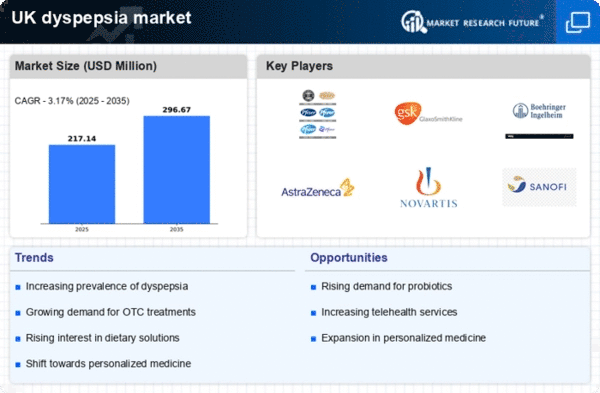
As per Market Research Future analysis, the UK dyspepsia market Size was estimated at 210.47 $ Million in 2024. The UK dyspepsia market is projected to grow from 217.14 $ Million in 2025 to 296.67 $ Million by 2035, exhibiting a compound annual growth rate (CAGR) of 3.1% during the forecast period 2025 - 2035

Key Market Trends & Highlights

The UK dyspepsia market is experiencing a transformative shift towards self-care and digital health solutions.

  • The rise of self-medication is reshaping consumer behavior in the dyspepsia market.
  • Digital health integration is becoming increasingly prevalent, enhancing patient engagement and management.
  • Preventive care is gaining traction, reflecting a broader trend towards proactive health management.
  • The increasing prevalence of dyspepsia and growing awareness of gastrointestinal health are key drivers of market growth.

Market Size & Forecast

2024 Market Size 210.47 (USD Million)
2035 Market Size 296.67 (USD Million)
CAGR (2025 - 2035) 3.17%

Major Players

Pfizer Inc (US), GlaxoSmithKline plc (GB), Boehringer Ingelheim GmbH (DE), AstraZeneca plc (GB), Novartis AG (CH), Sanofi S.A. (FR), Takeda Pharmaceutical Company Limited (JP), AbbVie Inc (US)

Our Impact
Enabled $4.3B Revenue Impact for Fortune 500 and Leading Multinationals
Partnering with 2000+ Global Organizations Each Year
30K+ Citations by Top-Tier Firms in the Industry

UK Dyspepsia Market Trends

The dyspepsia market is currently experiencing notable shifts, driven by evolving consumer preferences and advancements in treatment options. Increasing awareness regarding digestive health has led to a rise in demand for over-the-counter medications and dietary supplements aimed at alleviating symptoms associated with dyspepsia. Furthermore, the growing trend of self-medication among consumers appears to be influencing purchasing behaviors, as individuals seek immediate relief from discomfort. This shift is likely to encourage pharmaceutical companies to innovate and expand their product lines to cater to this emerging consumer base. In addition, the dyspepsia market is witnessing a surge in digital health solutions, including mobile applications and telehealth services. These technologies facilitate better management of symptoms and enhance patient engagement. As healthcare providers increasingly adopt these digital tools, patients may benefit from personalized treatment plans and improved access to healthcare resources. Overall, the landscape of the dyspepsia market is evolving, with a focus on convenience, accessibility, and patient-centered care, which may shape future developments in this sector.

Rise of Self-Medication

There is a growing trend towards self-medication among consumers, as individuals increasingly seek immediate relief from dyspepsia symptoms. This shift is likely to drive demand for over-the-counter medications and dietary supplements, prompting manufacturers to expand their offerings to meet consumer needs.

Digital Health Integration

The integration of digital health solutions is becoming more prevalent in the dyspepsia market. Mobile applications and telehealth services are enhancing patient engagement and enabling better symptom management, which may lead to improved health outcomes and increased consumer satisfaction.

Focus on Preventive Care

An increasing emphasis on preventive care is influencing the dyspepsia market. Consumers are becoming more proactive in managing their digestive health, leading to a rise in demand for products that promote overall well-being and prevent dyspepsia symptoms from occurring.

UK Dyspepsia Market Drivers

Impact of Dietary Changes

Dietary changes among the UK population are influencing the dyspepsia market. The modern diet, characterized by high-fat, processed foods and low fiber intake, is contributing to an increase in dyspeptic symptoms. As individuals become more aware of the link between diet and digestive health, there is a growing demand for dietary supplements and functional foods that promote gastrointestinal well-being. The market for probiotics and digestive enzymes is expanding, as consumers seek natural alternatives to manage dyspepsia. This shift in dietary habits is likely to drive innovation within the dyspepsia market, as manufacturers respond to consumer preferences for healthier options and products that support digestive health.

Increasing Prevalence of Dyspepsia

The rising incidence of dyspepsia in the UK is a crucial driver for the dyspepsia market. Recent studies indicate that approximately 20% of the UK population experiences dyspeptic symptoms at some point in their lives. This growing prevalence is attributed to lifestyle factors such as poor diet, increased stress levels, and sedentary habits. As more individuals seek relief from these symptoms, the demand for dyspepsia treatments is likely to escalate. The dyspepsia market is expected to witness a surge in product offerings, including over-the-counter medications and prescription therapies, to cater to this expanding patient base. Furthermore, healthcare providers are increasingly focusing on diagnosing and managing dyspepsia, which may further stimulate market growth.

Advancements in Pharmaceutical Research

Innovations in pharmaceutical research are significantly impacting the dyspepsia market. The development of new drug formulations and delivery systems is enhancing treatment efficacy and patient compliance. For instance, novel proton pump inhibitors and H2-receptor antagonists are being introduced, which offer improved symptom relief for dyspepsia sufferers. The UK pharmaceutical industry invests heavily in research and development, with expenditures reaching approximately £15 billion annually. This investment fosters the emergence of advanced therapies that address the underlying causes of dyspepsia, rather than merely alleviating symptoms. As a result, patients are likely to benefit from more effective treatment options, thereby driving growth in the dyspepsia market.

Regulatory Support for Treatment Options

Regulatory support for the approval and availability of dyspepsia treatments is a vital driver for the dyspepsia market. The UK regulatory framework facilitates the introduction of new therapies, ensuring that effective treatments reach patients in a timely manner. Recent initiatives aimed at expediting the approval process for innovative medications are likely to enhance market dynamics. Additionally, the National Health Service (NHS) is increasingly recognizing the importance of managing dyspepsia, which may lead to improved access to treatments for patients. This supportive regulatory environment is expected to foster competition among pharmaceutical companies, resulting in a wider array of treatment options for dyspepsia sufferers in the UK.

Growing Awareness of Gastrointestinal Health

There is a notable increase in public awareness regarding gastrointestinal health, which serves as a significant driver for the dyspepsia market. Educational campaigns and health initiatives are promoting understanding of digestive disorders, leading to more individuals seeking medical advice for dyspeptic symptoms. This heightened awareness is reflected in the rising number of consultations with healthcare professionals, as patients become more proactive in managing their health. The dyspepsia market is likely to benefit from this trend, as increased awareness may lead to higher demand for diagnostic services and treatment options. Furthermore, healthcare providers are adapting their approaches to include patient education, which could enhance treatment adherence and overall market growth.


Market Segment Insights

By Type: Functional Dyspepsia (Largest) vs. Non-Ulcer Dyspepsia (Fastest-Growing)

Functional Dyspepsia is the largest segment within the UK dyspepsia market, reflecting a significant share of the overall conditions affecting the population. Non-Ulcer Dyspepsia is experiencing rapid growth, attributed to increasing awareness and improved diagnostic capabilities. Organic Dyspepsia accounts for a smaller portion of the market, primarily consisting of specific identifiable causes. The growth trends in these segments are influenced by lifestyle changes, dietary habits, and heightened awareness among healthcare professionals. Functional Dyspepsia remains dominant due to its prevalence, while Non-Ulcer Dyspepsia benefits from emerging treatments and a greater understanding of its symptoms. The organic type, although less common, is driven by advancements in identifying underlying conditions leading to dyspepsia.

Functional Dyspepsia (Dominant) vs. Non-Ulcer Dyspepsia (Emerging)

Functional Dyspepsia serves as the dominant segment, characterized by chronic symptoms without an underlying organic cause, making it a prevalent condition among patients. This segment is distinguished by various emotional and psychological factors influencing symptom expression, significantly impacting patients' quality of life. On the other hand, Non-Ulcer Dyspepsia is emerging as a critical area of focus due to its fast-growing nature, driven by shifting dietary habits and growing concerns regarding gut health. Both segments reflect a complex interplay of lifestyle and health awareness, with treatment options evolving to meet the needs of affected individuals. Increased research and development in gastrointestinal health are expected to aid in the evolution of management strategies for both segments.

By Treatment Type: Proton Pump Inhibitors (Largest) vs. Antacids (Fastest-Growing)

The distribution of market share in the treatment type segment shows that Proton Pump Inhibitors (PPIs) hold the largest share, catering to a significant portion of patients seeking relief from dyspepsia. Antacids are currently experiencing rapid growth, indicating a shift in consumer preferences towards over-the-counter solutions for immediate relief. This changing landscape highlights the diverse options available to patients and the growing competition among treatment types. In recent years, the growth trends within the treatment type segment have been influenced by factors such as increasing awareness of dyspepsia and its various treatment options. Antacids, in particular, have seen a surge in demand as people seek quick and accessible remedies for their symptoms. Additionally, the rise of telemedicine has enabled patients to consult healthcare providers remotely, reinforcing the appeal of easily obtainable treatments such as PPIs and Antacids. Overall, both established and emerging treatments are adapting to meet the changing needs of consumers.

Antacids (Dominant) vs. Prokinetics (Emerging)

Antacids are positioned as a dominant segment within the treatment type options, delivering quick relief for dyspeptic symptoms. Their availability over-the-counter allows for easy access and immediate use, making them a preferred choice among patients. The popularity of Antacids can be attributed to their effectiveness and established reputation in alleviating discomfort associated with acid-related conditions. Conversely, Prokinetics represent an emerging category, offering potential benefits for patients with more complex dyspeptic disorders. Although they currently hold a smaller market share, Prokinetics are gaining traction due to their ability to enhance gut motility and address underlying causes of dyspeptic symptoms. As the UK dyspepsia market evolves, the balance between these treatment types will shape future consumer choices.

By Route of Administration: Oral (Largest) vs. Injectable (Fastest-Growing)

The UK dyspepsia market exhibits a diverse distribution of routes of administration, with Oral leading the charge due to its ease of use and higher patient compliance. Oral administration accounts for the majority share of the market, driven by a range of pharmaceutical options that cater to patients' preferences. In contrast, Injectable routes, while smaller in market share, are gaining traction as innovation in delivery mechanisms enhances their attractiveness for certain patient demographics. Growth trends indicate that the Injectable segment is rapidly expanding, fueled by advancements in technology and the increasing prevalence of conditions that require more immediate relief. Furthermore, the focus on patient-centric approaches and minimized side effects are propelling this segment forward. As the market evolves, understanding patient preferences and the therapeutic effectiveness of each route will be critical to capturing further growth and market share.

Oral (Dominant) vs. Injectable (Emerging)

Oral administration remains the dominant route in the UK dyspepsia market due to its convenience and the established perception of safety among patients. It allows for self-administration and generally leads to higher adherence rates. Injectable options, categorized as emerging, are gaining popularity due to innovative formulations that ensure rapid action and targeted delivery. This shift towards injectables is encouraged by healthcare professionals seeking better outcomes for patients with complex dyspeptic conditions. Furthermore, industry players are investing in developing user-friendly devices to make injectable therapies more acceptable, which could potentially transform the dynamics within the market.

By Distribution Channel: Retail Pharmacies (Largest) vs. Online Pharmacies (Fastest-Growing)

In the UK dyspepsia market, retail pharmacies hold the largest market share, serving as a critical access point for consumers seeking over-the-counter remedies. Their established presence and accessibility make them a preferred choice among customers. In contrast, online pharmacies have seen a substantial rise in demand, particularly in recent years, appealing to consumers who prefer the convenience of home delivery and often competitive pricing. The growth trends within the distribution channel segment indicate a shift towards online sales, driven by factors such as increased digital engagement and consumer preference for the convenience of home delivery. This trend has been expedited by the pandemic, which has heightened online interactions. Retail pharmacies remain dominant due to their reliability and trustworthiness, yet online pharmacies are rapidly capturing market share, especially among younger demographics looking for efficient and discreet options.

Retail Pharmacies (Dominant) vs. Online Pharmacies (Emerging)

Retail pharmacies are characterized by their widespread presence across urban and rural areas, enabling easy access for consumers. Their established relationships with healthcare providers and strong customer trust contribute to their dominant market position. On the other hand, online pharmacies are emerging as a significant force in the market, leveraging technology to offer a more convenient shopping experience. They cater to tech-savvy consumers who value discreet purchases and home delivery options. The competition between both segments is intensifying, as retail pharmacies adapt by enhancing their digital presence while online pharmacies strive to establish credibility and adhere to regulatory standards, thereby shaping the future landscape of the UK dyspepsia market.

Get more detailed insights about UK Dyspepsia Market

Key Players and Competitive Insights

The dyspepsia market exhibits a competitive landscape characterized by a blend of established pharmaceutical giants and emerging players, driven by increasing consumer awareness and a growing prevalence of gastrointestinal disorders. Key players such as Pfizer Inc (US), GlaxoSmithKline plc (GB), and AstraZeneca plc (GB) are strategically positioned to leverage their extensive research and development capabilities. These companies focus on innovation and the introduction of novel therapies, which collectively enhance their competitive edge. The operational focus on partnerships and collaborations further strengthens their market presence, indicating a trend towards cooperative strategies in addressing the complexities of dyspepsia treatment.In terms of business tactics, companies are increasingly localizing manufacturing to reduce costs and optimize supply chains. The market structure appears moderately fragmented, with a mix of large multinationals and smaller firms vying for market share. This fragmentation allows for diverse product offerings, yet the influence of key players remains substantial, as they set industry standards and drive advancements in treatment options.

In October GlaxoSmithKline plc (GB) announced a strategic partnership with a leading biotechnology firm to develop a new class of dyspepsia medications. This collaboration is expected to enhance GSK's portfolio and accelerate the development of innovative therapies, reflecting a broader trend of leveraging external expertise to bolster internal capabilities. Such partnerships may significantly impact the competitive dynamics by introducing cutting-edge solutions to the market.

In September AstraZeneca plc (GB) launched a digital health initiative aimed at improving patient engagement and adherence to dyspepsia treatments. This initiative utilizes mobile applications and telehealth services to provide personalized care, which could potentially reshape patient experiences and outcomes. By integrating technology into their treatment protocols, AstraZeneca positions itself as a forward-thinking leader in the market, likely enhancing its competitive differentiation.

In November Pfizer Inc (US) expanded its product line by introducing a new over-the-counter treatment for dyspepsia, targeting a broader consumer base. This move not only diversifies Pfizer's offerings but also reflects a strategic shift towards consumer-centric solutions, which may resonate well with patients seeking accessible treatment options. Such expansions indicate a growing trend towards self-care in the dyspepsia market, potentially altering traditional prescription dynamics.

As of November the competitive trends in the dyspepsia market are increasingly defined by digitalization, sustainability, and the integration of artificial intelligence in treatment protocols. Strategic alliances are becoming pivotal in shaping the landscape, as companies collaborate to enhance their technological capabilities and product offerings. Looking ahead, competitive differentiation is likely to evolve from price-based strategies to a focus on innovation, technology integration, and supply chain reliability, underscoring the importance of adaptability in a rapidly changing market.

Key Companies in the UK Dyspepsia Market include

Industry Developments

The UK Dyspepsia Market has witnessed significant developments in recent months, particularly from major pharmaceutical companies such as Pfizer, GlaxoSmithKline, and AstraZeneca. In October 2023, Pfizer announced advancements in their therapies aimed at dyspepsia, showcasing new formulations aimed at enhancing patient adherence. Within the same period, Bayer launched a public awareness campaign to address dyspepsia symptoms, aiming to increase patient engagement and treatment accessibility. 

Additionally, strong performances in stock valuations for companies like GlaxoSmithKline reflect a robust growth trajectory for the dyspepsia segment as organizations prioritize gastrointestinal health in their product pipelines. There were notable mergers in the UK market; for instance, Merck's acquisition of a UK-based biotech firm was made public in September 2023, which is expected to bolster their Research and Development capabilities in digestive health solutions. 

Over the past two to three years, the UK regulatory landscape has evolved, leading to streamlined approval processes for dyspepsia treatments, which is likely contributing to increased market activity and competitiveness within this therapeutic area. The emphasis on innovative solutions to manage dyspepsia underscores a broader trend in the pharmaceutical industry toward patient-centric treatment approaches.

Future Outlook

UK Dyspepsia Market Future Outlook

The Dyspepsia Market is projected to grow at a 3.17% CAGR from 2025 to 2035, driven by increasing prevalence and demand for effective treatments.

New opportunities lie in:

  • Development of personalized treatment plans leveraging AI technology.
  • Expansion of telehealth services for remote patient management.
  • Investment in R&D for novel drug formulations targeting dyspepsia symptoms.

By 2035, the dyspepsia market is expected to achieve robust growth and enhanced treatment options.

Market Segmentation

UK Dyspepsia Market Type Outlook

  • Functional Dyspepsia
  • Non-Ulcer Dyspepsia
  • Organic Dyspepsia

UK Dyspepsia Market Treatment Type Outlook

  • Antacids
  • Proton Pump Inhibitors
  • H2-Receptor Antagonists
  • Prokinetics

UK Dyspepsia Market Distribution Channel Outlook

  • Hospital Pharmacies
  • Retail Pharmacies
  • Online Pharmacies

UK Dyspepsia Market Route of Administration Outlook

  • Oral
  • Injectable
  • Topical

Report Scope

MARKET SIZE 2024 210.47(USD Million)
MARKET SIZE 2025 217.14(USD Million)
MARKET SIZE 2035 296.67(USD Million)
COMPOUND ANNUAL GROWTH RATE (CAGR) 3.17% (2025 - 2035)
REPORT COVERAGE Revenue Forecast, Competitive Landscape, Growth Factors, and Trends
BASE YEAR 2024
Market Forecast Period 2025 - 2035
Historical Data 2019 - 2024
Market Forecast Units USD Million
Key Companies Profiled Pfizer Inc (US), GlaxoSmithKline plc (GB), Boehringer Ingelheim GmbH (DE), AstraZeneca plc (GB), Novartis AG (CH), Sanofi S.A. (FR), Takeda Pharmaceutical Company Limited (JP), AbbVie Inc (US)
Segments Covered Type, Treatment Type, Route of Administration, Distribution Channel
Key Market Opportunities Emerging digital therapeutics and personalized treatment options enhance patient engagement in the dyspepsia market.
Key Market Dynamics Rising consumer awareness drives demand for innovative dyspepsia treatments amid evolving regulatory frameworks in the UK.
Countries Covered UK
Leave a Comment

FAQs

What is the projected market size of the UK Dyspepsia Market in 2024?

The UK Dyspepsia Market is expected to be valued at approximately 210.75 million USD in 2024.

What will the market size be for the UK Dyspepsia Market by 2035?

By 2035, the UK Dyspepsia Market is projected to reach a value of about 382.0 million USD.

What is the expected compound annual growth rate (CAGR) for the UK Dyspepsia Market from 2025 to 2035?

The market is anticipated to grow at a CAGR of 5.556% from 2025 to 2035.

What are the market values for the different types of dyspepsia in 2024?

In 2024, Functional Dyspepsia is valued at 80.0 million USD, Non-Ulcer Dyspepsia at 60.75 million USD, and Organic Dyspepsia at 70.0 million USD.

What will be the market values for these dyspepsia types by 2035?

By 2035, Functional Dyspepsia is expected to reach 145.0 million USD, Non-Ulcer Dyspepsia is projected at 110.0 million USD, and Organic Dyspepsia is anticipated to be valued at 127.0 million USD.

Who are the leading companies in the UK Dyspepsia Market?

Major players in the market include Pfizer, Bayer, GlaxoSmithKline, and AstraZeneca among others.

What factors are driving the growth of the UK Dyspepsia Market?

Growth is driven by rising awareness of dyspepsia and increasing demand for effective treatments and therapies.

What impact do ongoing healthcare trends have on the UK Dyspepsia Market?

Current healthcare trends emphasize preventive care and improved treatment options, positively influencing market growth.

Are there any emerging challenges in the UK Dyspepsia Market?

Challenges include the need for innovation in treatment and competition among established and emerging companies.

How is the regional market for UK Dyspepsia expected to perform by 2035?

The regional market is expected to experience significant growth as demand for dyspepsia management continues to rise through 2035.

Download Free Sample

Kindly complete the form below to receive a free sample of this Report

Compare Licence

×
Features License Type
Single User Multiuser License Enterprise User
Price $4,950 $5,950 $7,250
Maximum User Access Limit 1 User Upto 10 Users Unrestricted Access Throughout the Organization
Free Customization
Direct Access to Analyst
Deliverable Format
Platform Access
Discount on Next Purchase 10% 15% 15%
Printable Versions