×
Request Free Sample ×

Kindly complete the form below to receive a free sample of this Report

* Please use a valid business email

Leading companies partner with us for data-driven Insights

clients tt-cursor
Hero Background

UK Diabetic Retinopathy Market

ID: MRFR/HC/48704-HCR
200 Pages
Rahul Gotadki
February 2026

UK Diabetic Retinopathy Market Research Report: Size, Share, Trend Analysis By Types (Non-Proliferative Diabetic Retinopathy (NPDR), Proliferative Diabetic Retinopathy (PDR), By Treatment (Pharmacological Therapies, Laser Treatment, Surgery), and By End-user (Hospitals & Clinics, Ophthalmology Centers, Research Institutes) - Growth Outlook & Industry Forecast 2025 To 2035

Share:
Download PDF ×

We do not share your information with anyone. However, we may send you emails based on your report interest from time to time. You may contact us at any time to opt-out.

UK Diabetic Retinopathy Market Infographic
Purchase Options

UK Diabetic Retinopathy Market Summary

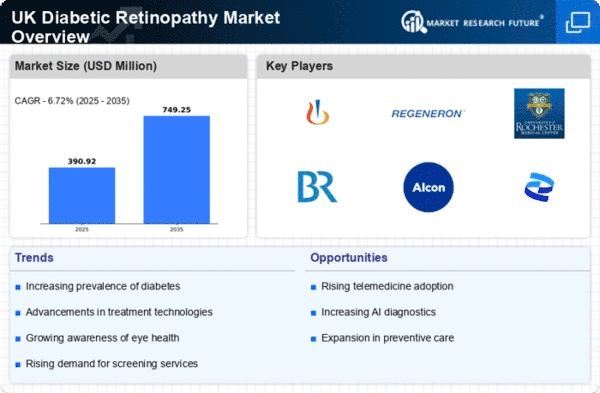
As per Market Research Future analysis, the UK diabetic retinopathy market size was estimated at 366.3 USD Million in 2024. The UK diabetic retinopathy market is projected to grow from 390.92 USD Million in 2025 to 749.25 USD Million by 2035, exhibiting a compound annual growth rate (CAGR) of 6.7% during the forecast period 2025 - 2035

Key Market Trends & Highlights

The UK diabetic retinopathy market is experiencing notable growth driven by technological advancements and increased awareness.

  • Technological advancements in diagnostics are enhancing early detection and treatment of diabetic retinopathy.
  • Increased awareness and screening initiatives are likely contributing to higher diagnosis rates among the population.
  • The integration of telemedicine solutions is facilitating access to care, particularly in remote areas.
  • Rising prevalence of diabetes and government initiatives are major drivers propelling market growth.

Market Size & Forecast

2024 Market Size 366.3 (USD Million)
2035 Market Size 749.25 (USD Million)
CAGR (2025 - 2035) 6.72%

Major Players

Novartis (CH), Regeneron Pharmaceuticals (US), Roche (CH), Bayer (DE), Alcon (CH), Pfizer (US), Santen Pharmaceutical (JP), Horizon Therapeutics (IE), Eyenovia (US)

Our Impact
Enabled $4.3B Revenue Impact for Fortune 500 and Leading Multinationals
Partnering with 2000+ Global Organizations Each Year
30K+ Citations by Top-Tier Firms in the Industry

UK Diabetic Retinopathy Market Trends

The diabetic retinopathy market is currently experiencing notable developments. This growth is driven by an increasing prevalence of diabetes and a growing awareness of eye health among the population. As the number of individuals diagnosed with diabetes rises, the demand for effective screening and treatment options for diabetic retinopathy is likely to expand. This condition, which can lead to vision loss if left untreated, necessitates timely intervention. Consequently, healthcare providers are focusing on enhancing diagnostic technologies and treatment modalities to address this pressing health concern. Furthermore, advancements in telemedicine and digital health solutions are facilitating remote monitoring and management of diabetic retinopathy, thereby improving patient access to care. In addition to technological innovations, the diabetic retinopathy market is influenced by government initiatives aimed at improving eye care services. Public health campaigns are increasingly emphasizing the importance of regular eye examinations for individuals with diabetes. These efforts are expected to foster a culture of proactive health management, potentially leading to earlier detection and treatment of diabetic retinopathy. Moreover, collaborations between healthcare providers and technology companies are likely to yield new solutions that enhance patient outcomes. Overall, the landscape of the diabetic retinopathy market appears to be evolving, with a focus on improving accessibility, efficiency, and effectiveness of care for affected individuals.

Technological Advancements in Diagnostics

Recent innovations in diagnostic tools are transforming the diabetic retinopathy market. Enhanced imaging techniques, such as optical coherence tomography, allow for more accurate detection of retinal changes. These advancements facilitate earlier diagnosis, which is crucial for effective management of the condition.

Increased Awareness and Screening Initiatives

There is a growing emphasis on awareness campaigns aimed at educating the public about the risks of diabetic retinopathy. Screening initiatives are being implemented to encourage regular eye examinations among individuals with diabetes, potentially leading to improved early detection rates.

Integration of Telemedicine Solutions

The integration of telemedicine into the diabetic retinopathy market is gaining traction. Remote monitoring and virtual consultations are becoming more prevalent, enabling patients to receive timely care without the need for in-person visits. This trend may enhance accessibility to essential eye care services.

UK Diabetic Retinopathy Market Drivers

Growing Geriatric Population

The shift towards an aging population in the UK is a significant driver for the diabetic retinopathy market. Older adults are at a higher risk of developing diabetes and its complications, including diabetic retinopathy. As the population aged 65 and over continues to grow, the incidence of diabetes-related eye diseases is likely to increase. This trend necessitates enhanced screening and treatment options to address the specific needs of this demographic. Healthcare providers are expected to adapt their services to cater to the aging population, which may lead to increased investments in the diabetic retinopathy market. Consequently, the market is poised for growth as more elderly patients seek care for diabetes-related eye conditions.

Rising Prevalence of Diabetes

The increasing prevalence of diabetes in the UK is a primary driver for the diabetic retinopathy market. According to recent statistics, approximately 4.9 million people are living with diabetes in the UK, a figure that is projected to rise. This surge in diabetes cases correlates with a heightened risk of developing diabetic retinopathy, a condition that affects the eyes and can lead to vision loss. As the population ages and lifestyle factors contribute to the rise in diabetes, the demand for effective screening and treatment options in the diabetic retinopathy market is likely to expand. Furthermore, the National Health Service (NHS) has been focusing on improving diabetes management, which may further stimulate growth in this market as more patients seek preventive care and treatment for eye-related complications.

Government Initiatives and Funding

Government initiatives aimed at combating diabetes and its complications play a crucial role in the diabetic retinopathy market. The UK government has allocated substantial funding to enhance diabetes care and prevention programs. For instance, the NHS Long Term Plan emphasizes the importance of early detection and management of diabetic retinopathy, which is expected to increase the number of screenings and treatments available. This proactive approach not only raises awareness but also encourages healthcare providers to invest in advanced diagnostic tools and therapies. As a result, the diabetic retinopathy market is likely to benefit from increased accessibility to care and improved patient outcomes, driven by these governmental efforts.

Advancements in Treatment Modalities

Innovations in treatment modalities for diabetic retinopathy are significantly influencing the market landscape. Recent developments in laser therapy, anti-VEGF injections, and surgical interventions have improved patient outcomes and reduced the risk of vision loss. The introduction of new pharmacological agents and minimally invasive procedures has expanded the therapeutic options available to healthcare providers. As these advancements become more widely adopted, the diabetic retinopathy market is expected to experience growth, driven by the demand for effective and less invasive treatment solutions. Moreover, the increasing focus on personalized medicine may lead to tailored therapies that enhance treatment efficacy, further propelling market expansion.

Increased Focus on Preventive Healthcare

There is a growing emphasis on preventive healthcare in the UK, which is positively impacting the diabetic retinopathy market. Public health campaigns aimed at educating individuals about the risks of diabetes and the importance of regular eye examinations are becoming more prevalent. This shift towards prevention encourages individuals to seek early screening and treatment, thereby reducing the incidence of severe complications associated with diabetic retinopathy. Additionally, healthcare providers are increasingly integrating preventive measures into routine care, which may lead to higher demand for diagnostic services and interventions. As awareness continues to rise, the diabetic retinopathy market is likely to benefit from a more proactive approach to managing diabetes and its ocular complications.


Market Segment Insights

By Type: Non-Proliferative Diabetic Retinopathy (Largest) vs. Proliferative Diabetic Retinopathy (Fastest-Growing)

In the UK diabetic retinopathy market, Non-Proliferative Diabetic Retinopathy (NPDR) holds the largest share among the types, reflecting a significant portion of diagnosed cases. NPDR is often recognized as a precursor stage, resulting in a higher prevalence within the population. Conversely, Proliferative Diabetic Retinopathy (PDR), while holding a smaller market share, is gaining traction due to increasing awareness and advancements in treatment options. This shift highlights the evolving landscape of diabetic retinopathy types and their respective market dynamics. The growth of the Proliferative Diabetic Retinopathy segment can largely be attributed to improved screening methodologies and the rising diabetic population in the UK. As diabetes management advances, more patients are being diagnosed at earlier stages, thereby transitioning into PDR at a faster rate. Innovations in therapies and increased funding for eye care initiatives are driving this growth, making it a significant area to watch in the upcoming years.

Non-Proliferative Diabetic Retinopathy (Dominant) vs. Proliferative Diabetic Retinopathy (Emerging)

Non-Proliferative Diabetic Retinopathy (NPDR) is recognized as the dominant segment, characterized by the absence of neovascularization and its status as a common early-stage condition among diabetic patients. It typically encompasses a broader base of patients due to its initial presentation and is critical in early intervention strategies. On the other hand, Proliferative Diabetic Retinopathy (PDR) is marked by the growth of new blood vessels and signifies a more advanced and severe stage of the disease. Though currently smaller in market share, PDR is emerging rapidly, fueled by increasing cases of diabetes and a heightened emphasis on managing serious ocular complications, presenting significant opportunities for treatments and interventions.

By Treatment: Pharmacological Therapies (Largest) vs. Laser Treatment (Fastest-Growing)

In the UK diabetic retinopathy market, the distribution of market share among the treatment segment values indicates that pharmacological therapies are the largest segment, largely due to their widespread acceptance and efficacy in managing the condition. Laser treatments are gaining traction, showcasing a dynamic shift in treatment preferences as clinicians and patients seek less invasive options. The surgical approaches remain vital but usually complement pharmacological or laser options rather than lead the segment. Growth trends within this segment are influenced by advances in drug formulations and laser technology, driving increased adoption rates. The aging population in the UK and rising diabetes prevalence further propel the demand for effective treatment solutions. Additionally, awareness and education initiatives are fostering an environment conducive to innovations, allowing for quicker adoption of newer therapies.

Pharmacological Therapies (Dominant) vs. Laser Treatment (Emerging)

Pharmacological therapies stand out in the treatment segment, characterized by a broad range of formulations, including injections and oral medications, which provide effective management for diabetic retinopathy. This dominant category benefits from extensive clinical research and established guidelines. In contrast, laser treatment is labeled as an emerging option, rapidly gaining recognition due to its minimally invasive nature and efficacy in preserving vision. As technology evolves, techniques such as retinal photocoagulation become more accessible, attracting patient interest and clinician endorsement. Together, these segments reflect a robust spectrum of choices available, ensuring tailored approaches to meet individual patient needs.

By End User: Hospitals & Clinics (Largest) vs. Ophthalmology Centers (Fastest-Growing)

The UK diabetic retinopathy market showcases diverse end user segments, with Hospitals & Clinics holding the dominant market share. This segment is favored due to the extensive resources and advanced technologies available, enabling comprehensive diabetic care and treatment. On the other hand, Ophthalmology Centers have been emerging with a significant share, driven by specialized services tailored for diabetic retinopathy patients, which enhances their appeal in the healthcare landscape. Growth trends indicate a notable expansion of Ophthalmology Centers, attributed to increasing patient awareness about diabetic retinopathy and advancements in diagnostic technologies. This segment's rise is also supported by a growing preference for specialized care among patients, leading to an uptick in the establishment of dedicated eye care facilities. Moreover, Research Institutes continue to play a pivotal role in driving innovation and new treatment options, thus benefiting the overall market ecosystem.

Hospitals & Clinics (Dominant) vs. Research Institutes (Emerging)

In the context of the UK diabetic retinopathy market, Hospitals & Clinics represent the dominant segment, providing extensive treatment services, including surgical interventions, retinal laser therapy, and routine eye examinations. Their established infrastructure, coupled with the ability to engage with a wide patient base, positions them as key players. Conversely, Research Institutes, while classified as emerging, are critical for fostering advancements in treatment methodologies and technologies. Their focus on clinical trials and research projects dedicated to diabetic retinopathy drives innovation, allowing for the introduction of cutting-edge therapies that could eventually reshape patient outcomes.

Get more detailed insights about UK Diabetic Retinopathy Market

Key Players and Competitive Insights

The diabetic retinopathy market exhibits a dynamic competitive landscape, marked by innovation and strategic partnerships among key players. Companies such as Novartis (CH), Regeneron Pharmaceuticals (US), and Roche (CH) are at the forefront, leveraging their extensive research capabilities to develop advanced therapeutic solutions. Novartis (CH) focuses on enhancing its product pipeline through strategic collaborations, while Regeneron Pharmaceuticals (US) emphasizes its commitment to innovation, particularly in gene therapy. Roche (CH) appears to be concentrating on expanding its diagnostic capabilities, which complements its therapeutic offerings, thereby shaping a competitive environment that prioritizes comprehensive patient care.The market structure is moderately fragmented, with several players vying for market share through localized manufacturing and optimized supply chains. This fragmentation allows for a diverse range of products and services, catering to varying patient needs. The collective influence of these key players fosters a competitive atmosphere where innovation and operational efficiency are paramount, driving growth and enhancing patient outcomes.

In October Regeneron Pharmaceuticals (US) announced a significant partnership with a leading technology firm to integrate artificial intelligence (AI) into its drug development processes. This strategic move is likely to enhance the efficiency of clinical trials and accelerate the time-to-market for new therapies, positioning Regeneron as a leader in the application of cutting-edge technology in the diabetic retinopathy space. The integration of AI could potentially streamline operations and improve patient outcomes through more personalized treatment approaches.

In September Novartis (CH) launched a new initiative aimed at increasing access to its diabetic retinopathy treatments in underserved regions of the UK. This initiative underscores the company's commitment to addressing healthcare disparities and expanding its market reach. By focusing on accessibility, Novartis not only enhances its brand reputation but also aligns with broader public health goals, which may lead to increased patient engagement and loyalty.

In August Roche (CH) unveiled a novel diagnostic tool designed to detect early signs of diabetic retinopathy. This innovation is expected to significantly improve early intervention strategies, thereby reducing the incidence of severe vision loss among patients. Roche's focus on diagnostics complements its therapeutic offerings, creating a comprehensive approach to managing diabetic retinopathy that could set a new standard in patient care.

As of November current trends in the diabetic retinopathy market are increasingly defined by digitalization, sustainability, and the integration of AI technologies. Strategic alliances among companies are shaping the competitive landscape, fostering innovation and enhancing operational efficiencies. The shift from price-based competition to a focus on technological advancement and supply chain reliability is evident. Moving forward, competitive differentiation will likely hinge on the ability to innovate and deliver comprehensive, patient-centered solutions.

Key Companies in the UK Diabetic Retinopathy Market include

Industry Developments

Recent developments in the UK Diabetic Retinopathy Market have shown significant growth and emerging trends, particularly with advancements in technology and treatment options. Key players such as Bayer, Novartis, and Johnson & Johnson are enhancing their product portfolios to meet increasing demand. In terms of mergers and acquisitions, there have been notable activities; for instance, in July 2023, Regeneron Pharmaceuticals announced its strategic partnership with Carl Zeiss AG to develop innovative imaging solutions aimed at improving diagnostic capabilities.

Major advancements in the field also include the launch of new devices by Heidelberg Engineering and Topcon, which focus on early detection and monitoring of diabetic retinopathy. Market valuation for companies within the sector has considerably increased, fueled by growing awareness of diabetic eye diseases and government initiatives that aim to bolster diabetes care in the UK. Over the last few years, substantial investments in Research and Development have driven innovation, with companies like Apple exploring the integration of health monitoring features in wearable devices.

As the prevalence of diabetes continues to rise, the UK market remains focused on enhancing accessibility to screening and treatment options for diabetic retinopathy.

Future Outlook

UK Diabetic Retinopathy Market Future Outlook

The Diabetic Retinopathy Market is projected to grow at a 6.72% CAGR from 2025 to 2035, driven by advancements in treatment technologies and increasing prevalence of diabetes.

New opportunities lie in:

  • Development of AI-driven diagnostic tools for early detection
  • Expansion of telemedicine services for remote patient monitoring
  • Investment in innovative drug delivery systems for sustained treatment

By 2035, the market is expected to achieve substantial growth, reflecting evolving treatment paradigms.

Market Segmentation

UK Diabetic Retinopathy Market Type Outlook

  • Non-Proliferative Diabetic Retinopathy (NPDR)
  • Proliferative Diabetic Retinopathy (PDR)

UK Diabetic Retinopathy Market End User Outlook

  • Hospitals & Clinics
  • Ophthalmology Centers
  • Research Institutes

UK Diabetic Retinopathy Market Treatment Outlook

  • Pharmacological Therapies
  • Laser Treatment
  • Surgery

Report Scope

MARKET SIZE 2024 366.3(USD Million)
MARKET SIZE 2025 390.92(USD Million)
MARKET SIZE 2035 749.25(USD Million)
COMPOUND ANNUAL GROWTH RATE (CAGR) 6.72% (2025 - 2035)
REPORT COVERAGE Revenue Forecast, Competitive Landscape, Growth Factors, and Trends
BASE YEAR 2024
Market Forecast Period 2025 - 2035
Historical Data 2019 - 2024
Market Forecast Units USD Million
Key Companies Profiled Novartis (CH), Regeneron Pharmaceuticals (US), Roche (CH), Bayer (DE), Alcon (CH), Pfizer (US), Santen Pharmaceutical (JP), Horizon Therapeutics (IE), Eyenovia (US)
Segments Covered Type, Treatment, End User
Key Market Opportunities Advancements in telemedicine and AI-driven diagnostics enhance access to diabetic retinopathy screening and treatment.
Key Market Dynamics Rising demand for innovative therapies drives competition and regulatory scrutiny in the diabetic retinopathy market.
Countries Covered UK
Leave a Comment

FAQs

What is the expected market size of the UK Diabetic Retinopathy Market in 2024?

The UK Diabetic Retinopathy Market is expected to be valued at 339.38 million USD in 2024.

What is the projected market size of the UK Diabetic Retinopathy Market by 2035?

By 2035, the UK Diabetic Retinopathy Market is projected to reach a value of 679.88 million USD.

What is the expected CAGR for the UK Diabetic Retinopathy Market from 2025 to 2035?

The expected CAGR for the UK Diabetic Retinopathy Market from 2025 to 2035 is 6.52 percent.

What will be the market value for Non-Proliferative Diabetic Retinopathy (NPDR) in 2035?

The market value for Non-Proliferative Diabetic Retinopathy (NPDR) is expected to be 289.88 million USD in 2035.

How much is the market for Proliferative Diabetic Retinopathy (PDR) expected to be valued in 2024?

The market for Proliferative Diabetic Retinopathy (PDR) is expected to be valued at 204.0 million USD in 2024.

Who are the key players in the UK Diabetic Retinopathy Market?

Key players in the UK Diabetic Retinopathy Market include Bayer, Novartis, Johnson & Johnson, and Roche.

What is driving the growth of the UK Diabetic Retinopathy Market?

The growth of the UK Diabetic Retinopathy Market is driven by increasing diabetes prevalence and advancements in ocular treatment technology.

What challenges does the UK Diabetic Retinopathy Market face?

The UK Diabetic Retinopathy Market faces challenges such as high treatment costs and the need for specialized healthcare professionals.

What key trends are emerging in the UK Diabetic Retinopathy Market?

Emerging trends in the UK Diabetic Retinopathy Market include the integration of technology in screening and the rise of telemedicine services.

How will the UK Diabetic Retinopathy Market evolve in the coming years?

The UK Diabetic Retinopathy Market is expected to evolve with increased investment in research and innovation for better treatment options.

Download Free Sample

Kindly complete the form below to receive a free sample of this Report

Compare Licence

×
Features License Type
Single User Multiuser License Enterprise User
Price $4,950 $5,950 $7,250
Maximum User Access Limit 1 User Upto 10 Users Unrestricted Access Throughout the Organization
Free Customization
Direct Access to Analyst
Deliverable Format
Platform Access
Discount on Next Purchase 10% 15% 15%
Printable Versions