×
Request Free Sample ×

Kindly complete the form below to receive a free sample of this Report

* Please use a valid business email

Leading companies partner with us for data-driven Insights

clients tt-cursor
Hero Background

UK Deep Vein Thrombosis Treatment Market

ID: MRFR/HC/50506-HCR
200 Pages
Rahul Gotadki
February 2026

UK Deep Vein Thrombosis Treatment Market Research Report By Drug Class (Anticoagulants, Heparin, Others), By Treatment (Surgery, Drugs, Others), By Mode Of Administration (Injectable, Oral, Others), By Distribution Channel (Hospital Pharmacies, Retail Pharmacies, Online Pharmacies) and By End-User (Hospitals, Homecare, Specialty Clinics, Others) -Forecast to 2035

Share:
Download PDF ×

We do not share your information with anyone. However, we may send you emails based on your report interest from time to time. You may contact us at any time to opt-out.

UK Deep Vein Thrombosis Treatment Market Infographic
Purchase Options

UK Deep Vein Thrombosis Treatment Market Summary

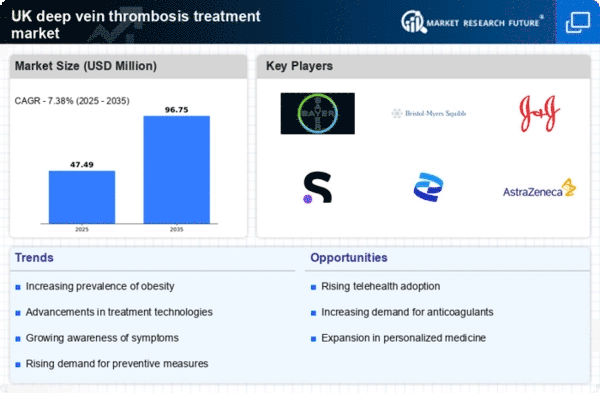
As per Market Research Future analysis, the UK deep vein-thrombosis-treatment market Size was estimated at $44.23 Million in 2024. The UK deep vein-thrombosis-treatment market is projected to grow from 47.49 $ Million in 2025 to 96.75 $ Million by 2035, exhibiting a compound annual growth rate (CAGR) of 7.3% during the forecast period 2025 - 2035

Key Market Trends & Highlights

The UK deep vein-thrombosis-treatment market is experiencing a transformative shift driven by innovation and patient-focused strategies.

  • The emergence of novel anticoagulants is reshaping treatment protocols and enhancing patient outcomes.
  • Technological advancements in diagnostics are facilitating earlier detection and intervention for deep vein thrombosis.
  • The focus on patient-centric care is driving healthcare providers to tailor treatments to individual needs and preferences.
  • Increasing prevalence of risk factors and rising awareness and education are key drivers propelling market growth.

Market Size & Forecast

2024 Market Size 44.23 (USD Million)
2035 Market Size 96.75 (USD Million)
CAGR (2025 - 2035) 7.38%

Major Players

Bayer AG (DE), Bristol-Myers Squibb Company (US), Johnson & Johnson (US), Sanofi (FR), Pfizer Inc. (US), AstraZeneca PLC (GB), Roche Holding AG (CH), Novartis AG (CH)

Our Impact
Enabled $4.3B Revenue Impact for Fortune 500 and Leading Multinationals
Partnering with 2000+ Global Organizations Each Year
30K+ Citations by Top-Tier Firms in the Industry

UK Deep Vein Thrombosis Treatment Market Trends

The deep vein-thrombosis-treatment market is experiencing notable developments due to increased awareness of the condition and its potential complications. Healthcare providers are focusing on improving diagnostic methods and treatment protocols, which may enhance patient outcomes. The rise in sedentary lifestyles and an aging population appear to contribute to a higher incidence of deep vein thrombosis, prompting a greater demand for effective treatment options. Furthermore, advancements in medical technology, such as the introduction of novel anticoagulants and minimally invasive procedures, are likely to reshape the treatment landscape. In addition, the regulatory environment is evolving, with authorities emphasizing the need for safety and efficacy in treatment options. This shift may lead to increased scrutiny of existing therapies and the introduction of new guidelines. As healthcare systems adapt to these changes, The deep vein-thrombosis-treatment market is expected to grow as stakeholders explore innovative solutions to meet patient needs. The interplay between technological advancements and regulatory frameworks will likely define the future trajectory of this market.

Emergence of Novel Anticoagulants

The introduction of new anticoagulant medications is transforming treatment approaches. These drugs offer advantages such as improved safety profiles and ease of use, which may enhance patient adherence. As healthcare providers become more familiar with these options, their adoption is expected to rise.

Technological Advancements in Diagnostics

Innovations in diagnostic tools are facilitating earlier detection of deep vein thrombosis. Enhanced imaging techniques and point-of-care testing are likely to improve diagnostic accuracy, enabling timely interventions and better patient management.

Focus on Patient-Centric Care

There is a growing emphasis on personalized treatment plans tailored to individual patient needs. This trend reflects a broader shift towards patient-centric care, where treatment decisions are made collaboratively, potentially leading to improved outcomes and satisfaction.

UK Deep Vein Thrombosis Treatment Market Drivers

Rising Awareness and Education

There is a growing awareness regarding deep vein thrombosis among both healthcare professionals and the general public in the UK. Educational campaigns aimed at highlighting the symptoms and risks associated with DVT are becoming more prevalent. This increased awareness is likely to lead to earlier diagnosis and treatment, which could positively impact the deep vein-thrombosis-treatment market. According to surveys, nearly 60% of the population now recognizes the importance of seeking medical attention for symptoms related to DVT. As awareness continues to rise, it is anticipated that more individuals will seek treatment, thereby driving market growth and encouraging healthcare providers to invest in better treatment options.

Government Initiatives and Funding

Government initiatives aimed at improving healthcare access and funding for DVT treatments are likely to influence the deep vein-thrombosis-treatment market positively. The UK government has been actively investing in healthcare infrastructure, which includes funding for research and development of new treatment options. Recent allocations indicate an increase in funding for vascular health programs, which may enhance the availability of advanced DVT treatments. Such initiatives not only improve patient access to necessary therapies but also encourage innovation within the market. As a result, the deep vein-thrombosis-treatment market may experience growth driven by enhanced healthcare policies and increased financial support for DVT management.

Advancements in Treatment Modalities

Innovations in treatment modalities for deep vein thrombosis are likely to propel the deep vein-thrombosis-treatment market forward. The introduction of new anticoagulants and minimally invasive procedures, such as catheter-directed thrombolysis, has transformed the management of DVT. Recent data indicates that the market for anticoagulants is projected to reach £2 billion by 2026, reflecting a robust growth trajectory. These advancements not only enhance patient outcomes but also reduce the risk of complications associated with traditional treatments. As healthcare professionals increasingly adopt these novel therapies, the deep vein-thrombosis-treatment market is poised for significant growth, driven by improved efficacy and safety profiles of new treatment options.

Increasing Prevalence of Risk Factors

The rising incidence of conditions such as obesity, diabetes, and sedentary lifestyles in the UK appears to be a significant driver for the deep vein-thrombosis-treatment market. According to recent health statistics, approximately 28% of adults in the UK are classified as obese, which is a known risk factor for deep vein thrombosis (DVT). This growing prevalence of risk factors is likely to lead to an increase in DVT cases, thereby driving demand for effective treatment options. Furthermore, the aging population, with a notable increase in individuals over 65 years, also contributes to the rising number of DVT cases. As healthcare providers focus on managing these risk factors, the deep vein-thrombosis-treatment market is expected to expand, with a greater emphasis on preventive measures and treatment protocols.

Integration of Telemedicine in Treatment

The integration of telemedicine into the management of deep vein thrombosis is emerging as a key driver for the deep vein-thrombosis-treatment market. With the rise of digital health solutions, patients can now receive consultations and follow-up care remotely, which is particularly beneficial for those with mobility issues or those living in remote areas. This shift towards telehealth services is likely to enhance patient engagement and adherence to treatment protocols. Recent studies suggest that telemedicine can improve patient outcomes by facilitating timely interventions. As telehealth continues to gain traction, it is expected to play a crucial role in expanding the reach of DVT treatments, thereby contributing to the growth of the market.


Market Segment Insights

By Drug Class: Anticoagulants (Largest) vs. Heparin (Fastest-Growing)

In the UK deep vein-thrombosis-treatment market, the drug class segment is primarily dominated by Anticoagulants, which hold a significant share. Following closely, Heparin represents a vital portion of the market, while the Others category captures a smaller segment of users. Overall, these distributions reflect the current therapeutic preferences and demand dynamics in the treatment of deep vein thrombosis. Growth trends in the drug class segment indicate a robust expansion, particularly for Heparin, which is being recognized as the fastest-growing segment due to its effectiveness in acute scenarios. The drivers for this growth include increasing awareness of deep vein thrombosis and advancements in treatment protocols that favor swift interventions using Heparin. Additionally, Anticoagulants maintain their status as a staple treatment option due to their established efficacy and patient compliance.

Anticoagulants (Dominant) vs. Heparin (Emerging)

Anticoagulants remain the dominant force in the UK deep vein-thrombosis-treatment market. Their long-standing presence is bolstered by proven effectiveness and a well-understood safety profile, making them the first-line choice for many practitioners. Conversely, Heparin is carving a niche as an emerging option, especially in acute care settings where rapid action is crucial. Both drug classes feature heightened patient education initiatives to address compliance issues, leading to improved therapeutic outcomes. As clinical data continues to support their respective benefits, Anticoagulants are expected to continue reigning supreme, while Heparin is set to see increasing adoption in hospital settings, driven by its speed of action.

By Treatment: Drugs (Largest) vs. Surgery (Fastest-Growing)

In the UK deep vein-thrombosis-treatment market, the treatment segment is primarily dominated by drugs, which hold the largest share due to their widespread acceptance and effectiveness. These pharmaceutical solutions have established a significant presence among healthcare providers for managing DVT, contributing to their market leadership. Meanwhile, surgical options, although they currently represent a smaller portion of the market, are rapidly gaining traction, indicating a shift in treatment approaches as patients seek more definitive solutions. The growth trends in the UK deep vein-thrombosis-treatment market show a noticeable increase in the adoption of surgical interventions, driven by advancements in technique and technology. As more patients and healthcare professionals recognize the necessity of aggressive treatment of DVT, surgical methods are becoming more accessible and preferred. Additionally, the growing awareness of DVT complications and the emphasis on comprehensive care bridges the gap toward increased surgical interventions, making it the fastest-growing segment within this market.

Drugs (Dominant) vs. Surgery (Emerging)

In the UK deep vein-thrombosis-treatment market, drugs have solidified their position as the dominant treatment option, attributed to their proven efficacy, ease of administration, and patient acceptance. These pharmaceutical products, ranging from anticoagulants to thrombolytics, provide quick relief and are typically the first line of defense against DVT. On the other hand, surgical options are emerging as a significant alternative, primarily for those patients who do not respond adequately to pharmacological treatments. Advances in minimally invasive surgical techniques have made these procedures more appealing and less intimidating, allowing for a gradual increase in their usage among clinicians. The evolving landscape of treatment options is indicative of a market that is adapting to the evolving needs and preferences of patients.

By Mode Of Administration: Injectable (Largest) vs. Oral (Fastest-Growing)

The mode of administration segment in the UK deep vein-thrombosis-treatment market is characterized by a strong preference for injectables, which hold a significant share due to their immediate therapeutic effects and targeted delivery. The injectable segment offers various options, including anticoagulant therapies that have been widely adopted across healthcare settings, making them the go-to choice for healthcare providers and patients alike. In contrast, the oral administration segment, while smaller, is rapidly growing as advancements in oral anticoagulants make them increasingly appealing due to their ease of use, convenience, and enhanced compliance among patients. Growth trends in this segment are driven by factors such as the continuous development of novel oral agents, which offer competitive alternatives to traditional injectable therapies. Furthermore, the aging population and the rising prevalence of risk factors associated with deep vein thrombosis have boosted demand for both injectable and oral treatments. The shift towards minimally invasive treatment options and patient-centric care paradigms has also contributed to the expansion of the market, with an emphasis on patient preferences and convenience shaping the trajectory of the injectable and oral drug strategies.

Injectable (Dominant) vs. Oral (Emerging)

Injectable therapies currently stand as the dominant mode of administration in the UK deep vein-thrombosis-treatment market, primarily due to their established efficacy and immediate effect in clinical scenarios. These therapies are often preferred in acute cases where rapid action is crucial. On the other hand, the oral segment has emerged as a viable alternative, driven by innovations in drug formulations that offer similar efficacy with the added benefit of ease of administration. Patients favor oral medications for their convenience, leading to improved adherence and outcomes. As such, the market is witnessing a dynamic shift with injectables maintaining a stronghold while oral treatments gain traction as an emerging choice among healthcare providers and patients.

By Distribution Channel: Hospital Pharmacies (Largest) vs. Online Pharmacies (Fastest-Growing)

In the UK deep vein-thrombosis-treatment market, the distribution channels exhibit distinct market share dynamics. Hospital pharmacies hold the largest share, benefiting from their integral role in providing immediate access to treatments and medication management within clinical settings. Conversely, online pharmacies are making significant inroads, showcasing a growing preference for convenience and accessibility among patients seeking thrombosis treatment solutions. The growth trajectory for these distribution channels is influenced by several factors, including an increasing emphasis on patient-centered care and the rise of digital health platforms. Online pharmacies are particularly thriving, driven by the convenience they offer in prescription fulfillment and medication delivery. Meanwhile, hospital pharmacies remain essential in acute care settings, emphasizing the need for robust pharmaceutical services in managing complex patient needs.

Hospital Pharmacies (Dominant) vs. Online Pharmacies (Emerging)

Hospital pharmacies are characterized by their pivotal role in the treatment landscape, often acting as the primary source of high-value medications in acute care facilities. They are instrumental in personalized patient care, offering tailored medication therapies and ensuring adherence to treatment protocols. The dominance of hospital pharmacies in the UK deep vein-thrombosis-treatment market is reflected in their ability to provide immediate intervention for patients requiring urgent care. In contrast, online pharmacies represent an emerging segment, harnessing digital platforms to enhance the accessibility of thrombosis treatments. These pharmacies attract patients with their user-friendly interfaces and home delivery services, which cater to the modern consumer's demand for convenience in managing health conditions.

By End-User: Hospitals (Largest) vs. Homecare (Fastest-Growing)

In the UK deep vein-thrombosis-treatment market, the distribution of market share among different end-users showcases hospitals as the dominant segment, accounting for a significant proportion of treatment procedures. Homecare services are gaining traction, presenting a dynamic shift in patient preferences towards convenience and personalized care, while specialty clinics and others hold smaller shares of the market. Growth trends indicate a shift in focus towards homecare solutions, driven by factors such as advancements in remote monitoring technologies and a growing emphasis on patient-centric care approaches. Hospitals continue to be integral for complex cases, but the demand for homecare options is escalating, reflecting a changing landscape in treatment settings where patients seek more flexible and accessible care solutions.

Hospitals (Dominant) vs. Homecare (Emerging)

Hospitals remain the dominant end-user in the UK deep vein-thrombosis-treatment market, primarily due to their capability to provide comprehensive management for complex cases and their resource availability. They are equipped with advanced medical technologies and specialists to address severe presentations of deep vein thrombosis. On the other hand, homecare is an emerging segment, driven by the increasing preference for personalized care at home and the ability to offer convenient follow-up treatments. Homecare services leverage technology for remote patient monitoring, enhancing adherence to treatment protocols while ensuring comfort. Together, these segments reflect a diverse approach to managing deep vein thrombosis treatments, catering to varying patient needs.

Get more detailed insights about UK Deep Vein Thrombosis Treatment Market

Key Players and Competitive Insights

The deep vein-thrombosis-treatment market is characterized by a competitive landscape that is increasingly shaped by innovation, strategic partnerships, and a focus on patient-centric solutions. Key players such as Bayer AG (DE), Bristol-Myers Squibb Company (US), and Johnson & Johnson (US) are actively engaged in enhancing their product offerings and expanding their market presence. Bayer AG (DE) has positioned itself as a leader in anticoagulant therapies, emphasizing research and development to introduce novel treatments. Meanwhile, Bristol-Myers Squibb Company (US) focuses on leveraging its extensive portfolio to integrate new therapies that address unmet medical needs, thereby enhancing its competitive edge. Johnson & Johnson (US) is also investing in digital health solutions, which reflects a broader trend towards technology integration in treatment protocols.The market structure appears moderately fragmented, with several players vying for market share through localized manufacturing and optimized supply chains. Companies are increasingly localizing their production to reduce costs and improve responsiveness to market demands. This strategy not only enhances operational efficiency but also allows for better alignment with regulatory requirements in the UK. The collective influence of these key players fosters a dynamic environment where innovation and strategic positioning are paramount.

In October Bayer AG (DE) announced a collaboration with a leading technology firm to develop a digital platform aimed at improving patient adherence to anticoagulant therapies. This strategic move is likely to enhance Bayer's market position by integrating technology into treatment regimens, thereby addressing a critical aspect of patient care. The collaboration underscores the importance of digital health solutions in the current treatment landscape, potentially setting a new standard for patient engagement.

In September Bristol-Myers Squibb Company (US) launched a new clinical trial for a novel anticoagulant that targets specific patient populations with a high risk of deep vein thrombosis. This initiative not only demonstrates the company's commitment to addressing niche markets but also positions it to capture a larger share of the market by offering tailored solutions. The trial's outcomes could significantly influence treatment protocols and establish Bristol-Myers as a frontrunner in innovative therapies.

In August Johnson & Johnson (US) expanded its partnership with a digital health startup to enhance its telehealth services for patients undergoing treatment for deep vein thrombosis. This strategic action reflects a growing trend towards integrating telemedicine into traditional treatment pathways, potentially improving patient outcomes and satisfaction. By leveraging technology, Johnson & Johnson is likely to strengthen its competitive position in a market that increasingly values accessibility and convenience.

As of November the competitive trends in the deep vein-thrombosis-treatment market are heavily influenced by digitalization, sustainability, and the integration of artificial intelligence. Strategic alliances are becoming more prevalent, as companies recognize the need to collaborate to enhance their technological capabilities and market reach. The shift from price-based competition to a focus on innovation and supply chain reliability is evident, suggesting that future competitive differentiation will hinge on the ability to deliver advanced, patient-centric solutions that leverage technology effectively.

Key Companies in the UK Deep Vein Thrombosis Treatment Market include

Industry Developments

Recent developments in the UK Deep Vein Thrombosis Treatment Market have highlighted significant advancements and ongoing changes among key players. Companies such as Merck, Sanofi, and Bayer continue to play vital roles in the development of innovative treatment options. In recent months, the market has observed substantial growth, with companies increasingly investing in Research and Development initiatives to enhance therapeutic effectiveness and patient outcomes. In March 2023, it was announced that Pfizer acquired a promising biotech firm focusing on vascular diseases, strengthening its portfolio in the treatment of Deep Vein Thrombosis.

Furthermore, Roche launched a new anticoagulant therapy designed specifically for patients at risk of venous thromboembolism, showcasing its commitment to addressing this health issue. Additionally, the rise in awareness initiatives around Deep Vein Thrombosis in the UK has contributed to an increase in diagnosis and treatment rates, with both public health authorities and private organizations pushing for better patient education and resources. This focus not only aids in improving patient health outcomes but also propels market growth as more effective treatment options emerge.

The UK health system's strategic objectives align with ongoing efforts within the pharmaceutical industry to tackle this pressing health concern effectively.

Future Outlook

UK Deep Vein Thrombosis Treatment Market Future Outlook

The Deep Vein Thrombosis Treatment Market is projected to grow at a 7.38% CAGR from 2025 to 2035, driven by advancements in treatment technologies and increasing awareness.

New opportunities lie in:

  • Development of telehealth platforms for remote patient monitoring
  • Investment in AI-driven diagnostic tools for early detection
  • Expansion of outpatient treatment facilities to enhance accessibility

By 2035, the market is expected to achieve substantial growth, reflecting evolving treatment paradigms.

Market Segmentation

UK Deep Vein Thrombosis Treatment Market End-User Outlook

  • Hospitals
  • Homecare
  • Specialty Clinics
  • Others

UK Deep Vein Thrombosis Treatment Market Treatment Outlook

  • Surgery
  • Drugs
  • Others

UK Deep Vein Thrombosis Treatment Market Drug Class Outlook

  • Anticoagulants
  • Heparin
  • Others

UK Deep Vein Thrombosis Treatment Market Distribution Channel Outlook

  • Hospital Pharmacies
  • Retail Pharmacies
  • Online Pharmacies

UK Deep Vein Thrombosis Treatment Market Mode Of Administration Outlook

  • Injectable
  • Oral
  • Others

Report Scope

MARKET SIZE 2024 44.23(USD Million)
MARKET SIZE 2025 47.49(USD Million)
MARKET SIZE 2035 96.75(USD Million)
COMPOUND ANNUAL GROWTH RATE (CAGR) 7.38% (2025 - 2035)
REPORT COVERAGE Revenue Forecast, Competitive Landscape, Growth Factors, and Trends
BASE YEAR 2024
Market Forecast Period 2025 - 2035
Historical Data 2019 - 2024
Market Forecast Units USD Million
Key Companies Profiled Bayer AG (DE), Bristol-Myers Squibb Company (US), Johnson & Johnson (US), Sanofi (FR), Pfizer Inc. (US), AstraZeneca PLC (GB), Roche Holding AG (CH), Novartis AG (CH)
Segments Covered Drug Class, Treatment, Mode Of Administration, Distribution Channel, End-User
Key Market Opportunities Advancements in minimally invasive therapies enhance treatment options in the deep vein-thrombosis-treatment market.
Key Market Dynamics Rising demand for innovative therapies drives competition and regulatory scrutiny in the deep vein-thrombosis-treatment market.
Countries Covered UK
Leave a Comment

FAQs

What is the expected market size of the UK Deep Vein Thrombosis Treatment Market in 2024?

The expected market size of the UK Deep Vein Thrombosis Treatment Market in 2024 is valued at 44.1 million USD.

What is the projected market size of the UK Deep Vein Thrombosis Treatment Market by 2035?

The projected market size of the UK Deep Vein Thrombosis Treatment Market by 2035 is 94.0 million USD.

What is the expected compound annual growth rate (CAGR) for the UK Deep Vein Thrombosis Treatment Market from 2025 to 2035?

The expected CAGR for the UK Deep Vein Thrombosis Treatment Market from 2025 to 2035 is 7.123%.

What are the primary drug classes in the UK Deep Vein Thrombosis Treatment Market?

The primary drug classes in the UK Deep Vein Thrombosis Treatment Market include Anticoagulants, Heparin, and Others.

How much is the Anticoagulants segment valued at in 2024 and what is its projected value by 2035?

The Anticoagulants segment is valued at 22.0 million USD in 2024 and is projected to reach 47.0 million USD by 2035.

What is the current value of the Heparin segment in 2024 and its expected value by 2035?

The Heparin segment is valued at 15.0 million USD in 2024 and is expected to grow to 30.0 million USD by 2035.

What is the 2024 value of the Others segment and its projected growth until 2035?

The Others segment is valued at 7.1 million USD in 2024 and is projected to increase to 17.0 million USD by 2035.

Which companies are considered major players in the UK Deep Vein Thrombosis Treatment Market?

Major players in the UK Deep Vein Thrombosis Treatment Market include Merck, Sanofi, Bayer, and Takeda among others.

What are the key growth drivers for the UK Deep Vein Thrombosis Treatment Market?

Key growth drivers for the UK Deep Vein Thrombosis Treatment Market include increasing awareness, advancements in treatment options, and rising cases of DVT.

Are there any emerging trends in the UK Deep Vein Thrombosis Treatment Market?

Emerging trends in the UK Deep Vein Thrombosis Treatment Market involve innovative drug development and increased focus on patient-specific treatments.

Download Free Sample

Kindly complete the form below to receive a free sample of this Report

Compare Licence

×
Features License Type
Single User Multiuser License Enterprise User
Price $4,950 $5,950 $7,250
Maximum User Access Limit 1 User Upto 10 Users Unrestricted Access Throughout the Organization
Free Customization
Direct Access to Analyst
Deliverable Format
Platform Access
Discount on Next Purchase 10% 15% 15%
Printable Versions