×
Request Free Sample ×

Kindly complete the form below to receive a free sample of this Report

* Please use a valid business email

Leading companies partner with us for data-driven Insights

clients tt-cursor
Hero Background

UK Antibiotic Resistance Market

ID: MRFR/MED/49527-HCR
200 Pages
Rahul Gotadki
February 2026

UK Antibiotic Resistance Market Research Report By Drug Class (Oxazolidinones, Lipoglycopeptides, Tetracyclines, Cephalosporins, Combination Therapies), By Disease (Complicated Urinary Tract Infection, Blood Stream Infections, Complicated Intra-Abdominal Infections, Clostridium Difficile Infections, Acute Bacterial Skin, Skin Structure Infections), By Pathogen (Staphylococcus Aureus, Streptococcus Pneumoniae, Acinetobacter, Enterococcus, Hemophilus Influenzae) and By End User (Hospitals & Clinics, Research Organizations) -Forecast to 2035

Share:
Download PDF ×

We do not share your information with anyone. However, we may send you emails based on your report interest from time to time. You may contact us at any time to opt-out.

UK Antibiotic Resistance Market Infographic
Purchase Options

UK Antibiotic Resistance Market Summary

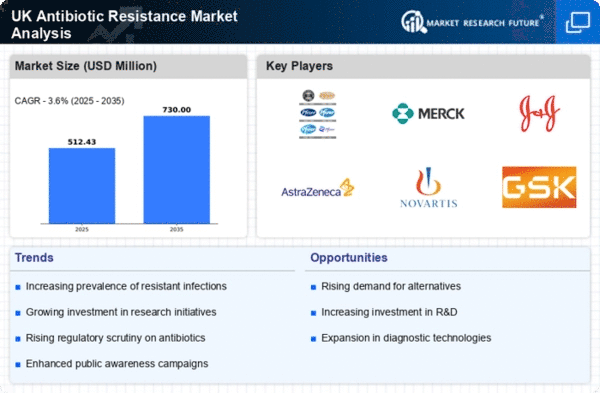
As per Market Research Future analysis, the UK antibiotic resistance market size was estimated at 494.62 USD Million in 2024. The UK antibiotic resistance market is projected to grow from 512.43 USD Million in 2025 to 730.0 USD Million by 2035, exhibiting a compound annual growth rate (CAGR) of 3% during the forecast period 2025 - 2035

Key Market Trends & Highlights

The UK antibiotic resistance market is experiencing a transformative shift driven by increased investment and regulatory enhancements.

  • Investment in research and development is witnessing a notable rise, indicating a proactive approach to combat antibiotic resistance.
  • Enhanced regulatory frameworks are being implemented to ensure the safety and efficacy of new antibiotic therapies.
  • Public awareness campaigns are gaining traction, aiming to educate the population on the importance of responsible antibiotic use.
  • The rising incidence of antibiotic-resistant infections and government initiatives are key drivers propelling market growth.

Market Size & Forecast

2024 Market Size 494.62 (USD Million)
2035 Market Size 730.0 (USD Million)
CAGR (2025 - 2035) 3.6%

Major Players

Pfizer Inc (US), Merck & Co Inc (US), Johnson & Johnson (US), AstraZeneca PLC (GB), Novartis AG (CH), GSK PLC (GB), Bayer AG (DE), Roche Holding AG (CH), Sanofi SA (FR)

Our Impact
Enabled $4.3B Revenue Impact for Fortune 500 and Leading Multinationals
Partnering with 2000+ Global Organizations Each Year
30K+ Citations by Top-Tier Firms in the Industry

UK Antibiotic Resistance Market Trends

The antibiotic resistance market is currently experiencing a significant transformation, driven by increasing awareness of the dangers posed by resistant pathogens. Healthcare professionals and policymakers are prioritizing the development of novel antibiotics and alternative therapies to combat this growing threat. The rise in antibiotic-resistant infections has prompted a reevaluation of existing treatment protocols, leading to a more cautious approach in antibiotic prescribing practices. This shift is not only influencing clinical guidelines but also shaping research funding and pharmaceutical investments in innovative solutions. Moreover, public health initiatives are gaining momentum, focusing on education and prevention strategies to mitigate the spread of resistant bacteria. The integration of rapid diagnostic tools is becoming more prevalent, allowing for timely identification of infections and appropriate treatment selection. As the landscape evolves, collaboration among stakeholders, including government agencies, healthcare providers, and the pharmaceutical industry, appears essential for addressing the challenges posed by antibiotic resistance. The antibiotic resistance market is poised for transformation, with a clear emphasis on sustainable practices and responsible antibiotic use, which may ultimately lead to improved patient outcomes and reduced healthcare costs.

Increased Investment in Research and Development

There is a growing emphasis on funding for research and development in the antibiotic resistance market. This trend reflects a recognition of the urgent need for new antibiotics and alternative therapies. Government initiatives and private sector investments are likely to play a crucial role in fostering innovation and accelerating the development of effective treatments.

Enhanced Regulatory Frameworks

Regulatory bodies are increasingly implementing stringent guidelines to ensure the responsible use of antibiotics. This trend aims to curb the misuse and over-prescription of these medications, which contribute to resistance. Enhanced regulations may lead to a more controlled environment for antibiotic distribution and usage, ultimately benefiting public health.

Focus on Public Awareness Campaigns

Public awareness campaigns are becoming more prevalent, aiming to educate the population about the risks associated with antibiotic resistance. These initiatives are likely to encourage responsible antibiotic use and promote preventive measures, such as vaccination and hygiene practices, which could significantly impact the trajectory of the antibiotic resistance market.

UK Antibiotic Resistance Market Drivers

Government Initiatives and Funding

The UK government has recognized the threat posed by antibiotic resistance and is actively implementing initiatives to combat antibiotic resistance. The UK Antimicrobial Resistance (AMR) Strategy aims to reduce antibiotic use in humans and animals by 15% by 2024. This strategic approach is likely to stimulate the antibiotic resistance market as funding is allocated for research and development of new antibiotics and alternative therapies. The government has committed £20 million to support innovative projects aimed at tackling AMR, which could lead to breakthroughs in treatment options. Additionally, public health campaigns funded by the government are raising awareness about responsible antibiotic use, further driving the market. As these initiatives unfold, the antibiotic resistance market is expected to expand, attracting investments and fostering innovation.

Technological Advancements in Diagnostics

Advancements in diagnostic technologies are transforming the antibiotic resistance market in the UK. Rapid and accurate diagnostic tools enable healthcare providers to identify resistant infections more effectively, leading to targeted treatment strategies. The market for diagnostic solutions is projected to grow significantly, with an estimated CAGR of 10% over the next five years. Technologies such as next-generation sequencing and point-of-care testing are becoming increasingly prevalent, allowing for quicker results and improved patient outcomes. This shift towards precision medicine is likely to enhance the overall efficiency of antibiotic use, thereby addressing the challenges posed by resistance. As healthcare systems adopt these innovations, the antibiotic resistance market is poised for substantial growth, driven by the demand for effective diagnostic solutions.

Collaboration Between Public and Private Sectors

Collaboration between public health organizations and private sector companies is emerging as a significant driver for the antibiotic resistance market. Partnerships aimed at addressing antibiotic resistance are fostering innovation and accelerating the development of new treatments. The UK government has initiated several collaborative projects, bringing together academia, industry, and healthcare providers to tackle AMR. These collaborations are likely to enhance research efforts and streamline the regulatory process for new antibiotics. Additionally, funding from both public and private sources is expected to increase, supporting the antibiotic resistance market's growth. As these partnerships evolve, they may lead to the introduction of novel therapies and solutions, ultimately benefiting patients and healthcare systems across the UK.

Increased Awareness of Antimicrobial Stewardship

The growing emphasis on antimicrobial stewardship programs in the UK is a pivotal driver for the antibiotic resistance market. These programs aim to optimize the use of antibiotics, ensuring they are prescribed only when necessary. As healthcare providers and institutions adopt these practices, the demand for educational resources and training is likely to increase. The antibiotic resistance market may benefit from this trend as pharmaceutical companies develop tools and resources to support stewardship initiatives. Furthermore, the UK government has set ambitious targets to reduce antibiotic prescriptions by 10% by 2025, which could further stimulate market growth. The focus on responsible antibiotic use is expected to lead to a more sustainable market environment, fostering innovation and the development of new therapies.

Rising Incidence of Antibiotic-Resistant Infections

The increasing prevalence of antibiotic-resistant infections in the UK is a critical driver for the antibiotic resistance market. Reports indicate that approximately 5,000 deaths annually in the UK are attributed to antibiotic resistance, highlighting the urgent need for effective solutions. This alarming trend compels healthcare providers and policymakers to invest in innovative treatments and preventive measures. The antibiotic resistance market is likely to experience growth as hospitals and clinics seek advanced antibiotics and alternative therapies to combat resistant strains. Furthermore, the economic burden of these infections, estimated at £1 billion annually in the UK, underscores the necessity for robust market responses. As awareness of this issue grows, the demand for new antibiotics and diagnostic tools is expected to rise, propelling the antibiotic resistance market forward.


Market Segment Insights

By Drug Class: Oxazolidinones (Largest) vs. Lipoglycopeptides (Fastest-Growing)

In the UK antibiotic resistance market, the drug class segment reveals a diverse distribution of market share among its various values. Oxazolidinones take the lead as the largest share holder, driven by their effectiveness against resistant Gram-positive bacteria. Other classes, such as Tetracyclines and Cephalosporins, also contribute to the overall market, yet they do not match the dominance of Oxazolidinones in terms of share. Lipoglycopeptides, while currently holding a smaller portion of the market, signify an emerging trend with significant potential due to their advanced spectrum of activity. The growth trends in this segment highlight the increasing demand for effective antibiotic formulations. The UK antibiotic resistance market is influenced by the rising prevalence of multi-drug resistant infections, pushing healthcare providers to explore novel therapeutic solutions. Combination Therapies are gaining traction as versatile options that can address multiple bacterial pathogens simultaneously, driving innovation across the landscape. Furthermore, the advancements in clinical research and biotechnology are expected to bolster the emergence and adoption of newer drug classes, notably Lipoglycopeptides, leading to a dynamic shift in market dynamics.

Oxazolidinones (Dominant) vs. Lipoglycopeptides (Emerging)

Oxazolidinones have established themselves as the dominant players in the UK antibiotic resistance market due to their unique mechanism of action that inhibits protein synthesis in bacteria. Their effectiveness against resistant strains of Gram-positive pathogens, including MRSA, underscores their significance in clinical settings, which has led to widespread acceptance among healthcare professionals. On the other hand, Lipoglycopeptides are on the rise, characterized by their enhanced activity against Gram-positive pathogens and superior pharmacokinetics. As healthcare systems grapple with increasing resistance, Lipoglycopeptides offer promising options for treatment, positioning them as emerging therapies with the potential to gain a substantial market share in the coming years.

By Disease: Complicated Urinary Tract Infection (Largest) vs. Blood Stream Infections (Fastest-Growing)

In the UK antibiotic resistance market, Complicated Urinary Tract Infection (cUTI) represents the largest segment, holding the majority market share due to the high prevalence and resistance patterns associated with common pathogens. Following closely, Blood Stream Infections (BSI) are gaining attention as notable contributors to the overall disease burden, driven by increasing instances of hospital-acquired infections and other complications that exacerbate resistance issues. Growth trends within this segment indicate that Blood Stream Infections are emerging as the fastest-growing area, fueled by an uptick in awareness regarding sepsis and its consequences. Enhanced diagnostic capabilities and novel antibiotic therapies are propelling market expansion, while rising incidences of antibiotic-resistant strains are underscoring the urgency for effective therapeutic options, significantly shaping future treatment protocols.

Complicated Urinary Tract Infection (Dominant) vs. Blood Stream Infections (Emerging)

Complicated Urinary Tract Infections are the dominant segment within the UK antibiotic resistance market, largely due to the frequent occurrence of urinary tract infections that progress to severe conditions requiring hospitalization. The ongoing challenge of multi-drug resistant pathogens has fostered a concerted response from healthcare providers and researchers alike, leading to innovative treatment regimens. In contrast, Blood Stream Infections are recognized as an emerging segment, with an accelerated growth rate driven primarily by the rising incidence of sepsis in healthcare settings. This segment faces a dual challenge of evolving resistant strains and a critical public health focus, prompting the development and approval of new antibiotic agents tailored to combat these complex infections.

Get more detailed insights about UK Antibiotic Resistance Market

Key Players and Competitive Insights

The antibiotic resistance market is currently characterized by a complex interplay of competitive dynamics, driven by the urgent need for innovative solutions to combat resistant pathogens. Key players such as Pfizer Inc (US), AstraZeneca PLC (GB), and GSK PLC (GB) are at the forefront, each adopting distinct strategies to enhance their market positioning. Pfizer Inc (US) has focused on expanding its portfolio through strategic partnerships and collaborations aimed at developing novel antibiotics. AstraZeneca PLC (GB) emphasizes innovation in drug development, particularly in the area of combination therapies that target resistant bacteria. GSK PLC (GB) is leveraging its extensive research capabilities to explore new therapeutic avenues, thereby shaping a competitive environment that prioritizes innovation and collaboration.
In terms of business tactics, companies are increasingly localizing manufacturing and optimizing supply chains to enhance efficiency and responsiveness to market demands. The market structure appears moderately fragmented, with a mix of established players and emerging biotech firms. This fragmentation allows for diverse approaches to antibiotic development, although the collective influence of major companies remains significant in setting industry standards and driving research initiatives.
In October 2025, Pfizer Inc (US) announced a collaboration with a leading biotech firm to accelerate the development of a new class of antibiotics targeting multi-drug resistant infections. This strategic move is likely to enhance Pfizer's competitive edge by diversifying its product offerings and addressing critical unmet medical needs. The partnership underscores the importance of collaboration in fostering innovation within the antibiotic resistance landscape.
In September 2025, AstraZeneca PLC (GB) launched a new antibiotic that combines two existing drugs to combat resistant strains of bacteria. This innovative approach not only showcases AstraZeneca's commitment to addressing antibiotic resistance but also positions the company as a leader in developing effective combination therapies. The launch is expected to strengthen AstraZeneca's market presence and contribute to improved patient outcomes.
In August 2025, GSK PLC (GB) initiated a research program focused on the use of artificial intelligence (AI) to identify potential antibiotic candidates. This initiative reflects a growing trend towards digitalization in drug discovery, potentially expediting the development process and enhancing the efficacy of new treatments. GSK's investment in AI signifies a forward-thinking approach that may redefine traditional methodologies in antibiotic research.
As of November 2025, current trends in the antibiotic resistance market are increasingly defined by digitalization, sustainability, and the integration of advanced technologies such as AI. Strategic alliances are becoming pivotal in shaping the competitive landscape, facilitating knowledge sharing and resource pooling among companies. Looking ahead, competitive differentiation is likely to evolve from traditional price-based competition to a focus on innovation, technological advancements, and supply chain reliability. This shift may ultimately lead to a more resilient and responsive market, better equipped to tackle the challenges posed by antibiotic resistance.

Key Companies in the UK Antibiotic Resistance Market include

Industry Developments

Recent developments in the UK Antibiotic Resistance Market reveal significant movements as companies focus on combating resistance. Eli Lilly has been ramping up its Research and Development efforts to address bacterial infections, while Roche is advancing its clinical trials for new antibiotic therapies. In August 2023, Merck announced a partnership with GlaxoSmithKline to enhance their joint Research and Development on novel antibiotics. Furthermore, AstraZeneca unveiled a new initiative in July 2023 aimed at increasing public awareness and research funding for antibiotic resistance solutions.

The market has seen growth, particularly in the valuation of companies like Novartis and Sanofi, driven by their innovative approaches to antibiotic discovery and development. Major incidents in the past few years, such as the UK government's commitment of 120 million in 2022 to tackle antimicrobial resistance, have catalyzed action within the pharmaceutical sector. Recent discussions among key stakeholders, including Bayer and Bristol-Myers Squibb, underscore the urgency of collaborative efforts in tackling antibiotic resistance, which threatens public health and necessitates innovative solutions.


Future Outlook

UK Antibiotic Resistance Market Future Outlook

The Antibiotic Resistance Market is projected to grow at 3.6% CAGR from 2025 to 2035, driven by rising infection rates, regulatory support, and innovation in treatment options.

New opportunities lie in:

  • Development of rapid diagnostic tools for antibiotic susceptibility testing.
  • Investment in telehealth platforms for remote antibiotic management.
  • Partnerships with biotech firms for novel antibiotic discovery initiatives.

By 2035, the market is expected to achieve substantial growth, driven by innovative solutions and strategic collaborations.

Market Segmentation

UK Antibiotic Resistance Market Disease Outlook

  • Complicated Urinary Tract Infection
  • Blood Stream Infections
  • Complicated Intra-Abdominal Infections
  • Clostridium Difficile Infections
  • Acute Bacterial Skin and Skin Structure Infections

UK Antibiotic Resistance Market Drug Class Outlook

  • Oxazolidinones
  • Lipoglycopeptides
  • Tetracyclines
  • Cephalosporins
  • Combination Therapies

Report Scope

MARKET SIZE 2024 494.62(USD Million)
MARKET SIZE 2025 512.43(USD Million)
MARKET SIZE 2035 730.0(USD Million)
COMPOUND ANNUAL GROWTH RATE (CAGR) 3.6% (2025 - 2035)
REPORT COVERAGE Revenue Forecast, Competitive Landscape, Growth Factors, and Trends
BASE YEAR 2024
Market Forecast Period 2025 - 2035
Historical Data 2019 - 2024
Market Forecast Units USD Million
Key Companies Profiled Pfizer Inc (US), Merck & Co Inc (US), Johnson & Johnson (US), AstraZeneca PLC (GB), Novartis AG (CH), GSK PLC (GB), Bayer AG (DE), Roche Holding AG (CH), Sanofi SA (FR)
Segments Covered Drug Class, Disease
Key Market Opportunities Emerging diagnostics and therapeutics addressing antibiotic resistance present substantial growth opportunities in the market.
Key Market Dynamics Rising regulatory scrutiny drives innovation in antibiotic resistance solutions amid increasing public health concerns.
Countries Covered UK
Leave a Comment

FAQs

What is the expected market size of the UK Antibiotic Resistance Market in 2024?

The UK Antibiotic Resistance Market is expected to be valued at 791.4 million USD in 2024.

What will be the market value of the UK Antibiotic Resistance Market in 2035?

By 2035, the market is projected to reach a valuation of approximately 1063.1 million USD.

What is the expected CAGR for the UK Antibiotic Resistance Market from 2025 to 2035?

The expected compound annual growth rate (CAGR) for the market from 2025 to 2035 is 2.719%.

Which drug class holds the largest market share in the UK Antibiotic Resistance Market in 2024?

In 2024, Cephalosporins hold the largest market share with a valuation of approximately 254.4 million USD.

What is the market size for Combination Therapies in the UK Antibiotic Resistance Market in 2035?

The market size for Combination Therapies is expected to reach around 350.0 million USD by 2035.

Who are the major players in the UK Antibiotic Resistance Market?

Key players in the market include Eli Lilly, Roche, and GlaxoSmithKline among others.

What will be the market size for Oxazolidinones in 2035?

The market for Oxazolidinones is anticipated to be valued at 170.0 million USD in 2035.

How is the Lipoglycopeptides segment expected to perform by 2035?

The Lipoglycopeptides segment is projected to reach a market value of 115.0 million USD by 2035.

What are the growth opportunities in the UK Antibiotic Resistance Market?

The market presents growth opportunities driven by rising antibiotic resistance and the need for new therapies.

What challenges does the UK Antibiotic Resistance Market face?

The market faces challenges related to regulatory hurdles and the development of innovative therapeutic solutions.

Download Free Sample

Kindly complete the form below to receive a free sample of this Report

Compare Licence

×
Features License Type
Single User Multiuser License Enterprise User
Price $4,950 $5,950 $7,250
Maximum User Access Limit 1 User Upto 10 Users Unrestricted Access Throughout the Organization
Free Customization
Direct Access to Analyst
Deliverable Format
Platform Access
Discount on Next Purchase 10% 15% 15%
Printable Versions