Rising Oil and Gas Production
The rising production of oil and gas is a fundamental driver for the Sulphur Recovery Market. As exploration and extraction activities expand, the volume of sulphur produced as a byproduct also increases. This trend is particularly evident in regions with rich natural gas reserves, where sulphur recovery becomes essential to manage emissions and comply with environmental standards. The International Energy Agency projects that global oil and gas production will continue to grow, thereby elevating the demand for effective sulphur recovery solutions. Companies are increasingly recognizing the economic benefits of investing in sulphur recovery technologies, as they not only mitigate environmental impact but also convert waste into a valuable resource. This dynamic is likely to propel the Sulphur Recovery Market forward, as stakeholders seek to capitalize on the opportunities presented by rising production levels.
Increasing Demand for Clean Energy
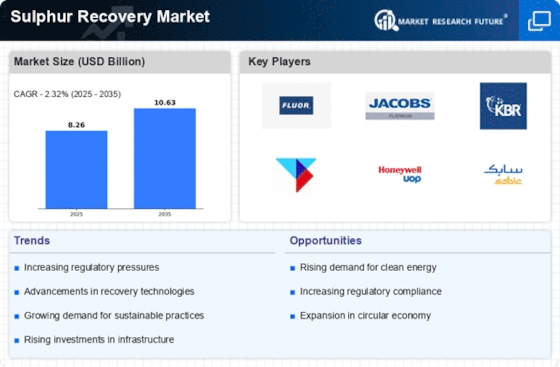
The rising demand for clean energy sources is a pivotal driver in the Sulphur Recovery Market. As nations strive to reduce their carbon footprints, the need for efficient sulphur recovery processes becomes paramount. This trend is underscored by the fact that sulphur is a byproduct of natural gas processing and oil refining, which are integral to energy production. The market is projected to witness a compound annual growth rate of approximately 5% over the next few years, driven by the transition towards cleaner energy solutions. Companies are increasingly investing in advanced sulphur recovery technologies to meet regulatory standards and consumer expectations, thereby enhancing their operational efficiency and sustainability. This shift not only supports environmental goals but also positions the Sulphur Recovery Market as a critical component in the energy sector.
Stringent Environmental Regulations
The imposition of stringent environmental regulations is a significant driver for the Sulphur Recovery Market. Governments worldwide are enacting laws aimed at reducing sulphur emissions from industrial processes, particularly in the oil and gas sector. For instance, regulations such as the European Union's Industrial Emissions Directive mandate that facilities implement effective sulphur recovery systems to minimize environmental impact. This regulatory landscape compels companies to adopt advanced sulphur recovery technologies, which can lead to increased operational costs but also offers opportunities for innovation and efficiency. The market is expected to expand as industries seek to comply with these regulations, thereby driving investments in sulphur recovery solutions. The proactive approach to environmental compliance not only mitigates risks but also enhances corporate reputation, making it a crucial factor in the growth of the Sulphur Recovery Market.
Technological Innovations in Sulphur Recovery
Technological innovations play a crucial role in shaping the Sulphur Recovery Market. The development of advanced recovery techniques, such as the Claus process and newer variations, has significantly improved the efficiency of sulphur recovery operations. These innovations enable facilities to recover up to 98% of sulphur from gas streams, thereby maximizing resource utilization. Furthermore, the integration of automation and digital technologies in sulphur recovery processes enhances monitoring and control, leading to reduced operational costs and improved safety. As industries increasingly adopt these cutting-edge technologies, the market is likely to experience robust growth. The ongoing research and development efforts aimed at optimizing sulphur recovery processes suggest a promising future for the Sulphur Recovery Market, as companies seek to enhance their competitive edge through technological advancements.
Growing Awareness of Environmental Sustainability
The growing awareness of environmental sustainability among consumers and industries is a key driver for the Sulphur Recovery Market. As public concern regarding environmental issues intensifies, companies are compelled to adopt sustainable practices, including effective sulphur recovery methods. This shift is reflected in the increasing number of corporate sustainability initiatives aimed at reducing emissions and enhancing resource efficiency. The market is witnessing a surge in demand for sulphur recovery technologies that align with these sustainability goals. Furthermore, industries are recognizing that sustainable practices can lead to cost savings and improved brand loyalty. The emphasis on sustainability is likely to continue influencing investment decisions and operational strategies, thereby fostering growth in the Sulphur Recovery Market as stakeholders prioritize environmentally responsible solutions.