Changing Consumer Preferences
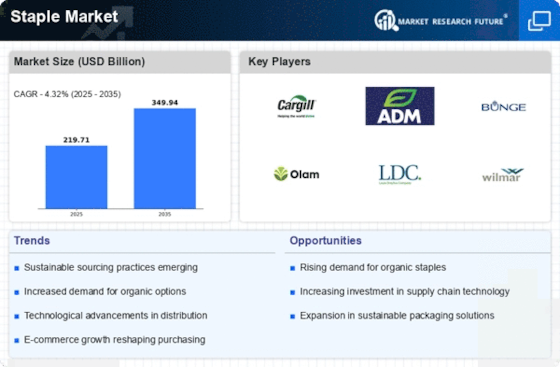
Consumer preferences are evolving, influencing the Staple Market in various ways. There is a noticeable shift towards healthier and more sustainable food options, prompting consumers to seek out organic and whole grain staples. This trend is reflected in market data, which indicates a growing demand for products that are perceived as healthier alternatives. Additionally, the rise of plant-based diets has led to increased interest in staples such as quinoa and legumes. As consumers become more health-conscious, the Staple Market must adapt to these changing preferences by offering a diverse range of products that cater to various dietary needs. This shift not only impacts product offerings but also necessitates changes in marketing strategies to effectively reach and engage health-oriented consumers.
Economic Stability and Growth
Economic conditions play a pivotal role in shaping the Staple Market. In regions where economic stability is evident, consumer purchasing power tends to increase, leading to higher demand for staple foods. For instance, countries experiencing GDP growth often witness a shift in dietary patterns, with consumers opting for higher-quality staples. The International Monetary Fund indicates that many economies are on a recovery path, which could enhance food security and increase investments in agricultural infrastructure. This economic growth may lead to a more robust Staple Market, as producers and retailers respond to the evolving preferences of consumers who are willing to spend more on staple products. Thus, the interplay between economic performance and staple food consumption is likely to influence market dynamics significantly.
Government Policies and Support
Government policies play a crucial role in shaping the Staple Market by influencing agricultural practices, trade regulations, and food security initiatives. Many governments are implementing policies aimed at supporting local farmers and ensuring a stable supply of staple foods. For instance, subsidies for staple crop production can enhance farmers' profitability and encourage increased output. Additionally, trade agreements can facilitate the import and export of staple foods, impacting market dynamics. The Food and Agriculture Organization emphasizes the importance of policy frameworks in achieving food security and sustainable agricultural practices. As governments continue to prioritize food security, the Staple Market is likely to benefit from supportive policies that promote growth and stability in staple food production and distribution.
Rising Population and Urbanization
The increasing global population, projected to reach approximately 9.7 billion by 2050, drives demand in the Staple Market. Urbanization trends indicate that more individuals are moving to cities, where access to staple foods becomes crucial. This demographic shift necessitates a reliable supply chain for staples such as rice, wheat, and maize. As urban areas expand, the Staple Market must adapt to meet the growing needs of urban consumers, who often prefer convenience and accessibility. The demand for staples is expected to rise, with estimates suggesting a 70% increase in food production by 2050 to meet this population growth. Consequently, the Staple Market is likely to experience significant growth opportunities as it seeks to fulfill the dietary needs of an expanding urban populace.
Technological Advancements in Agriculture
Technological innovations are transforming the Staple Market by enhancing agricultural productivity and efficiency. Precision farming, biotechnology, and data analytics are increasingly being adopted to optimize crop yields and reduce waste. For example, the use of genetically modified organisms (GMOs) has been shown to improve resistance to pests and diseases, thereby increasing the availability of staple crops. Additionally, advancements in irrigation and soil management techniques contribute to more sustainable farming practices. As these technologies become more widespread, the Staple Market is expected to benefit from increased production capabilities, which may help stabilize prices and ensure food security. The integration of technology into agriculture not only supports farmers but also aligns with the growing consumer demand for sustainably produced staple foods.



























Leave a Comment