Government Initiatives and Subsidies
The Spain biostimulants market benefits significantly from government initiatives aimed at promoting sustainable agriculture. The Spanish government has implemented various subsidies and financial support programs to encourage the use of biostimulants among farmers. These initiatives are part of a broader strategy to enhance agricultural productivity while minimizing environmental impact. For instance, the Ministry of Agriculture has allocated funds specifically for research and development in biostimulant technologies. This financial backing not only supports farmers in adopting these products but also stimulates innovation within the industry. As a result, the market is likely to see an influx of new biostimulant products, further driving growth.
Global Market Trends Influencing Local Demand
The Spain biostimulants market is not isolated from global market trends that are shaping agricultural practices worldwide. The increasing global demand for sustainable agricultural inputs is influencing local farmers to adopt biostimulants. As international markets shift towards eco-friendly solutions, Spanish farmers are recognizing the need to remain competitive. Data suggests that exports of biostimulants from Spain have increased by 12% in the past year, indicating a growing recognition of their value. This global perspective is likely to drive local demand, as farmers seek to align with international standards and practices. Consequently, the Spain biostimulants market is poised for continued growth as it adapts to these global influences.
Increasing Adoption of Organic Farming Practices
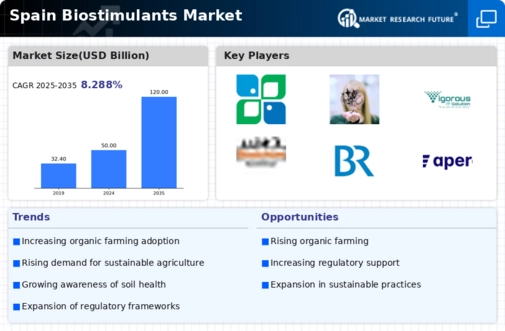
The Spain biostimulants market is experiencing a notable shift towards organic farming practices. This trend is driven by consumer demand for organic produce, which has surged in recent years. According to data from the Spanish Ministry of Agriculture, Fisheries and Food, the area dedicated to organic farming has increased by over 10% annually. Biostimulants, which enhance plant growth and resilience, are becoming essential tools for organic farmers. They help improve soil health and crop yields without synthetic chemicals, aligning with the principles of organic agriculture. As more farmers transition to organic methods, the demand for biostimulants is expected to rise, potentially leading to a market growth rate of 8% annually in the coming years.
Rising Awareness of Environmental Sustainability
There is a growing awareness of environmental sustainability among Spanish consumers and farmers, which is positively influencing the Spain biostimulants market. As environmental concerns become more pronounced, farmers are increasingly seeking alternatives to traditional fertilizers and pesticides. Biostimulants offer a more sustainable option, as they enhance plant health and productivity while reducing chemical inputs. This shift in mindset is reflected in market data, which indicates a 15% increase in biostimulant usage among farmers in the last two years. The emphasis on sustainable practices is likely to continue, suggesting that the demand for biostimulants will remain robust as farmers strive to meet both regulatory requirements and consumer expectations.
Technological Advancements in Biostimulant Formulations
The Spain biostimulants market is witnessing rapid technological advancements in the formulation of biostimulants. Innovations in biotechnology and agronomy are leading to the development of more effective and targeted biostimulant products. These advancements include the use of microbial inoculants and natural extracts that enhance plant growth and stress resistance. Research institutions in Spain are actively collaborating with industry players to create cutting-edge biostimulant solutions. This focus on innovation is expected to drive market growth, with projections indicating a potential increase in market size by 20% over the next five years. As farmers become more aware of these advanced formulations, adoption rates are likely to rise.