×
Request Free Sample ×

Kindly complete the form below to receive a free sample of this Report

* Please use a valid business email

Leading companies partner with us for data-driven Insights

clients tt-cursor
Hero Background

South Korea Palliative Care Market

ID: MRFR/MED/47689-HCR
200 Pages
Rahul Gotadki
February 2026

South Korea Palliative Care Market Research Report By Type (Hospital Inpatient Care, Hospice Inpatient Care, Nursing Homes, Residential Facility Care, Homecare, Private Residence Care), By End-User (Long Term Care Centers & Rehabilitation Centers, Hospitals & Clinics, Palliative Care Centers, Home Care Settings) and By Application (Cardiac Disease, Congestive Heart Failure, Cancer, Chronic Obstructive Pulmonary Disease (COPD), Kidney Failure, Alzheimer’s Disease, Parkinson’s Disease, Amyotrophic Lateral Sclerosis (ALS)) -Forecast to 2035

Share:
Download PDF ×

We do not share your information with anyone. However, we may send you emails based on your report interest from time to time. You may contact us at any time to opt-out.

South Korea Palliative Care Market Infographic
Purchase Options

South Korea Palliative Care Market Summary

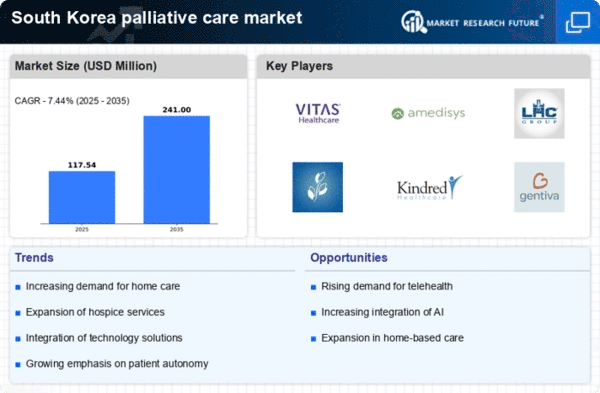
As per Market Research Future analysis, the South Korea palliative care market size was estimated at 109.4 USD Million in 2024.. The South Korea palliative care market is projected to grow from 117.54 USD Million in 2025 to 241.0 USD Million by 2035, exhibiting a compound annual growth rate (CAGR) of 7.4% during the forecast period 2025 - 2035

Key Market Trends & Highlights

The South Korea palliative care market is experiencing a transformative shift towards home-based and technology-integrated care solutions.

  • The demand for home-based palliative care is increasing as patients prefer receiving care in familiar environments.
  • Technology integration in palliative care delivery is enhancing patient monitoring and communication between care teams.
  • Multidisciplinary care teams are becoming essential in providing comprehensive support to patients and families.
  • The aging population and rising chronic illnesses are major drivers of market growth, alongside government initiatives and funding for palliative care.

Market Size & Forecast

2024 Market Size 109.4 (USD Million)
2035 Market Size 241.0 (USD Million)
CAGR (2025 - 2035) 7.44%

Major Players

VITAS Healthcare (US), Amedisys Inc (US), LHC Group (US), Brookdale Senior Living (US), Kindred Healthcare (US), Curo Health Services (US), Compassus (US), Palliative Care Center (US)

Our Impact
Enabled $4.3B Revenue Impact for Fortune 500 and Leading Multinationals
Partnering with 2000+ Global Organizations Each Year
30K+ Citations by Top-Tier Firms in the Industry

South Korea Palliative Care Market Trends

The palliative care market in South Korea is currently experiencing a notable evolution, driven by an increasing recognition of the importance of quality of life for patients with serious illnesses. This shift is largely influenced by demographic changes, including an aging population that is more likely to require specialized care. Furthermore, there is a growing emphasis on patient-centered approaches, which prioritize the needs and preferences of individuals facing life-limiting conditions. As healthcare providers adapt to these changes, the integration of palliative care into standard medical practice appears to be gaining traction, suggesting a more holistic approach to treatment. In addition, the South Korean government is actively promoting policies that support the development of palliative care services. This includes funding initiatives aimed at enhancing training for healthcare professionals and increasing public awareness about the benefits of palliative care. The collaboration between various stakeholders, including hospitals, community organizations, and policymakers, seems to be fostering an environment conducive to the growth of this market. As a result, the palliative care market is likely to expand, reflecting a broader commitment to improving the quality of care for patients and their families in South Korea.

Increased Demand for Home-Based Care

There is a rising trend towards home-based palliative care services in South Korea. This shift is driven by patients' preferences to receive care in familiar environments, which can enhance comfort and emotional well-being. Healthcare providers are responding by developing programs that facilitate at-home support, thereby reducing the need for hospital visits.

Integration of Technology in Care Delivery

The incorporation of technology into the palliative care market is becoming increasingly prevalent. Telehealth services and digital health tools are being utilized to improve communication between patients and healthcare providers. This trend not only enhances access to care but also allows for more personalized treatment plans.

Focus on Multidisciplinary Care Teams

There is a growing emphasis on the establishment of multidisciplinary care teams within the palliative care market. These teams typically consist of various healthcare professionals, including doctors, nurses, social workers, and spiritual advisors. This collaborative approach aims to address the diverse needs of patients, ensuring comprehensive support throughout their care journey.

South Korea Palliative Care Market Drivers

Government Initiatives and Funding

Government initiatives aimed at improving healthcare access and quality are pivotal in shaping the palliative care market. In South Korea, the Ministry of Health and Welfare has implemented various policies to enhance palliative care services, including increased funding and support for healthcare facilities. Recent allocations indicate a budget increase of approximately 20% for palliative care programs, reflecting the government's commitment to this sector. These initiatives not only aim to improve service delivery but also to raise public awareness about the importance of palliative care. As funding becomes more accessible, healthcare providers are likely to expand their palliative care offerings, thereby driving market growth. The emphasis on integrating palliative care into the broader healthcare system suggests a long-term commitment to improving patient outcomes and quality of life.

Aging Population and Chronic Illnesses

The aging population in South Korea is a primary driver of the palliative care market. As life expectancy increases, the prevalence of chronic illnesses such as cancer, heart disease, and dementia rises. According to recent statistics, approximately 14.3% of the population is aged 65 and older, a figure projected to increase significantly in the coming years. This demographic shift necessitates enhanced palliative care services to address complex health needs. The palliative care market is expected to expand as healthcare providers adapt to the growing demand for specialized care that focuses on quality of life and symptom management for elderly patients. Furthermore, the integration of palliative care into standard treatment protocols for chronic illnesses is likely to become more prevalent, indicating a shift in healthcare delivery models in South Korea.

Technological Advancements in Healthcare

Technological advancements are transforming the landscape of the palliative care market. Innovations such as telemedicine, electronic health records, and mobile health applications are enhancing the delivery of palliative care services. In South Korea, the adoption of telehealth solutions has increased by approximately 30% in recent years, allowing healthcare providers to offer remote consultations and support to patients and families. This shift not only improves access to care but also facilitates better communication between patients and healthcare teams. As technology continues to evolve, it is likely to play a crucial role in streamlining palliative care processes, improving patient outcomes, and ultimately driving market growth. The integration of technology into palliative care practices may also lead to more personalized care plans, tailored to the specific needs of patients.

Cultural Attitudes Towards End-of-Life Care

Cultural attitudes in South Korea significantly influence the palliative care market. Traditionally, there has been a strong emphasis on curative treatments, often overshadowing the importance of palliative care. However, there appears to be a gradual shift in public perception, with increasing recognition of the value of quality of life at the end of life. Surveys indicate that approximately 60% of the population now supports the integration of palliative care into treatment plans. This evolving mindset is likely to encourage more families to seek palliative care services, thereby expanding the market. Additionally, educational campaigns aimed at healthcare professionals and the public may further enhance understanding and acceptance of palliative care, leading to increased demand for these services in South Korea.

Rising Awareness and Education on Palliative Care

Rising awareness and education regarding palliative care are critical drivers of market growth. In South Korea, healthcare organizations and advocacy groups are increasingly focusing on educating both healthcare professionals and the public about the benefits of palliative care. Recent campaigns have highlighted the importance of early integration of palliative care in treatment plans, which can lead to improved patient satisfaction and quality of life. As awareness increases, more patients and families are likely to seek out palliative care services, thereby expanding the market. Furthermore, educational programs aimed at training healthcare providers in palliative care principles are essential for ensuring that quality services are delivered. This emphasis on education and awareness is expected to foster a more supportive environment for palliative care, ultimately benefiting patients and their families.


Market Segment Insights

By Type: Homecare (Largest) vs. Hospice Inpatient Care (Fastest-Growing)

In the South Korea palliative care market, the distribution of market share among the types of care reveals significant preferences. Homecare services have emerged as the largest segment, catering to a growing demand for personalized, in-home support. This trend is complemented by the rising adoption of technology-enabled healthcare solutions, enhancing comfort and accessibility for patients. Meanwhile, hospice inpatient care has gained traction, showcasing its vital role in providing comprehensive end-of-life services within dedicated facilities. Growth trends in the South Korea palliative care market are driven by an increasing aging population and a rising incidence of chronic diseases. The shift towards home-based care options aligns with patients' desires for familiar environments during their care journey. Additionally, hospice inpatient care is experiencing rapid growth due to heightened awareness about the importance of specialized palliative services, demonstrating the need for compassionate support during critical health transitions.

Homecare (Dominant) vs. Hospice Inpatient Care (Emerging)

Homecare stands out as the dominant segment in the South Korea palliative care market, offering tailored support to patients in their familiar surroundings. This category thrives on the personal touch, fostering deep connections between caregivers and patients. Its growth is bolstered by technological advancements, such as telehealth and remote monitoring, which facilitate better communication and care management. In contrast, hospice inpatient care is emerging as a vital component, focusing on comprehensive support in a dedicated setting. This segment emphasizes a holistic approach to end-of-life care, addressing not just medical needs but also emotional and psychological support, ultimately enhancing the quality of life for patients and their families.

By End-User: Hospitals & Clinics (Largest) vs. Home Care Settings (Fastest-Growing)

In the South Korea palliative care market, Hospitals & Clinics represent the largest segment, accounting for a substantial share due to their comprehensive services and specialized staff dedicated to palliative care. Long Term Care Centers & Rehabilitation Centers and Palliative Care Centers follow, catering to a growing demographic seeking alternative and supportive care. Home Care Settings, while smaller, are rapidly gaining traction as more individuals prefer receiving care in familiar environments. The growth in the South Korea palliative care market is driven by an increasing aging population and rising chronic illnesses, which necessitate comprehensive palliative services. Home Care Settings are witnessing the fastest growth, fueled by advancements in telehealth and home-based technologies that enhance patient support. The evolving healthcare preferences towards personalized care are also pushing demand for services in Home Care Settings, making it a vibrant area of growth for future investments and resources.

Hospitals & Clinics (Dominant) vs. Home Care Settings (Emerging)

Hospitals & Clinics serve as the dominant force in the South Korea palliative care market, providing essential services equipped with specialized teams and advanced medical facilities. These establishments are integral in managing complex cases that require hands-on interventions. Meanwhile, Home Care Settings represent an emerging segment, appealing to patients who prefer to receive care in their own homes. This segment is characterized by a growing acceptance of at-home medical technologies and personalized support services. The shift towards Home Care Settings is also bolstered by policy changes promoting at-home healthcare solutions, which aim to improve patient satisfaction and reduce hospital readmissions.

By Application: Cancer (Largest) vs. Congestive Heart Failure (Fastest-Growing)

The South Korea palliative care market reveals a distinct distribution of market share among various applications. Cancer remains the largest segment, accounting for a significant portion of the market, driven by the increasing prevalence of cancer cases and an aging population. Congestive Heart Failure and other chronic conditions also contribute to the growing demand for palliative care, emphasizing a shift towards holistic patient management in healthcare. In terms of growth trends, the demand for palliative care associated with Cancer is being propelled by advancements in treatment options and improved patient survival rates, leading to an increased need for end-of-life care. Meanwhile, Congestive Heart Failure is experiencing the fastest growth due to rising diagnoses and a greater focus on chronic illness management, underscoring the evolving landscape of healthcare practices in addressing complex medical needs.

Cancer (Dominant) vs. Congestive Heart Failure (Emerging)

Cancer represents the dominant application within the South Korea palliative care market, necessitating specialized care approaches to manage symptoms and enhance quality of life for patients. Its prominence is fueled by significant investments in oncological treatments and supportive care services. In contrast, Congestive Heart Failure emerges as a vital segment, gaining traction due to growing awareness of heart health and effective management strategies. Both segments underscore the market's need to adapt to the complexities of patient needs, reflecting the ongoing development in treatment methodologies and patient-centric care solutions.

Get more detailed insights about South Korea Palliative Care Market

Key Players and Competitive Insights

The palliative care market in South Korea is characterized by a competitive landscape that is increasingly shaped by innovation, strategic partnerships, and a focus on patient-centered care. Key players such as VITAS Healthcare (US), Amedisys Inc (US), and LHC Group (US) are actively redefining their operational strategies to enhance service delivery and expand their market presence. VITAS Healthcare (US) has positioned itself as a leader in providing comprehensive palliative care solutions, emphasizing the integration of advanced technologies to improve patient outcomes. Meanwhile, Amedisys Inc (US) focuses on expanding its home health services, which aligns with the growing demand for in-home palliative care, thereby enhancing its competitive edge. LHC Group (US) is also notable for its strategic acquisitions aimed at bolstering its service offerings and geographic reach, indicating a trend towards consolidation in the market.The business tactics employed by these companies reflect a nuanced understanding of the market's structure, which appears moderately fragmented yet competitive. Localizing services and optimizing supply chains are critical strategies that these companies leverage to enhance operational efficiency and responsiveness to patient needs. The collective influence of these key players suggests a dynamic environment where innovation and service quality are paramount, potentially reshaping consumer expectations and care standards.

In October VITAS Healthcare (US) announced a partnership with a leading telehealth provider to enhance its remote care capabilities. This strategic move is significant as it not only expands VITAS's service offerings but also aligns with the increasing demand for telehealth solutions in palliative care, allowing for more flexible and accessible patient management. Such initiatives may set a precedent for other companies in the sector to adopt similar technologies, thereby elevating the overall standard of care.

In September Amedisys Inc (US) launched a new initiative aimed at training healthcare professionals in palliative care best practices. This initiative underscores Amedisys's commitment to improving care quality and reflects a broader trend towards workforce development in the sector. By investing in training, Amedisys positions itself as a thought leader in palliative care, potentially attracting more patients seeking high-quality services.

In August LHC Group (US) completed the acquisition of a regional home health agency, which is expected to enhance its service delivery capabilities in palliative care. This acquisition not only expands LHC's geographic footprint but also allows for a more integrated approach to patient care, which is increasingly favored by consumers. The strategic importance of such acquisitions lies in their potential to create synergies that improve operational efficiencies and patient satisfaction.

As of November the competitive trends in the palliative care market are increasingly defined by digitalization, sustainability, and the integration of artificial intelligence (AI) into care delivery. Strategic alliances are becoming more prevalent, as companies recognize the value of collaboration in enhancing service offerings and operational capabilities. Looking ahead, the competitive differentiation in this market is likely to evolve from traditional price-based competition towards a focus on innovation, technology integration, and supply chain reliability. This shift may ultimately lead to improved patient outcomes and a more sustainable business model for palliative care providers.

Key Companies in the South Korea Palliative Care Market include

Industry Developments

Recent developments in the South Korea Palliative Care Market have seen a significant focus on enhancing the quality and accessibility of care for patients with life-limiting illnesses. The growth of facilities such as Samsung Medical Center and Asan Medical Center highlight ongoing improvements in patient-centric care protocols. Both institutions emphasize Research and Development in palliative care practices, ensuring they remain at the forefront of treatment advancements. In July 2023, National Cancer Center announced the launch of a comprehensive palliative care program aimed at integrating psychological support services, reflecting a trend towards holistic patient care.

Additionally, Korea University Anam Hospital reported an increase in funding for its palliative care department, allowing for expanded training and resources for healthcare professionals. There have been no recent mergers or acquisitions among the specified institutions, indicating a more organic growth strategy within the sector. Over the past two years, hospitals like Chungnam National University Hospital and Seoul National University Hospital have seen substantial investments in technology to improve end-of-life care, influencing the overall market valuation positively. These developments underline a proactive approach toward addressing the growing needs of patients and families navigating serious health challenges in South Korea.

Future Outlook

South Korea Palliative Care Market Future Outlook

The Palliative Care Market in South Korea is projected to grow at a 7.44% CAGR from 2025 to 2035, driven by an aging population, increased chronic diseases, and enhanced healthcare policies.

New opportunities lie in:

  • Development of telehealth platforms for remote palliative consultations.
  • Integration of AI-driven patient management systems for personalized care.
  • Expansion of home-based palliative care services to meet rising demand.

By 2035, the palliative care market in South Korea is expected to be robust, reflecting significant growth and innovation..

Market Segmentation

South Korea Palliative Care Market Type Outlook

  • Hospital Inpatient Care
  • Hospice Inpatient Care
  • Nursing Homes
  • Residential Facility Care
  • Homecare
  • Private Residence Care

South Korea Palliative Care Market End-User Outlook

  • Long Term Care Centers & Rehabilitation Centers
  • Hospitals & Clinics
  • Palliative Care Centers
  • Home Care Settings

South Korea Palliative Care Market Application Outlook

  • Cardiac Disease
  • Congestive Heart Failure
  • Cancer
  • Chronic Obstructive Pulmonary Disease (COPD)
  • Kidney Failure
  • Alzheimer’s Disease
  • Parkinson’s Disease
  • Amyotrophic Lateral Sclerosis (ALS)

Report Scope

MARKET SIZE 2024 109.4(USD Million)
MARKET SIZE 2025 117.54(USD Million)
MARKET SIZE 2035 241.0(USD Million)
COMPOUND ANNUAL GROWTH RATE (CAGR) 7.44% (2025 - 2035)
REPORT COVERAGE Revenue Forecast, Competitive Landscape, Growth Factors, and Trends
BASE YEAR 2024
Market Forecast Period 2025 - 2035
Historical Data 2019 - 2024
Market Forecast Units USD Million
Key Companies Profiled VITAS Healthcare (US), Amedisys Inc (US), LHC Group (US), Brookdale Senior Living (US), Kindred Healthcare (US), Curo Health Services (US), Compassus (US), Palliative Care Center (US)
Segments Covered Type, End-User, Application
Key Market Opportunities Integration of telehealth solutions enhances access to palliative care services in South Korea.
Key Market Dynamics Growing demand for personalized palliative care solutions driven by aging population and evolving healthcare policies.
Countries Covered South Korea
Leave a Comment

FAQs

What is the expected market size of the South Korea Palliative Care Market in 2024?

The South Korea Palliative Care Market is expected to be valued at 136.75 million USD in 2024.

What will be the projected market size for the South Korea Palliative Care Market by 2035?

By 2035, the market is projected to reach 288.65 million USD.

What is the expected compound annual growth rate (CAGR) for the South Korea Palliative Care Market from 2025 to 2035?

The expected CAGR for the market from 2025 to 2035 is 7.027%.

Which segment is expected to hold the largest market share in the South Korea Palliative Care Market in 2024?

Hospital inpatient care is expected to hold the largest market share, valued at 40.0 million USD in 2024.

What is the projected market size for hospice inpatient care by 2035?

The hospice inpatient care segment is projected to be valued at 65.0 million USD by 2035.

Who are the key players in the South Korea Palliative Care Market?

Major players in the market include Samsung Medical Center, Asan Medical Center, and National Cancer Center.

What is the expected market size for nursing homes in the South Korea Palliative Care Market by 2035?

The nursing homes segment is expected to reach a market size of 55.0 million USD by 2035.

What are the expected market values for homecare services in the South Korea Palliative Care Market by 2035?

Homecare services are projected to be valued at 38.65 million USD by 2035.

What are the anticipated challenges in the South Korea Palliative Care Market?

Challenges in the market may include increasing demand for quality care and resource allocation.

What growth opportunities exist in the South Korea Palliative Care Market between 2025 and 2035?

The market will see growth opportunities driven by an aging population and increasing awareness of palliative care.

Download Free Sample

Kindly complete the form below to receive a free sample of this Report

Compare Licence

×
Features License Type
Single User Multiuser License Enterprise User
Price $4,950 $5,950 $7,250
Maximum User Access Limit 1 User Upto 10 Users Unrestricted Access Throughout the Organization
Free Customization
Direct Access to Analyst
Deliverable Format
Platform Access
Discount on Next Purchase 10% 15% 15%
Printable Versions