×
Request Free Sample ×

Kindly complete the form below to receive a free sample of this Report

* Please use a valid business email

Leading companies partner with us for data-driven Insights

clients tt-cursor
Hero Background

South Korea Operational Technology Security Market

ID: MRFR/ICT/59574-HCR
200 Pages
Aarti Dhapte
February 2026

South Korea Operational Technology Security Market Size, Share and Trends Analysis Report By Component (Solution, Services), By Deployment (On-Premise, Cloud, Hybrid)and By End-Use Industry (Power & Electrical, Mining, Transportation, Manufacturing, Others)-Forecast to 2035

Share:
Download PDF ×

We do not share your information with anyone. However, we may send you emails based on your report interest from time to time. You may contact us at any time to opt-out.

South Korea Operational Technology Security Market Infographic
Purchase Options

South Korea Operational Technology Security Market Summary

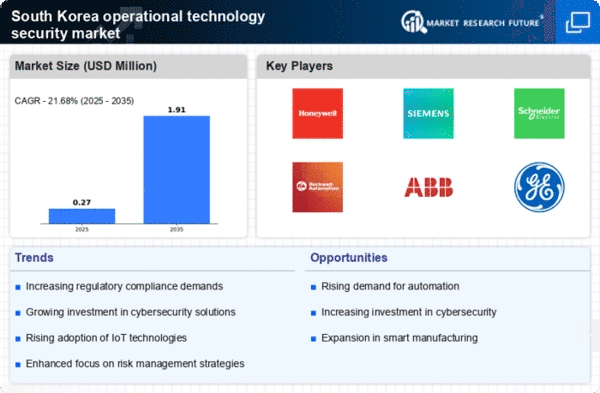
As per Market Research Future analysis, the South Korea operational technology-security market Size was estimated at 0.22 USD Million in 2024. The South Korea operational technology-security market is projected to grow from 0.268 USD Million in 2025 to 1.91 USD Million by 2035, exhibiting a compound annual growth rate (CAGR) of 21.6% during the forecast period 2025 - 2035

Key Market Trends & Highlights

The South Korea operational technology-security market is experiencing robust growth driven by technological advancements and increasing cyber threats.

  • Investment in cybersecurity solutions is on the rise as organizations prioritize protection against evolving threats.
  • Regulatory compliance and the development of standards are becoming critical for businesses in the operational technology sector.
  • The integration of AI and machine learning in security measures is enhancing threat detection and response capabilities.
  • Rising cyber threats and increased automation are key drivers propelling the growth of the operational technology-security market.

Market Size & Forecast

2024 Market Size 0.22 (USD Million)
2035 Market Size 1.91 (USD Million)
CAGR (2025 - 2035) 21.68%

Major Players

Honeywell (US), Siemens (DE), Schneider Electric (FR), Rockwell Automation (US), ABB (CH), General Electric (US), Mitsubishi Electric (JP), Emerson Electric (US), Cisco Systems (US)

Our Impact
Enabled $4.3B Revenue Impact for Fortune 500 and Leading Multinationals
Partnering with 2000+ Global Organizations Each Year
30K+ Citations by Top-Tier Firms in the Industry

South Korea Operational Technology Security Market Trends

The operational technology-security market in South Korea is currently experiencing a notable evolution, driven by the increasing integration of digital technologies within critical infrastructure sectors. As industries such as manufacturing, energy, and transportation adopt advanced automation and connectivity, the need for robust security measures becomes paramount. This shift is underscored by the growing awareness of cyber threats targeting operational technologies, which could potentially disrupt essential services and compromise safety. Consequently, organizations are prioritizing investments in security solutions that safeguard their operational environments against a myriad of vulnerabilities. Moreover, the regulatory landscape in South Korea is evolving to address these emerging challenges. Government initiatives aimed at enhancing cybersecurity frameworks are fostering a more secure operational environment. This includes the establishment of standards and guidelines that encourage organizations to adopt best practices in securing their operational technologies. As a result, the operational technology-security market is poised for growth, with stakeholders increasingly recognizing the importance of integrating security into their operational strategies. The focus on resilience and risk management is likely to shape the future of this market, as organizations strive to protect their assets and ensure continuity in the face of evolving threats.

Increased Investment in Cybersecurity Solutions

Organizations are allocating more resources towards advanced cybersecurity solutions to protect their operational technologies. This trend reflects a growing recognition of the potential risks associated with cyber threats, prompting companies to enhance their security postures.

Regulatory Compliance and Standards Development

The South Korean government is actively developing regulations and standards aimed at improving cybersecurity within operational technologies. This initiative encourages organizations to adopt comprehensive security measures, fostering a more secure operational environment.

Integration of AI and Machine Learning in Security

The operational technology-security market is witnessing a trend towards the integration of artificial intelligence and machine learning technologies. These innovations are being utilized to enhance threat detection and response capabilities, thereby improving overall security effectiveness.

South Korea Operational Technology Security Market Drivers

Rising Cyber Threats

The operational technology-security market is experiencing heightened demand due to the increasing frequency and sophistication of cyber threats. In South Korea, industries such as manufacturing and energy are particularly vulnerable, with reports indicating a 30% rise in cyber incidents over the past year. This alarming trend compels organizations to invest in robust security measures to protect critical infrastructure. As a result, the operational technology-security market is projected to grow significantly, with estimates suggesting a compound annual growth rate (CAGR) of 12% through 2027. Companies are prioritizing the implementation of advanced security protocols and technologies to mitigate risks, thereby driving market expansion.

Government Initiatives and Support

The operational technology-security market is bolstered by proactive government initiatives aimed at enhancing national cybersecurity. The South Korean government has launched various programs to promote the adoption of security technologies across critical sectors. For instance, the Ministry of Science and ICT has allocated approximately $200 million to support cybersecurity research and development. Such investments not only foster innovation but also encourage collaboration between public and private sectors. This strategic focus on cybersecurity is expected to stimulate growth in the operational technology-security market, as organizations align with government standards and frameworks to safeguard their operations.

Increased Automation and IoT Adoption

The operational technology-security market is significantly influenced by the rapid adoption of automation and Internet of Things (IoT) technologies. As South Korean industries increasingly integrate IoT devices into their operations, the potential attack surface expands, necessitating enhanced security measures. Reports indicate that over 70% of manufacturers in South Korea are implementing IoT solutions, which raises concerns about data integrity and system vulnerabilities. Consequently, the operational technology-security market is likely to see a surge in demand for solutions that can effectively secure these interconnected systems. This trend underscores the need for comprehensive security strategies that address the unique challenges posed by automation and IoT.

Growing Awareness of Cybersecurity Risks

The operational technology-security market is benefiting from a growing awareness of cybersecurity risks among organizations in South Korea. As high-profile cyberattacks make headlines, businesses are increasingly recognizing the importance of safeguarding their operational technology environments. Surveys indicate that nearly 65% of companies now prioritize cybersecurity in their strategic planning. This shift in mindset is driving investments in security solutions, as organizations seek to protect their assets and maintain operational continuity. The operational technology-security market is thus positioned for growth, as companies allocate resources to enhance their security postures and mitigate potential threats.

Emergence of Advanced Security Technologies

The operational technology-security market is witnessing a surge in the development and adoption of advanced security technologies. Innovations such as blockchain, artificial intelligence, and machine learning are being integrated into security solutions to enhance threat detection and response capabilities. In South Korea, the market for AI-driven security solutions is expected to reach $1 billion by 2026, reflecting a growing trend towards leveraging technology for improved security outcomes. This evolution in security technology not only addresses current vulnerabilities but also prepares organizations for future challenges. As a result, the operational technology-security market is likely to expand as companies invest in cutting-edge solutions to stay ahead of emerging threats.

Market Segment Insights

By Component: Solution (Largest) vs. Services (Fastest-Growing)

In the South Korea operational technology-security market, the component segment is primarily divided into solutions and services. Solutions dominate the market, holding a significant share due to their essential role in safeguarding operational technology environments. Services, though smaller in comparison, are gaining traction, capturing an increasing share of the market as organizations seek comprehensive security strategies that include consultation, deployment, and ongoing support. Growth trends in this segment are strongly influenced by the increasing sophistication of cyber threats and the critical need for operational continuity. Organizations are investing heavily in security solutions to mitigate risks and ensure reliable operations. Services are emerging rapidly due to the demand for expert guidance and tailored security strategies, making it the fastest-growing component as businesses recognize the value of protective services alongside robust technological solutions.

Solutions (Dominant) vs. Services (Emerging)

Solutions within this segment are characterized by their ability to provide critical security functionalities such as intrusion detection, threat analysis, and compliance management, thus holding a dominant position in the South Korea operational technology-security market. They are often preferred for their reliability and proven track record in protecting vital infrastructure. On the other hand, services represent an emerging opportunity in the market, offering businesses not only implementation support but also strategic insights into evolving threats. This growing emphasis on service-oriented solutions reflects a shift in focus from merely deploying technology to integrating ongoing support and expertise, which enhances organizational resilience.

By Deployment: Cloud (Largest) vs. Hybrid (Fastest-Growing)

In the South Korea operational technology-security market, the deployment segment is characterized by a diverse distribution among on-premises, hybrid, and cloud models. Cloud deployments hold the largest share, driven by the increasing demand for scalability and flexibility in operational technology. On-premises solutions continue to attract niches that prioritize data sovereignty and control, while hybrid models are gaining traction among organizations seeking to combine the benefits of both cloud and on-premises systems. The growth trends in this segment are predominantly driven by the digital transformation initiatives across industries and the rising importance of cybersecurity. As organizations migrate to cloud infrastructures, the hybrid deployment model is emerging as the fastest-growing option due to its flexibility and scalability. Many businesses are opting for hybrid solutions to balance the secure environments offered by on-premises systems with the additional resources provided by cloud technologies, enhancing overall operational efficiency.

Cloud (Dominant) vs. Hybrid (Emerging)

In the South Korea operational technology-security market, cloud solutions are the dominant deployment choice, appealing to businesses looking for agility and reduced infrastructure costs. Their ability to provide scalable resources and advanced security features meets the demands of modern enterprises. Conversely, hybrid deployments are emerging as a compelling alternative, driven by the need for enhanced data control and integration of legacy systems. Organizations are increasingly adopting hybrid models as they provide the best of both worlds, allowing for sensitive data to remain on-premises while leveraging the cloud for non-sensitive operations. This adaptability makes hybrid solutions particularly attractive to companies navigating complex regulatory environments.

By End-Use Industry: Power & Electrical (Largest) vs. Manufacturing (Fastest-Growing)

In the South Korea operational technology-security market, the 'Power & Electrical' segment commands the largest market share, driven by the increasing demand for energy efficiency and smart grid technologies. This segment is underpinned by substantial investments aimed at enhancing the resilience of electrical infrastructures against cyber threats, leading to a more secure operational environment. Meanwhile, the 'Manufacturing' segment is witnessing rapid growth, fueled by the expansion of Industry 4.0 initiatives and the adoption of automation technologies that require robust security measures. As the demand for interconnected devices and systems burgeons, the South Korea operational technology-security market is increasingly shaped by the need for comprehensive security solutions in the manufacturing sector. Factors such as rising cyber incidents and the need for compliance with regulations are propelling investments in cybersecurity technologies within manufacturing processes. Consequently, organizations are prioritizing security integration within their operational strategies to safeguard their assets, resulting in the manufacturing segment becoming the fastest-growing sector in the market.

Power & Electrical: Dominant vs. Manufacturing: Emerging

The 'Power & Electrical' segment in the South Korea operational technology-security market is characterized by its dominance, primarily due to the critical nature of electrical infrastructure and the rising focus on energy efficiency. This segment is essential for managing risks associated with cyber threats, as utilities increasingly adopt smart technologies and IoT solutions. Conversely, the 'Manufacturing' segment is emerging rapidly, spurred by digitization and automation. Manufacturers are incorporating advanced technologies that necessitate robust cybersecurity measures to protect intricate supply chains against disruptions. The urgency for security in manufacturing is amplified by the need to remain competitive, making both segments crucial for the overall stability and evolution of the operational technology-security landscape.

Get more detailed insights about South Korea Operational Technology Security Market

Key Players and Competitive Insights

The operational technology-security market in South Korea is characterized by a dynamic competitive landscape, driven by increasing demand for enhanced security measures in industrial environments. Key players are focusing on innovation, strategic partnerships, and regional expansion to solidify their market positions. Companies such as Honeywell (US), Siemens (DE), and Schneider Electric (FR) are at the forefront, leveraging their technological expertise to develop integrated solutions that address the complexities of operational security. Their collective strategies not only enhance their competitive edge but also contribute to a more robust market environment, where collaboration and technological advancement are paramount.In terms of business tactics, companies are increasingly localizing manufacturing and optimizing supply chains to respond swiftly to market demands. The competitive structure of the market appears moderately fragmented, with several key players exerting influence over various segments. This fragmentation allows for a diverse range of offerings, yet the presence of major companies like Rockwell Automation (US) and ABB (CH) ensures that innovation and quality remain at the forefront of market competition.

In October Honeywell (US) announced a strategic partnership with a leading South Korean cybersecurity firm to enhance its operational technology security solutions. This collaboration aims to integrate advanced cybersecurity measures into Honeywell's existing product lines, thereby addressing the growing concerns over cyber threats in industrial settings. The strategic importance of this partnership lies in its potential to bolster Honeywell's market share while providing customers with comprehensive security solutions that are tailored to local needs.

In September Siemens (DE) launched a new suite of cybersecurity services specifically designed for the South Korean market. This initiative reflects Siemens' commitment to digital transformation and its recognition of the unique challenges faced by local industries. By offering tailored solutions, Siemens not only strengthens its competitive position but also demonstrates its adaptability to regional market dynamics, which is crucial for long-term success.

In August Schneider Electric (FR) expanded its operations in South Korea by establishing a new innovation hub focused on developing next-generation security technologies. This move underscores Schneider Electric's dedication to fostering innovation and enhancing its product offerings in the operational technology-security space. The establishment of this hub is likely to accelerate the development of cutting-edge solutions, positioning Schneider Electric as a leader in the market.

As of November current trends in the operational technology-security market include a pronounced shift towards digitalization, sustainability, and the integration of artificial intelligence (AI) into security solutions. Strategic alliances among key players are shaping the competitive landscape, fostering innovation and collaboration. Looking ahead, it appears that competitive differentiation will increasingly hinge on technological advancements and supply chain reliability, rather than solely on price. This evolution suggests a market that values innovation and quality, paving the way for a more resilient operational technology-security environment.

Key Companies in the South Korea Operational Technology Security Market include

Industry Developments

The South Korea Operational Technology Security Market has seen significant recent developments, particularly with the growth in demand for cybersecurity solutions amid increasing cyber threats targeting critical infrastructure. Companies like Samsung Electronics and LG Electronics have expanded their cybersecurity portfolios to enhance the security of IoT devices.

In April 2025, Fortinet Korea hosted its inaugural OT Security Summit Korea in partnership with major industrial players, such as Siemens, Rockwell Automation, Korea Yokogawa Electric, SK Shielders, and S-Oil. The event aimed to exchange platform-based security insights and OT threat trends that were pertinent to infrastructure and smart industries.

In December 2024, Nokia and SK Broadband implemented quantum-secure network encryption throughout the infrastructure of Korea Hydro & Nuclear Power. This measure was implemented to fortify the OT data links at significant energy and power facilities against emergent cyber threats.

 In previous years, significant regulatory moves in 2021 led to tighter security frameworks impacting various industries across South Korea, prompting increased investments in cybersecurity technologies

Future Outlook

South Korea Operational Technology Security Market Future Outlook

The Operational Technology Security Market in South Korea is projected to grow at 21.68% CAGR from 2025 to 2035, driven by increasing cyber threats and regulatory compliance demands.

New opportunities lie in:

  • Development of AI-driven threat detection systems
  • Integration of IoT security solutions for industrial applications
  • Expansion of managed security services for operational technology environments

By 2035, the market is expected to achieve substantial growth, reflecting robust demand and innovation.

Market Segmentation

South Korea Operational Technology Security Market Component Outlook

  • Solution
  • Services

South Korea Operational Technology Security Market Deployment Outlook

  • On-Premises
  • Hybrid
  • Cloud

South Korea Operational Technology Security Market End-Use Industry Outlook

  • Power & Electrical
  • Manufacturing
  • Transportation
  • Mining

Report Scope

MARKET SIZE 2024 0.22(USD Million)
MARKET SIZE 2025 0.268(USD Million)
MARKET SIZE 2035 1.91(USD Million)
COMPOUND ANNUAL GROWTH RATE (CAGR) 21.68% (2025 - 2035)
REPORT COVERAGE Revenue Forecast, Competitive Landscape, Growth Factors, and Trends
BASE YEAR 2024
Market Forecast Period 2025 - 2035
Historical Data 2019 - 2024
Market Forecast Units USD Million
Key Companies Profiled Honeywell (US), Siemens (DE), Schneider Electric (FR), Rockwell Automation (US), ABB (CH), General Electric (US), Mitsubishi Electric (JP), Emerson Electric (US), Cisco Systems (US)
Segments Covered Component, Deployment, End-Use Industry
Key Market Opportunities Integration of advanced cybersecurity measures in industrial automation systems presents a key opportunity.
Key Market Dynamics Rising regulatory pressures drive innovation and investment in operational technology-security solutions across various sectors.
Countries Covered South Korea
Leave a Comment

FAQs

What is the expected market size of the South Korea Operational Technology Security Market in 2024?

The South Korea Operational Technology Security Market is expected to be valued at 165.3 million USD in 2024.

How much is the Operational Technology Security Market projected to be worth by 2035?

By 2035, the Operational Technology Security Market is projected to reach approximately 1057.8 million USD.

What is the expected compound annual growth rate (CAGR) for the South Korea Operational Technology Security Market from 2025 to 2035?

The expected CAGR for the South Korea Operational Technology Security Market from 2025 to 2035 is 18.382%.

Which segment of the South Korea Operational Technology Security Market is expected to generate more revenue by 2035?

By 2035, the Services segment is expected to generate more revenue, reaching 594.8 million USD, compared to 463.0 million USD for Solutions.

Who are the key players in the South Korea Operational Technology Security Market?

Major players in the South Korea Operational Technology Security Market include Samsung Electronics, Honeywell, Fortinet, and Cisco Systems, among others.

What was the market value for Solutions in 2024 within the South Korea Operational Technology Security Market?

The market value for Solutions within the South Korea Operational Technology Security Market was 75.0 million USD in 2024.

What key trends are currently shaping the South Korea Operational Technology Security Market?

Key trends include increasing cybersecurity threats, advancements in IoT, and a growing emphasis on industrial automation.

What opportunities are available within the South Korea Operational Technology Security Market?

Opportunities include the rising demand for security solutions and services due to increased cyber threats and regulatory requirements.

What challenges is the South Korea Operational Technology Security Market facing?

Challenges include the evolving nature of cyber threats and the need for organizations to implement comprehensive security measures.

What impact does regionality have on the growth of the South Korea Operational Technology Security Market?

The South Korean market is experiencing growth driven by government initiatives and increasing investments in smart manufacturing technologies.

Download Free Sample

Kindly complete the form below to receive a free sample of this Report

Compare Licence

×
Features License Type
Single User Multiuser License Enterprise User
Price $4,950 $5,950 $7,250
Maximum User Access Limit 1 User Upto 10 Users Unrestricted Access Throughout the Organization
Free Customization
Direct Access to Analyst
Deliverable Format
Platform Access
Discount on Next Purchase 10% 15% 15%
Printable Versions