×
Request Free Sample ×

Kindly complete the form below to receive a free sample of this Report

* Please use a valid business email

Leading companies partner with us for data-driven Insights

clients tt-cursor
Hero Background

South Korea Neurodegenerative Disease Market

ID: MRFR/LS/50851-HCR
200 Pages
Rahul Gotadki
February 2026

South Korea Neurodegenerative Disease Market Research Report: Size, Share, Trend Analysis By Disease Type (Alzheimer's Disease, Parkinson's Disease, Multiple Sclerosis, Amyotrophic Lateral Sclerosis, Huntington's Disease), By Diagnosis Method (Neurological Examination, Imaging Techniques, Cerebrospinal Fluid Analysis, Electrophysiological Tests), By Treatment Type (Medication, Therapy, Rehabilitation, Surgical Interventions) and By Route of Administration (Oral, Injectable, Intravenous, Transdermal) - Growth Outlook & Industry Forecast 2025 To 2035

Share:
Download PDF ×

We do not share your information with anyone. However, we may send you emails based on your report interest from time to time. You may contact us at any time to opt-out.

South Korea Neurodegenerative Disease Market Infographic
Purchase Options

South Korea Neurodegenerative Disease Market Summary

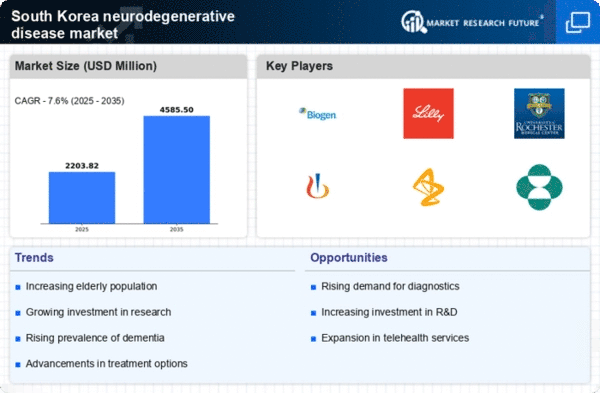
As per Market Research Future analysis, the South Korea neurodegenerative disease market size was estimated at 2048.16 USD Million in 2024. The South Korea neurodegenerative disease market is projected to grow from 2203.82 USD Million in 2025 to 4585.5 USD Million by 2035, exhibiting a compound annual growth rate (CAGR) of 7% during the forecast period 2025 - 2035

Key Market Trends & Highlights

The South Korea neurodegenerative disease market is experiencing robust growth driven by innovation and demographic shifts.

  • Investment in research and development is rising, indicating a strong commitment to advancing neurodegenerative disease treatments.
  • Collaboration between pharmaceutical companies and research institutions is becoming increasingly prevalent, fostering innovation.
  • The market is witnessing a shift towards personalized medicine, enhancing treatment efficacy for patients.
  • Key drivers include an aging population and advancements in diagnostic technologies, which are propelling market expansion.

Market Size & Forecast

2024 Market Size 2048.16 (USD Million)
2035 Market Size 4585.5 (USD Million)
CAGR (2025 - 2035) 7.6%

Major Players

Biogen (US), Eli Lilly (US), Roche (CH), Novartis (CH), AstraZeneca (GB), Merck & Co (US), Amgen (US), Sanofi (FR), AbbVie (US)

Our Impact
Enabled $4.3B Revenue Impact for Fortune 500 and Leading Multinationals
Partnering with 2000+ Global Organizations Each Year
30K+ Citations by Top-Tier Firms in the Industry

South Korea Neurodegenerative Disease Market Trends

The neurodegenerative disease market in South Korea is currently experiencing notable developments, driven by an aging population and increasing awareness of these conditions. The prevalence of diseases such as Alzheimer's and Parkinson's is rising, prompting both public and private sectors to invest in research and development. This focus on innovation is likely to enhance treatment options and improve patient outcomes. Furthermore, the South Korean government is actively supporting initiatives aimed at advancing healthcare technologies, which may lead to breakthroughs in the management of neurodegenerative diseases. In addition to government support, collaborations between academic institutions and pharmaceutical companies are becoming more common. These partnerships appear to foster a conducive environment for clinical trials and the introduction of novel therapies. The neurodegenerative disease market is also witnessing a shift towards personalized medicine, where treatments are tailored to individual patient profiles. This trend could potentially improve efficacy and reduce side effects, making therapies more appealing to patients and healthcare providers alike.

Rising Investment in Research and Development

There is a growing emphasis on funding for research initiatives focused on neurodegenerative diseases. This trend is likely driven by the increasing incidence of these conditions, which necessitates innovative treatment solutions. Both public and private sectors are channeling resources into developing new therapies and technologies.

Collaboration Between Sectors

Partnerships between academic institutions and the pharmaceutical industry are becoming more prevalent. These collaborations may enhance the development of new drugs and therapies, facilitating clinical trials and accelerating the introduction of effective treatments to the market.

Shift Towards Personalized Medicine

The neurodegenerative disease market is witnessing a transition towards personalized treatment approaches. This trend suggests that therapies are increasingly being tailored to individual patient needs, potentially improving treatment outcomes and patient satisfaction.

South Korea Neurodegenerative Disease Market Drivers

Emerging Therapeutic Approaches

The neurodegenerative disease market is witnessing a surge in emerging therapeutic approaches, including gene therapy and stem cell research. These innovative treatments hold the potential to alter the course of diseases that were previously deemed untreatable. In South Korea, several clinical trials are underway, exploring the efficacy of these novel therapies. The market is likely to experience significant growth as these therapies progress through clinical stages and receive regulatory approval. The promise of new treatment modalities not only excites the medical community but also offers hope to patients and their families, thereby driving demand in the neurodegenerative disease market.

Growing Awareness and Education

There is a growing awareness of neurodegenerative diseases among the South Korean population, which is driving demand for better treatment options. Educational campaigns aimed at both healthcare professionals and the public are crucial in promoting understanding of these conditions. As awareness increases, patients are more likely to seek medical advice and treatment, thereby expanding the market. The neurodegenerative disease market must capitalize on this trend by providing accessible information and resources to patients and caregivers. This heightened awareness could lead to earlier diagnosis and intervention, ultimately improving patient outcomes and market growth.

Government Initiatives and Funding

Government initiatives aimed at addressing neurodegenerative diseases are pivotal for the market's expansion. In South Korea, the government has allocated substantial funding for research and development in this field, with investments reaching approximately $200 million annually. These initiatives focus on enhancing public awareness, improving healthcare infrastructure, and supporting clinical trials for new therapies. The neurodegenerative disease market stands to gain from these efforts, as increased funding can lead to breakthroughs in treatment options and better patient care. Furthermore, collaboration with academic institutions and private sectors is likely to foster innovation and accelerate the development of effective therapies.

Advancements in Diagnostic Technologies

Technological advancements in diagnostic tools are transforming the neurodegenerative disease market. Innovations such as neuroimaging techniques and biomarker identification are enabling earlier and more accurate diagnoses. For instance, the introduction of PET scans and MRI technology has improved the detection of neurodegenerative conditions, allowing for timely intervention. The market is likely to benefit from these advancements, as they not only enhance patient outcomes but also reduce long-term healthcare costs. As diagnostic capabilities improve, the demand for targeted therapies and personalized treatment plans is expected to rise, further stimulating market growth in South Korea.

Aging Population and Increased Incidence

The aging population in South Korea is a critical driver for the neurodegenerative disease market. As life expectancy rises, the prevalence of neurodegenerative diseases such as Alzheimer's and Parkinson's is expected to increase significantly. Current estimates suggest that by 2030, approximately 1.5 million individuals in South Korea will be living with dementia, which represents a substantial rise from previous years. This demographic shift necessitates enhanced healthcare services and innovative treatment options, thereby propelling market growth. The neurodegenerative disease market must adapt to these changing demographics by focusing on early diagnosis and effective management strategies to cater to the growing patient population.

Market Segment Insights

By Disease Type: Alzheimer's Disease (Largest) vs. Parkinson's Disease (Fastest-Growing)

In the South Korea neurodegenerative disease market, Alzheimer's Disease represents the largest share, reflecting the significant burden it places on the population. This segment is followed closely by Parkinson's Disease, which, despite its lower market share, is witnessing remarkable growth due to increasing incidence rates and heightened awareness. Growth trends in this segment are largely driven by advancements in therapeutic options and increased investment in research and development. The rising aging population in South Korea contributes to the escalation in both diseases, mandating a robust response from healthcare systems. Parkinson's Disease, in particular, benefits from innovative treatment strategies, garnering it recognition as the fastest-growing segment in this market.

Alzheimer's Disease (Dominant) vs. Parkinson's Disease (Emerging)

Alzheimer's Disease stands out as the dominant force in the South Korea neurodegenerative disease market, primarily due to its entrenched presence and the extensive support networks established for affected individuals and their families. Therapeutic approaches for Alzheimer's have been evolving, giving rise to a more tailored management strategy. Conversely, Parkinson's Disease is emerging rapidly, fueled by a younger demographic diagnosed with the condition and innovative treatment modalities. This segment experiences a surge in clinical trials, indicating a promising future pipeline that attracts both regulatory and private sector interest. As both conditions receive significant attention, the gap between their market positions continues to narrow.

By Diagnosis Method: Neurological Examination (Largest) vs. Imaging Techniques (Fastest-Growing)

In the South Korea neurodegenerative disease market, the diagnosis methods are characterized by significant distribution among four primary segments: Neurological Examination, Imaging Techniques, Cerebrospinal Fluid Analysis, and Electrophysiological Tests. Neurological Examination currently holds the largest market share, being the most common and trusted method in diagnosing various neurodegenerative diseases. Imaging Techniques have also gained traction, attributed to advancements in technology and better patient outcomes. The growth trends in these methods are particularly influenced by technological advancements and increased awareness about neurodegenerative diseases among healthcare professionals and the public. Imaging Techniques are recognized as the fastest-growing method, driven by innovations in imaging technology and the rising prevalence of neurodegenerative disorders. As patients demand more efficient diagnostic tools, healthcare providers are increasingly adopting these innovative techniques to improve diagnostic accuracy and patient management.

Neurological Examination (Dominant) vs. Imaging Techniques (Emerging)

The dominant segment, Neurological Examination, stands out for its clinical effectiveness and established history in the diagnostic process. It encompasses patient history, mental status examination, and a physical examination, making it the preferred choice among clinicians. On the other hand, Imaging Techniques represent the emerging segment in this context, leveraging advanced technologies like MRI and CT scans to enhance diagnostic capabilities. These methods support the identification of neurodegenerative diseases at earlier stages, which is crucial for timely intervention. As technology continues to evolve, the demand for Imaging Techniques is expected to rise, thus influencing their market position positively.

By Treatment Type: Medication (Largest) vs. Therapy (Fastest-Growing)

In the South Korea neurodegenerative disease market, the treatment type segment is predominantly led by medication, which constitutes a significant share owing to its established use in managing symptoms. Therapy also holds a noteworthy share as it complements medication, providing holistic care approaches for patients seeking relief from neurodegenerative conditions. Rehabilitation and surgical interventions follow but represent smaller portions of the market share, indicating a focus on non-invasive treatment modalities. The growth trends in this segment are heavily influenced by an aging population and increasing neurological disorders, driving a robust demand for effective treatment options. Innovation and advancements in medication are also propelling growth, while therapy, increasingly recognized for its benefits, is rapidly gaining traction. This dual momentum reflects a shift towards integrative approaches in managing neurodegenerative diseases, with both medication and therapy playing pivotal roles in patient care.

Medication (Dominant) vs. Therapy (Emerging)

Medication remains the dominant force in the treatment landscape for neurodegenerative diseases due to its long-standing efficacy and continuous innovations. Various pharmacological options cater to multiple conditions, making it essential for patients seeking immediate relief. Therapy, while emerging, shows considerable promise, appealing to those who prefer comprehensive treatments encompassing physical, occupational, and cognitive methodologies. This segment’s growth is also fueled by raising awareness about alternative therapies and the growing acknowledgment of their role in enhancing patient quality of life. As both treatment avenues evolve, they are likely to coexist, presenting a well-rounded framework for managing neurodegenerative diseases.

By Route of Administration: Oral (Largest) vs. Injectable (Fastest-Growing)

The market for routes of administration in the South Korea neurodegenerative disease market reveals various dynamics among segment values. Oral administration is currently the largest segment, widely preferred for its ease of use and patient compliance. In contrast, injectable routes, while smaller in market share, are gaining momentum due to advancements in formulation technologies that improve patient experiences. This segment distribution reflects preferences that are evolving as patients and providers seek efficacy and convenience in treatment options. Growth trends within the routes of administration are driven by innovations in drug formulations and delivery mechanisms. The injectable segment is recognized as the fastest-growing, propelled by the introduction of novel biologics and specialty drugs targeting neurodegenerative conditions. Furthermore, increased investments in research and development are fostering the emergence of transdermal patches, which offer an alternative for patients hesitant about injections, thereby contributing to the diversification of the segment’s growth strategies.

Oral (Dominant) vs. Injectable (Emerging)

Oral administration stands out as the dominant route in the South Korea neurodegenerative disease market, appreciated for its accessibility and adherence rates among patients. This segment is characterized by a wide range of formulations, including tablets and capsules, catering to diverse patient needs. On the other hand, injectable products are emerging as a crucial alternative, especially for advanced therapies that require precise dosing and rapid onset of action. The rise of this segment is spurred by the growing acceptance of biologics and monoclonal antibodies, which often necessitate parenteral delivery methods. As the market evolves, both oral and injectable routes will continue to play significant roles in addressing the complexities of neurodegenerative treatment paradigms.

Get more detailed insights about South Korea Neurodegenerative Disease Market

Key Players and Competitive Insights

The neurodegenerative disease market in South Korea is characterized by a dynamic competitive landscape, driven by increasing prevalence rates and a growing aging population. Key players such as Biogen (US), Eli Lilly (US), and Roche (CH) are strategically positioned to leverage innovation and partnerships to enhance their market presence. Biogen (US) focuses on developing novel therapies for Alzheimer's disease, while Eli Lilly (US) emphasizes its pipeline of treatments for various neurodegenerative conditions. Roche (CH) is investing heavily in personalized medicine, which appears to be a significant trend shaping the competitive environment. Collectively, these strategies indicate a shift towards more targeted and effective treatment options, thereby intensifying competition among these major players.In terms of business tactics, companies are increasingly localizing manufacturing and optimizing supply chains to enhance efficiency and reduce costs. The market structure is moderately fragmented, with several players vying for market share. However, the influence of key players is substantial, as they often set the pace for innovation and market trends. This competitive structure suggests that while there is room for smaller companies, the dominance of established firms is likely to shape the market's future trajectory.

In October Biogen (US) announced a collaboration with a leading South Korean biotech firm to develop a new treatment for Alzheimer's disease. This partnership is strategically significant as it not only enhances Biogen's research capabilities but also allows for localized clinical trials, potentially accelerating the development process. Such collaborations may also facilitate better market penetration in South Korea, where the demand for effective treatments is rapidly increasing.

In September Eli Lilly (US) launched a new digital health platform aimed at improving patient engagement and adherence to treatment regimens for neurodegenerative diseases. This initiative underscores the company's commitment to integrating technology into healthcare, which is becoming increasingly vital in managing chronic conditions. By leveraging digital tools, Eli Lilly (US) may enhance patient outcomes and solidify its competitive edge in the market.

In August Roche (CH) unveiled a new biomarker discovery initiative focused on early diagnosis of neurodegenerative diseases. This strategic move is crucial as early detection can significantly improve treatment outcomes. Roche's investment in biomarker research indicates a forward-thinking approach that could redefine treatment paradigms in the neurodegenerative space, positioning the company as a leader in innovative diagnostics.

As of November current competitive trends in the neurodegenerative disease market include a strong emphasis on digitalization, sustainability, and the integration of artificial intelligence (AI) in drug development. Strategic alliances are increasingly shaping the landscape, allowing companies to pool resources and expertise. Looking ahead, competitive differentiation is likely to evolve from traditional price-based competition to a focus on innovation, technological advancements, and supply chain reliability. This shift suggests that companies that prioritize research and development, alongside strategic partnerships, will be better positioned to thrive in this rapidly changing market.

Key Companies in the South Korea Neurodegenerative Disease Market include

Industry Developments

The South Korea Neurodegenerative Disease Market has witnessed significant developments recently. In October 2023, LG Chem announced progress in its Research and Development pipeline for neurodegenerative treatments, focusing on Alzheimer’s disease therapies. Meanwhile, SK Biopharmaceuticals has been recognized for its breakthrough drug for epilepsy, reflecting the growing momentum in the biopharmaceutical sector related to neurodegenerative disorders. Hanmi Pharmaceutical and Daewoong Pharmaceutical are also actively collaborating to explore innovative treatments aimed at neurodegeneration, showcasing a trend towards joint ventures in product development.

In terms of market valuation, major players like Samsung Biologics reported increased revenue due to heightened demand for biologics, particularly in treatments for neurodegenerative diseases. The market's growth has also been bolstered by funding from the Korean government, which is directing resources into biotechnology startups focused on neurodegenerative research. In terms of mergers and acquisitions, there have been speculations surrounding Green Cross and future collaborative efforts in developing neurodegenerative disease therapies, though no formal announcements have been made as of now. The South Korean neurodegenerative disease market continues to evolve, driven by innovation and strategic partnerships.


Future Outlook

South Korea Neurodegenerative Disease Market Future Outlook

The Neurodegenerative Disease Market in South Korea is projected to grow at a 7.6% CAGR from 2025 to 2035, driven by increasing prevalence and advancements in treatment options.

New opportunities lie in:

  • Development of personalized medicine solutions for neurodegenerative disorders.
  • Expansion of telehealth services for remote patient monitoring and consultations.
  • Investment in AI-driven drug discovery platforms targeting neurodegenerative diseases.

By 2035, the market is expected to achieve substantial growth, driven by innovation and strategic investments.

Market Segmentation

South Korea Neurodegenerative Disease Market Disease Type Outlook

  • Alzheimer's Disease
  • Parkinson's Disease
  • Multiple Sclerosis
  • Amyotrophic Lateral Sclerosis
  • Huntington's Disease

South Korea Neurodegenerative Disease Market Treatment Type Outlook

  • Medication
  • Therapy
  • Rehabilitation
  • Surgical Interventions

South Korea Neurodegenerative Disease Market Diagnosis Method Outlook

  • Neurological Examination
  • Imaging Techniques
  • Cerebrospinal Fluid Analysis
  • Electrophysiological Tests

South Korea Neurodegenerative Disease Market Route of Administration Outlook

  • Oral
  • Injectable
  • Intravenous
  • Transdermal

Report Scope

MARKET SIZE 20242048.16(USD Million)
MARKET SIZE 20252203.82(USD Million)
MARKET SIZE 20354585.5(USD Million)
COMPOUND ANNUAL GROWTH RATE (CAGR)7.6% (2025 - 2035)
REPORT COVERAGERevenue Forecast, Competitive Landscape, Growth Factors, and Trends
BASE YEAR2024
Market Forecast Period2025 - 2035
Historical Data2019 - 2024
Market Forecast UnitsUSD Million
Key Companies ProfiledBiogen (US), Eli Lilly (US), Roche (CH), Novartis (CH), AstraZeneca (GB), Merck & Co (US), Amgen (US), Sanofi (FR), AbbVie (US)
Segments CoveredDisease Type, Diagnosis Method, Treatment Type, Route of Administration
Key Market OpportunitiesAdvancements in biomarker discovery enhance early diagnosis and treatment options in the neurodegenerative disease market.
Key Market DynamicsRising demand for innovative therapies drives competition and regulatory scrutiny in the neurodegenerative disease market.
Countries CoveredSouth Korea
Leave a Comment

FAQs

What is the expected market size of the South Korea Neurodegenerative Disease Market in 2024?

The South Korea Neurodegenerative Disease Market is expected to be valued at 466.6 USD Million in 2024.

What is the projected market value for the South Korea Neurodegenerative Disease Market by 2035?

By 2035, the South Korea Neurodegenerative Disease Market is expected to reach a value of 1200.0 USD Million.

What is the expected CAGR for the South Korea Neurodegenerative Disease Market from 2025 to 2035?

The expected CAGR for the South Korea Neurodegenerative Disease Market from 2025 to 2035 is 8.967%.

Which disease type has the highest market share in the South Korea Neurodegenerative Disease Market in 2024?

In 2024, Alzheimer's Disease has the highest market share, valued at 180.0 USD Million.

What is the market value for Parkinson's Disease in the South Korea Neurodegenerative Disease Market in 2024?

The market value for Parkinson's Disease in 2024 is 130.0 USD Million.

Who are the major players in the South Korea Neurodegenerative Disease Market?

Key players include Celltrion, LG Chem, Hanmi Pharmaceutical, and Samsung Biologics among others.

What is the expected market value for Multiple Sclerosis in 2035?

By 2035, the market value for Multiple Sclerosis is projected to be 210.0 USD Million.

What are the growth drivers for the South Korea Neurodegenerative Disease Market?

Key growth drivers include the increasing prevalence of neurodegenerative diseases and advancements in treatment options.

What is the anticipated market size for Amyotrophic Lateral Sclerosis by 2035?

The anticipated market size for Amyotrophic Lateral Sclerosis by 2035 is 95.0 USD Million.

How does the South Korea Neurodegenerative Disease Market position itself in terms of regional demand?

The South Korea Neurodegenerative Disease Market is witnessing growing demand due to rising awareness and healthcare investments.

Download Free Sample

Kindly complete the form below to receive a free sample of this Report

Compare Licence

×
Features License Type
Single User Multiuser License Enterprise User
Price $4,950 $5,950 $7,250
Maximum User Access Limit 1 User Upto 10 Users Unrestricted Access Throughout the Organization
Free Customization
Direct Access to Analyst
Deliverable Format
Platform Access
Discount on Next Purchase 10% 15% 15%
Printable Versions